2 BIG Ways Breathwork Can Help Low Back Pain
Being someone who has dealt with low back pain for almost their whole life, you can imagine my cynicism when I would hear what seemed like everyone on social media claim that breathwork could solve all your back pain. Depending on whom you listen to, breathing incorrectly might be responsible for everything from poor posture to chronic pain. Of course, the solution is usually some special breathing technique that’s supposed to fix everything!
While I think we’ve made breathing unnecessarily complicated, there’s some fascinating research showing that how we breathe can influence low back pain. What makes this especially interesting is that breathing may help through two very different mechanisms. One involves creating greater physical stability, while the other involves changing how our nervous system responds to pain and perceived threats.
The important part? These approaches don’t necessarily use the same breathing strategies, and understanding the difference can make our training far more effective.
Breathing Can Help Create Core Stability
When most people think about core training, they imagine planks, crunches, or exercises targeting their abdominal muscles. However, the core is much more than a collection of muscles surrounding our waist.
Our diaphragm, pelvic floor, abdominal wall, and spinal muscles work together to help manage pressure and control movement. The diaphragm is particularly interesting because it serves both respiratory and postural functions.
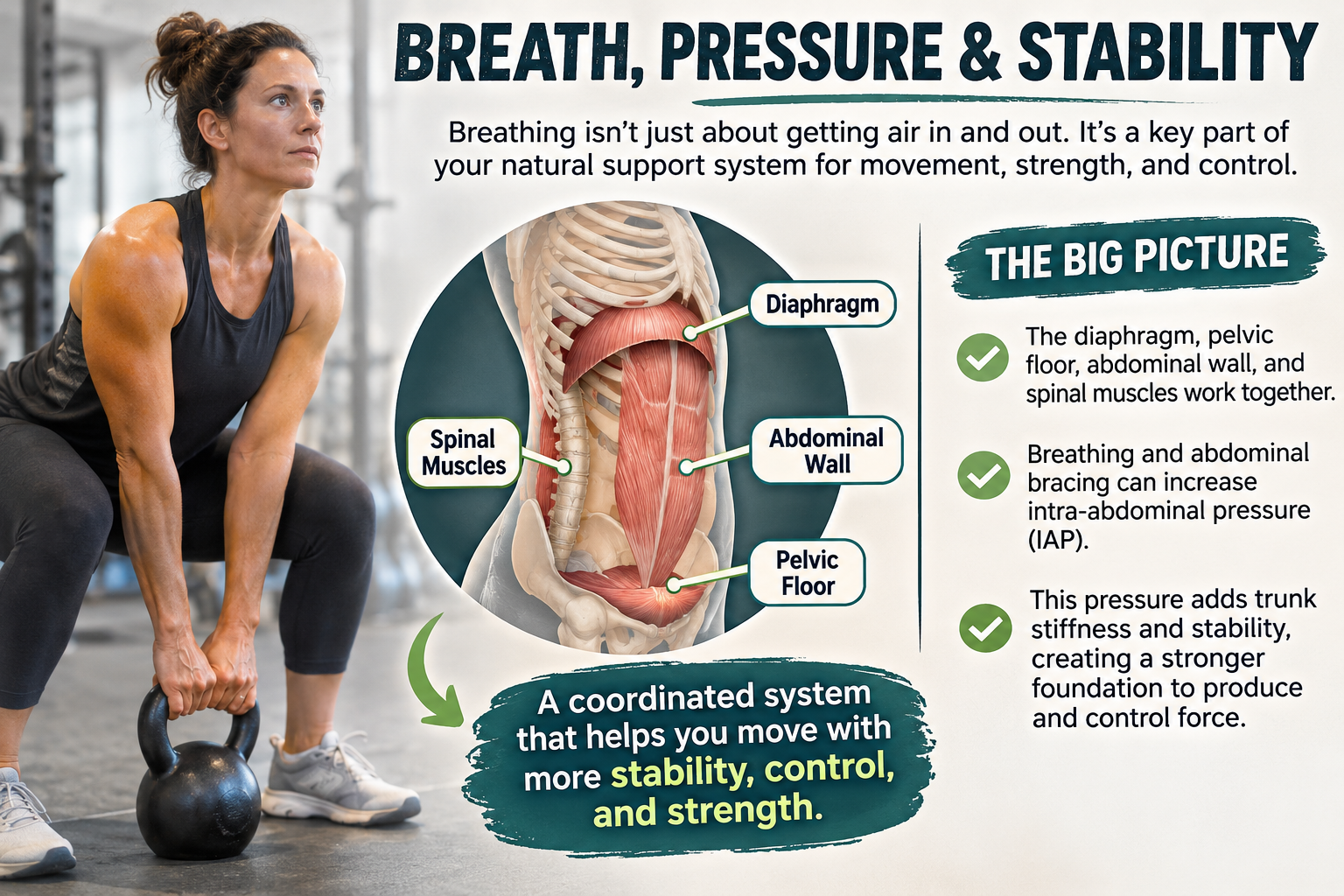
Research has demonstrated that breathing and abdominal bracing influence intra-abdominal pressure (IAP), which can contribute to trunk stiffness and stability. Think of this pressure as one component of the body’s natural support system. It doesn’t replace muscular strength, but it can help us create a more stable foundation for producing and controlling force.
This is where techniques such as pressurized breathing become useful.
You may have heard of the Valsalva maneuver, which involves attempting to exhale against a closed airway. During demanding strength exercises, a brief Valsalva maneuver can substantially increase intra-abdominal pressure and trunk rigidity.
A review by Hackett and Chow (2013) confirmed that the Valsalva maneuver increases intra-abdominal pressure during resistance exercise, potentially contributing to spinal stability. However, it also produces significant cardiovascular responses, including increases in blood pressure.
Does that mean everyone with low back pain should hold their breath during exercise? Absolutely not!
Instead, we can teach people to coordinate breathing, abdominal tension, and movement according to the demands of the exercise. During challenging strength movements, this might involve inhaling to prepare, creating appropriate circumferential abdominal tension, and using a controlled exhalation as the movement continues.
It’s important to recognize that a controlled exhalation isn’t identical to a full Valsalva maneuver, and more pressure isn’t automatically better. In fact, increasing intra-abdominal pressure doesn’t necessarily reduce spinal compression.
The goal isn’t to brace as hard as possible during every movement. It’s to develop the ability to create the stability needed for the task.
This suggests that breathing can be a useful addition to rehabilitation, but we shouldn’t claim that pressurized breathing alone has been proven to resolve low back pain.
Breathing Can Help Change Our Relationship With Pain
While creating pressure and tension may be useful during strength training, people experiencing persistent low back pain can also struggle with an entirely different challenge: a nervous system that has become increasingly protective.
Pain isn’t simply a measurement of tissue damage. It’s an experience influenced by biological, psychological, and social factors, including previous experiences, expectations, emotions, and perceived threats.
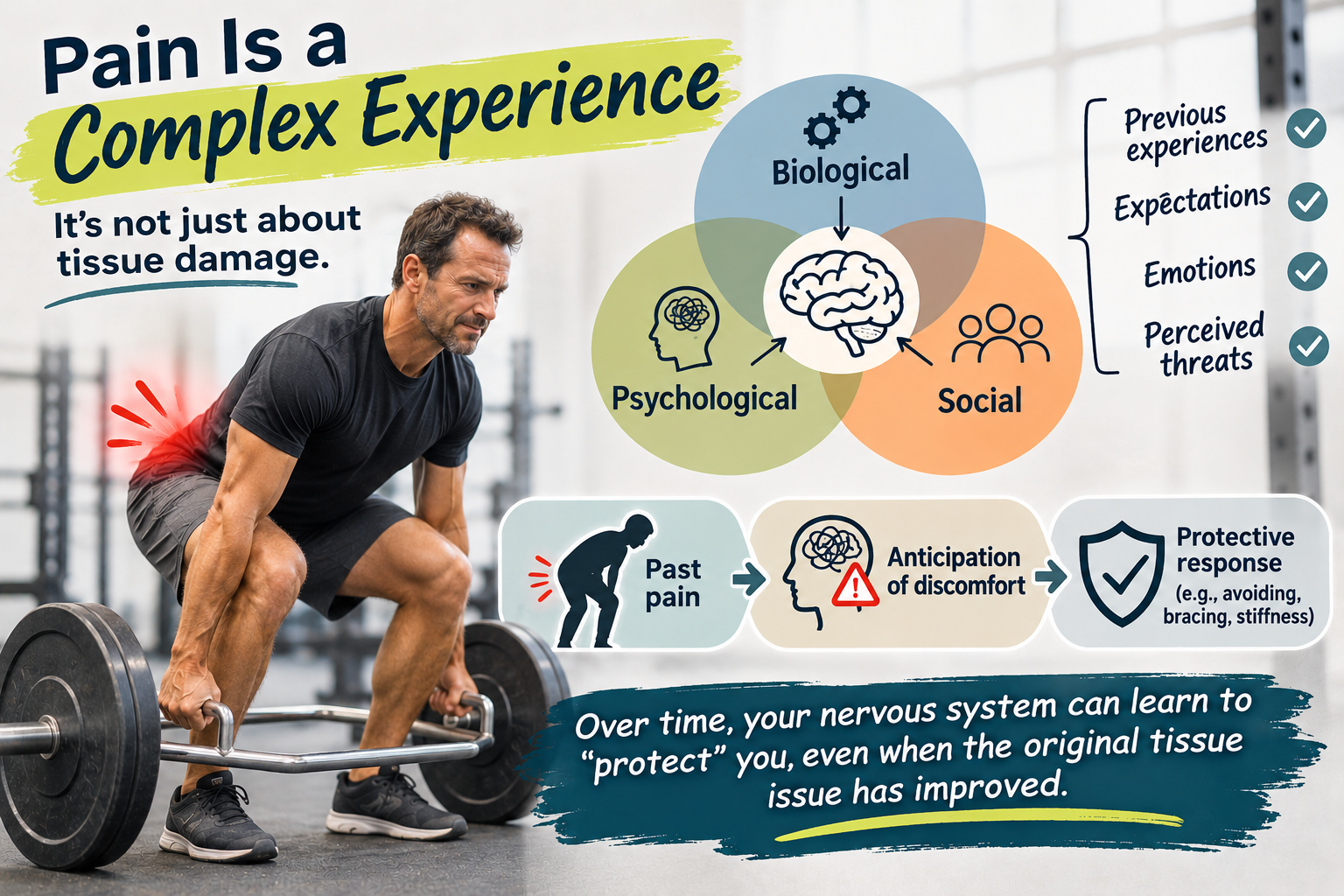
When someone has experienced pain for months or years, they may begin anticipating discomfort before certain movements even occur. Bending forward, rotating, or picking something up can become associated with danger.
This doesn’t mean the pain is imaginary. It means our nervous system can learn protective responses that sometimes persist beyond their usefulness.
One strategy that may help is slow, comfortable breathing.
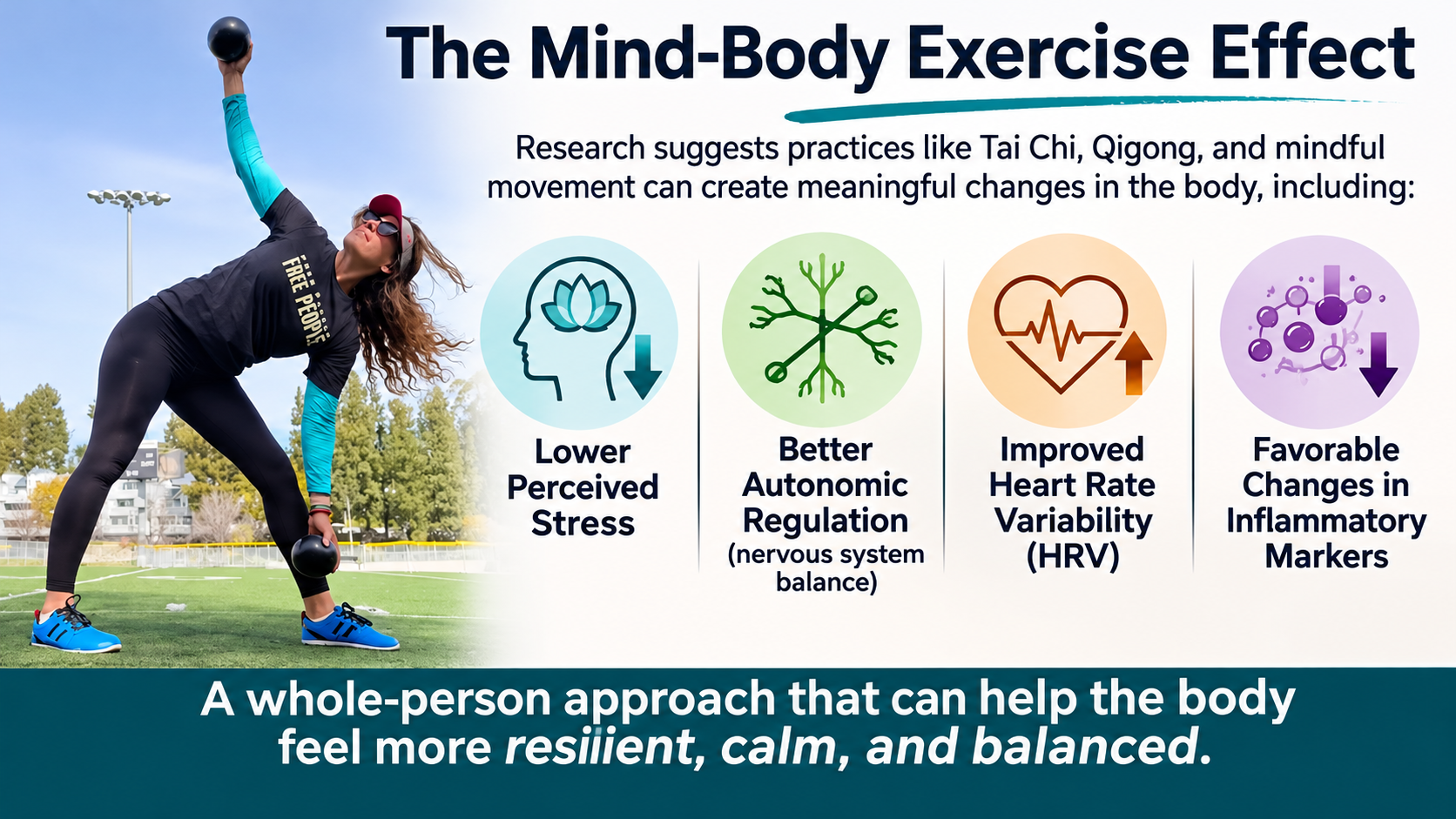
A 2022 systematic review and meta-analysis by Laborde and colleagues found that voluntary slow breathing increased measures of vagally mediated heart rate variability, suggesting changes in autonomic cardiovascular regulation.
However, increased heart rate variability doesn’t automatically mean pain will disappear or that the nervous system has been permanently reset.
Instead, breathing may provide an accessible way to reduce physiological arousal and create conditions in which people can approach uncomfortable sensations with less urgency.
This is where strategies such as somatic tracking and acceptance become particularly valuable.
Somatic Tracking: Learning That Sensations Aren’t Always Dangerous
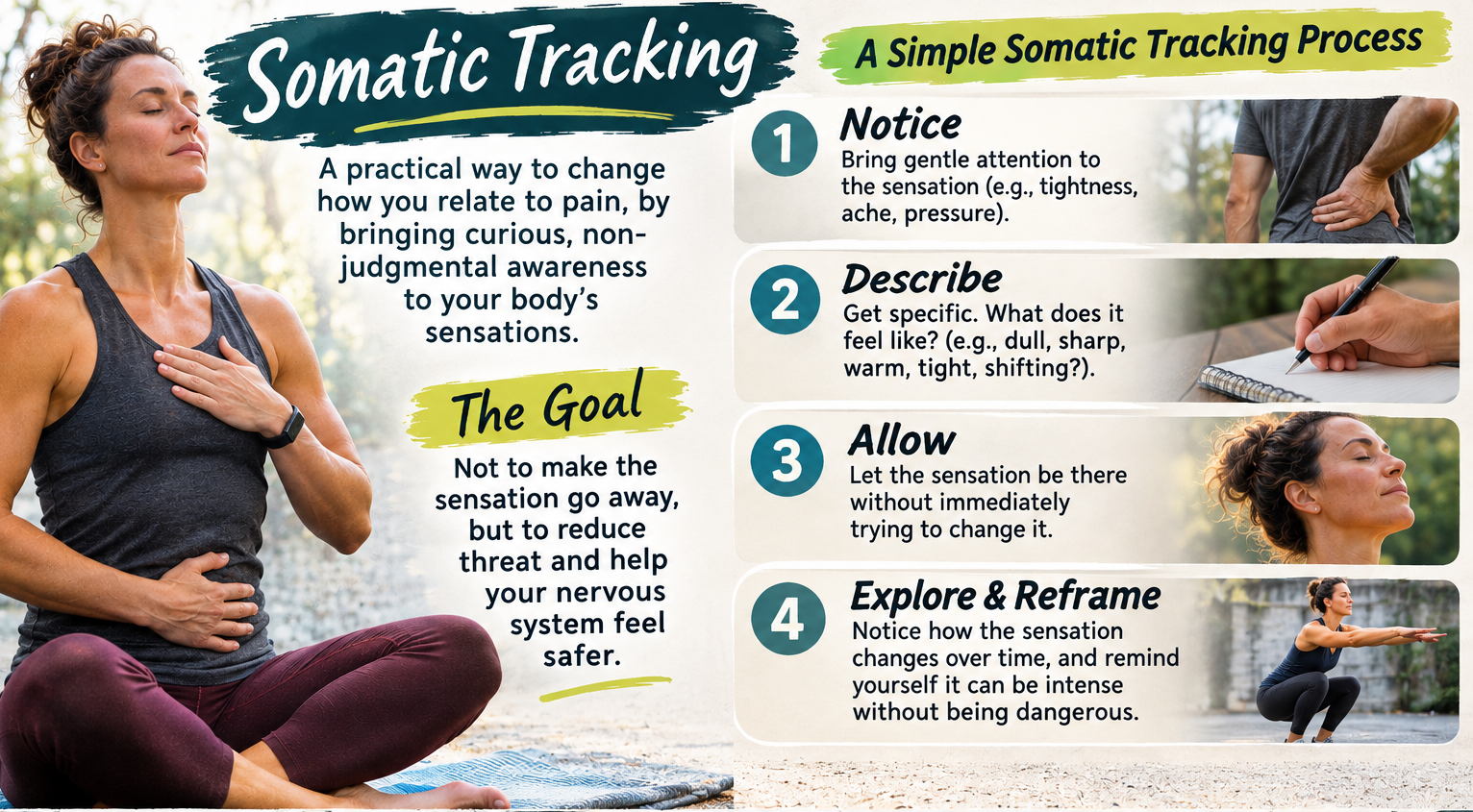
Somatic tracking is a strategy used in Pain Reprocessing Therapy (PRT). Rather than immediately reacting to every uncomfortable sensation as evidence of injury, individuals practice observing sensations with curiosity and less fear.
For example, someone experiencing back discomfort during a gentle movement might notice where the sensation occurs, how it changes, and whether they can observe it without immediately assuming something harmful is happening.
Comfortable diaphragmatic breathing can accompany this process, helping someone remain attentive rather than becoming overwhelmed by the experience.
A randomized clinical trial published in JAMA Psychiatry examined Pain Reprocessing Therapy in people with primary chronic back pain. Following treatment, 66% of participants receiving PRT were pain-free or nearly pain-free, compared with 20% receiving placebo treatment and 10% receiving usual care. Improvements were largely maintained at one year.
These are remarkable findings, but there’s an important distinction: the study examined a comprehensive psychological treatment, not breathing or somatic tracking alone.
Somatic tracking shouldn’t be used to dismiss possible injury or assume every painful sensation is harmless.
Acceptance: Stop Fighting Every Sensation
Another valuable approach comes from Acceptance and Commitment Therapy (ACT).
Acceptance doesn’t mean liking pain, ignoring it, or giving up on improvement. It means learning that we don’t necessarily have to eliminate every uncomfortable sensation before engaging in meaningful activities.
For someone with chronic low back pain, this can be an important shift.
Instead of constantly asking, “How do I make this sensation disappear?” they might begin asking, “How can I respond to this experience in a way that supports the life I want to live?”
Breathing can provide an anchor for attention while practicing this skill. Rather than forcing relaxation, we can allow the breath to remain comfortable while noticing thoughts, emotions, and physical sensations without immediately reacting to them.
A 2023 systematic review and meta-analysis of 21 trials involving 1,962 participants found that ACT improved pain acceptance, pain-related functioning, quality of life, and several psychological outcomes in people with chronic pain.
Again, this doesn’t establish breathing as the active ingredient. Rather, breathing can complement a broader approach to developing psychological flexibility.
Two Different Breathing Strategies, One Bigger Goal
This is what I find most fascinating about breathing and low back pain.
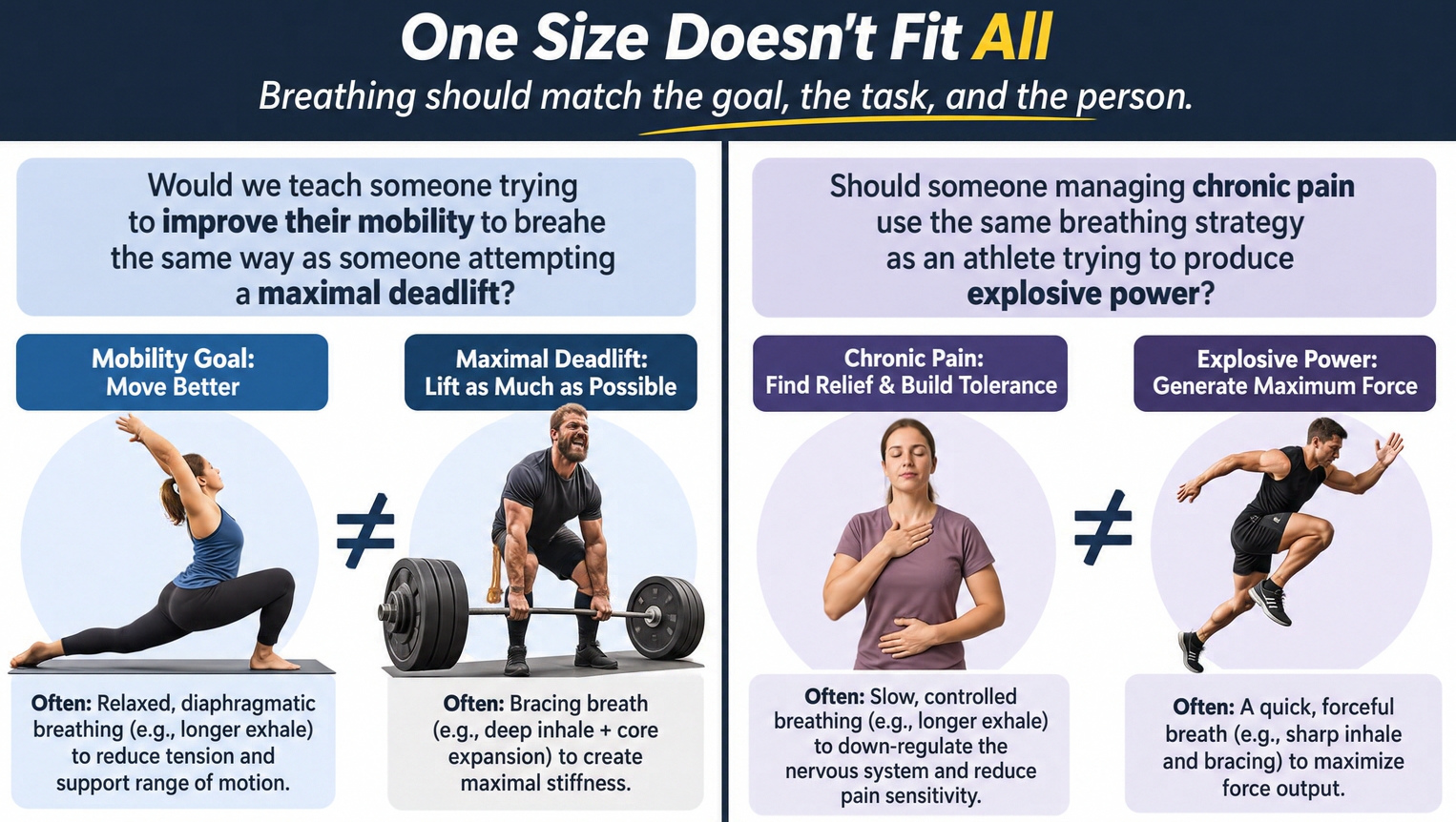
Sometimes we want breathing to help us create more tension and stability. Other times, we want breathing to help us reduce unnecessary arousal, approach movement with greater confidence, and develop a different relationship with uncomfortable sensations.
Neither strategy is universally better.
During a demanding strength exercise, appropriate bracing and pressure may help us control movement. During a gentle mobility session or pain-related mindfulness practice, comfortable, slower breathing may support attention and reduce arousal.
We also shouldn’t assume that someone needs to be completely relaxed to move safely, or that every person with back pain needs more core stability.
The larger lesson is that breathing should serve our goals rather than become another rigid set of rules.
For people experiencing persistent low back pain, the most effective approach will often involve more than breathing alone. Progressive exercise, appropriate strength training, education, psychological strategies, and individualized care can all play important roles.
Breathing isn’t a magic solution for low back pain. But when we understand how to use it to support both physical stability and psychological flexibility, it becomes a valuable tool for helping people move with greater strength, confidence, and less fear.
And ultimately, isn’t that what successful rehabilitation should be about?
Learn MUCH more at our Coach’s Corner “Beyond Breath” 2-week online program November 24th and December 1st. Save 20% this last week and find out more HERE with code “breath20”