Why More Mobility Isn’t Helping Your Movement
You’ve done the 90/90 transitions. You’ve hung from a pull-up bar until your shoulders screamed for mercy. Yet your overhead position still looks like a question mark, and your deep squat still has a mysterious pinch.

Maybe your hips and shoulders don’t need more mobility and stretching. Maybe they need a better foundation.
Mobility is a safety decision
Your nervous system is protective. If it doesn’t trust the base your limbs are moving from, it limits how far they can go. That limit feels like “tightness,” but it’s often your brain pulling the emergency brake.
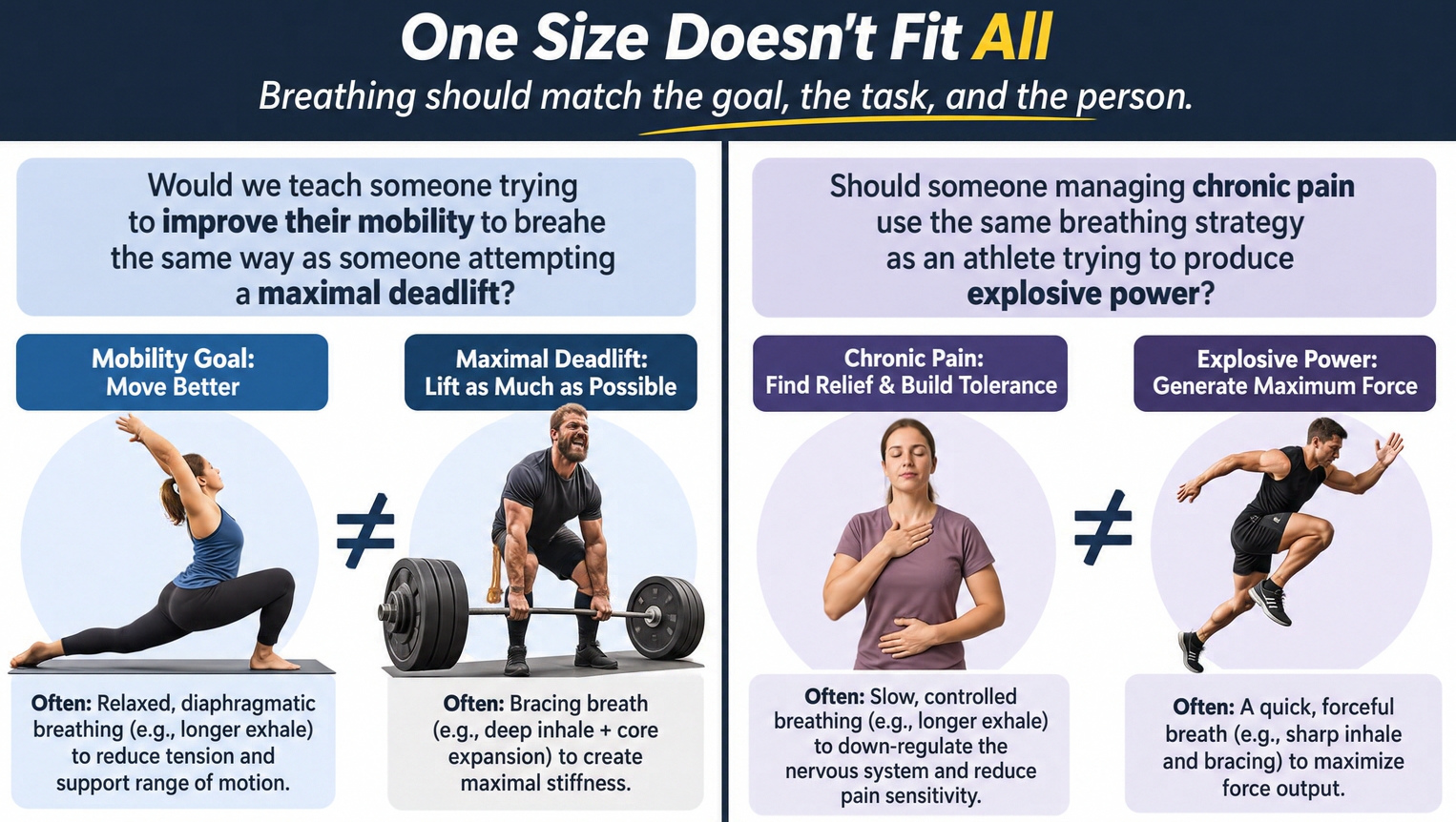
This is the idea behind proximal stability: a stable trunk gives the hips and shoulders permission to move. The three tools below build that stability, and we aren’t just going to show you more exercises, but better ways to get the body to respond!
Tip #1: Make your belly a pressure vessel
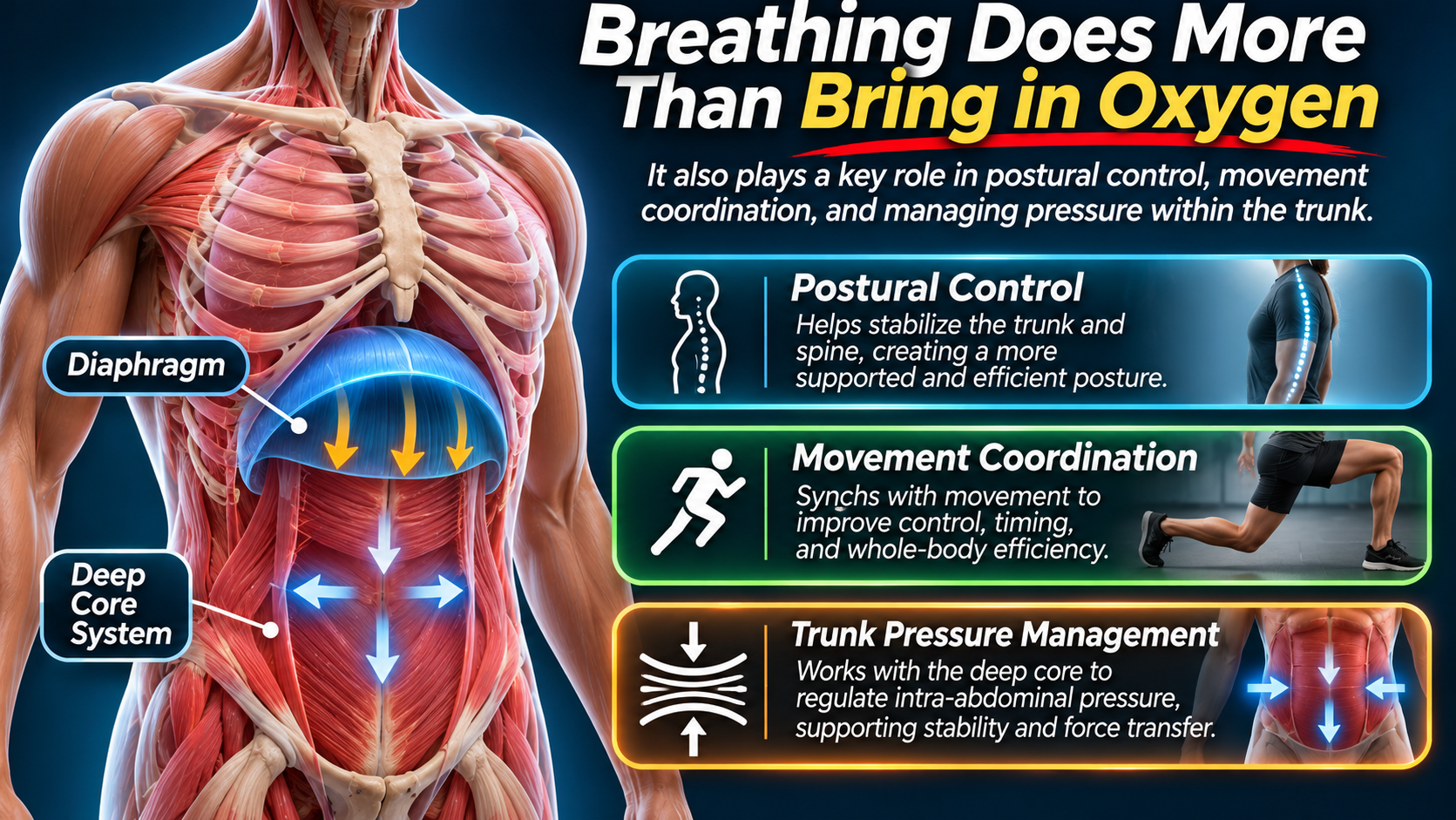
When your abdominal wall contracts around a held breath, it raises intra-abdominal pressure (IAP), which acts like an internal brace for the spine. In one biomechanical model, spinal stability rose by an average factor of 1.8 when intra-abdominal pressure doubled. Another analysis predicted that spinal compression dropped as pressure went from 5 to 10 kPa. These are modeling studies, and other work suggests the benefit depends on the posture and the task. That’s why we train it in real positions.
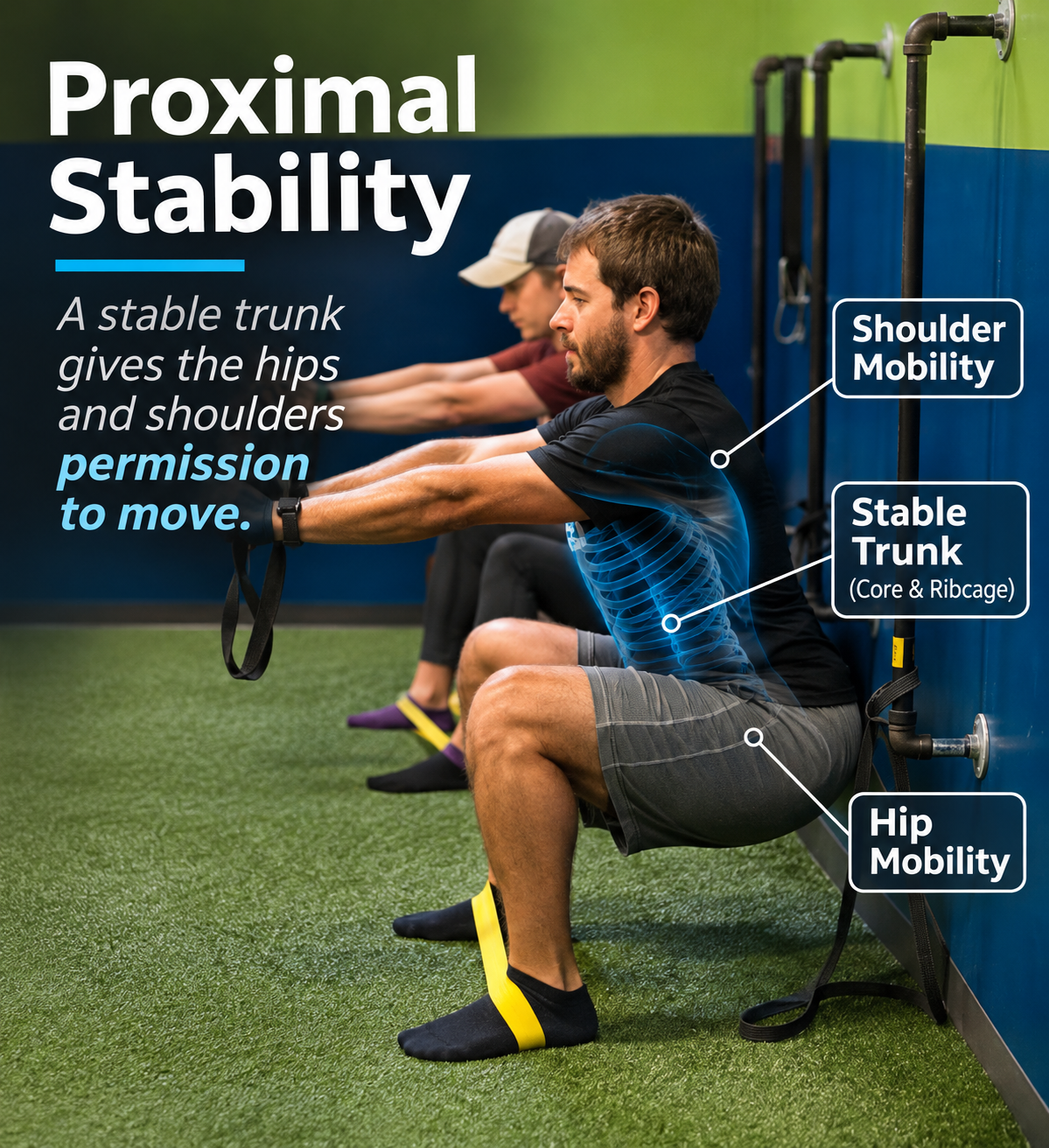
Here’s where the Ultimate Sandbag comes in. In an Ultimate Sandbag press-out, don’t just hold the USB, try to pull it apart. Pull the handles outward like you’re trying to tear it in half. That grip effort is a bracing cue in disguise. Gripping an object activates the stabilizers of the shoulder and trunk, a spread of tension known as irradiation. Making a fist is thought to cue even the rotator cuff to “pack” the shoulder into a stable position. Your hands switch on your trunk, and your trunk gives your arms a base to press from.
View this post on Instagram
Press outs can be used in any movement to enhance the impact of mobility as Martin Adame shows.
Try it: Hold the bag at your chest, pull outward, brace your midsection, then press out slowly and bring it back without losing tension.
Tip #2: Go diagonal
Real life isn’t sagittal. You throw, reach, and rotate diagonally. PNF (proprioceptive neuromuscular facilitation) builds its patterns around that fact. In a study of patients with shoulder impingement, a session combining soft tissue work with PNF diagonal patterns improved external rotation and overhead reach. That was a short, single-session study in a clinical population, so treat it as a promising signal rather than a promise. A separate study found that diagonal shoulder movement produced greater brain plasticity markers than plain forward flexion. Your nervous system seems to like diagonals.
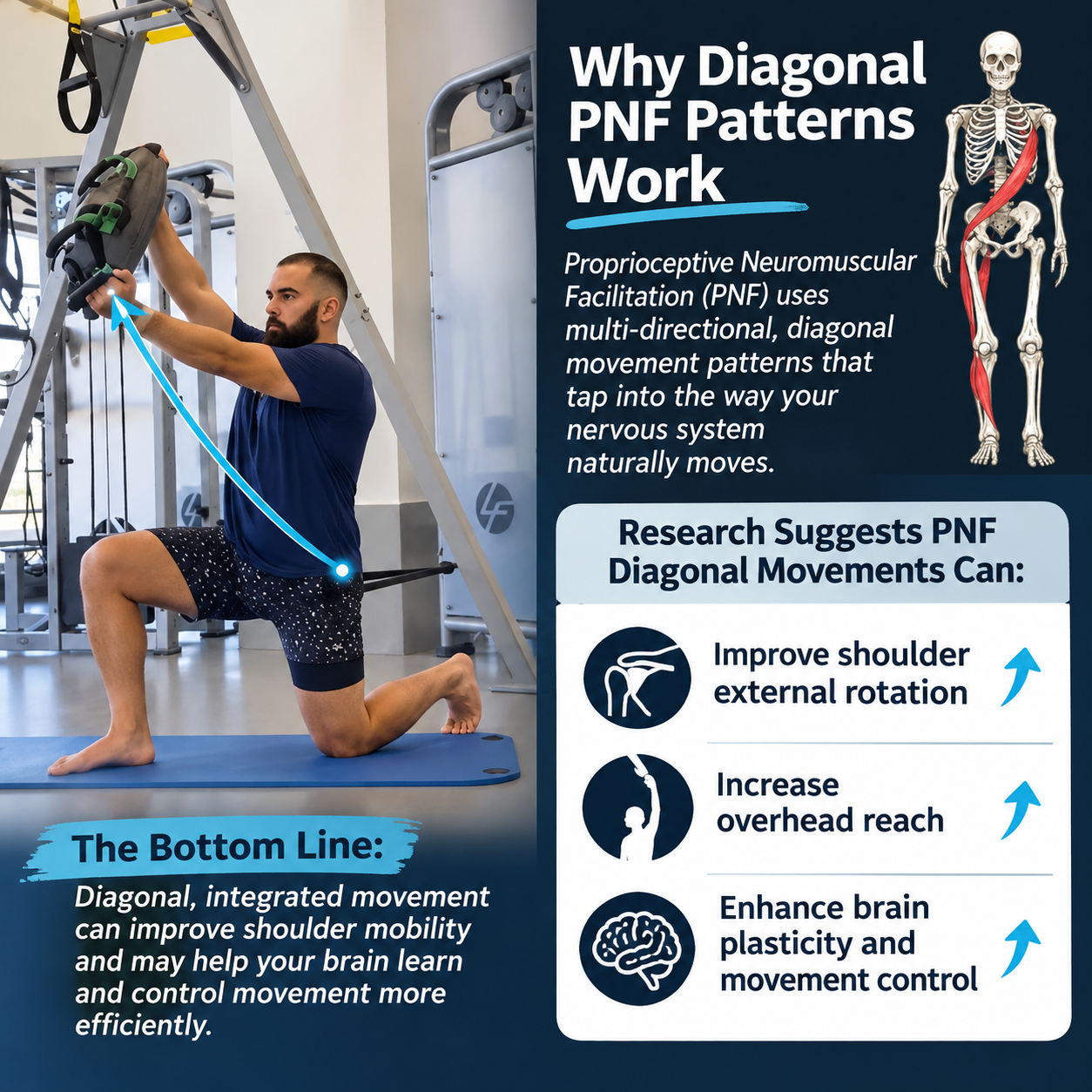
Now add the pull-apart. In an Ultimate Sandbag lift or chop, keep pulling the handles away from each other the whole way through. The outward pull sets the shoulder blades and ribcage in a better relationship, which lets the core connect across the body. PNF’s force irradiation principle holds that strong, well-recruited muscles can drive activation in neighboring ones, and the pull-apart makes that happen. Your hips benefit as well, since a diagonal pattern runs from the opposite shoulder through the trunk to the hip
Try it: Half-kneeling, lift the bag from low outside one hip to high across the opposite shoulder. Pull the handles apart the whole way, and let your eyes and ribcage follow the diagonal.
Tip #3: Breathe like you mean it
Bracing without breathing is just holding your breath and turning red. The diaphragm sits at the top of your pressure system, and how you breathe changes how well the system works. In one trial, an 8-week core program that included diaphragm strengthening improved postural stability during heavy squats more than conventional training did.
The goal is a 360° breath: inhale into your belly, sides, and low back so the whole canister expands, then brace around that air. One caution: research suggests heavy bracing can reduce lung volumes during lifting, so the goal is to adjust pressure up or down rather than max it out constantly. Save the hard brace for hard efforts and let the rest of your reps breathe.
Try it: Inhale through your nose into your ribs and belly. Set a moderate brace and pull the USB apart. Exhale slowly through pursed lips, ribs down, while keeping tension in your trunk. You’re managing pressure, not clenching.
View this post on Instagram
Stretching asks your hips and shoulders to open up. Proximal stability gives them a reason to. Build the brace, pull the USB apart, find the diagonal, and breathe into the pressure. Then watch how much mobility was waiting behind the emergency brake.
Find out MUCH more in our upcoming 2-week Coach’s Corner HERE. Still save 20% THIS week with code “breath20“