5 Key Movements to Help Prevent (and Address) Knee Issues

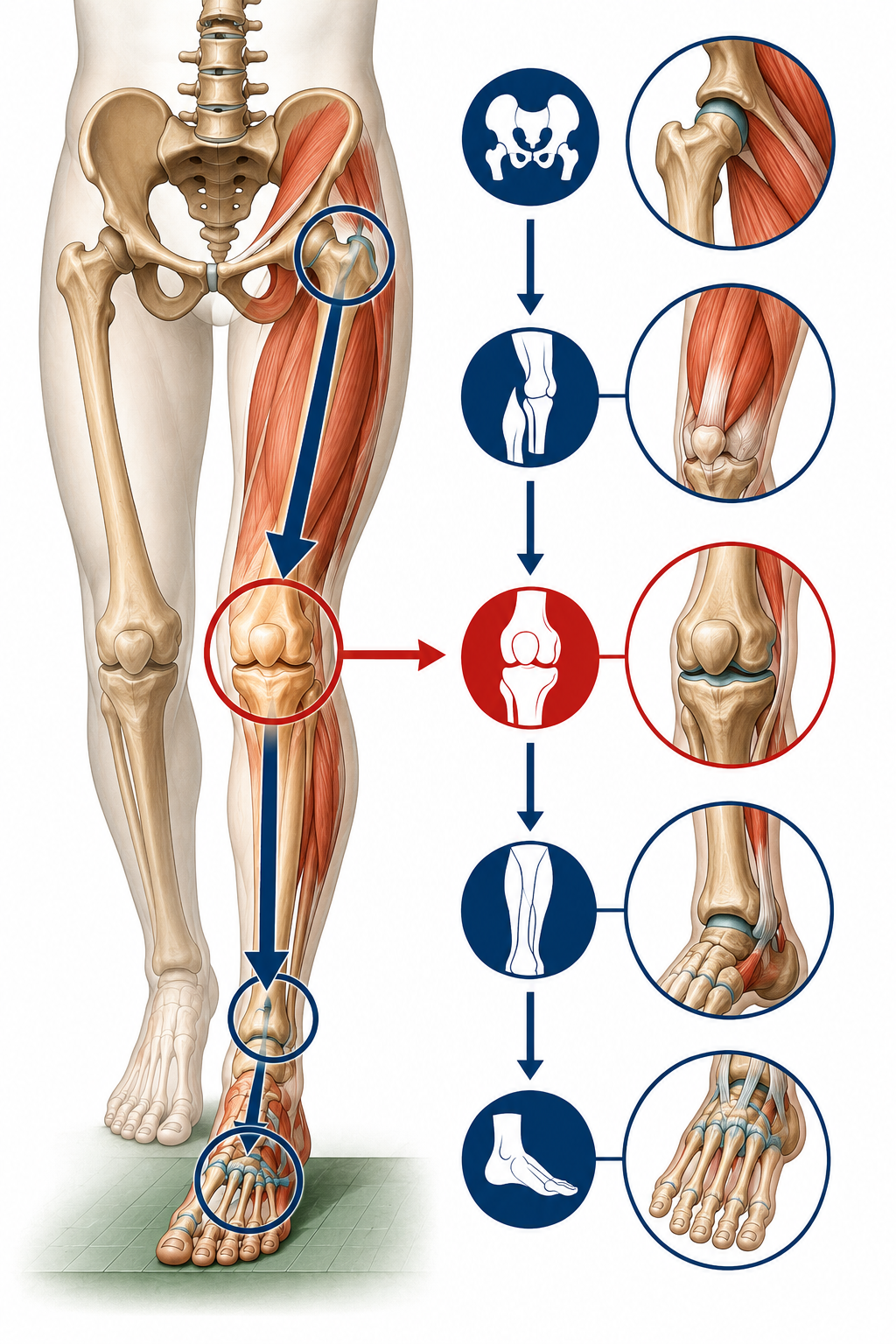
Knee pain rarely starts at the knee. Most of the time, it’s the result of what’s happening or not happening at the joints and tissues around it: the ankle, the hip, the core, and the deceleration mechanics that control how force moves through the leg. These five movement progressions are built specifically around those relationships, using research on injury mechanics to guide exactly why each one belongs in a knee-focused program.
1. DVRT Step-Up Progressions for Lateral Stability, Foot Strength, and Ankle Stability
Most step-ups are trained in a single, forward direction, which misses a huge piece of what actually protects the knee: frontal-plane control. Our step-up progressions deliberately incorporate lateral and multi-directional variations specifically to challenge the ankle and foot to stabilize outside the sagittal plane.
This matters because knee valgus, the inward collapse of the knee under load is one of the most consistently documented risk factors for knee injury, and research has repeatedly linked poor lateral hip and ankle stability to increased valgus collapse. A foot and ankle that can’t stabilize under a shifting, multi-directional load sends that instability directly up the chain to the knee. Building genuine foot strength and ankle stability through progressive step-up variations addresses this risk at its actual source, rather than only training the knee joint in isolation.
View this post on Instagram
2. Hip Hinge Stepping Progressions for Deceleration Strength and Posterior Chain Development
Deceleration is one of the most overlooked, and most important qualities for knee health. Research on ACL injury mechanics has found that a striking proportion of these injuries occur during deceleration rather than acceleration, as the body attempts to absorb force faster than untrained tissue and poor mechanics can handle.
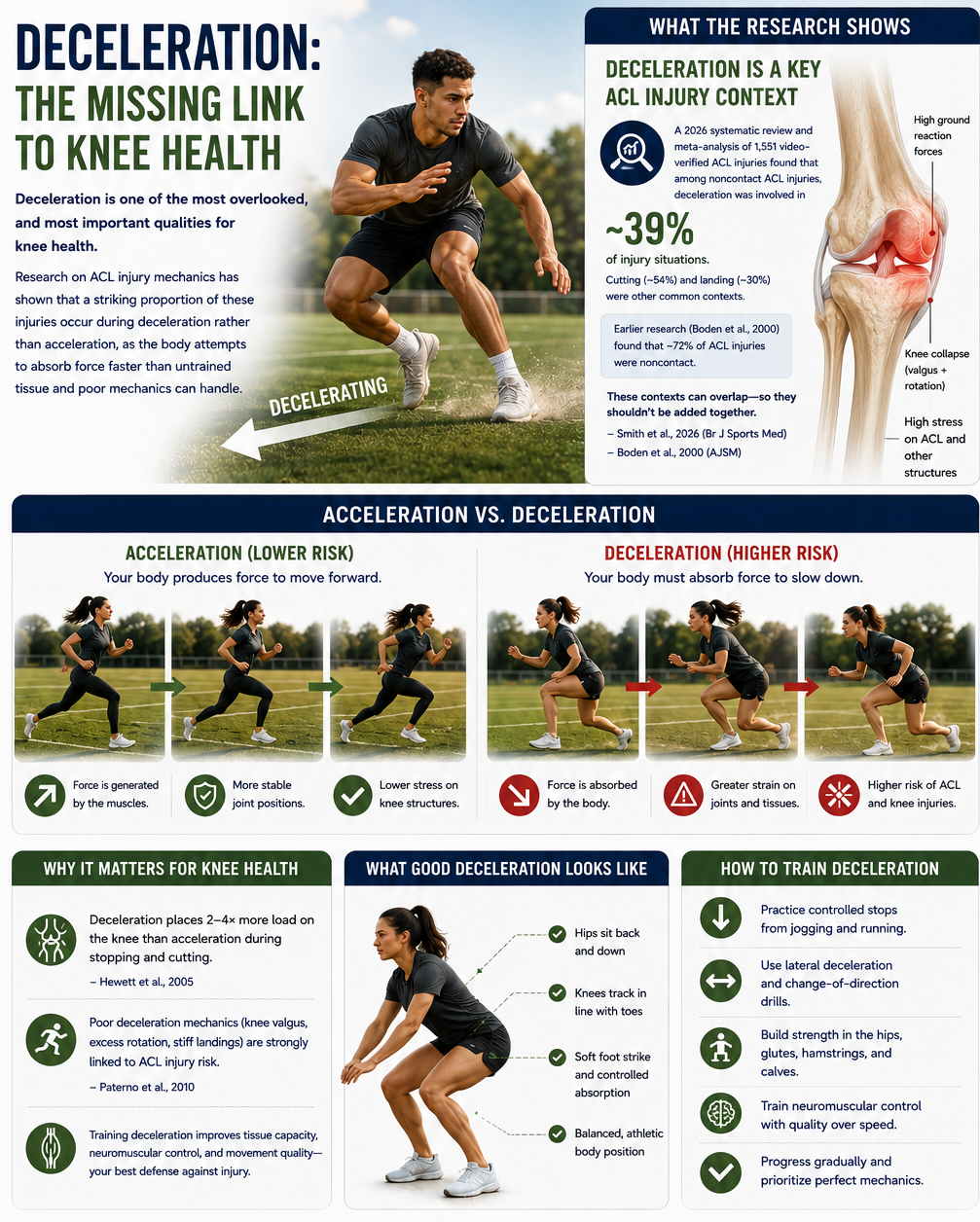
Hip hinge stepping progressions train exactly this capacity. By combining a hip-hinge pattern with a stepping or shifting component, these drills teach the posterior chain, glutes, hamstrings, and trunk, to actively control the deceleration of body weight and momentum, rather than allowing that force to be absorbed passively by the knee joint itself. Given that the hamstrings function as a genuine “biomechanical braking system” for the knee actively reducing anterior tibial translation and helping stabilize the joint during rapid deceleration training this pattern directly builds the posterior chain strength research identifies as protective against exactly this kind of knee-loading event.
View this post on Instagram
3. Walking Silk Reeling for Hip Mobility, Glute Strength, Weight Shifting, Foot Stability, and Frontal Plane Strength
Walking Silk Reeling brings together more protective qualities in a single movement than almost any other drill in this list. As the body continuously spirals and shifts weight from one leg to another, the hips are taken through genuine, actively controlled rotational mobility, the glutes are challenged to stabilize the pelvis through single-leg phases, and the feet must continuously adjust and stabilize as weight transfers across a changing base of support.
This continuous weight-shifting demand is directly relevant to frontal-plane knee protection. Because the exercise never allows the body to settle into a static, symmetrical position, it trains the same lateral and rotational stability qualities linked to reduced knee valgus and lower injury risk in the research covered above, but through smooth, continuous, low-impact movement rather than abrupt, ballistic loading, making it an accessible entry point for building these protective qualities.
4. Lunge Progressions for Deceleration Strength, Power Development, Frontal Plane Stability, and Kinetic Chain Integration
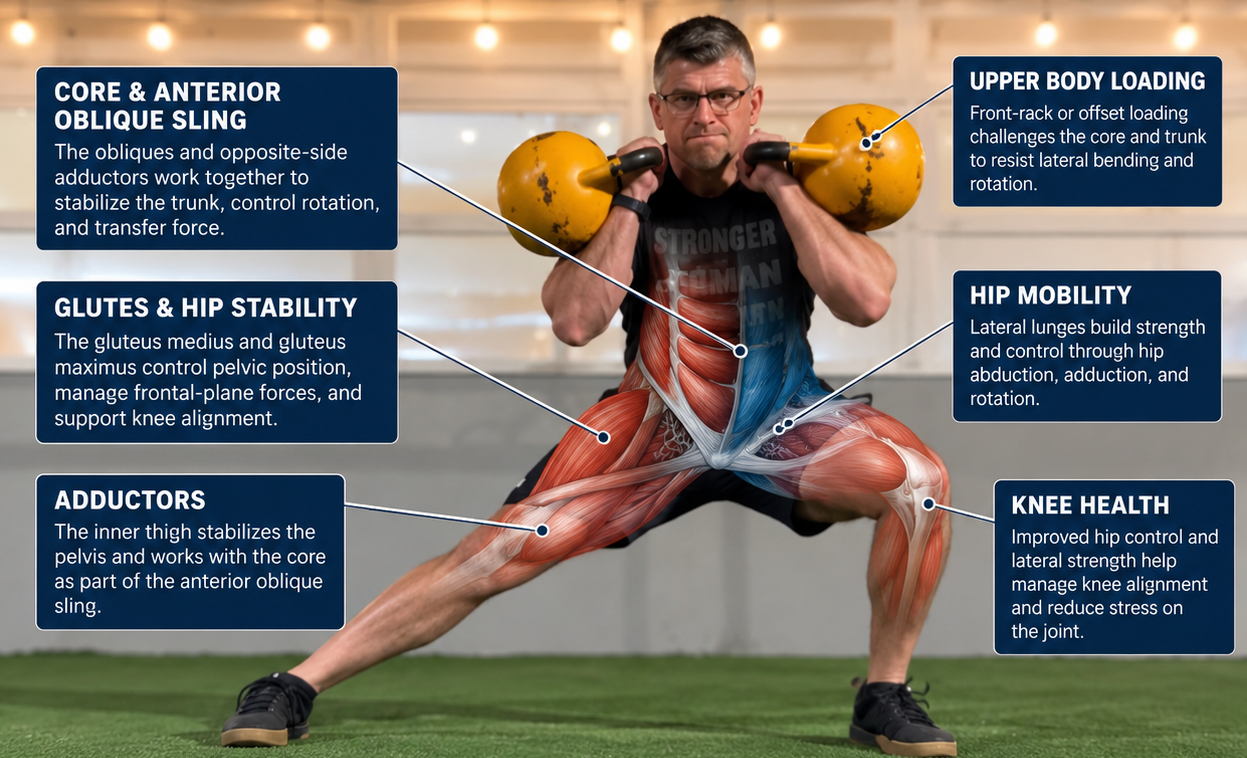
Lunges are a foundational movement in most training programs, but progressed deliberately through depth, direction, and loading variations they become one of the most complete tools for knee resilience available. A well-progressed lunge trains eccentric deceleration as the body lowers under control, concentric power as it drives back to standing, and frontal-plane stability whenever lateral or rotational lunge variations are introduced.
This combination directly reflects the deceleration research covered above: eccentric strength capacity isn’t just a performance quality, it’s a protective factor that helps the body absorb and control force rather than transferring that load uncontrollably to the passive structures of the knee, including the ACL. Progressing lunges through multiple planes and directions ensures the entire lower body kinetic chain — foot, ankle, knee, and hip is trained to integrate and share load, rather than leaving any single joint to absorb a disproportionate share of the demand.
View this post on Instagram
5. Supine Hip Extension Leg Curl Progressions for Integrated Core Stability and Eccentric Hamstring Strength
This movement targets two protective qualities simultaneously: core stability and eccentric hamstring strength, trained together rather than in isolation. As the body maintains a bridged hip extension position while curling and extending the legs, the core has to stabilize the pelvis and spine continuously, while the hamstrings work eccentrically to control the lowering phase of the leg curl.
Eccentric hamstring training specifically has strong research support for knee protection, hamstring strength is understood to meaningfully reduce force on the ACL by resisting anterior tibial translation, and structured eccentric hamstring protocols have been shown to meaningfully reduce injury rates in athletic populations. Training this quality in an integrated, core-engaged position — rather than through an isolated machine curl, better reflects how the hamstrings are actually asked to function during real movement.
View this post on Instagram
None of these five movements treat the knee as an isolated joint to be strengthened directly. Each one addresses a specific mechanism, foot and ankle stability, deceleration capacity, hip mobility and glute control, frontal-plane strength, or eccentric hamstring function, that research consistently links to how well the knee is protected during real, dynamic movement. Trained together, they build a knee that isn’t just stronger in isolation, but genuinely more resilient within the entire kinetic chain it depends on.
Find out MUCH more in Physical Therapist, Jessica Bento’s DVRT Rx Knee Programs HERE and save 25% with code “dvrt25″