Beyond the Deadlift: 3 Progressions That Build Real-World Strength

I’ve always found it interesting how the fitness industry can take an incredibly valuable exercise and make it unnecessarily limited. The deadlift is a perfect example. There’s no question that deadlifting can be one of the most effective ways to develop strength, particularly through the hips and posterior chain. However, somewhere along the way, we started treating the deadlift as though its primary purpose was simply to lift progressively heavier weights from the floor.
Don’t get me wrong, getting stronger matters! But after more than 30 years of coaching, I’ve come to appreciate that strength isn’t just about how much force we can produce. It’s also about how effectively we can organize that strength across different positions, directions, and movement demands.

I’m someone who has always valued being strong and lifting heavy, but how we do it smarter has kept evolving for me.
That’s one of the reasons I developed DVRT Ultimate Sandbag Training. I wanted to help people understand that progression doesn’t always mean adding weight. Sometimes changing our stance, the direction we move, or where we hold a load can create entirely new strength and stability challenges.
Three of my favorite examples are matrix stepping deadlifts, MAX deadlifts, and changing stability through body and load positioning. Each builds on the fundamental hip hinge while developing qualities that traditional deadlifts may not emphasize.
1. Matrix Stepping Deadlifts: Building Strength in Multiple Directions
One of the biggest limitations I see in many strength programs is that almost everything happens in the sagittal plane. We squat, hinge, lunge, and press primarily forward and backward. While there’s nothing inherently wrong with this, our bodies are designed to manage movement and forces in all three planes.
Think about how you actually move throughout the day. You step sideways, reach diagonally, turn, change directions, and constantly adjust your position relative to the environment. Your hips and trunk have to coordinate these movements, often while supporting or moving an external load.
Matrix stepping deadlifts take the familiar hip hinge and introduce different stepping directions. Instead of always performing a deadlift from the same symmetrical stance, we incorporate forward, lateral, and rotational stepping patterns while maintaining control of the load.
What makes this so valuable isn’t simply that we’re adding movement. We’re changing how the hips, pelvis, and trunk must coordinate to produce and control force.
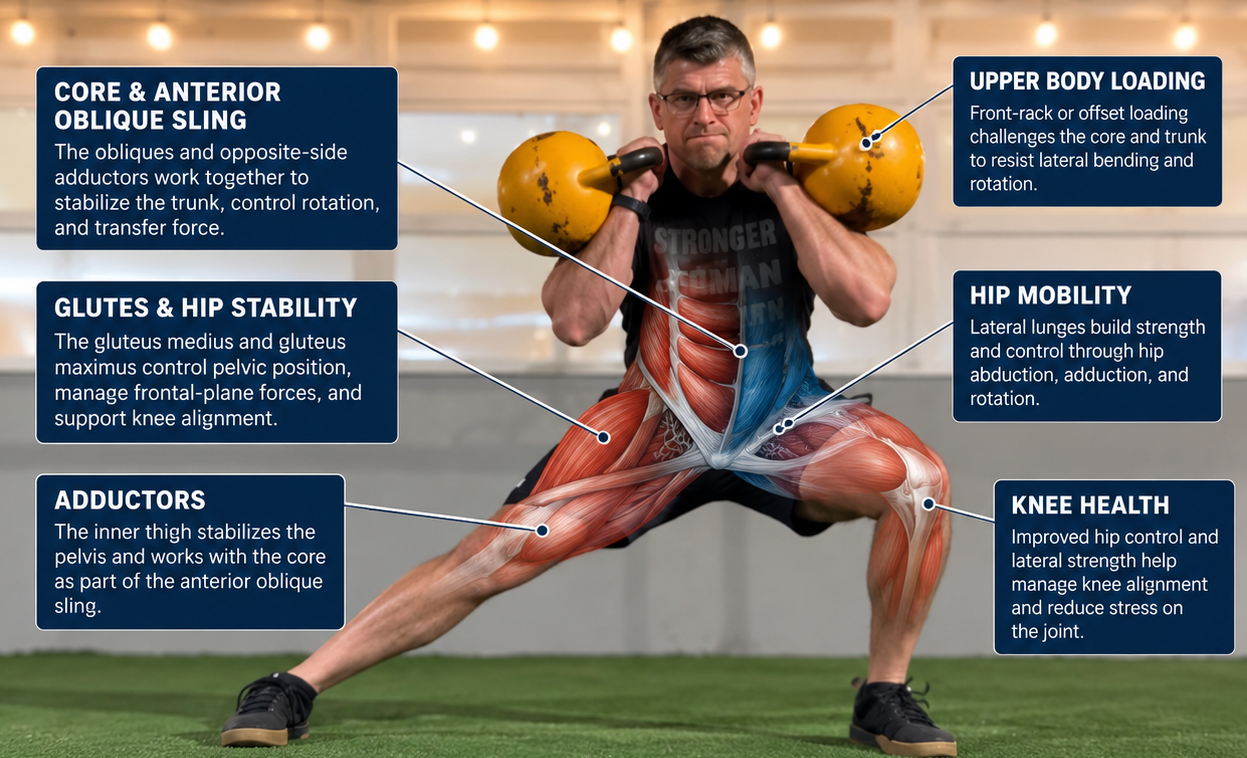
For example, a lateral stepping deadlift increases the need to manage frontal-plane forces, while rotational stepping introduces additional transverse-plane demands. These variations can challenge the hip musculature and trunk stabilizers in ways that a conventional bilateral deadlift may not.
View this post on Instagram
Research on movement variability and motor learning suggests that practicing appropriately varied movement tasks can help develop adaptable coordination. That doesn’t mean every exercise needs to be complicated, but it does suggest value in exposing people to different movement demands.
For me, the goal of matrix stepping deadlifts isn’t to make deadlifting harder just for the sake of difficulty. It’s to teach people how to maintain a strong hip hinge while their body changes position.
2. MAX Deadlifts: Teaching the Body to Resist Rotation
One of my favorite concepts in DVRT is that we can dramatically change the challenge of an exercise without dramatically changing the weight.
MAX stands for Multiple Axis, and MAX deadlifts demonstrate how powerful this concept can be.
View this post on Instagram
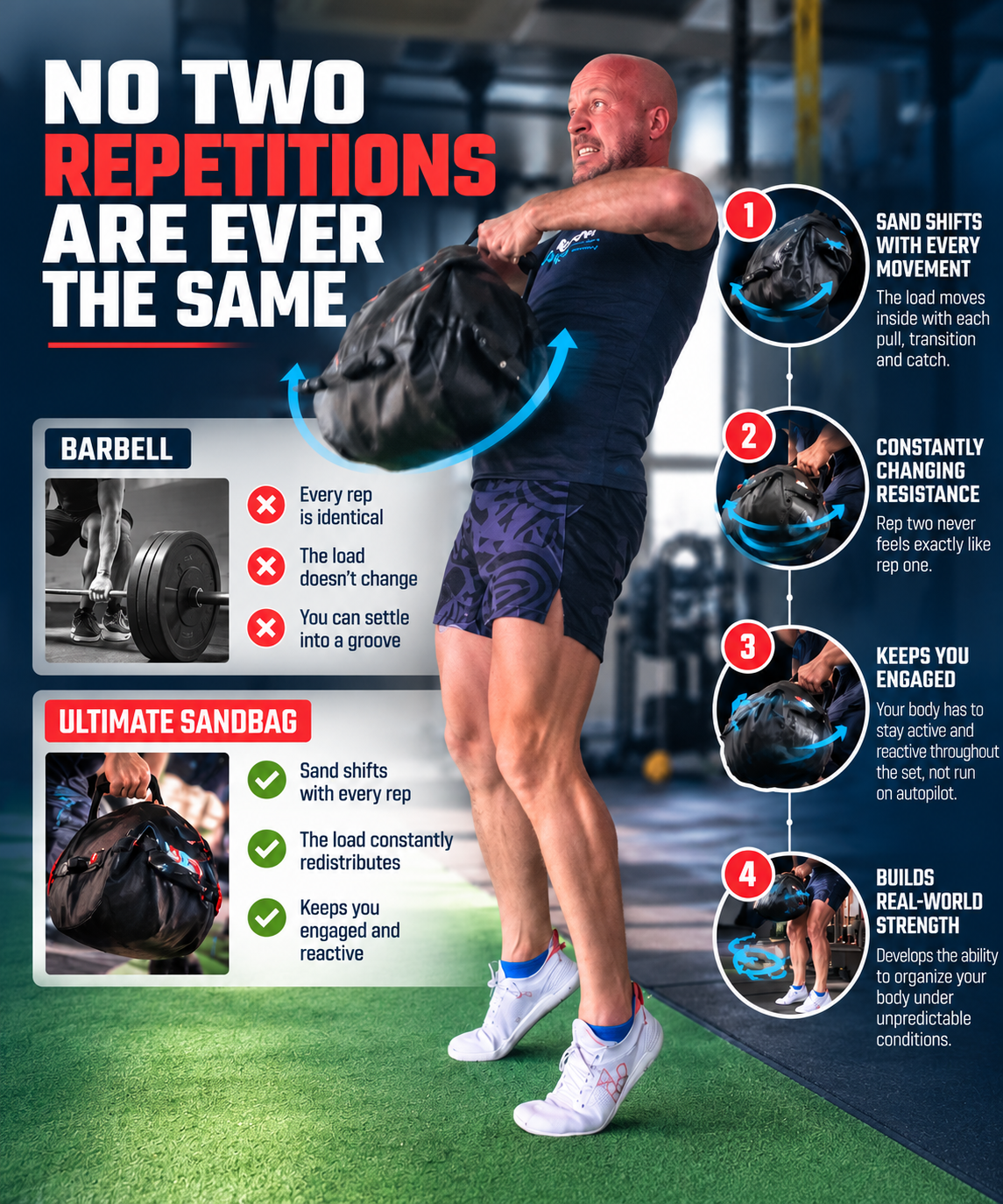
In a traditional deadlift, the load is generally positioned symmetrically relative to the body. In a MAX deadlift, we manipulate the position and orientation of the Ultimate Sandbag to create asymmetrical forces that the body must control.
Now the exercise isn’t simply about extending the hips and standing up. The trunk and pelvis must also resist unwanted rotation and lateral movement while the hips generate force.
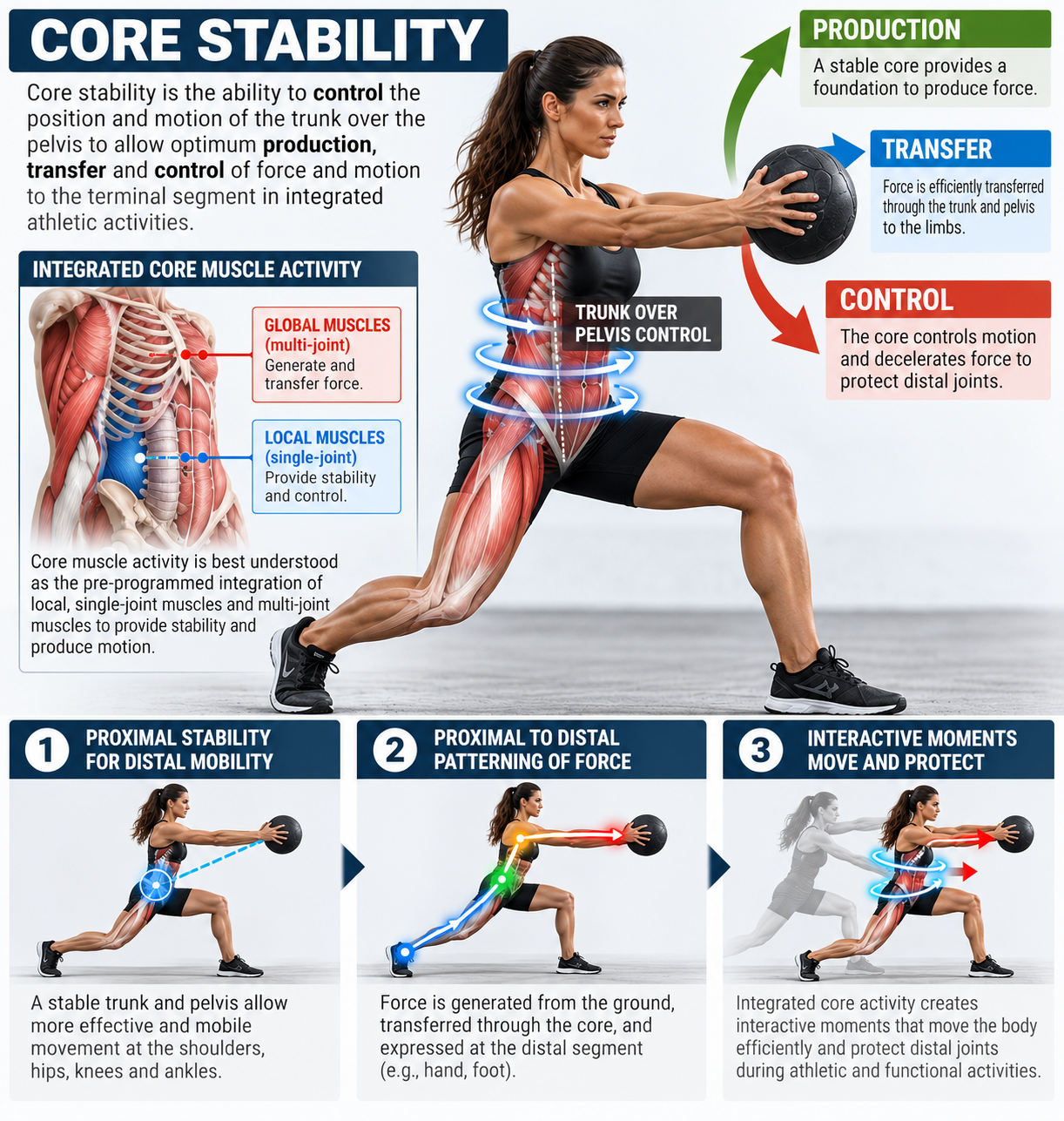
This connects to an important principle discussed by Kibler and colleagues in their influential 2006 paper on core stability: proximal stability for distal mobility. The trunk provides a foundation that helps the extremities generate, transfer, and control force.
View this post on Instagram
I think this is where many people misunderstand functional core training. They assume that training the core means either creating maximal abdominal tension or performing exercises that visibly move the spine.
But core stability is largely about controlling movement according to the demands of the task.
MAX deadlifts provide an opportunity to develop this control because the asymmetrical loading challenges the body to maintain alignment throughout the hinge.
We aren’t trying to eliminate all movement or create excessive stiffness. We’re teaching the nervous system to coordinate the appropriate muscular responses while the hips perform their primary job.
That’s a very different training experience from simply performing more repetitions of an isolated abdominal exercise.
3. Changing Stability Through Body Position and Load Position
One of the most important lessons I’ve learned from coaching is that an exercise doesn’t need to become more complicated to become more challenging. Sometimes the smallest changes create the most meaningful differences.
Consider how we position our feet during a deadlift. A symmetrical stance provides a relatively predictable base of support. Moving into a sprinter stance changes how the hips and trunk manage the load. Progressing toward a sprinter stance or single-leg variation further increases the demands on balance, pelvic control, and lower-body coordination.
The same principle applies to load position.
Holding an Ultimate Sandbag close to the body creates a different mechanical challenge than holding in the front loaded position, or going MAX. Changing from a centered load to an offset position alters the external forces acting on the trunk and requires different muscular strategies to maintain control.
View this post on Instagram
This also goes for the use of kettlebells or dumbbells. How we hold them, do we hold symmetrical or asymmetrical, or unilateral? These all can drastically change the progressions of the deadlift.
These changes matter because the nervous system doesn’t simply respond to how heavy something is. It also responds to where that weight is located, the direction of the forces, and the stability demands of the task.
This is closely related to what we often call reflexive stability in DVRT. The goal is to develop the body’s ability to organize largely automatic postural responses as movement demands change.
Of course, not every adjustment creates a superior exercise. A narrower stance or more challenging load position isn’t automatically better. The value comes from matching the challenge to the person’s current abilities and progressively developing greater control.
That’s why I often tell coaches that progression should be about improving movement competency, not just increasing difficulty.
The Bigger Lesson: Strength Should Be Adaptable
When I look at these three deadlift progressions, what excites me most isn’t that they provide more exercise variations. It’s that they help us expand what strength training can accomplish.
Matrix stepping deadlifts introduce different directions of movement. MAX deadlifts challenge our ability to control rotational forces. Changing body and load positions allows us to progressively manipulate stability and coordination demands.
None of these approaches makes traditional deadlifts obsolete. In fact, I believe a strong foundation in basic hinging mechanics makes these progressions more effective. The goal is to build upon that foundation rather than constantly replace it with something new.
The research on kinetic-chain function, motor control, and progressive resistance training supports the broader idea that strength is influenced by more than muscular force alone. However, we should also recognize that direct research comparing these specific DVRT deadlift variations with traditional deadlifts remains limited.
For me, that distinction is important. I don’t want people adopting exercises simply because they look more functional or challenging. I want them to understand the principles behind what they’re doing.
The ultimate goal isn’t to become great at performing one version of the deadlift. It’s to develop strength that you can access, coordinate, and control across a wide variety of movement demands.
That’s what makes these progressions so valuable, and why I believe they deserve a place in a well-designed strength training program.
View this post on Instagram
Research References
- Kibler WB, Press J, Sciascia A. (2006). The role of core stability in athletic function. Sports Medicine, 36(3), 189–198. https://pubmed.ncbi.nlm.nih.gov/16526831/
- Reed CA, Ford KR, Myer GD, Hewett TE. (2012). The effects of isolated and integrated core stability training on athletic performance measures: A systematic review. Sports Medicine, 42(8), 697–706. https://pubmed.ncbi.nlm.nih.gov/22784233/
- Behm DG, Anderson KG. (2006). The role of instability with resistance training. Journal of Strength and Conditioning Research, 20(3), 716–722. https://pubmed.ncbi.nlm.nih.gov/16937988/
- Wulf G, Shea C, Lewthwaite R. (2010). Motor skill learning and performance: A review of influential factors. Medical Education, 44(1), 75–84. https://doi.org/10.1111/j.1365-2923.2009.03421.x