Strength, Stability, Mobility, Conditioning — One Movement
Most training programs build strength, mobility, stability, and conditioning as separate categories. strength, stability, mobility and conditioning work as their own blocks, usually disconnected from one another. It’s an efficient way to organize a program on paper and it’s exactly why we don’t achieve the types of improvements in movement and overall strength that we often think we should.
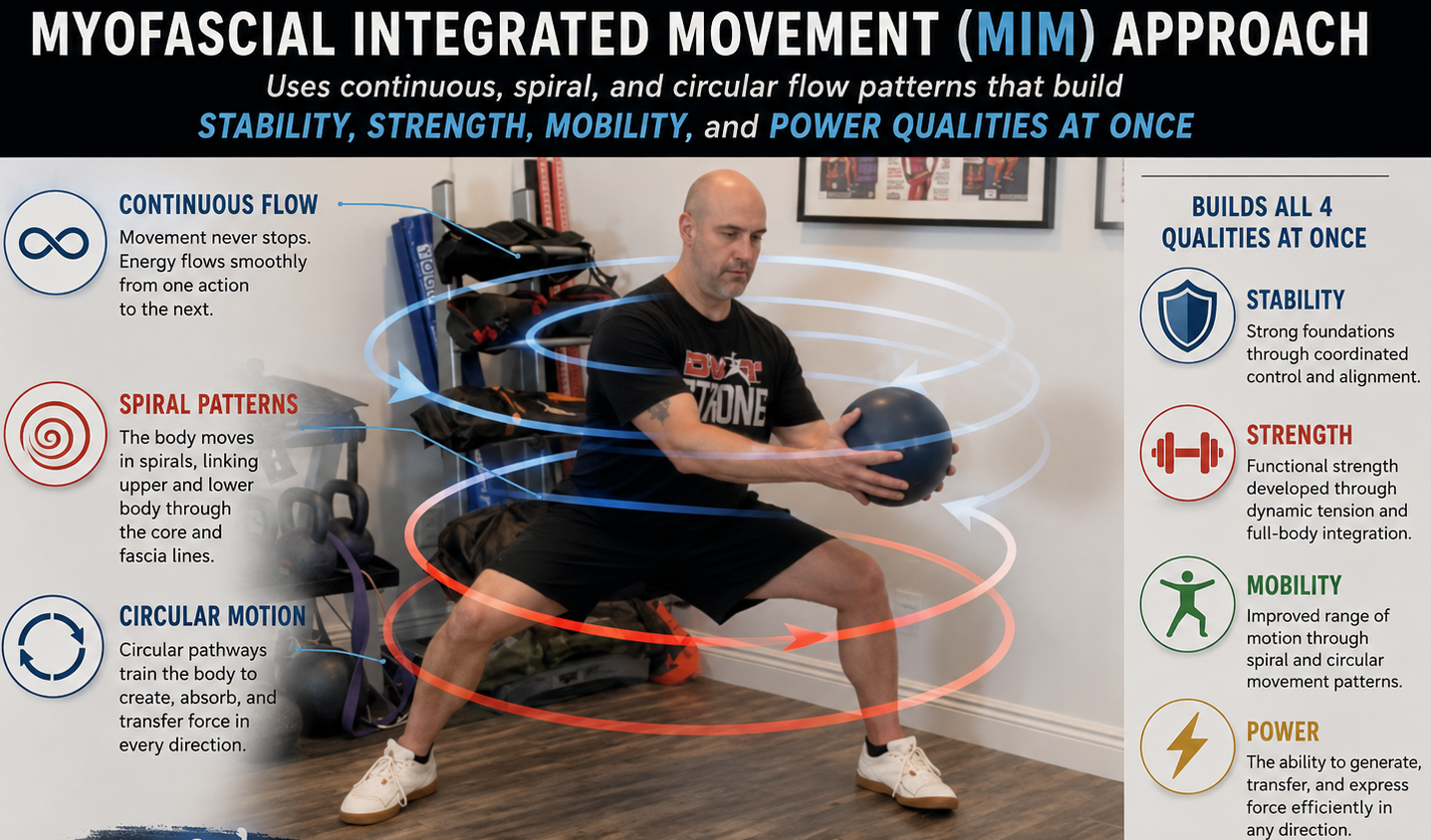
Within our Myofascial Integrated Movement (MIM) approach, we train a different way through continuous, spiral, and circular flow patterns that build multiple physical qualities simultaneously, inside the same movement. These flows aren’t a stylistic choice. They expose gaps that conventional training rarely even attempts to address.
Two Flows, Two Distinct Demands
We build these principles through two flow series, each teaching something different.
The first is compact and explosive. It begins from a grounded, stable starting position and moves into a gathering-and-releasing pattern the body sinking down through a stable base, drawing inward to build tension, then releasing that tension outward in a short, powerful burst. This flow trains the body to store force like a compressed spring and release it efficiently, rather than generating power through disconnected muscular effort.
The second flow is slower and continuous sweeping, circular arm patterns paired with a shifting, sealing stance, where weight transfers smoothly from one leg to the other while the trunk rotates to guide the movement rather than force it. This flow trains sustained rotational control, continuous weight-shifting, and the kind of shoulder and hip mobility that only develops under active, ongoing control.
Between the two, you get exposure to both ends of the same spectrum: compact, explosive force production, and slow, sustained, rotational control. Very few training programs ask the body to develop both qualities, let alone within the same session.
What Makes This Genuinely Different
Conventional strength training tends to isolate stability and treat it as a fixed, braced state hold the position, resist movement, done. These flows do the opposite. They demand stability through continuous motion the core, hips, and shoulders constantly adjusting as weight shifts, as rotation occurs, as the body transitions from a compressed, gathered position into an extended, released one.
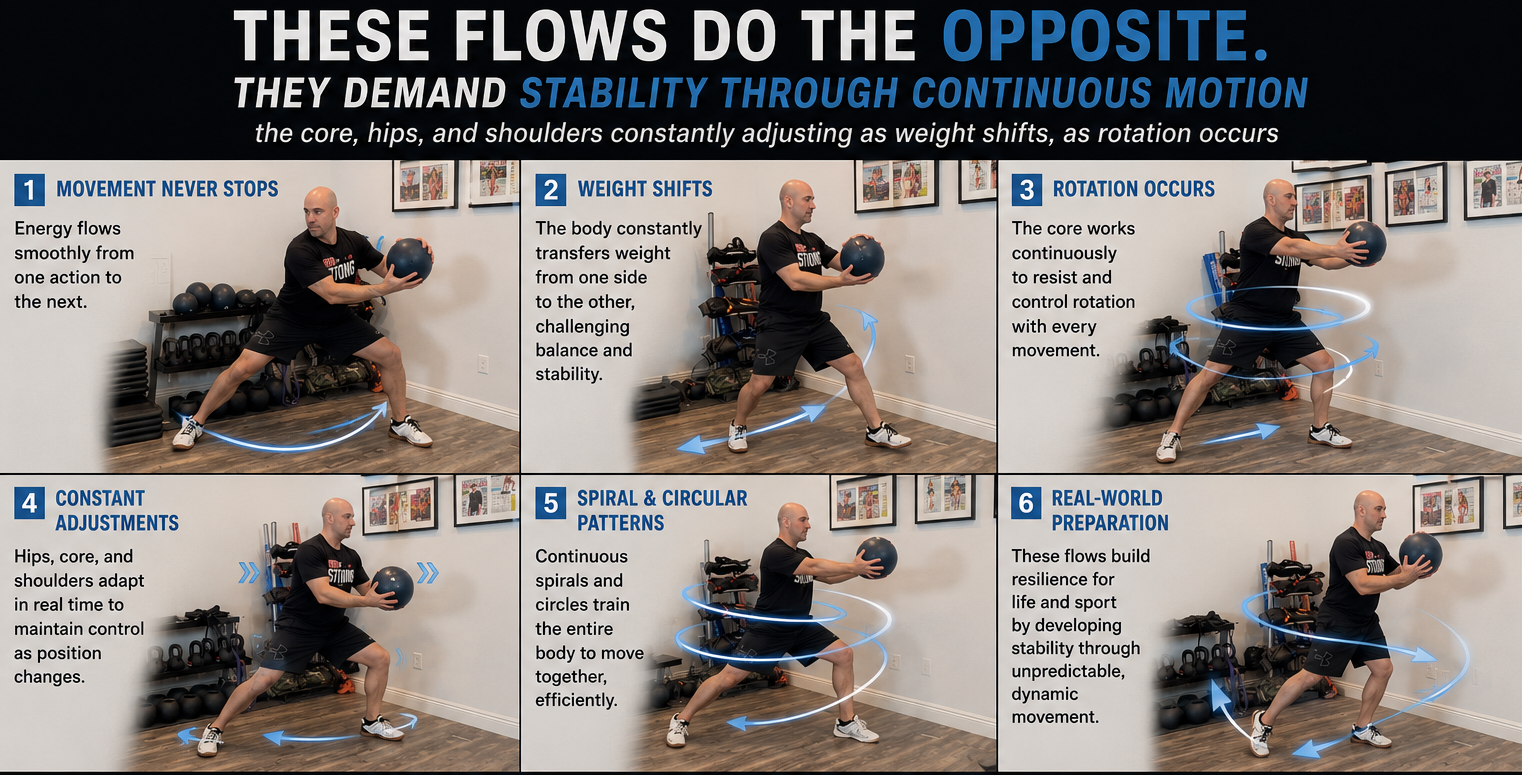
This is a fundamentally different skill than static stability, and it’s one most fitness programs never directly train. Real-world stability rarely happens while standing still. It happens while you’re moving, transitioning, and reacting exactly the demand these flows are built around.
The same is true for mobility. Instead of achieving range of motion through passive stretching, these flows build mobility actively the hips, spine, and shoulders moving through genuine range while under continuous muscular control. That’s mobility your nervous system can actually use, because it was never separated from strength and control in the first place.
The Conditioning Element Hiding in Plain Sight
Here’s what surprises people most: these flows are genuinely conditioning work, even though they don’t look like traditional cardio.
Because the flows are continuous sinking, shifting, rotating, gathering, releasing, without long pauses between repetitions they demand sustained muscular effort and controlled breathing over time. This builds a different kind of conditioning than sprint intervals or steady-state cardio: one rooted in sustained postural control, continuous core engagement, and breath regulation under prolonged physical demand. Many people are surprised at how quickly their heart rate rises and how much their legs and core fatigue during these flows, despite no heavy equipment and no explosive, high-impact movement.
This is conditioning built through movement quality and sustained control, not through speed or impact which makes it especially valuable for populations who need real cardiovascular and muscular endurance benefits without the joint stress that comes with more aggressive conditioning methods.
Core Control That Goes Beyond Bracing
Perhaps the most unique quality these flows build is core control that isn’t just static bracing. Because the trunk is constantly guiding rotation, resisting unwanted twist, and coordinating with a continuously shifting base, the core learns to organize itself reflexively and continuously not just at a single, braced moment, but throughout an entire sustained sequence of movement.
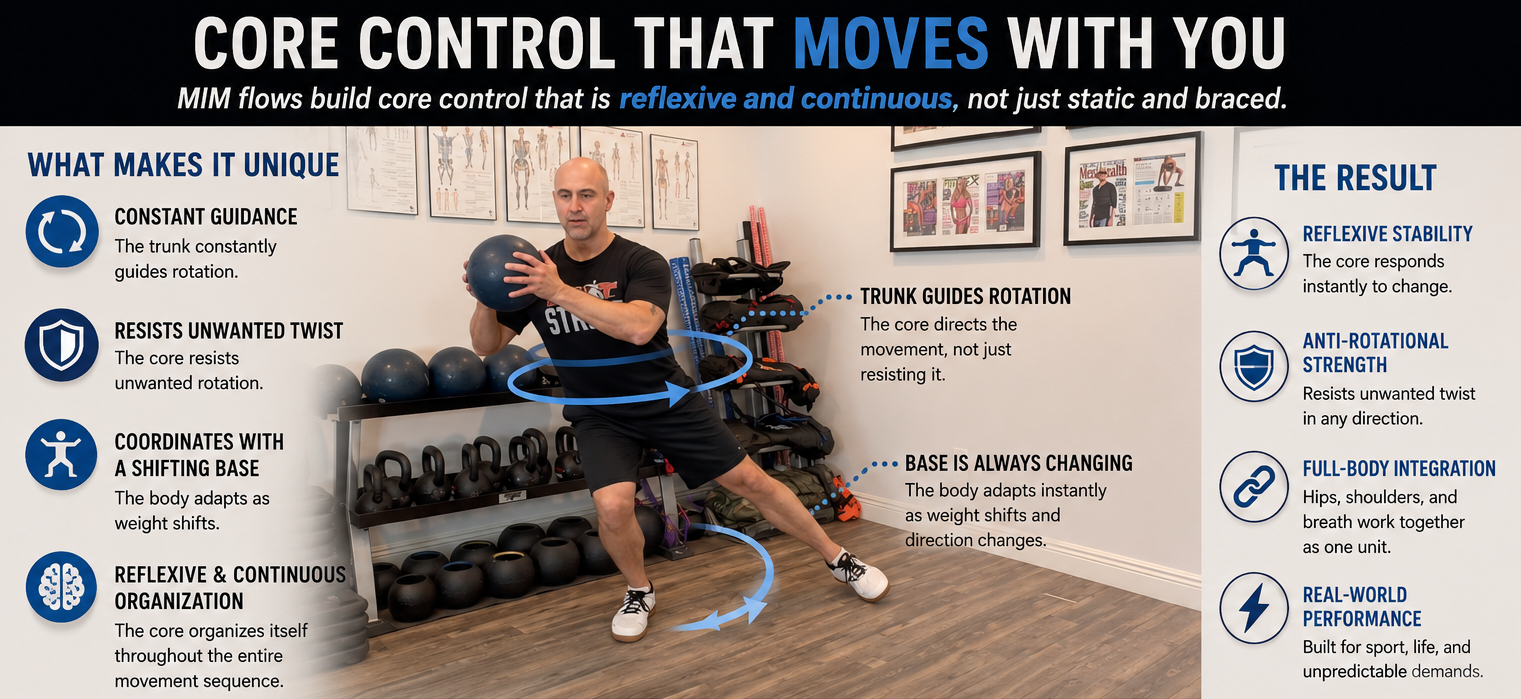
This is the kind of core control that transfers directly into real life and real athletic demand: maintaining control while moving, not just while holding still.
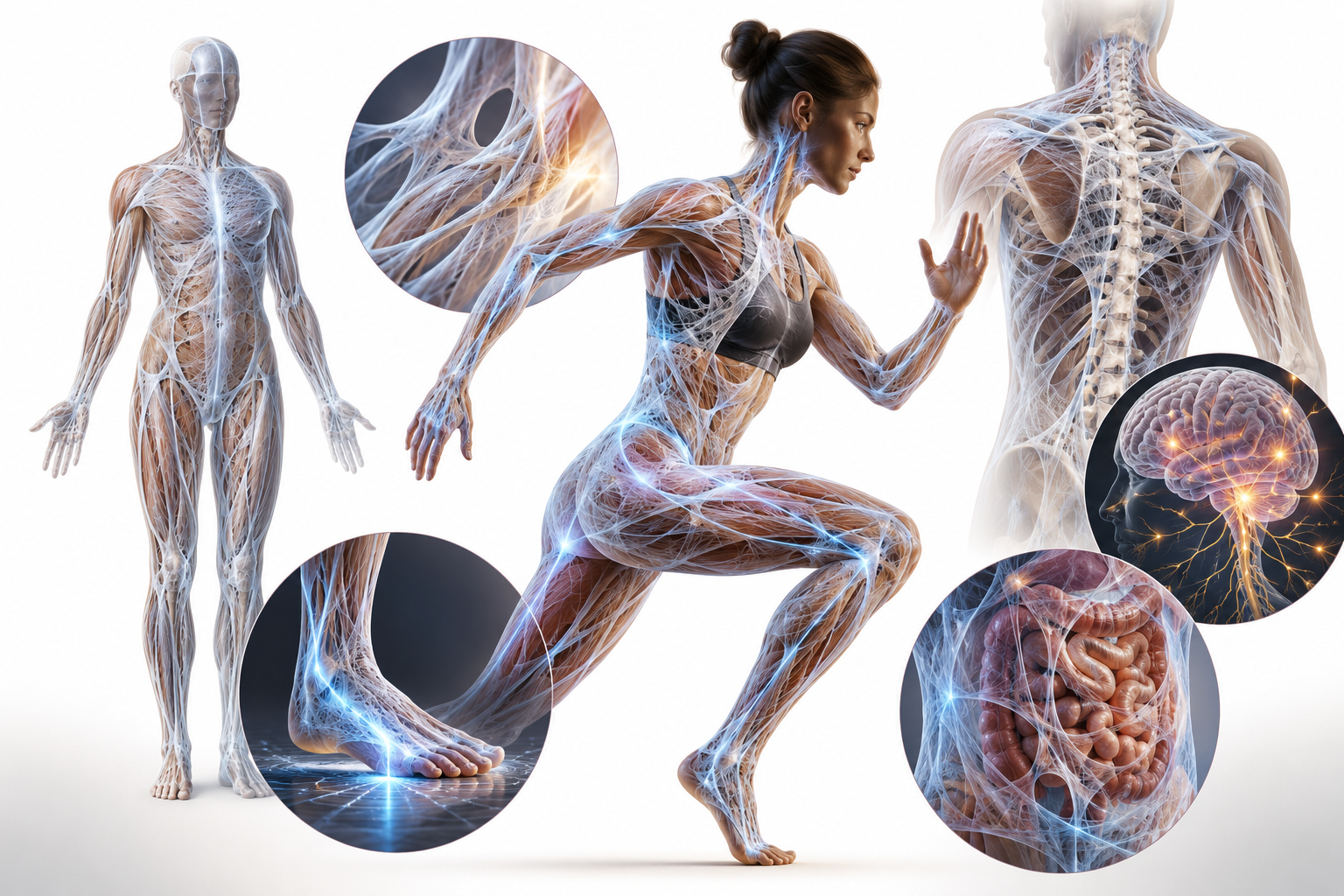
These flows aren’t a niche or specialty addition to a program. They fill a genuine gap in how most fitness training is structured building strength, stability, mobility, conditioning, and core control together, continuously, rather than as separate boxes to check.
For fitness enthusiasts, this means training that builds real, connected capability rather than isolated fitness metrics. For trainers, it means a scalable way to develop multiple qualities in a single, time-efficient sequence. For clinicians, it offers a rehabilitation-friendly way to build strength and control through continuous, low-impact, joint-friendly movement.
The result isn’t just a stronger body. It’s a body that moves as one connected, efficient, and resilient system trained the way it actually needs to perform in real life.
They are simple enough to begin by implement for a few repetitions as part of a dynamic warm-up, they can be used at the end of a workout to improve conditioning and improve efficiency. They have such great flexibility they can match whatever your goals and needs are for your training.
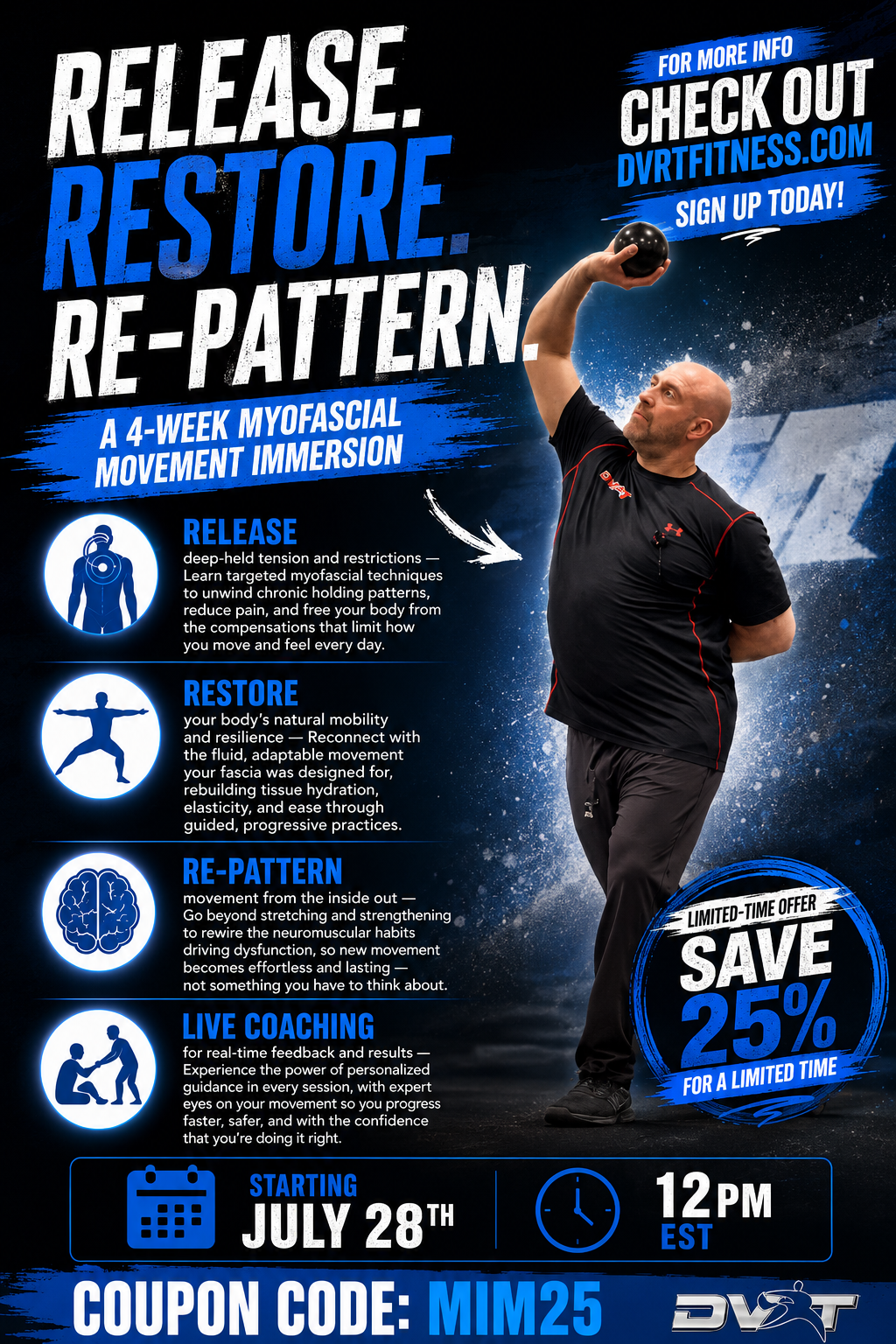
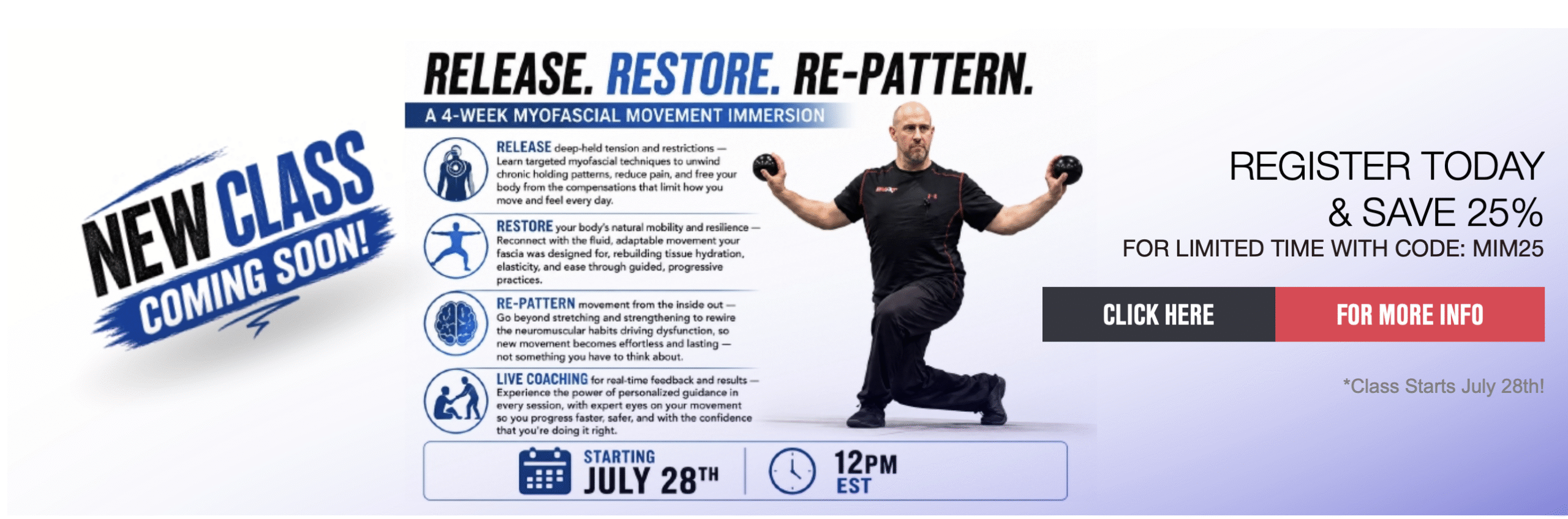
Don’t miss the final days to both save 25% and register for our online 4-week MIM Coaching Classes starting this coming Tuesday (yes, recordings will be available for all sessions). Use code “mim25” HERE