Why Recovery Is Mostly Hype!

Walk into a many training facilities today and recovery has become its own arms race. Compression boots, cryotherapy chambers, infrared saunas, percussion guns, cold plunges, electrical stimulation units. The message, implicit or explicit, is that real recovery requires expensive equipment, and more is always better.
A major 2026 systematic review and network meta-analysis just made that message a lot harder to defend.
What the Research Actually Found
Researchers pooled sixteen randomized controlled trials across 273 competitive and elite endurance athletes, comparing common recovery modalities, cold-water immersion, whole-body cryotherapy, compression garments, massage, electrical stimulation, active recovery, against simple passive rest. Across eight outcomes and 47 comparisons, the finding was blunt: no modality was shown to meaningfully outperform passive recovery. Not for muscle soreness, not for creatine kinase (a marker of muscle damage), not for next-day performance.

For compression garments specifically, the evidence was strong enough to say something rarer in this field: not just “no proof it works,” but reasonable confidence that it doesn’t move the needle on performance at all.
Maybe the most telling detail in the whole study: one trial included a sham condition, a plain thermoneutral water immersion with no real physiological rationale behind it. That sham ranked at or above every genuine active modality across flexibility, performance, and jump output. When a fake treatment performs as well as the real ones, that’s a strong signal that a lot of what people feel from these tools is expectation, not physiology.
Why This Matters Beyond Elite Sports
This isn’t to make anyone feel bad and maybe you did feel better (probably more of a placebo effect). Rather, to point out that expensive, passive, equipment-heavy modalities are appealing because they feel like doing something. You show up, a machine does its job, you leave feeling like you’ve addressed recovery. But the evidence says the thing you bought probably isn’t outperforming simply resting.
Meanwhile, a genuinely well-supported recovery tool gets almost no attention: training your nervous system directly, through mind-body practice.
Why Mind-Body Practices Are Actually Effective
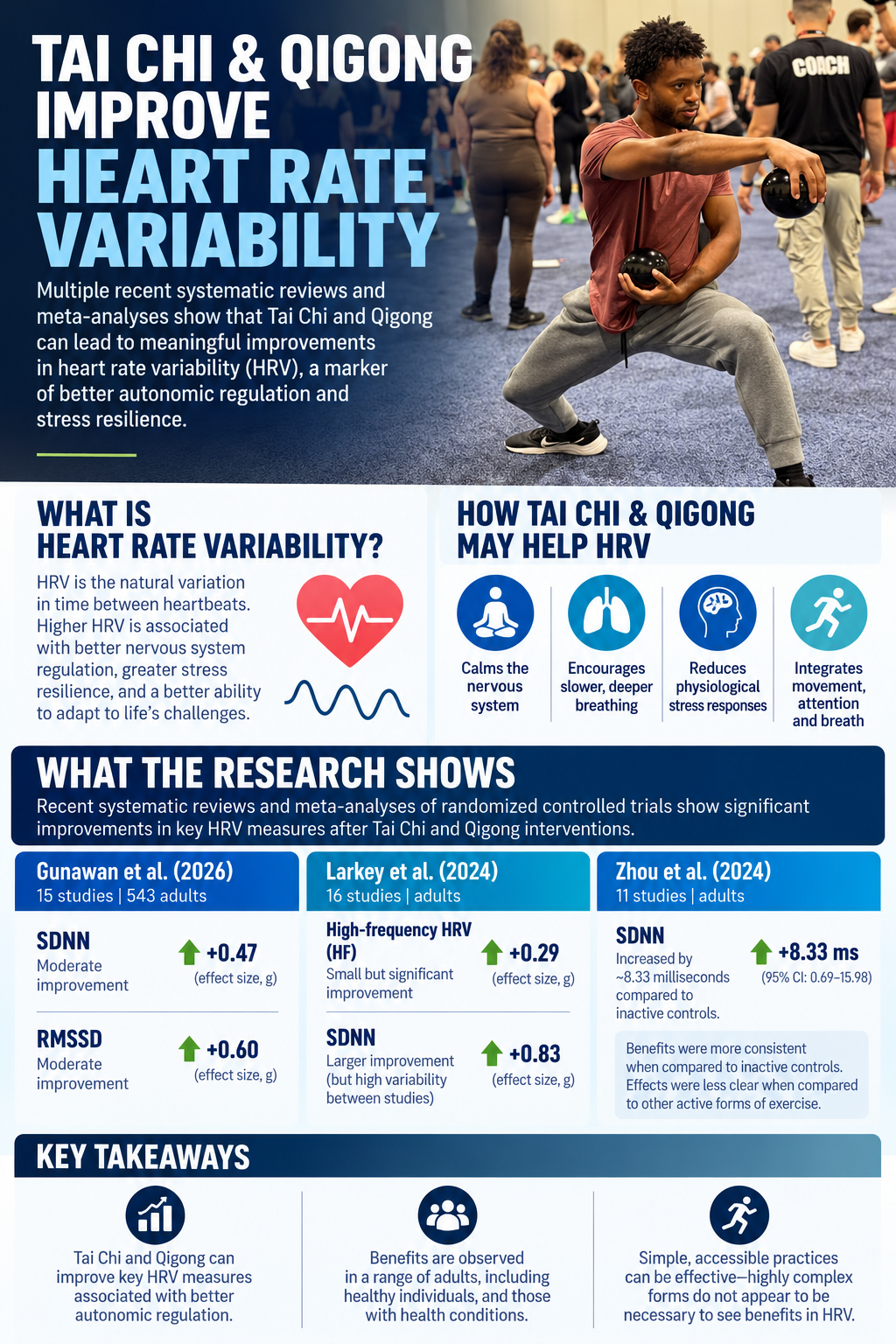
This is where the research tells a very different story. A systematic review and meta-analysis of 17 randomized controlled trials found mind-body practices produced significant, measurable improvements in heart rate variability, the gold-standard marker of how well your autonomic nervous system shifts out of high-alert “sympathetic” mode and into the parasympathetic recovery state, alongside significant reductions in perceived stress. A separate meta-analysis on Tai Chi and Qigong specifically found consistent shifts in HRV parameters toward greater resilience.
The applied research is even more direct. One study comparing yoga practitioners to aerobic- and strength-trained individuals found the yoga group showed significantly faster autonomic recovery after exercise than either group, essentially, their nervous systems came back down from exertion more efficiently. Another trial comparing 15 minutes of yoga to static stretching after high-intensity interval training found yoga produced measurably better post-exercise recovery of heart rate and heart rate variability. Older but still-cited research on Tai Chi found a single session could shift the sympathetic-to-parasympathetic balance substantially within 30 to 60 minutes.
It Goes Deeper Than the Nervous System
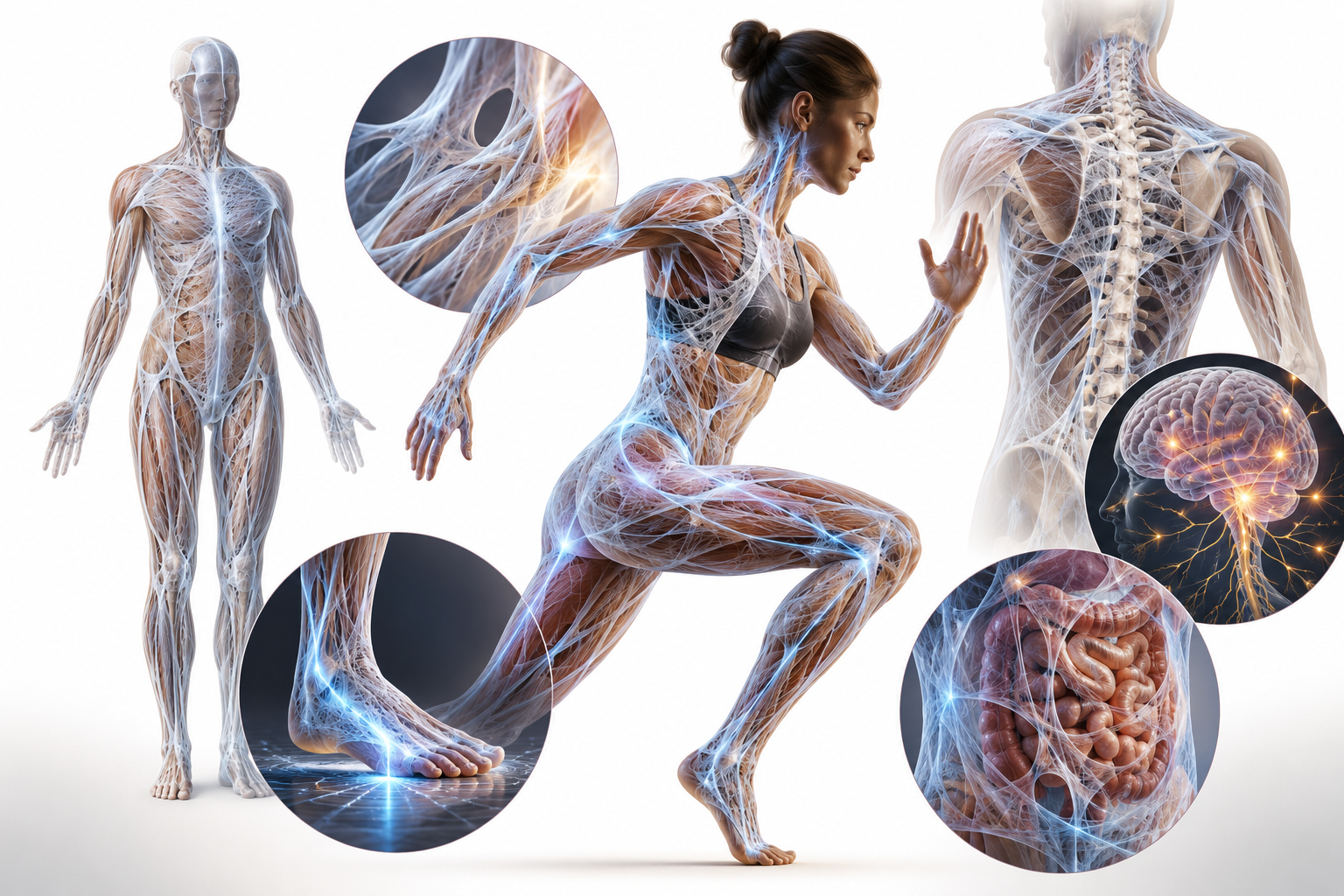
The recovery benefits don’t stop at autonomic regulation. Brain imaging research on mind-body practices has found measurable structural changes with consistent practice, including increased gray matter volume and density in the hippocampus and prefrontal cortex, regions tied to memory, emotional regulation, and executive function, along with slower age-related gray matter atrophy compared to non-practitioners. One study directly comparing Tai Chi to general aerobic exercise found Tai Chi produced distinct advantages in brain plasticity, with greater increases in gray matter volume and functional connectivity over eight weeks.
There’s a plausible inflammation link here too. Research has found mind-body practice is associated with down regulated sympathetic nervous system output over time, which in turn appears to reduce certain upstream inflammatory markers, including reversing some of the inflammatory changes associated with poor sleep in older adults. Other work has found reduced stress hormones, lower norepinephrine, epinephrine, and cortisol, following practice compared to a non-practicing control group. The evidence on inflammation specifically is still mixed and less consistent than the HRV and brain-structure findings, researchers are candid that not every study finds an effect, but the overall direction across multiple lines of research points the same way: calming the nervous system appears to calm the inflammatory response that rides along with it.
The Honest Comparison
Put these two bodies of research side by side and the contrast is striking. The high-tech, passive recovery tools that dominate “recovery culture” have, per the best current evidence, failed to demonstrate a real advantage over simply resting. Meanwhile, slow deliberate movement practices, breath-driven, nervous-system-targeting mind-body practices have repeatedly shown measurable, physiological improvements in the exact mechanism, autonomic recovery, that actually governs how ready your body is for the next session.
That doesn’t mean compression boots or cold plunges are worthless for every person, preference and perceived benefit matter too. But it does mean the industry’s recovery hierarchy may be backward. The low-tech, low-cost, unglamorous option is outperforming the equipment people pay thousands of dollars for.
Recovery and Performance, Not Recovery Instead of Performance
Here’s what makes this especially relevant for programming: mind-body practice isn’t a separate category you bolt onto training as a recovery day filler. The same qualities that drive its recovery benefits, slow controlled movement, breath regulation, body awareness, also build mobility, balance, and movement quality simultaneously. You’re not choosing between training hard and recovering well. A well-built mind-body session does both at once.
If recovery has started to feel like another complicated system to manage, with its own gear, subscriptions, and protocols, the research suggests a simpler answer was available the whole time. Train your nervous system directly. It’s free, it’s well-supported, and unlike a lot of what’s in the recovery aisle, it actually has the data behind it.
Learn how you can go from strength to mobility to recovery with our NEW Myofascial Integrated Movement online certification. Save 30% and get LOTS of CEUs with code “mim30” HERE
References:
Jin Y, Pan D, Li M, Zhu D, Wen J. Physical recovery modalities in competitive and elite endurance athletes: a systematic review and network meta-analysis finding limited evidence of benefit over passive recovery. Front Sports Act Living. 2026;8:1876924. doi:10.3389/fspor.2026.1876924. PMID: 42683395
Wu Y, Johnson BT, Acabchuk RL, et al. Effects of Mind-Body Exercises (Tai Chi/Yoga) on Heart Rate Variability Parameters and Perceived Stress: A Systematic Review with Meta-Analysis of Randomized Controlled Trials. J Clin Med. 2019;8(11):1771. doi:10.3390/jcm7110404. PMID: 30441883
Larkey L, James D, Vizcaino M, Kim SW. Effects of Tai Chi and Qigong on Heart Rate Variability: A Systematic Review and Meta-Analysis. Heart Mind. 2024;8(4). doi:10.4103/hm.HM-D-24-00045
Yoga vs. Static Stretching: Recovery Impact on Male Athletes’ Post-HIIT Heart Rate, Respiratory Rate, Blood Pressure, and Heart Rate Variability Analysis. PMC11798559.
Autonomic recovery following submaximal exercise in yoga practitioners versus aerobic and strength-trained individuals. Manipal Academy of Higher Education research publication.
Lu W, Kuo C. The effect of Tai Chi Chuan on the autonomic nervous modulation in older persons. Med Sci Sports Exerc. 2003;35(12):1972-1976.