Why Reflexive Core Stability IS The Goal

Most people think of “core training” as something you do deliberately tighten your abs, hold a plank, brace before a lift. That kind of conscious bracing has its place, but it’s not actually how your core is designed to function most of the time. The research points to something more important, and far more automatic: reflexive core stability, and its role in connecting your hips and shoulders into one efficient, powerful system.
What Reflexive Core Stability Actually Means
Core stability, as defined in research on athletic performance, is the ability to control the position and motion of the trunk over the pelvis, allowing for optimal production, transfer, and control of force between your upper and lower body. That word “control” is doing a lot of work in that definition it’s not describing a fixed, braced position, but an ongoing, dynamic process.
This is where reflexive stability comes in. Foundational research on the deep core muscles, particularly the transverse abdominis, found something that reshaped how we understand back pain and core function. These studies didn’t find that people with low back pain simply had “weak” core muscles, as is commonly assumed. Instead, they found a timing problem: the transverse abdominis activated later than it should, relative to movement of the limbs, in people experiencing back pain. In other words, the issue wasn’t strength it was that the core wasn’t firing early enough, automatically, to stabilize the spine before the limbs moved.
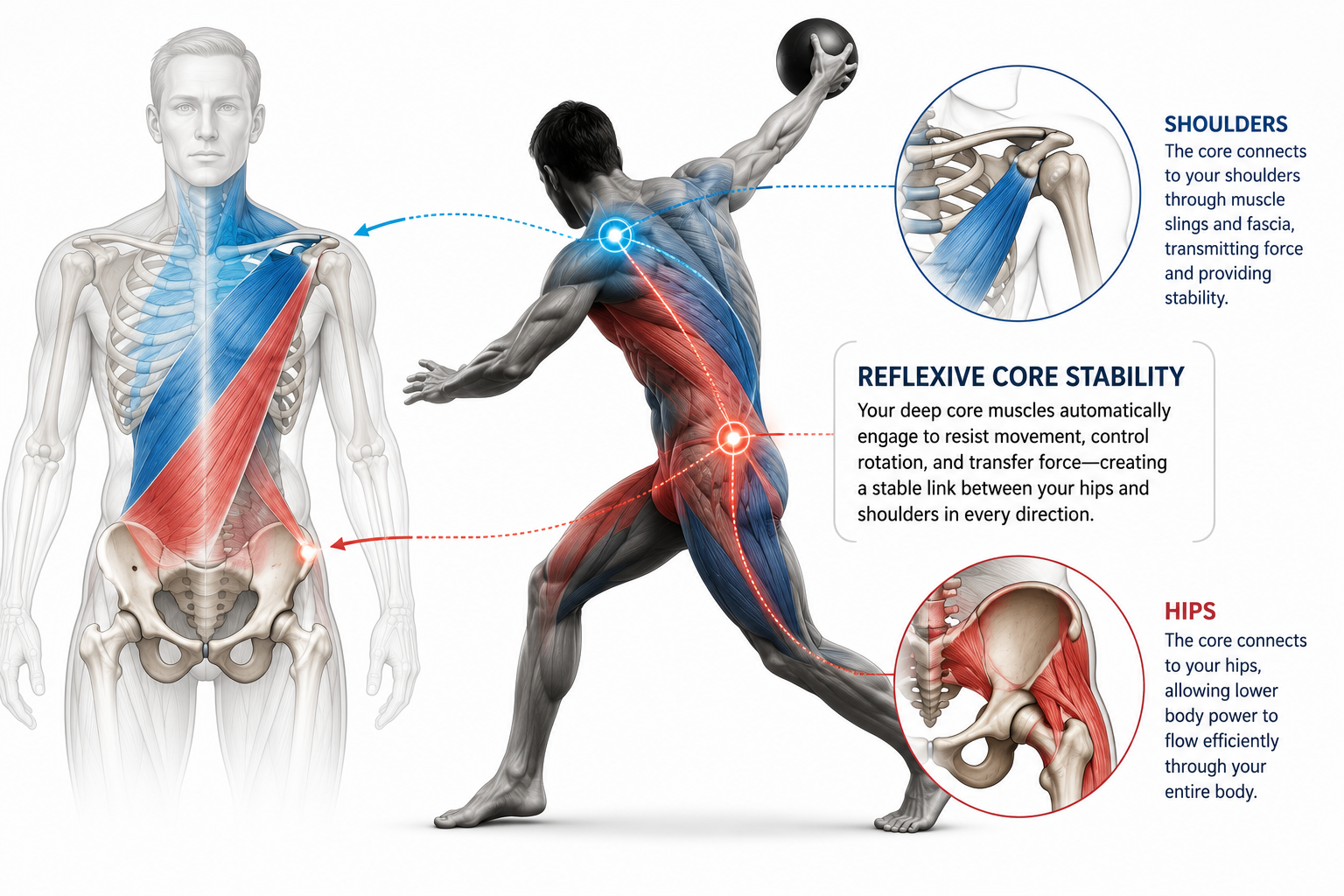
This distinction matters enormously. Reflexive core stability means your deep core muscles activate in anticipation of movement, before your arms or legs even begin to move, stabilizing your spine and pelvis so force can transfer efficiently and safely through your body. When that automatic timing breaks down, the spine loses its stable foundation right when it needs it most and that’s when compensation, inefficient movement, and pain tend to show up.
Larisa Lotz shows some great examples of what refelxive core stability can look like.
The Hip-Shoulder Connection Runs Through the Core
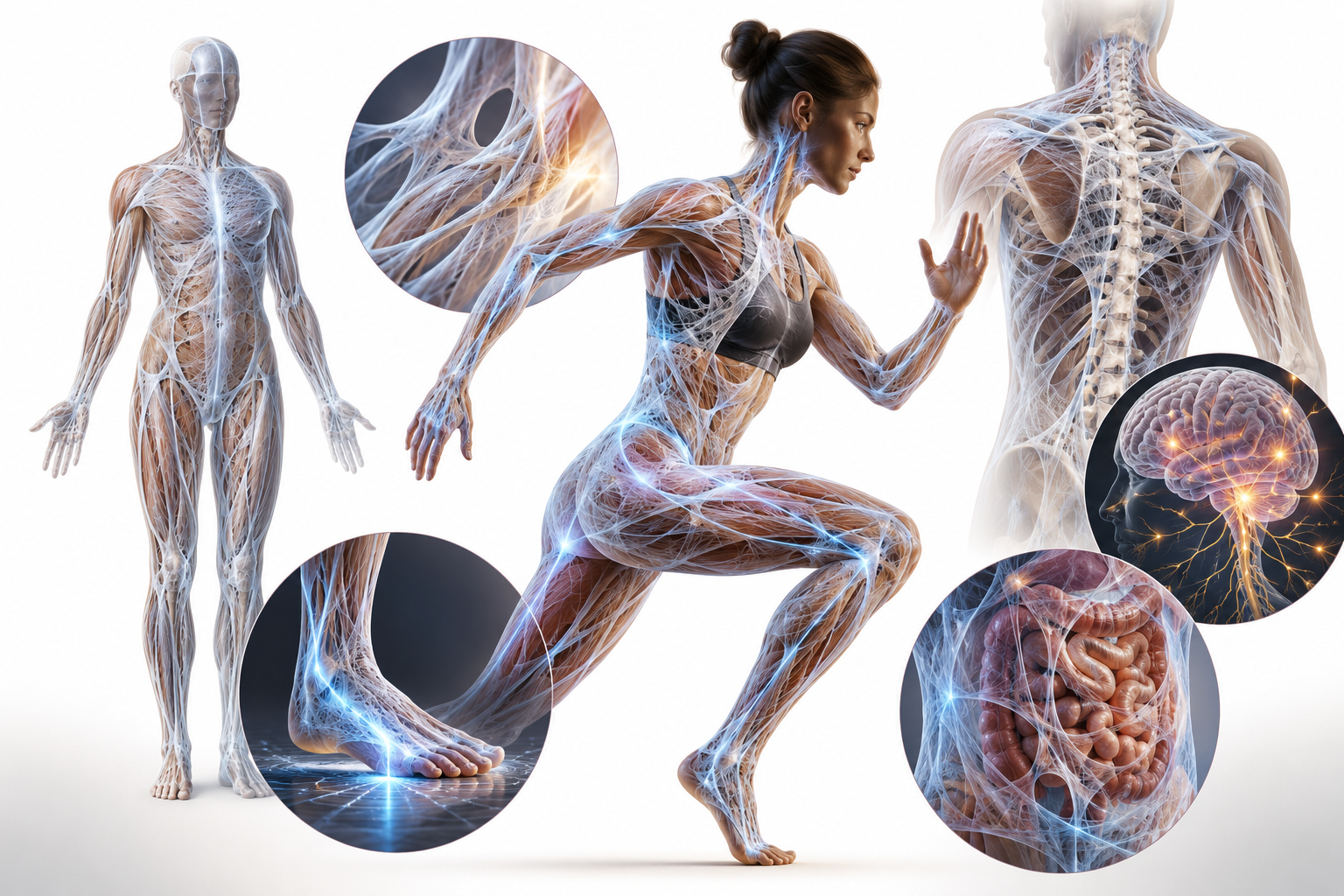
Here’s where this becomes directly relevant to functional strength, not just injury prevention. Your hips and shoulders are not independent systems that happen to share a torso they’re connected through myofascial sling systems that run diagonally through your core.
The posterior oblique sling connects one side’s latissimus dorsi to the opposite glute, running across the back through the thoracolumbar fascia. The anterior oblique sling connects your obliques to the opposite hip adductors, crossing the front of your pelvis. These aren’t anatomical trivia they’re the actual pathways your body uses to transfer force between your hips and shoulders during nearly every powerful, coordinated movement: throwing, sprinting, changing direction, lifting something quickly off the ground.
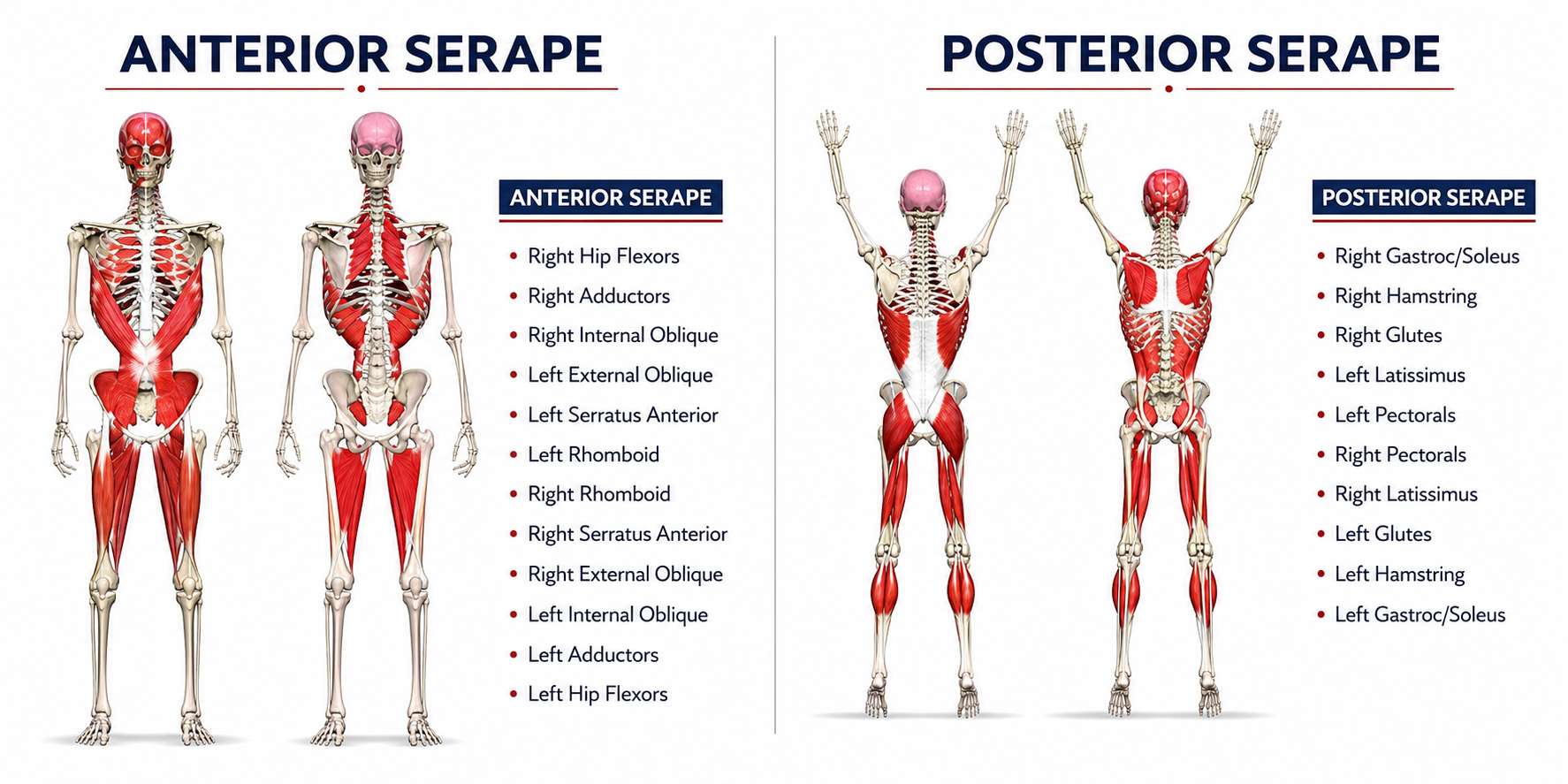
For these sling systems to function efficiently, your core has to provide the same kind of reflexive, anticipatory stability described above activating automatically to support the diagonal transfer of force between your hip and opposite shoulder, rather than requiring conscious effort every single time you move. When this reflexive stability is intact, force generated at the hip transfers efficiently up through the core into the shoulder, and vice versa. When it’s not, that force gets lost, or your body starts finding workarounds compensations that often show up eventually as pain somewhere along the chain.
Why This Matters for Strength
This reframes what “core strength” should actually mean for functional fitness. A core that can hold a heavy static brace isn’t necessarily a core that can stabilize reflexively during dynamic, real-world movement. Training that only builds static bracing strength without training the reflexive, anticipatory timing this research identifies leaves a genuine gap between how strong someone looks in isolated core exercises and how efficiently they can actually transfer force during real athletic or functional movement.
Training multi-planar, diagonal, and integrated movement patterns rather than isolated planks and crunches alone is what actually challenges and improves this reflexive timing, teaching your core to activate automatically and appropriately as your hips and shoulders coordinate through real movement.
Why This Matters for Chronic Pain
This same research base explains why addressing reflexive core stability can meaningfully reduce chronic pain and recurring aches, particularly in the low back, hips, and shoulders. If delayed core activation is a genuine contributor to back pain, then training that specifically rebuilds this automatic, anticipatory timing addresses a root mechanical cause, rather than simply managing symptoms after they appear.
The same logic extends to the shoulder. When the sling systems connecting the hip and shoulder aren’t supported by reflexive core stability, the shoulder frequently ends up compensating for instability that actually originates elsewhere in the chain a significant reason shoulder pain so often persists despite shoulder-focused treatment alone.
Reflexive core stability isn’t a peripheral detail of functional training it’s the mechanism connecting your hips and shoulders into one efficient system, the foundation underneath real functional strength, and a genuine, evidence-supported target for reducing chronic pain at its source rather than managing it indefinitely.
Find out more in our DVRT courses and save 20% HERE with code “save20” as well as our functional training tools.