
The Power of Diagonal PNF Patterns for Pain, Mobility, and Strength
2026-01-5

Movement in life is rarely linear. We walk, reach, twist, push, pull, and shift in spirals and diagonals every day. Yet, much of traditional training focuses on straight-line movement lifts, presses, squats, and lunges in the sagittal plane. While valuable, these patterns don’t reflect the full complexity of how the body actually functions. That’s where diagonal PNF patterns — originally developed in clinical rehabilitation become incredibly powerful tools not just for rehab, but for anyone who wants better mobility, less pain, and increased strength.
What Are PNF Diagonal Patterns?
Proprioceptive Neuromuscular Facilitation (PNF) is a movement concept that uses diagonal and spiral movement patterns to enhance neuromuscular control and function. These patterns are designed to mimic the way muscles and joints work together in coordinated sequences rather than isolated actions. Rather than moving exclusively forward-backward or side-to-side, diagonal patterns involve compound movements that cross planes: reaching up and across, stepping diagonally with rotation, or lifting in spiral arcs.
These diagonals aren’t random. They reflect the natural way the nervous system organizes movement, integrating multiple muscle groups across joints, which creates more efficient, functional ability.
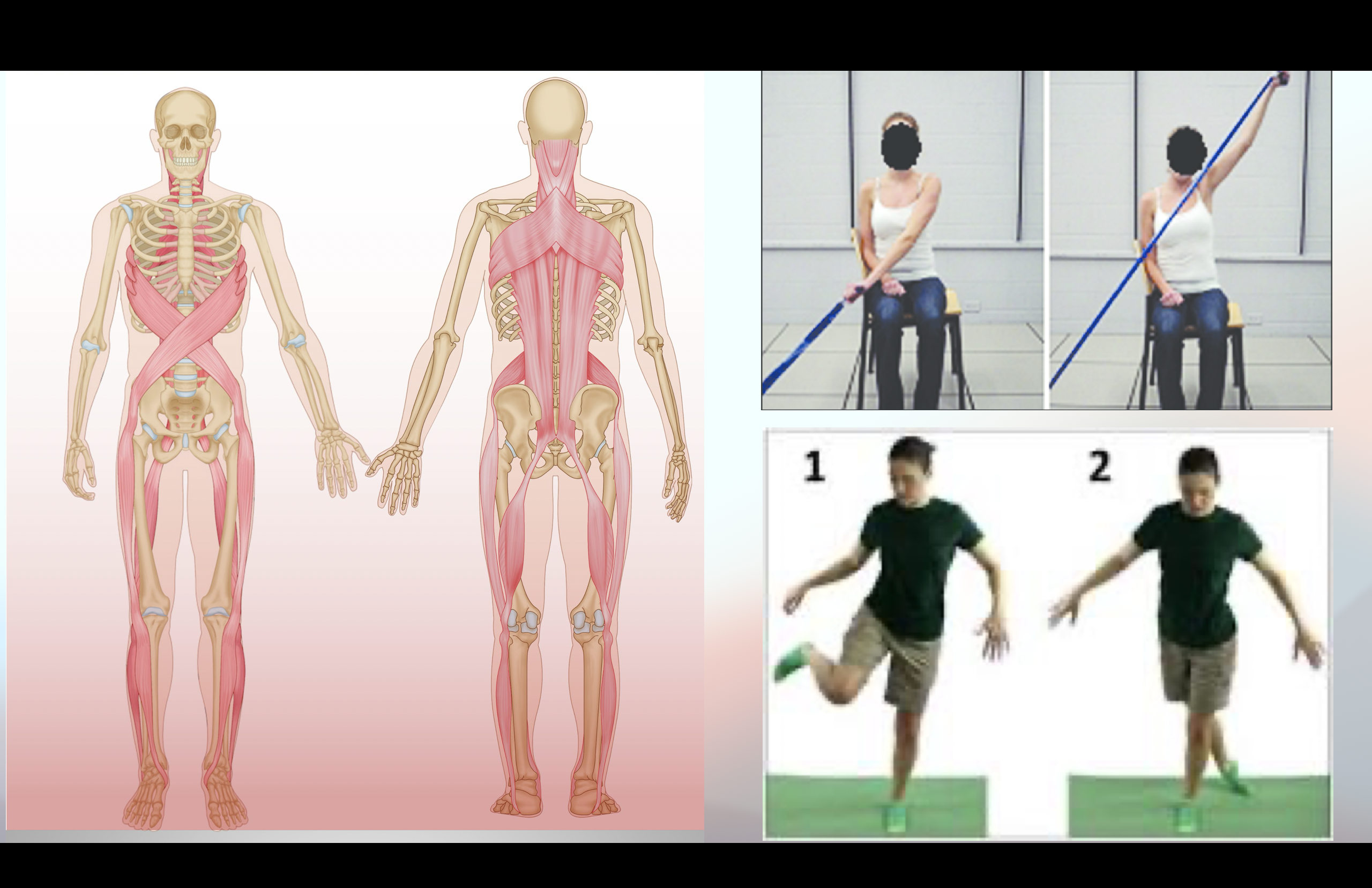
Why Diagonal Patterns Work From a Neurological Perspective
One of the core reasons diagonal PNF patterns are effective is how they engage the nervous system. Traditional isolated exercises often reinforce static, compartmentalized patterns. Diagonal and spiral movements, by contrast:
-
Enhance proprioceptive feedback — the nervous system’s awareness of joint position and movement
-
Improve motor control sequencing — training the brain and body to fire muscles in coordinated order
-
Stimulate reciprocal inhibition — where activation of one muscle group naturally relaxes its antagonist, improving mobility and reducing unnecessary tension
This neurological foundation is why PNF patterns have clinical applications for conditions like stroke rehabilitation, Parkinson’s disease, and chronic pain, yet they also translate beautifully to fitness and athletic training.
Diagonal Patterns and Pain Reduction
Many people with chronic pain experience movement limitations not because of a single weak muscle, but because of dysfunctional movement patterns. Pain science research increasingly shows that pain is not only about tissue damage it’s also about how the nervous system interprets movement and threat signals.
By retraining the body to move in integrated, coordinated patterns, diagonal PNF exercises can help the nervous system re-interpret movement as safe and organized rather than threatening or unstable.
For example, a diagonal reaching pattern that involves the leg, core, and arm together teaches the body how to share the load across multiple joints. As these patterns become more fluent, muscles fire with better timing, which can reduce stress accumulation in sensitive areas, such as the low back or shoulder.
Many clinicians also see decreases in pain sensitivity when patients learn how to move along paths that mirror natural, daily demands not just up and down in a single plane. Coach Cory Cripe shows a great series of progressions of our Myfoscial Integrated Movement drills that bring PNF patterning to upper and lower body training.
View this post on Instagram
Improving Mobility More Than Stretching
Someone might think mobility is just about flexibility — stretching tight tissues until they “loosen up.” But true mobility is control through range of motion.
Diagonal PNF patterns improve mobility not by pulling on tissues, but by training the nervous system to allow and control movement across multiple planes. This is crucial because mobility is not just about lengthening muscles it’s about co-activation, joint centration, and motor efficiency.
In fact, research comparing PNF techniques to traditional strength exercises found that PNF often leads to greater flexibility and functional range. For select joints, PNF stretching combined with diagonal movement patterns can offer greater long-term mobility improvements than isolated stretching alone.
This makes sense when we consider that diagonal patterns recruit entire chains of muscles. For instance, the posterior serape pattern which connects the right glute to the left latissimus dorsi and their fascial connections shows how force can travel across the body in spirals, not just lines. Strengthening these spirals improves your ability to rotate, reach, and load the hips and spine in functional tasks without stiffness or compensation.
View this post on Instagram
Building Functional Strength Through Integration
Strength isn’t just about how much weight you can lift in a straight line. Functional strength the kind that helps you push a stroller, lift a box, or explode out of a sprint requires coordinated force transfer across multiple joints. That means the muscles of the legs, core, and shoulders need to work together as an integrated system.
Diagonal PNF patterns are uniquely positioned to build that kind of strength because they engage multiple muscle groups in fluid sequences that mirror life’s demands.
A 2025 study involving functional training highlighted that exercises emphasizing movement patterns (multi-directionally and integrated) produced better improvements in performance than isolated strength movements alone (PMID: 40951391). This points to the idea that training the body the way it actually moves in spirals, diagonals, and coordinated sequences leads to more meaningful strength gains.
Even more, because diagonal patterns demand coordination and stability, they often improve core engagement in functional contexts. A strong core isn’t just about big abs it’s about the ability to transfer and modulate forces from the ground through the hips and into the upper body, whether you’re swinging a kettlebell, walking uphill, or climbing stairs.
Why Train Smarter
Diagonal PNF patterns aren’t some obscure clinical tool hidden from mainstream fitness. They are a high-value strategy that bridges rehabilitation principles and performance training. PNF training has been around for over 80 years, yet fitness keeps ignoring their benefits because we get incorrectly focused on individual muscles, “the burn”, and just sweating.
Diagonal PNF patterns provide more than just another exercise, they offer a strategy for training the entire body as the integrated, adaptive system. Whether you coach athletes, work with clients recovering from injury, or want to move better in life, embracing the power of diagonal patterns can be so impactful to your training.
Want to learn more how to help people reach their best both mentally and physically? Don’t miss our upcoming Myofascial Integrated Movement Building Longevity, Resilience, & Strength webinar for FREE HERE January 8th at 2pm EST.
View this post on Instagram
Featured in





© 2026 Ultimate Sandbag Training. Site by Jennifer Web Design.