
How To Improve Movement and Reduce Chronic Pain
2026-01-15

I know better than most…chronic pain is more than just an ache, it’s a complex interaction of the nervous system, musculoskeletal structures, and how we move daily. Traditional approaches often focus on isolating painful joints or muscles, but research increasingly shows that addressing the body as an integrated system is far more effective.
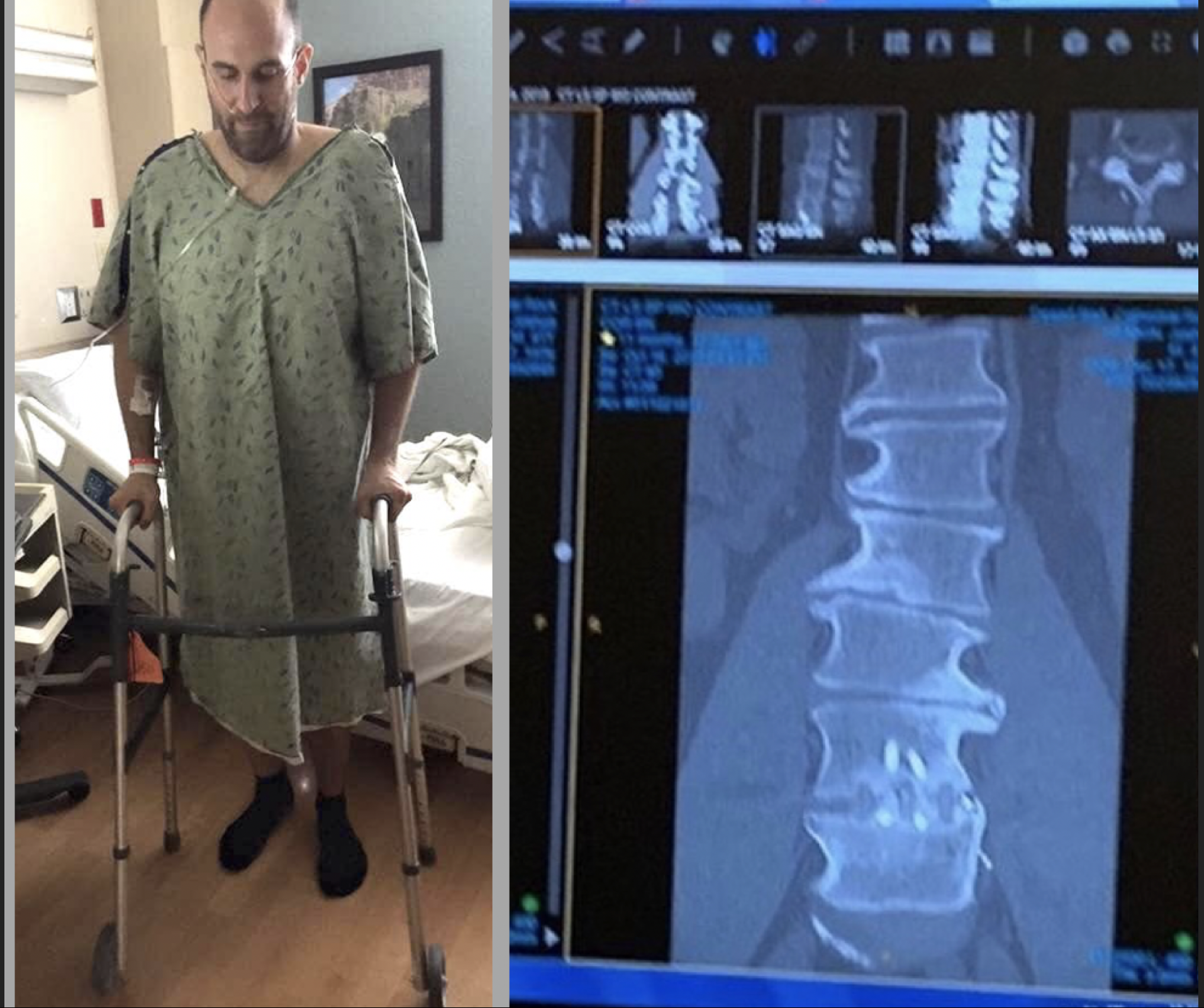
When you have chronic pain you have ONE goal, to get out of it! You are willing to do literally anything and everything. Plus, everyone you know (even those that you don’t really know) will give you advice on what you SHOULD be doing.
The internet is full of supposed solutions, but the list of things that one can do to help their chronic pain and help their movement seems almost endless. Few things become more frustrating than trying to employ all these ideas and strategies and see little return in all your effort.

What we do know about chronic pain is that it has A LOT to do with changes in the brain and that means our attitudes towards what we do and how we do it. For example, if we put a lot of pressure on the practices we are using, the need to get results fast, and having to be “perfect” in doing them, these are all things that lead the brain to creating more pain and staying stuck!
That is why I often recommend fellow chronic pain people to start by doing less. Focus on things that accomplish many of the things that can help at once, but also with a proper perspective in how you perform them. Like what?
Meditative movement practices have been consistently shown to reduce chronic pain and improve function. Such movement practices have demonstrated the ability to reduce pain severity in conditions such as osteoarthritis and fibromyalgia, while also improving physical function and psychological well-being.

Our Myofascial Integrated Movement drills are a great example of using such concepts. MIM incorporates mindful, slow, and deliberate movement, which helps regulate the nervous system, reduce pain sensitization, and retrain movement patterns. The meditative aspect isn’t just “relaxing”, it improves fitness and body awareness, allowing people to notice how tension, posture, and coordination contribute to discomfort.
Myofascial Stretching and Elastic Force Transmission
Fascia the connective tissue surrounding muscles, bones, and organs plays a key role in how force is transmitted throughout the body. Restricted fascia can limit mobility, contribute to joint stress, and exacerbate chronic pain.
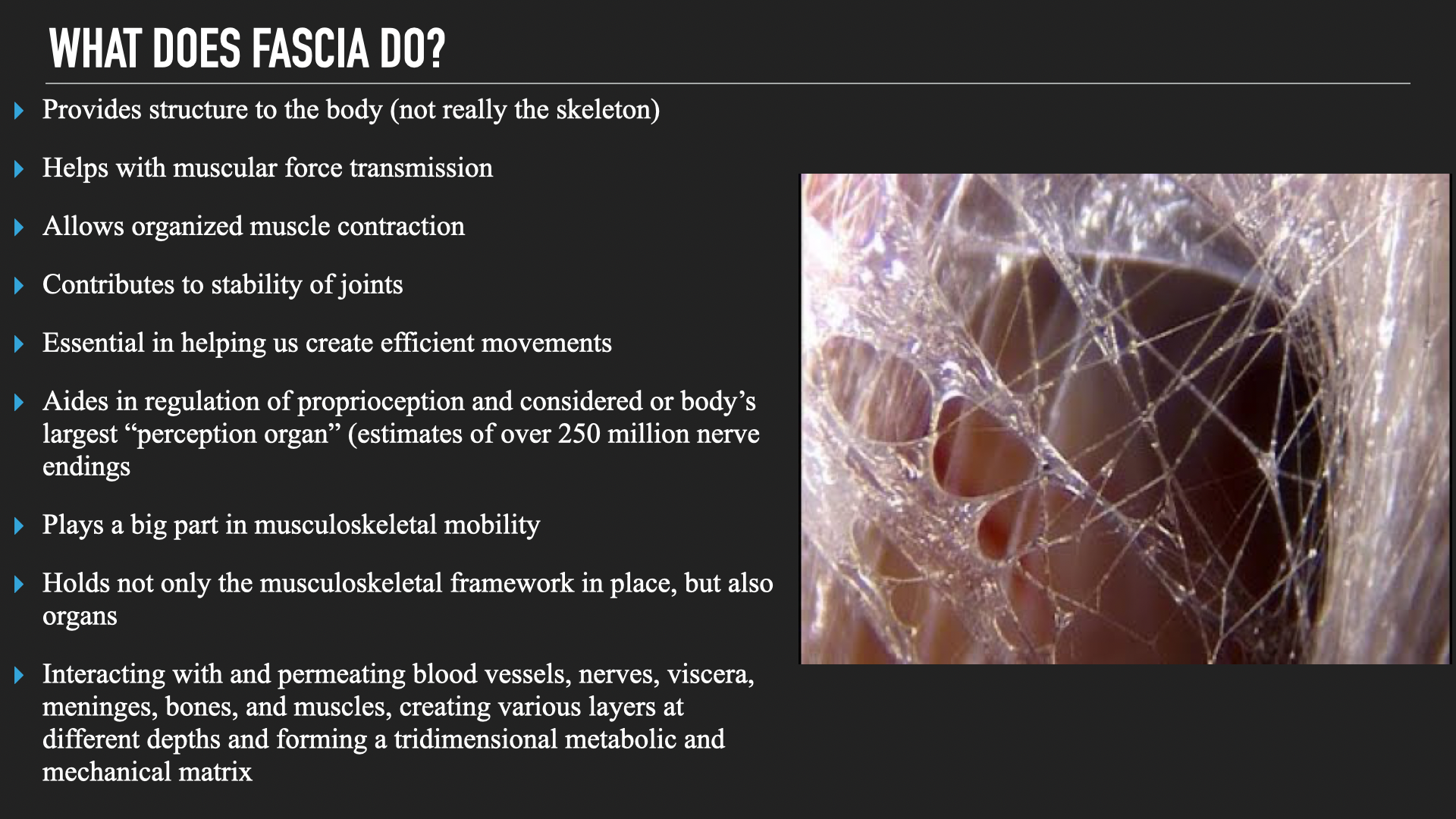
MIM emphasizes myofascial stretching and movement patterns, which lengthen fascial chains and restore natural tension lines. By training fascia in multiple planes and along diagonal or spiral lines, MIM enhances how force flows through the body, improving both stability and mobility.

Core Stability as a Foundation for Pain-Free Movement
Pain often emerges when the body attempts to move without a stable foundation. Core stability is central to controlling force transfer from the lower to the upper body and maintaining proper posture during movement. Research demonstrates that exercises targeting core muscles, not just the superficial abs, but deep stabilizers like the transverse abdominis and multifidus enhance spinal stability, improve functional movement, and reduce knee, shoulder, and low back pain (PMID: 22319676, 35949382, 31453530).
In MIM, core engagement is integrated into every movement, from whole body integrated movements to diagonal patterns. This trains the body to stabilize dynamically, which improves overall coordination and reduces stress on painful joints.
Breath Work and Nervous System Regulation
Breathing is a direct line to the nervous system. Slow, diaphragmatic breathing stimulates the parasympathetic nervous system, reducing sympathetic overactivity that often accompanies chronic pain. Research shows that controlled breathing can lower perceived pain intensity and reduce stress-related muscle tension (PMID: 31978501).
In MIM, breath work is integrated with movement, helping the body move more efficiently while calming the nervous system. Coordinating breath with motion reduces unnecessary muscle guarding and allows joints and fascia to glide smoothly.
Chronic pain isn’t just about weak muscles or stiff joints, it’s about how the body moves as a whole, how the nervous system responds, and how tension patterns develop over time. Myofascial Integrated Movement addresses these factors simultaneously, helping people move more freely, feel stronger, and experience less pain. By training fascia, core, and movement in concert with breath and mindfulness, MIM offers a holistic, science-backed approach to achieving lasting mobility and pain relief.
Don’t miss the last 72 hours to get our NEW MIM Intensive Course and a FREE follow along program for over $50 of savings HERE
Featured in





© 2026 Ultimate Sandbag Training. Site by Jennifer Web Design.