
Balance, Stability, and Better Movement
2026-01-28

Jessica Bento, Physical Therapist
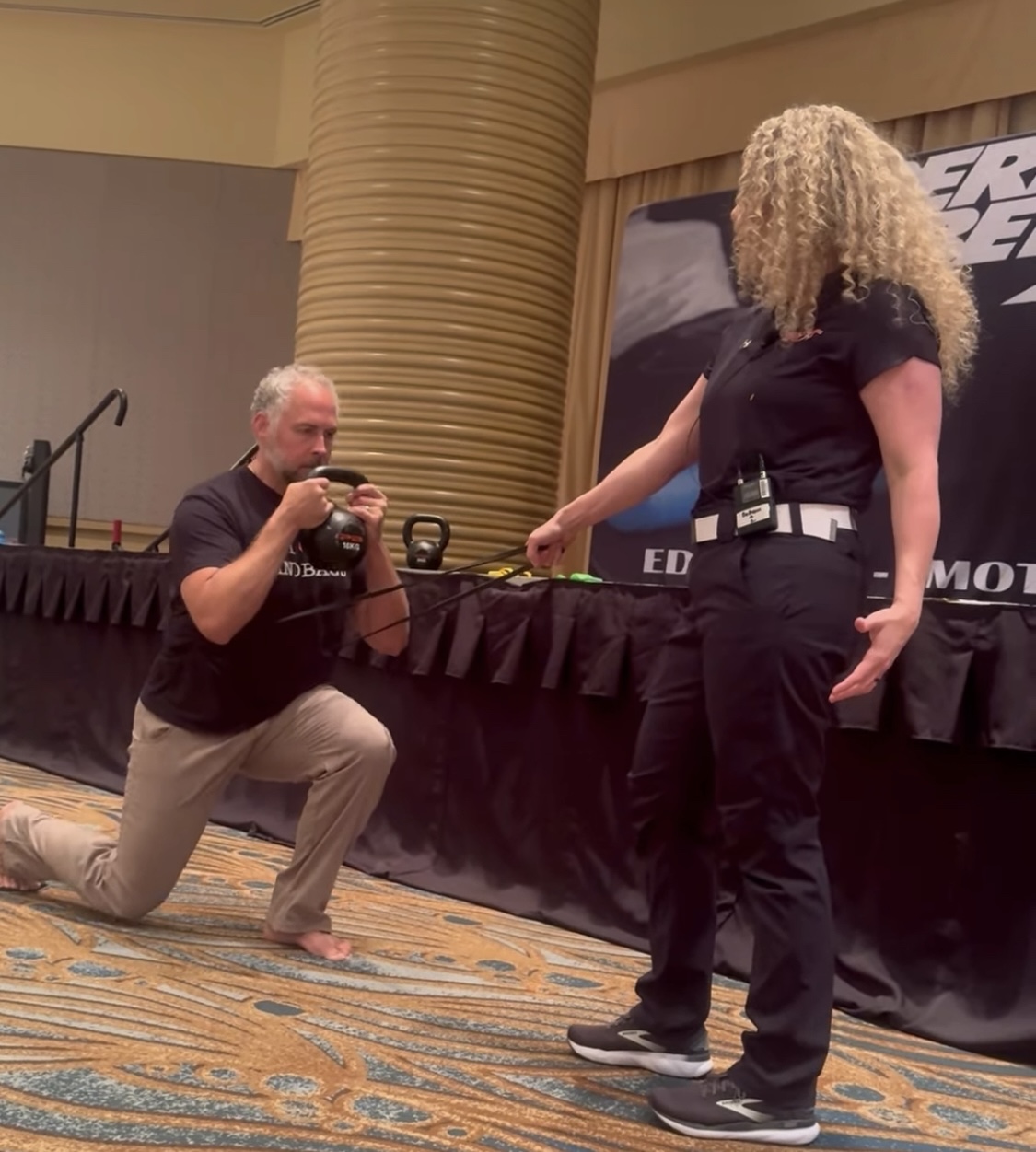
Balance and stability are often overlooked in traditional fitness programs, yet they are foundational for nearly every movement we perform, whether it’s lifting a weight, climbing stairs, or simply getting out of a chair. Research shows that gait stability and dynamic balance begin to decline as early as age 40–50 (PMID: 25455699), often before individuals notice any functional changes. This decline can increase the risk of slips, trips, and falls, and it also limits the ability to safely and effectively perform exercises that build strength, mobility, and endurance.
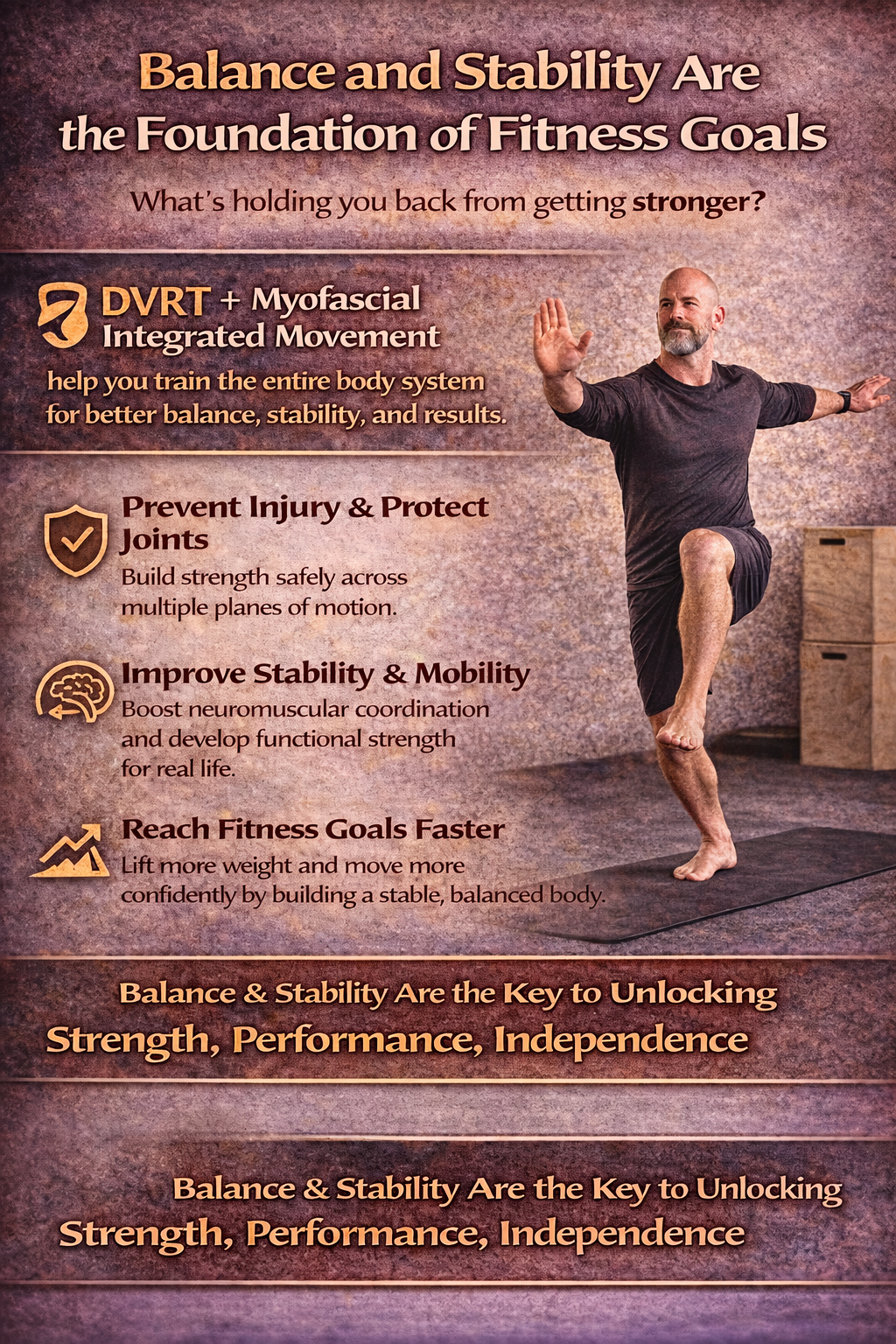
Rather than focusing solely on isolated muscle strength or traditional static exercises, the approaches I am going to share take an integrated, system-wide approach to movement. By combining functional load, multi-planar patterns, and proprioceptive feedback, DVRT and MIM improve the body’s ability to control movement through multiple joints and planes simultaneously, which is the very essence of balance and stability.
The Science Behind Balance Training
Balance isn’t just about standing on one leg or walking heel-to-toe. True dynamic balance is a complex interaction between the nervous system, musculoskeletal system, and sensory input from vision, the vestibular system, and proprioception. Exercise programs that target these components have been shown to significantly improve dynamic balance, as measured by clinical performance tests such as the Timed Up and Go and Berg Balance Scale (PMID: 32796528). Improved balance translates to greater confidence and mobility in everyday activities, from navigating stairs to performing athletic movements safely.
View this post on Instagram
Furthermore, balance training enhances neuromuscular coordination. The body learns to integrate sensory input with muscular responses, which allows for smoother, more efficient movement and rapid adaptation to unexpected perturbations. This is critical not only for fall prevention but also for achieving higher-level fitness goals. Without proper stability and neuromuscular control, adding strength, mobility, or endurance training can increase the risk of injury and limit progress.
Building Stability and Balance
DVRT introduces load into functional, multi-planar movements, creating what many researchers refer to as “dynamic stability.” For example, exercises DVRT lunges, or diagonal lifts require the body to stabilize through the trunk while producing force through the limbs. This teaches the nervous system to coordinate movement across multiple joints, engaging stabilizers that are often neglected in traditional workouts.
View this post on Instagram
Unlike isolated core exercises or static balance drills, DVRT integrates strength, mobility, and stability into a single movement. When the body learns to resist rotation, translation, or unexpected shifts in load, it develops true balance that transfers directly to athletic performance and everyday tasks. This system also emphasizes multi-directional patterns that reflect how humans naturally move in life, rather than limiting the body to sagittal plane exercises that rarely occur outside the gym.
The Role of Myofascial Integrated Movement
MIM complements DVRT by focusing on the connective tissue system, or fascia, which links muscles, joints, and organs into a continuous network capable of transmitting force and sensory information. Research shows fascia contains mechanoreceptors that influence neuromuscular control, proprioception, and even movement confidence (Schleip et al., 2012). By training the body in coordinated, spiral, and diagonal patterns, MIM helps the fascia and muscles work together efficiently. The result is improved trunk stability, better scapular mechanics, and enhanced limb coordination—all critical elements for balance and injury prevention.
View this post on Instagram
Breath also plays a key role in MIM. Proper diaphragmatic breathing creates intra-abdominal pressure, which stabilizes the spine while allowing the limbs to move freely. This combination of core engagement, fascial integrity, and controlled breathing optimizes balance and creates a stable foundation for more challenging strength and mobility work.
Why Balance and Stability Matter for Fitness Goals
Many people underestimate how balance and stability influence overall fitness results. Without a stable base, strength gains are often limited because force cannot be transmitted efficiently from the core to the extremities. Poor stability also compromises technique, increasing stress on joints and soft tissues and raising the risk of overuse injuries. By improving balance and neuromuscular coordination, DVRT and MIM allow clients to lift heavier, move more confidently, and perform complex movements safely.
In addition, enhanced balance contributes to functional strength, the kind of strength that translates directly into daily life. For older adults or those returning from injury, this means greater independence and reduced risk of falls. For athletes or fitness enthusiasts, it means improved performance, agility, and precision. In both cases, balance and stability act as the foundation upon which all other fitness goals are built.
Putting It All Together
The beauty of DVRT and Myofascial Integrated Movement is that they train the body as a system rather than a collection of isolated muscles. Dynamic load, multi-planar patterns, and fascial integration collectively improve trunk stability, neuromuscular coordination, and balance. These gains aren’t just theoretical, they translate into safer, more effective movement in everyday life and training.
Whether the goal is strength, mobility, athletic performance, or simply staying independent as we age, balance and stability are essential. DVRT and MIM provide evidence-based tools to develop these qualities efficiently, effectively, and safely. By focusing on system-wide integration rather than isolated exercises, clients gain not only better balance but also improved movement confidence, resilience, and the ability to achieve their fitness goals without compromise.
Don’t miss the chance to save on ALL our MIM programs including our NEW MIM Intensive Coaching & Strength Programs along with our MIM Shoulder Program HERE with code “mim30”
View this post on Instagram
References
-
PMID: 25455699 – Balance and gait stability decline with age.
-
PMID: 32796528 – Balance training improves dynamic balance and confidence in functional tasks.
-
Schleip, R., Findley, T. W., Chaitow, L., & Huijing, P. (2012). Fascia: The Tensional Network of the Human Body. Elsevier.
Featured in





© 2026 Ultimate Sandbag Training. Site by Jennifer Web Design.