
The Best Exercise For When Lunges Hurt The Knees
2026-01-30

Many clients enter the gym with the same fear: “Lunges will hurt my knees.” Whether it’s from past injury, niggling pain, or the persistent myth that lunges are inherently bad for the knees, this fear often holds people back from transformative lower-body strength work. The solution isn’t avoidance it’s restructuring movement through smart, pain-informed training.

One of the most powerful bridges between fear and functional strength is Myofascial Integrated Movement particularly exercises rooted in the bow stance. These patterns reconnect the nervous system with safe, confident movement while building strength, mobility and stability, especially around the knee joint.
Understanding the Fear-Pain Cycle
Before we talk technique, we must talk psychology.
Clients who fear pain often enter a fear-pain cycle:
-
Anticipation of pain → 2. Tightening and guarding muscles → 3. Altered movement patterns → 4. Inefficient biomechanics → 5. More pain and avoidance.
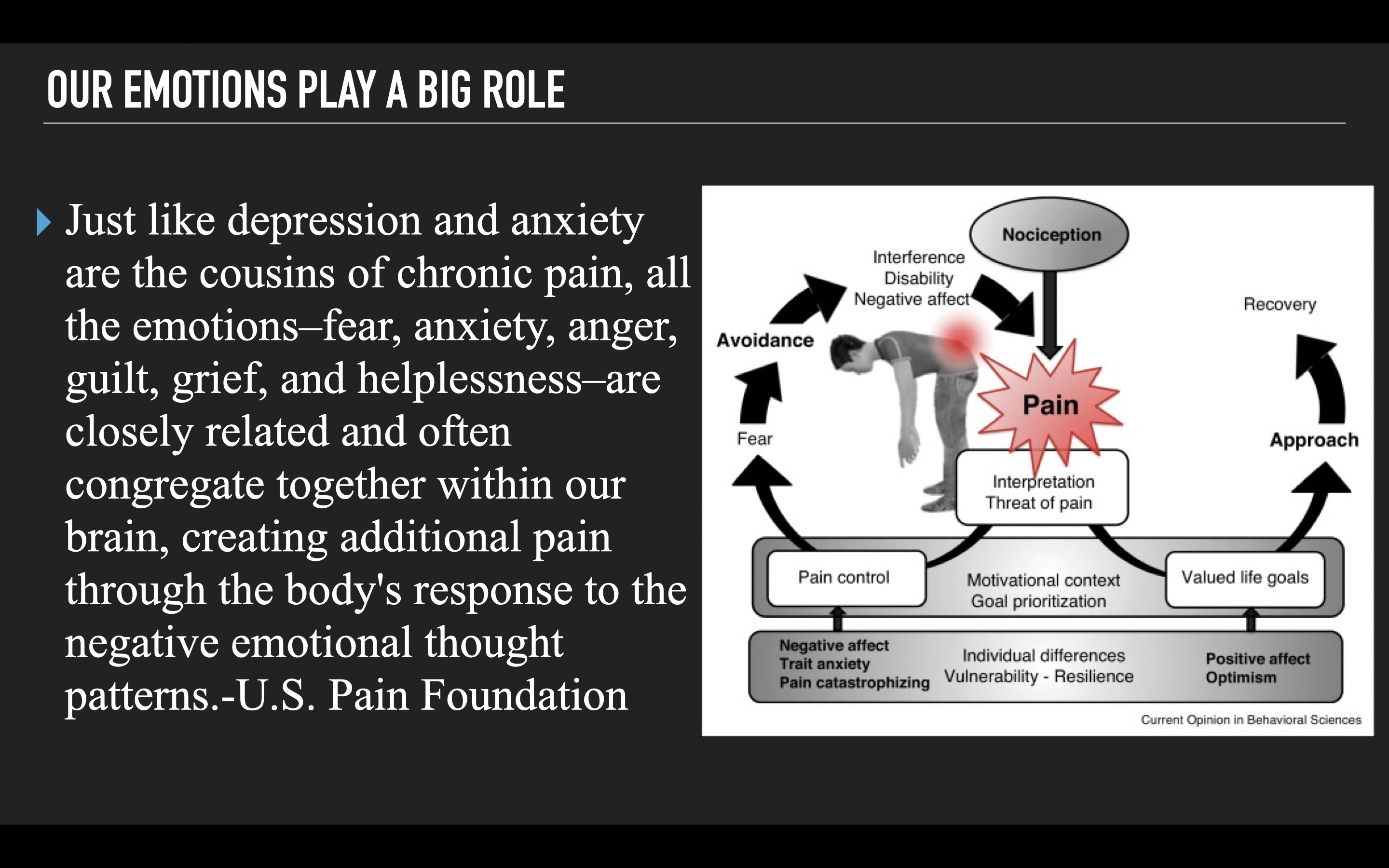
Over time, this cycle strengthens itself. The knee becomes something to avoid, not strengthen.
You can’t train strength if the nervous system believes the movement equals harm.
This is where intelligent movement preparation rooted in neuromuscular re-education becomes essential.
Why Myofascial Integrated Movement?
Myofascial Integrated Movement (MIM) is a system of exercises that:
-
Integrates muscle, fascia, joints and nervous system
-
Emphasizes inter-segmental coordination
-
Uses rhythmic, patterned movements to retrain perception of pain and safety
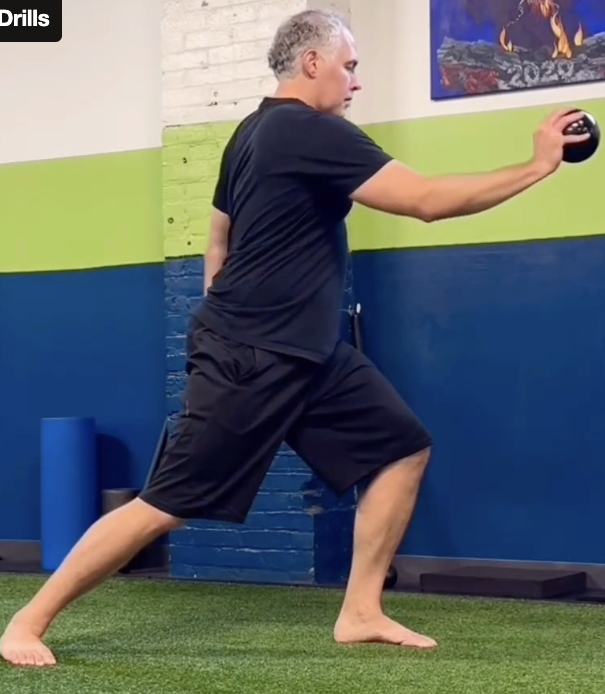
Unlike traditional warm-ups that isolate muscles, MIM flows through multiple planes of motion while respecting neural safety maps. One of the foundational patterns in this system is the bow stance a low, grounded position that mimics everyday function (walking, stepping, lunge-like patterns) without provoking fear.
The Bow Stance: A Gateway Movement
The bow stance is not a lunge but it prepares the body for lunges.
It trains:
Strength
The bow stance recruits the feet, ankles, hips, glutes, quads, hamstrings and adductors, creating a balanced, functional lower-body contraction. Unlike a traditional lunge that demands greater range of motion, the bow stance allows muscles to co-activate in a safer range.
Mobility
Because the bow stance emphasizes stability and coordination in the kinetic chain that helps unlock hip mobility. The rhythmic and circular movements both “calm” the nerves system and teach the hips to move through a greater range of motion than most hip focused mobility exercises actually allow. This builds mobility prerequisites for deep, confident lunges.
Stability
The stance requires controlled loading through the front leg while the back leg stabilizes a pattern that mirrors split stance and single-leg balance. This enhances proprioception and knee joint control without the fear trigger. We can work through understanding how to load and move the body appropriately through these ranges while building all the qualities of strength and stability.
In short, the bow stance isn’t just for those with knee pain, it is an amazing position to teach anyone better strength, mobility, stability, and movement efficiency.
Research Supports Movement Patterns Like Bow Stance Work
You’ve likely heard of us talking about how MIM type drills are often (not always) a low-impact, flowing movement practice that’s been studied extensively for older adults and people with knee pain, including osteoarthritis.
Here’s what the research shows:
Reduces Knee Pain
Multiple studies have found that practicing MIM type training significantly:
-
Reduces pain and stiffness
-
Improves physical function
-
Enhances quality of life
In people with knee osteoarthritis, such training showed improvements on par with traditional physical therapy, especially in pain reduction and functional mobility. It works not by isolating muscles, but by retraining the nervous system through fluid, integrated motion.
This matters because MIM exercises, particularly those using bow stances, function in the same paradigm: rhythm, integration, and mindful control rather than strain.
Neuromuscular Retraining Changes Pain Perception
Research supports that patterned movement enhances proprioception the brain’s sense of where the body is in space which helps break the fear-pain association. In people with chronic knee pain, improving neuromuscular control has been shown to reduce pain and improve confidence when performing functional tasks.
Bow Stance: Step-By-Step
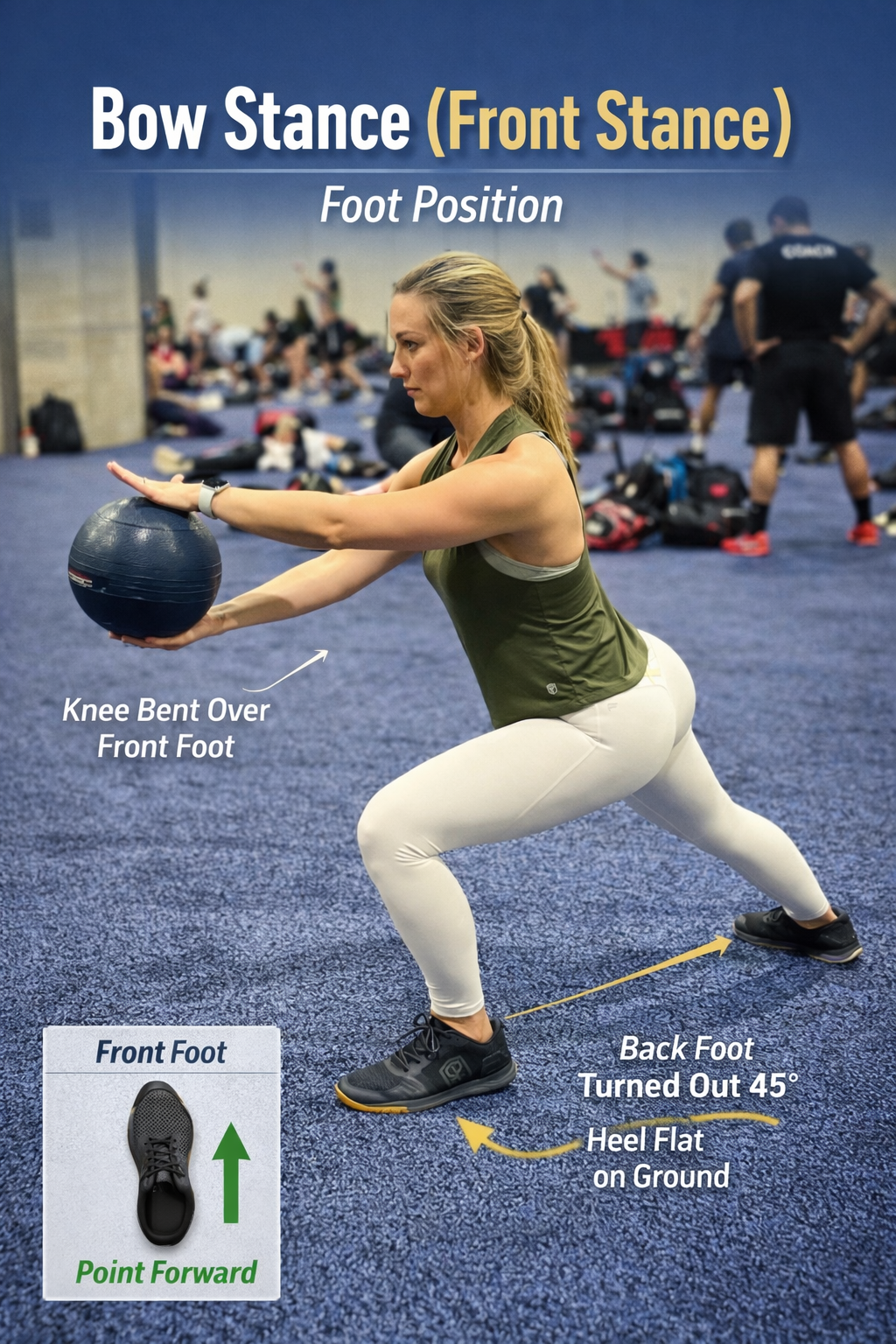
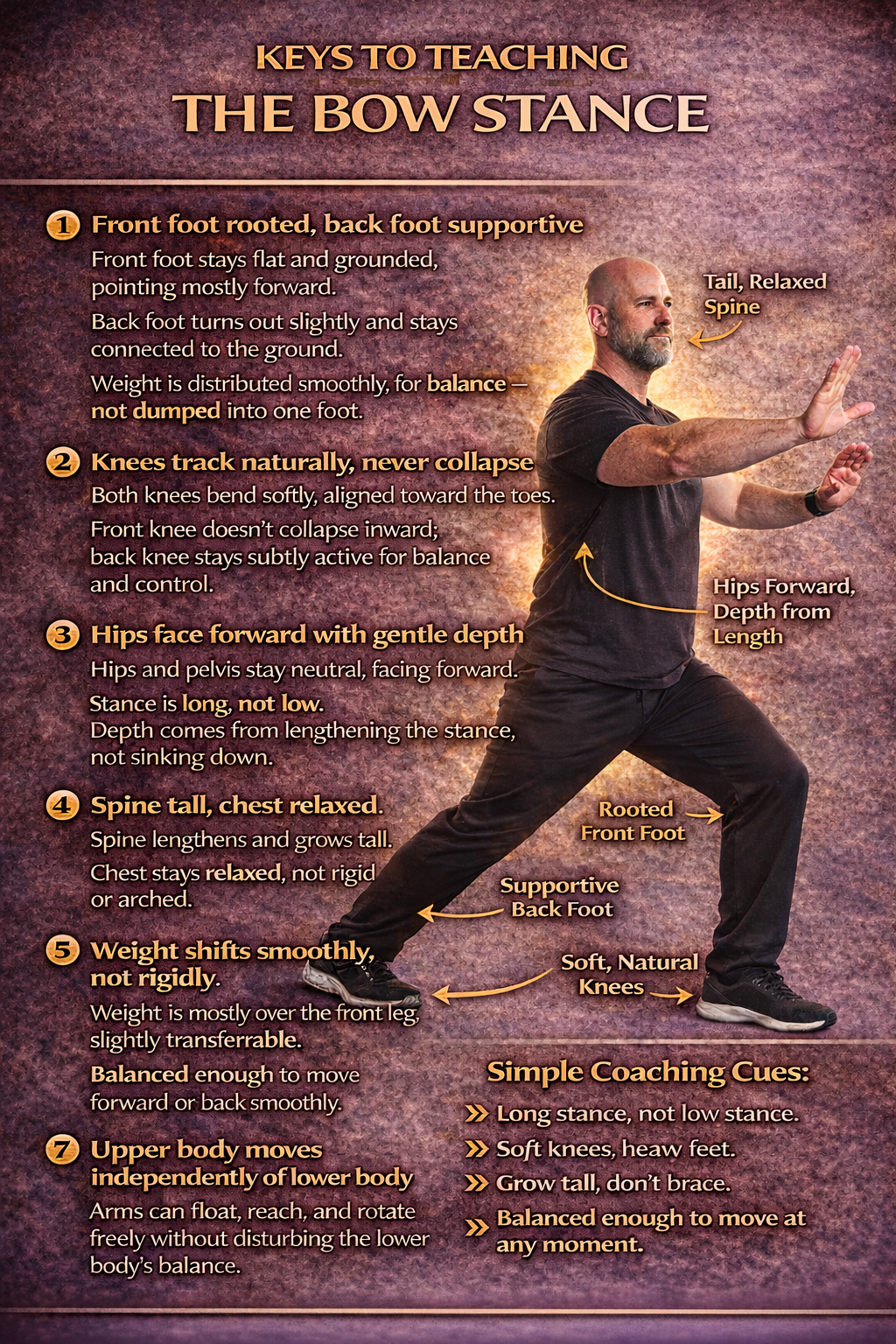
1. Front foot rooted, back foot supportive
The front foot stays flat and grounded, pointing mostly forward. The back foot turns slightly outward and stays connected to the ground. Weight is distributed smoothly, not dumped into one joint.
2. Knees track naturally, never collapse
Both knees bend softly and align with the toes. The front knee doesn’t cave inward, and the back knee stays active to support balance and control.
3. Hips face forward with gentle depth
The pelvis stays neutral and squared forward. The stance is long, not low. Depth comes from lengthening the stance, not sinking straight down.
4. Spine tall, chest relaxed
Grow tall through the crown of the head while keeping the ribs down. The chest stays open but soft no arching or bracing.
5. Weight shifts smoothly, not rigidly
Weight is primarily over the front leg but remains transferable. You should be able to move forward or backward with fluidity.
6. Breath supports stability
Inhale through the nose as you shift back, focus on the breath helping you release hip tension and move you through the movement. Exhale gently to feel connection through the trunk and legs. Breath creates stability without stiffness.
7. Upper body moves independently of the lower body
Arms can float, reach, or rotate without disturbing balance. This teaches true proximal stability with distal mobility.
A New Narrative for Knee Health
Clients don’t need to fear lunges they need to earn confidence through integrated, neuromuscularly sound training.
The bow stance when applied within a Myofascial Integrated Movement framework:
✔ Builds coordinated strength
✔ Enhances hip and knee mobility
✔ Improves stability and balance
✔ Reduces fear of movement
✔ Rewrites the nervous system’s pain map
And research from mind-body practices reinforces what we see in practice: movement that integrates body and mind reduces pain and improves function, even in osteoarthritis.
So the next time a client says, “I can’t do lunges, they hurt my knees,” you can reply with confidence:
“Let’s train how your body wants to move first… and then earn the lunges.”
Don’t miss the LAST 2 days to save 30% on our MIM programs including our NEW MIM Intensive Coaching program and MIM Strength workout program. Just use code “mim30” HERE
Featured in





© 2026 Ultimate Sandbag Training. Site by Jennifer Web Design.