
Why Most Fitness Programs Fail People Over 40
2026-02-9

If you’re over 40 and feel like most fitness programs don’t fit your life anymore, that’s not because you’re unmotivated or “past your prime.” Which should feel good because that is the narrative that people often hear.
It’s because most programs were never designed with the need of the people over 40 in mind.
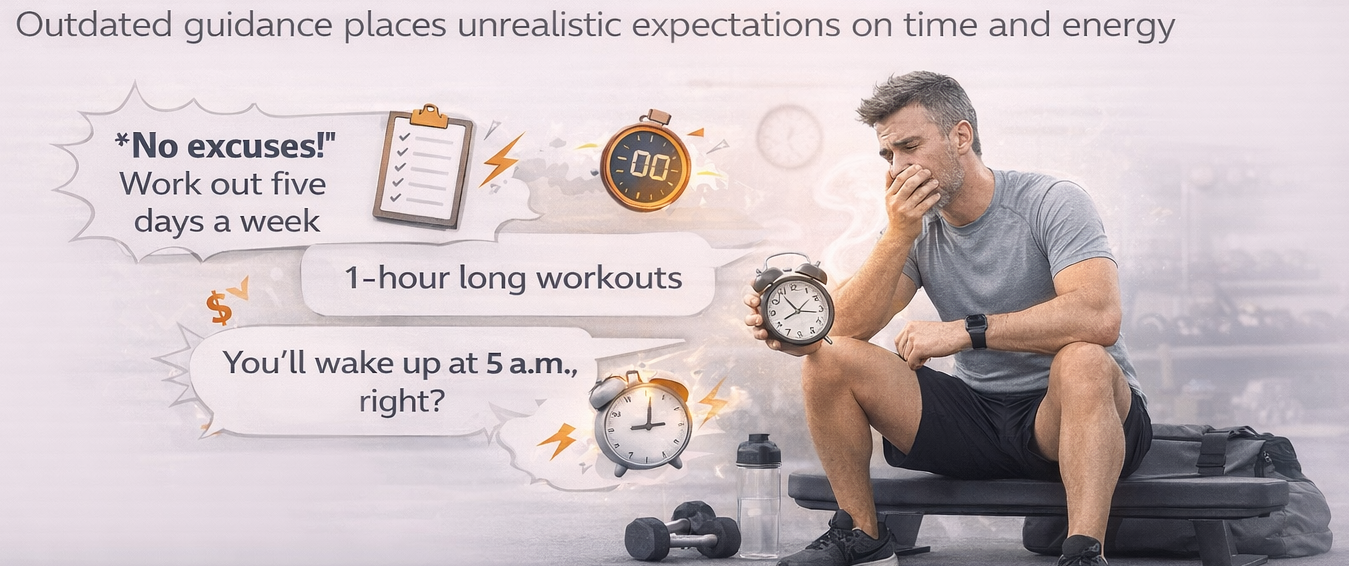
The biggest mistake the fitness industry makes with adults over 40 isn’t intensity, complexity, or even exercise selection, it’s ignoring time. Real people don’t have unlimited hours to train. They don’t recover like they did at 25. And they certainly don’t need programs built around bodybuilding splits that assume five or six gym days a week.
When time is limited, the margin for error disappears. Every exercise, every set, every drill has to matter. Research shows that over 50% of people say that time is the biggest obstacle to their fitness goals (PMID: 39060107).
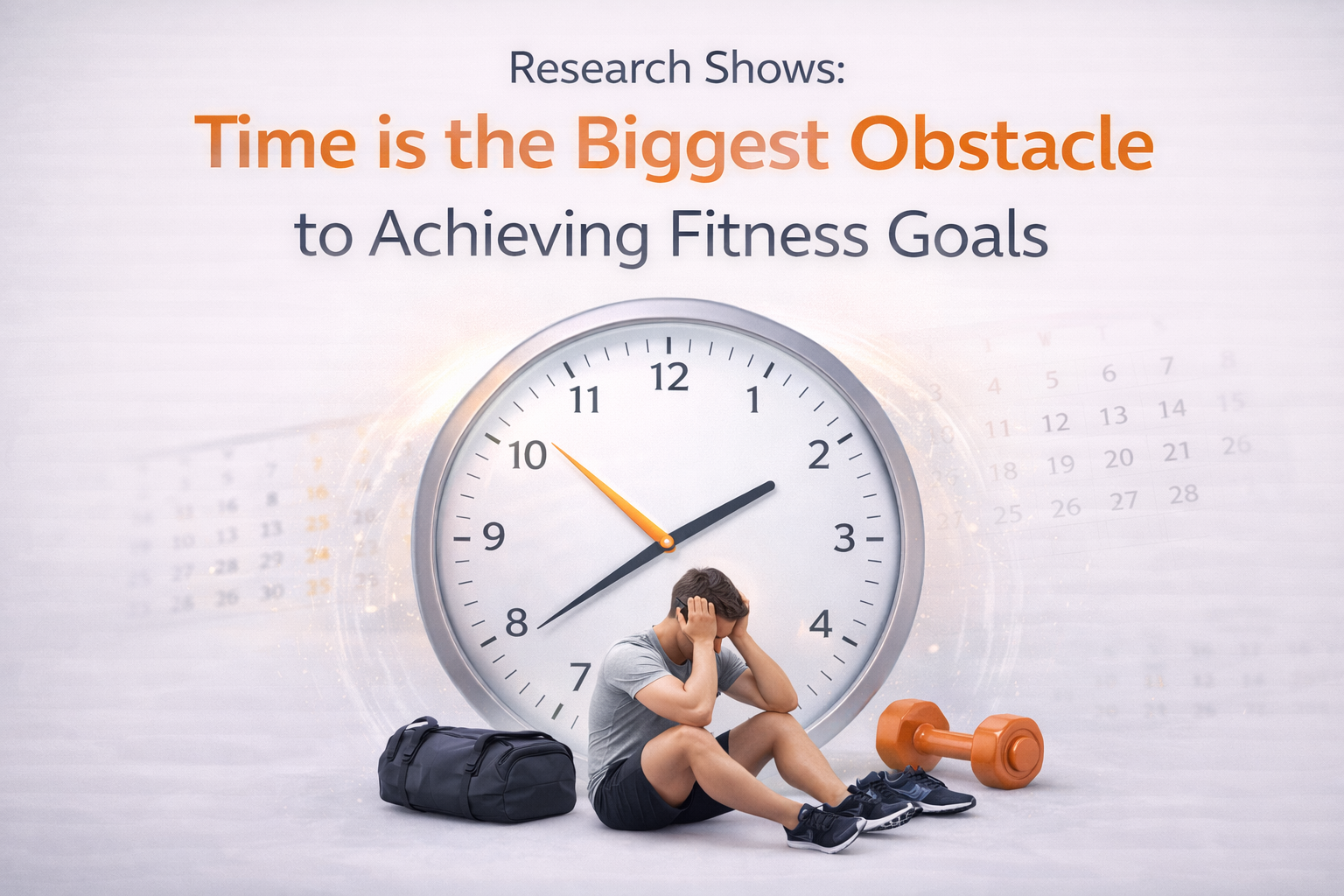
The Time Problem No One Wants to Address
Most adults over 40 train 1-3 days per week, often for less than an hour. Yet many programs still rely on body-part splits; leg day, chest day, back day systems that only work if you can train frequently and recover quickly.
When people are doing the “right thing” and not getting the results they want, it can take all the motivation out of people. At the same time, if the expectations of what is required as far as time and energy to take to be fit is overwhelming, people won’t find success.
Research consistently shows that frequency of movement and total training quality matter more than isolating muscles. When training opportunities are limited, dividing the body into parts is inefficient and, frankly, outdated (PMID: 35069251, PMID: 34125411).
The Body Doesn’t Move in Parts—So Why Train It That Way?
The human body is an integrated system. Real life doesn’t ask your biceps or quads to work alone. People often think if they do NOT work these muscles in isolation then they just won’t build appreciable muscle. This is NOT backed by any research and negates that athletes usually use whole body movements in their training and build physiques most would be more than happy to walk around with in life.
Then we look at activities like walking, lifting, rotating, changing direction, carrying loads, or even preventing a fall all require the coordination of multiple joints, muscles, and the nervous system.
Body-part training:
-
Wastes time isolating muscles instead of training movement
-
Neglects stability and coordination
-
Increases joint stress without improving real-world function
-
Requires more sessions to get meaningful results
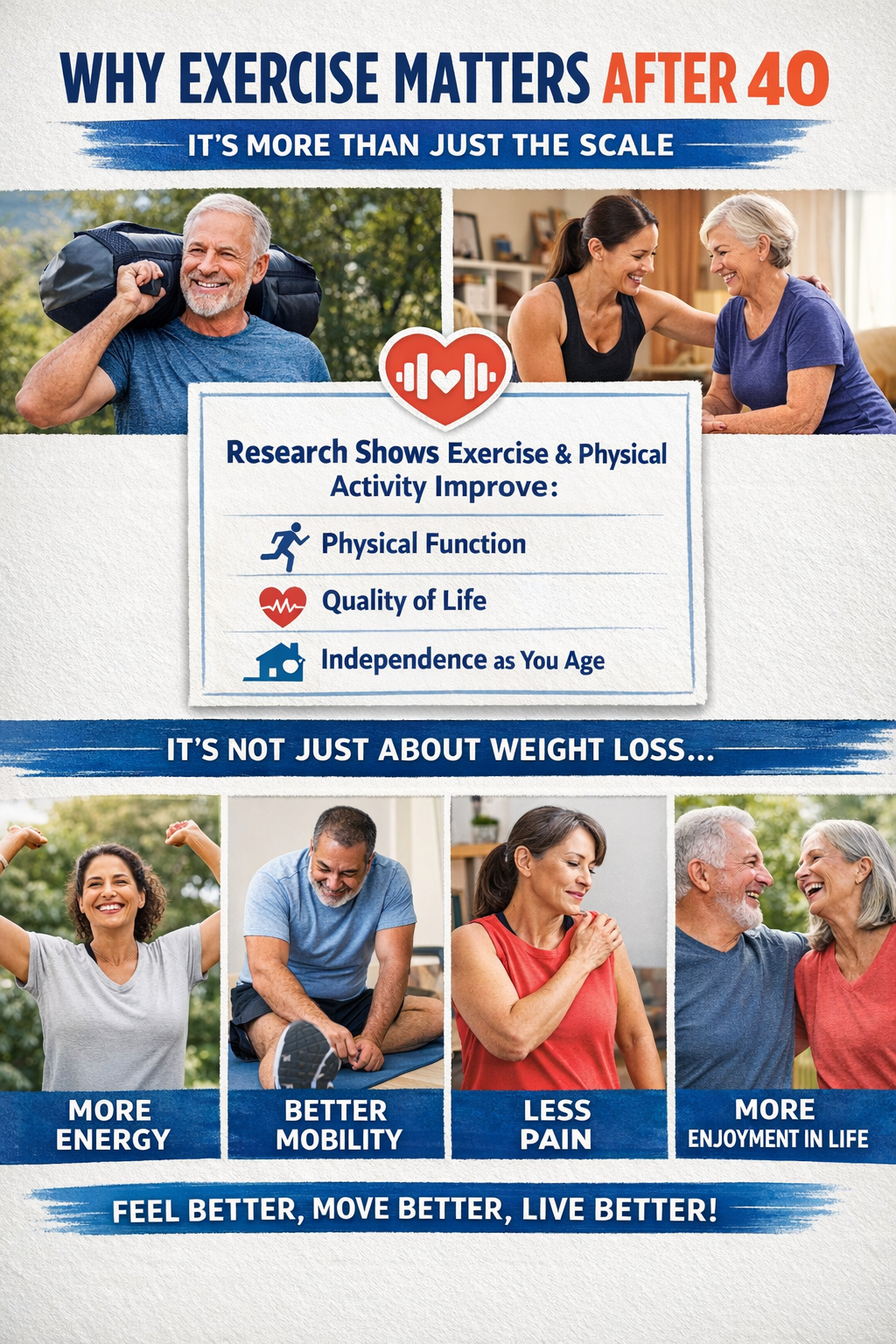
Research shows that regular physical activity and exercise in middle-aged and older adults is strongly linked to improvements in physical function, quality of life, and well-being, beyond changes in body weight alone, and helps maintain independence and daily capability as people age (PMID: 33044541).
Work by behavioral scientists also suggests that many adults sustain activity when it is framed around immediate, personally meaningful benefits such as increased energy, better mobility, pain reduction, and more enjoyment in daily life not solely long-term weight outcomes.
Whole-Body Training Isn’t a Trend—It’s a Necessity
When time is limited, whole-body, integrated training is not optional, it’s essential.
Instead of organizing workouts around muscles, we organize them around movement patterns:
-
Squatting
-
Hinging
-
Lunging
-
Pushing and pulling
-
Rotational and anti-rotational strength
-
Gait and loaded carries
One well-designed movement can develop strength, mobility, stability, and conditioning at the same time. This isn’t about doing “more exercises.” It’s about choosing exercises that respect how the body actually works. We make our training better in getting results for not just one goal, but the multiple goals that most people, especially over 40 have in their fitness training.
Building Multiple Qualities at Once—On Purpose
One of the biggest myths in fitness is that you must train everything separately.
In reality, smart programming allows you to build:
-
Stability through controlled load placement and body position
-
Strength through progressive resistance
-
Mobility by owning range of motion under load
-
Power by learning to accelerate and decelerate safely
-
Conditioning by intelligently linking movements
This may sound like it is too good to be true, but to be honest, it is work! However, it is work that is worth doing and gives appreciable feedback at the end of the day. It is how we keep people both engaged and motivated.
The Gym Is Only Part of the Equation
Even the best workout can’t undo a sedentary lifestyle.
Research on physical activity consistently shows that movement outside the gym plays a massive role in health, pain reduction, and long-term resilience. Yet most programs ignore this entirely.
If fitness only happens during a 45-minute session, results will always be limited.
Reframe Physical Activity as “Movement That Counts”
Behavioral research shows that adults are more likely to sustain activity when it’s framed around immediate, personally meaningful benefits such as better mobility, less pain, and more energy rather than distant outcomes like weight loss (Bauman et al., 2012).
Trainers can reinforce this by:
-
Validating walking, carrying, and mobility work as “real training”
-
Highlighting how daily movement improves how clients feel that same day
-
Shifting the win from calories burned to capabilities preserved
We often think such small activities in our daily life don’t make a difference, but as renowned psychologist, Dr. Ellen Langer, breaks down why from one of her most important studies.
View this post on Instagram
Normalize Movement Variety, Not Perfection
Studies consistently show that consistency, not intensity, is the key driver of long-term physical activity adherence (Rhodes et al., 2017).
Trainers should:
-
Remove the “all-or-nothing” mindset
-
Reinforce that short, imperfect movement still matters
-
Celebrate daily movement wins, not just gym sessions
When clients stop seeing movement as something that must be perfect, they do more of it.
Personal trainers who work with adults over 40 aren’t just exercise providers they’re movement educators.
By coaching daily activity alongside gym training, trainers help clients:
-
Maintain independence
-
Improve quality of life
-
Reduce pain and stiffness
-
Stay active for decades, not just months
And that’s where real results live.
Want to learn more?! We hope you will join us Tuesday, February 24th for a FREE webinar on “The Biggest Mistakes In Training Over 40” HERE

Featured in





© 2026 Ultimate Sandbag Training. Site by Jennifer Web Design.