
Why HIIT Works…Until It Doesn’t
2026-03-30

High-Intensity Interval Training (HIIT) has become one of the most popular training methods over the past two decades and for good reason. From busy professionals to athletes, HIIT offers a time-efficient way to improve fitness and health. Limited time is the BIGGEST obstacle that both coaches and fitness enthusiasts face.
But like many powerful tools in fitness, what works incredibly well in the right dose can start to create problems when misapplied. People can get blind on the benefits and also over state the potential issues to make HIIT sound scary too!
To really understand HIIT, we have to look at both sides of the equation: why it works so well and why it can eventually stop working.
Why HIIT Works
One of the biggest advantages of HIIT is its efficiency. Research has consistently shown that short bursts of high-intensity work, followed by recovery periods, can produce significant physiological adaptations in far less time than traditional steady-state training.
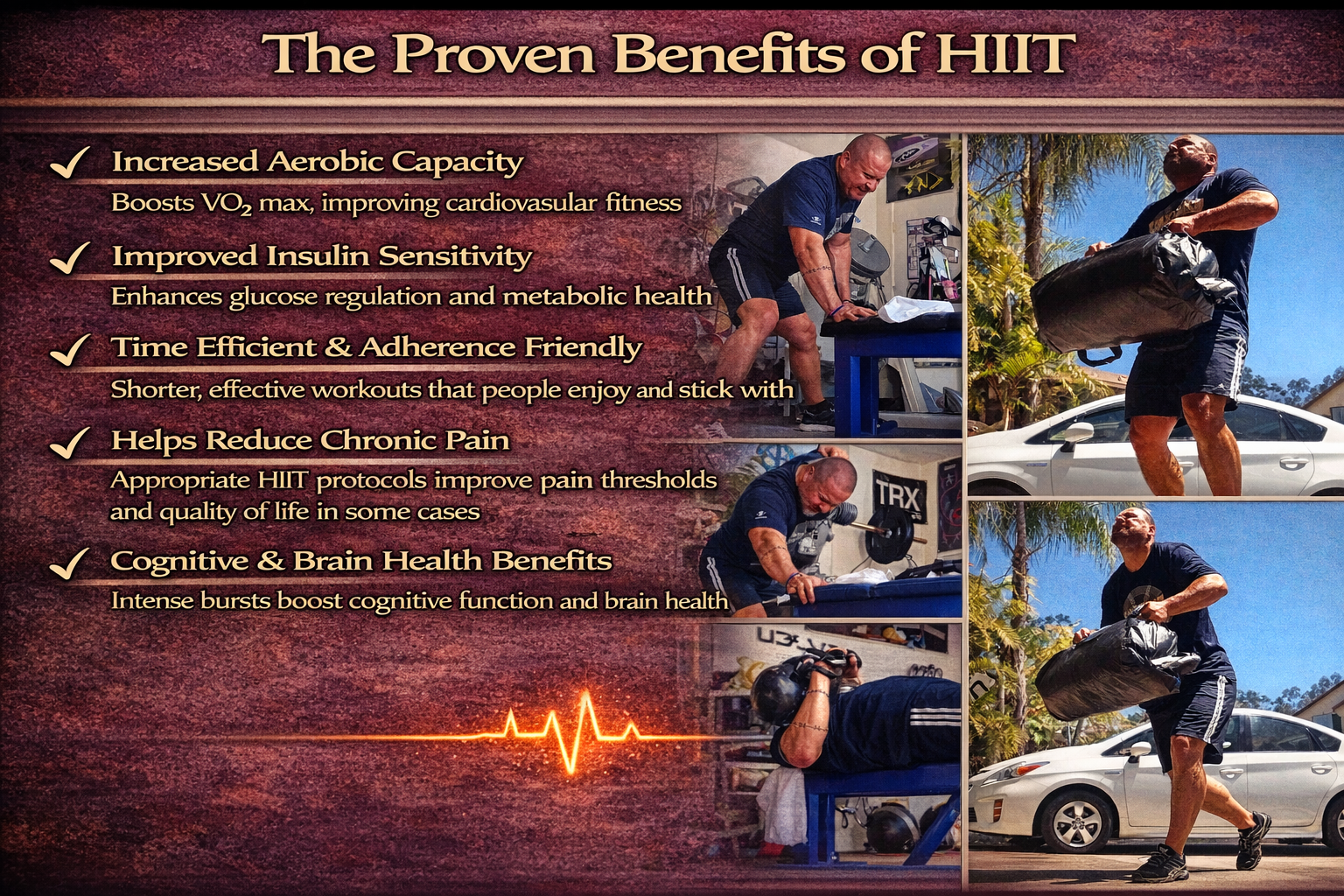
Increased Aerobic Capacity
HIIT is one of the most effective ways to improve VO₂ max, a key marker of cardiovascular fitness. Studies (including work by Gibala and colleagues) show that even low-volume HIIT protocols can significantly improve aerobic capacity—sometimes matching or exceeding longer-duration endurance training.
Improved Insulin Sensitivity
HIIT has been shown to improve glucose regulation and insulin sensitivity, making it a powerful tool for metabolic health. This is especially important for individuals at risk of or managing type 2 diabetes.
Time Efficiency and Adherence
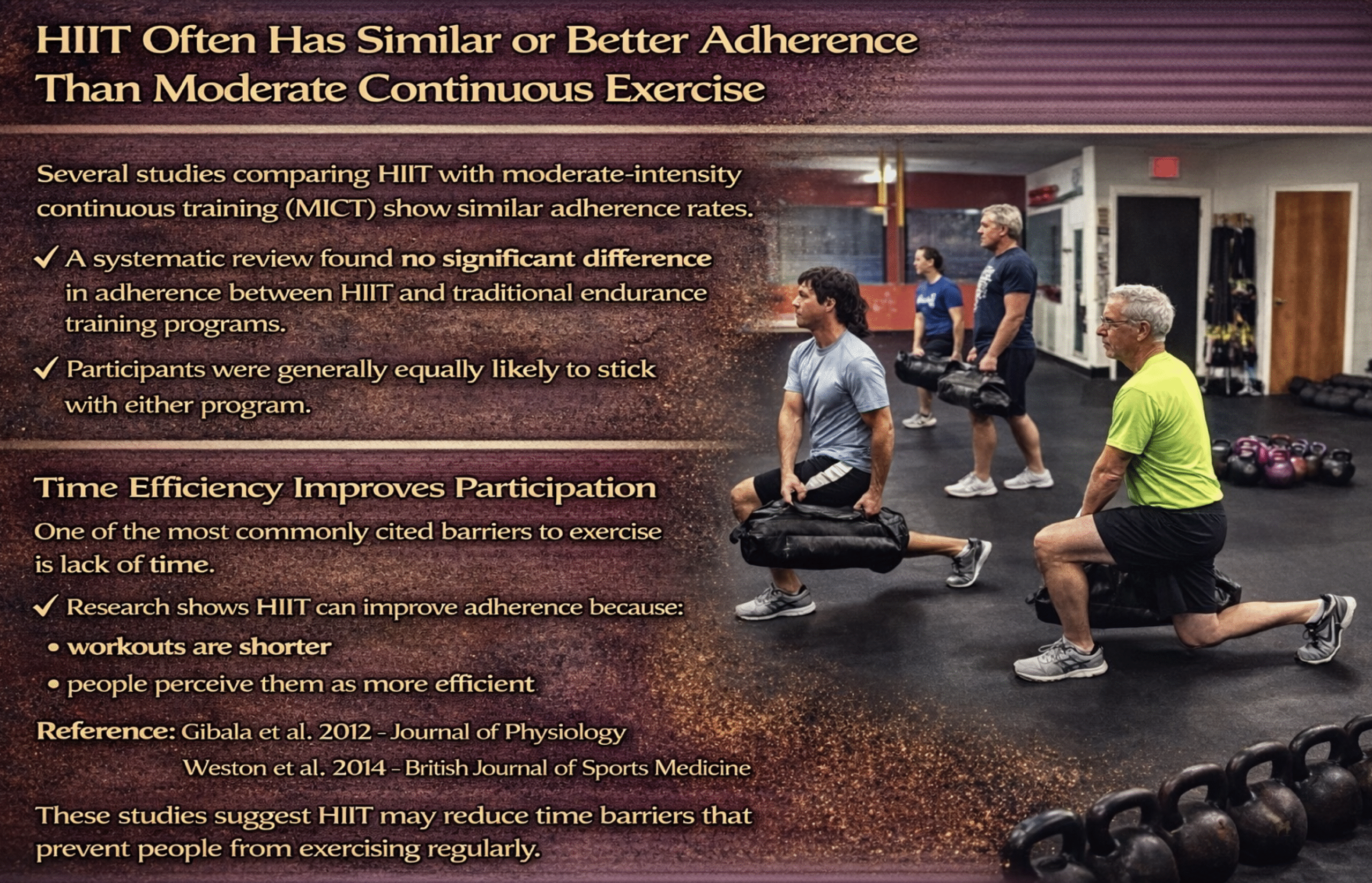
Let’s be honest, most people aren’t skipping workouts because they don’t care. They’re skipping because they don’t have time. Time is STILL cited as the biggest obstacle for people adhering to their workouts.
HIIT addresses this directly.
Research shows that many people report equal or greater enjoyment with HIIT compared to longer workouts, which can improve adherence. Shorter sessions feel more manageable, and the sense of accomplishment is often higher.
Benefits for Chronic Pain
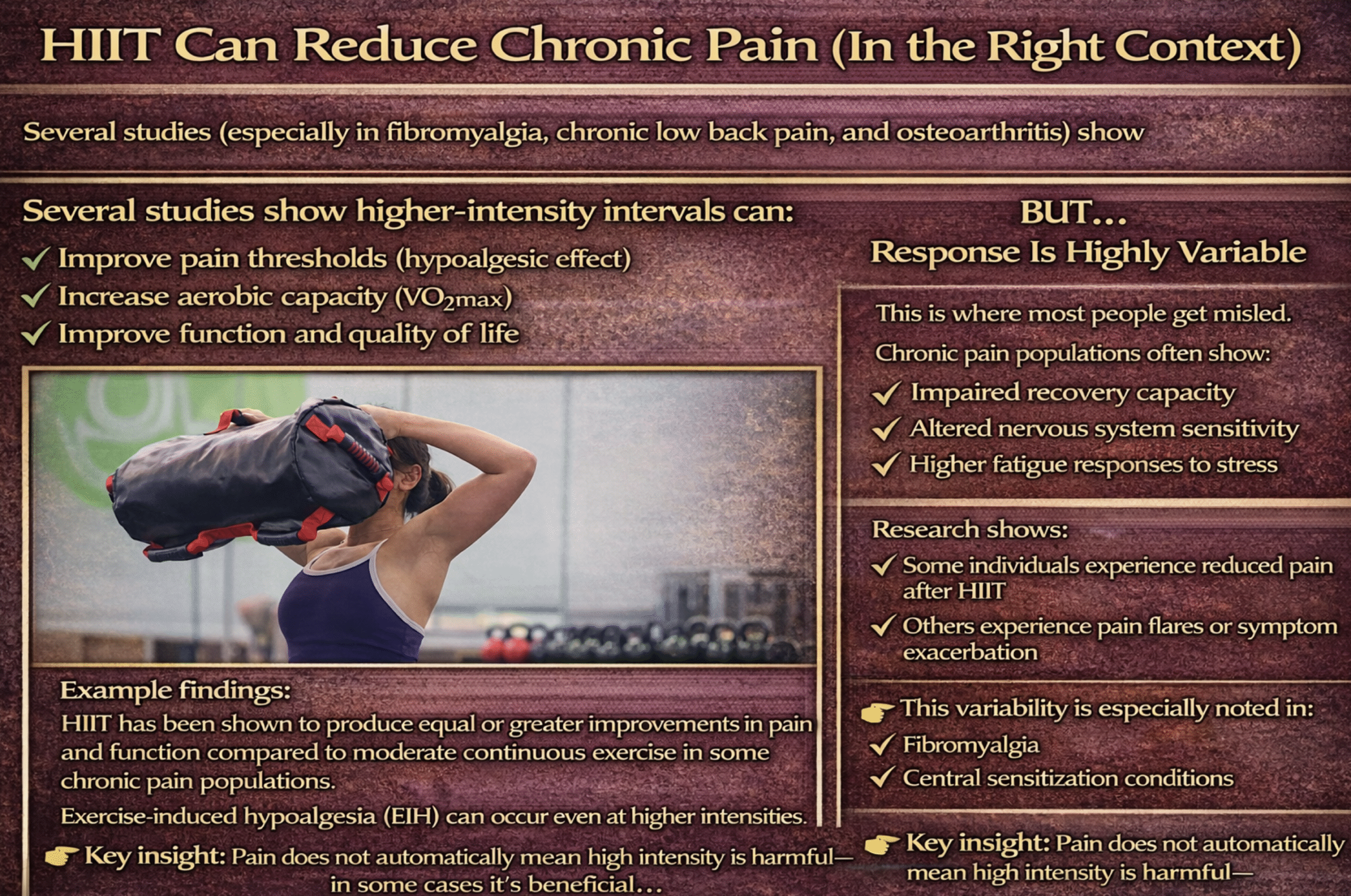
This surprises a lot of people, but HIIT, when appropriately programmed, can actually help individuals with chronic pain.
Studies in populations like fibromyalgia and chronic low back pain suggest:
- Improved pain thresholds (exercise-induced hypoalgesia)
- Better physical function
- Enhanced quality of life
The key here is appropriate dosage and progression.
Cognitive and Brain Health Benefits
Emerging research suggests that high-intensity exercise can improve cognitive function, including memory, attention, and executive function.
Short bursts of intense effort appear to stimulate neurochemical responses (like BDNF—brain-derived neurotrophic factor) that support brain health.
So…What’s the Problem?
If HIIT is so effective, why do so many people eventually stall or even feel worse?
Because more is not better. Better is better.
When HIIT Stops Working
Too Much High Intensity, Too Often
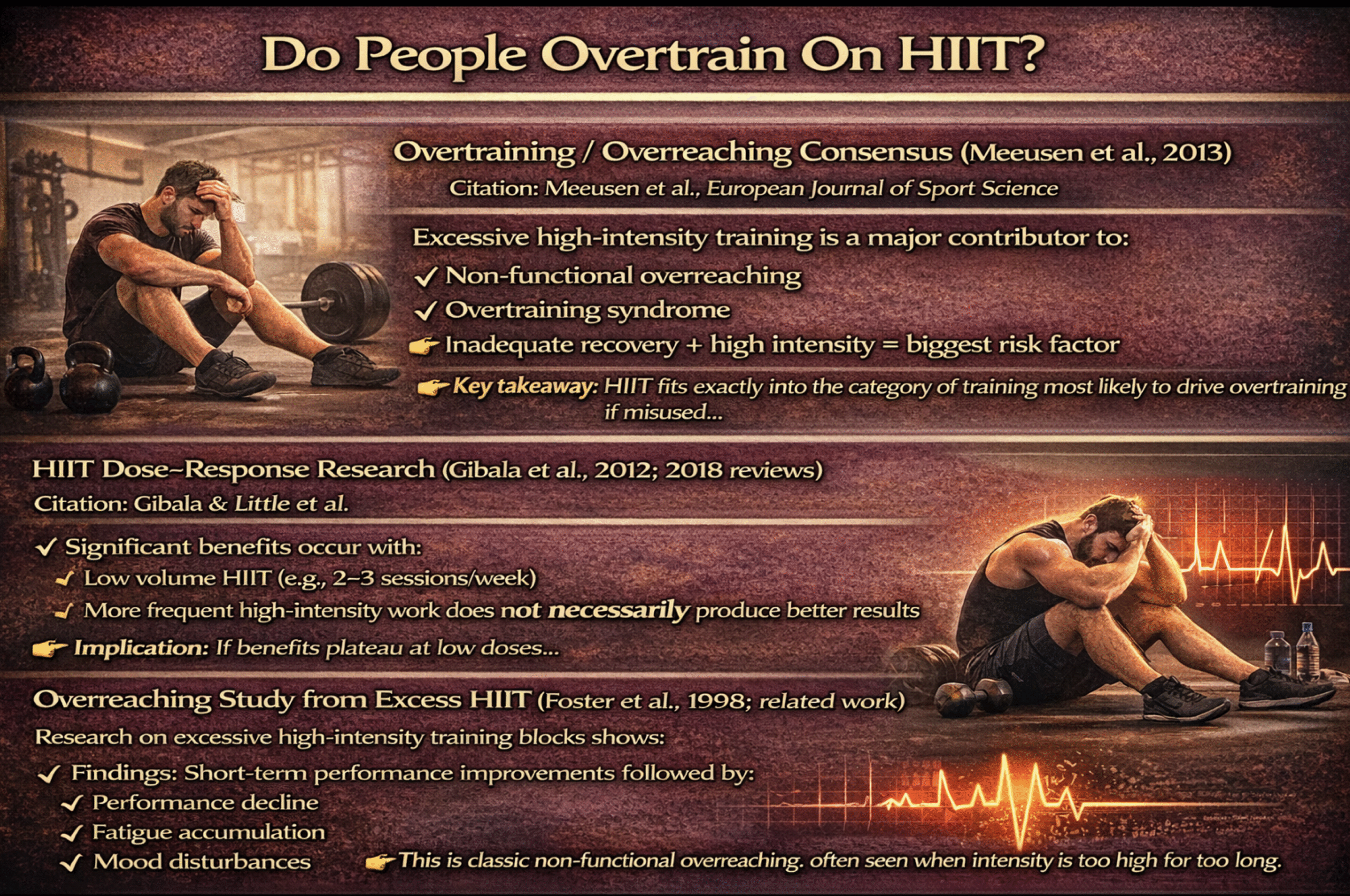
One of the most well-supported findings in exercise science is that excessive high-intensity training can lead to:
- Non-functional overreaching
- Performance decline
- Chronic fatigue
- Mood disturbances
Research on overtraining highlights that high intensity combined with inadequate recovery is one of the biggest risk factors.
Ironically, the very thing that makes HIIT effective, its intensity, is also what makes it risky when overused.
The Dose–Response Problem
Studies consistently show that many of HIIT’s benefits occur with relatively often just 2–3 sessions per week.
Doing more doesn’t necessarily lead to better results.
In fact, performance can plateau, or even regress, when high-intensity work is overemphasized. However, this is in rare cases of people trying to do programs that are too long (most of these so called HIIT classes aren’t actually HIIT) or 6-7 days a week which would be the exception for the majority.
Movement Quality Matters
Here’s where things get overlooked.
If someone doesn’t move well, turning their strength training into a HIIT workout can be a problem.
Fatigue + poor movement patterns = higher risk of:
- Compensations
- Overuse issues
- Reinforcing bad mechanics
This doesn’t mean you avoid intensity, it means you apply it strategically and protocols.
Not All HIIT Has to Look the Same
One of the biggest mistakes is assuming HIIT must involve complex, high-skill movements under fatigue.
Instead, simpler tools often make more sense:
- Airdynes
- Sled pushes/drags
- Battle ropes
- Carries
These allow people to work at high intensity without compromising movement quality.
You Don’t Need to Make Everything HIIT
Another common mistake is turning the entire workout into high intensity.
A better approach?
Use short 5–10 minute HIIT segments:
- At the end of a session
- As a finisher
- Or as a standalone conditioning block
This helps people:
- Learn how to push intensity safely
- Build tolerance over time
- Avoid excessive fatigue
Pain and Recovery Capacity Matter
While HIIT can help chronic pain in some cases, it’s not always appropriate—especially when pain levels are high or poorly managed.
People with higher pain levels often have:
- Reduced recovery capacity
- Increased sensitivity to stress
In these cases, adding more intensity can make things worse, not better.
HIIT works because it’s powerful, but that power requires precision.
When used appropriately, HIIT can:
- Improve cardiovascular health
- Enhance metabolic function
- Support cognitive performance
- Even help reduce pain
But when overused or poorly applied, it can:
- Stall progress
- Increase fatigue
- Reinforce poor movement
- Lead to overtraining
Where HIIT Fits Best
For most people, especially those training 2–3 days per week, HIIT can be one of the most time-efficient tools available.
The key is understanding:
- It doesn’t need to dominate your program
- It should complement, not replace, quality movement and strength work
- And more is not better, appropriate is better
HIIT works…until it doesn’t.
And whether it continues to work depends entirely on how you use it.
Gain much more insight with our HIIT programs HERE and all our programs 25% off with code “save25”
Featured in





© 2026 Ultimate Sandbag Training. Site by Jennifer Web Design.