
Stop THIS Cortisol Myth About Fat Loss!
2026-06-28

Jessica Bento, Physical Therapist
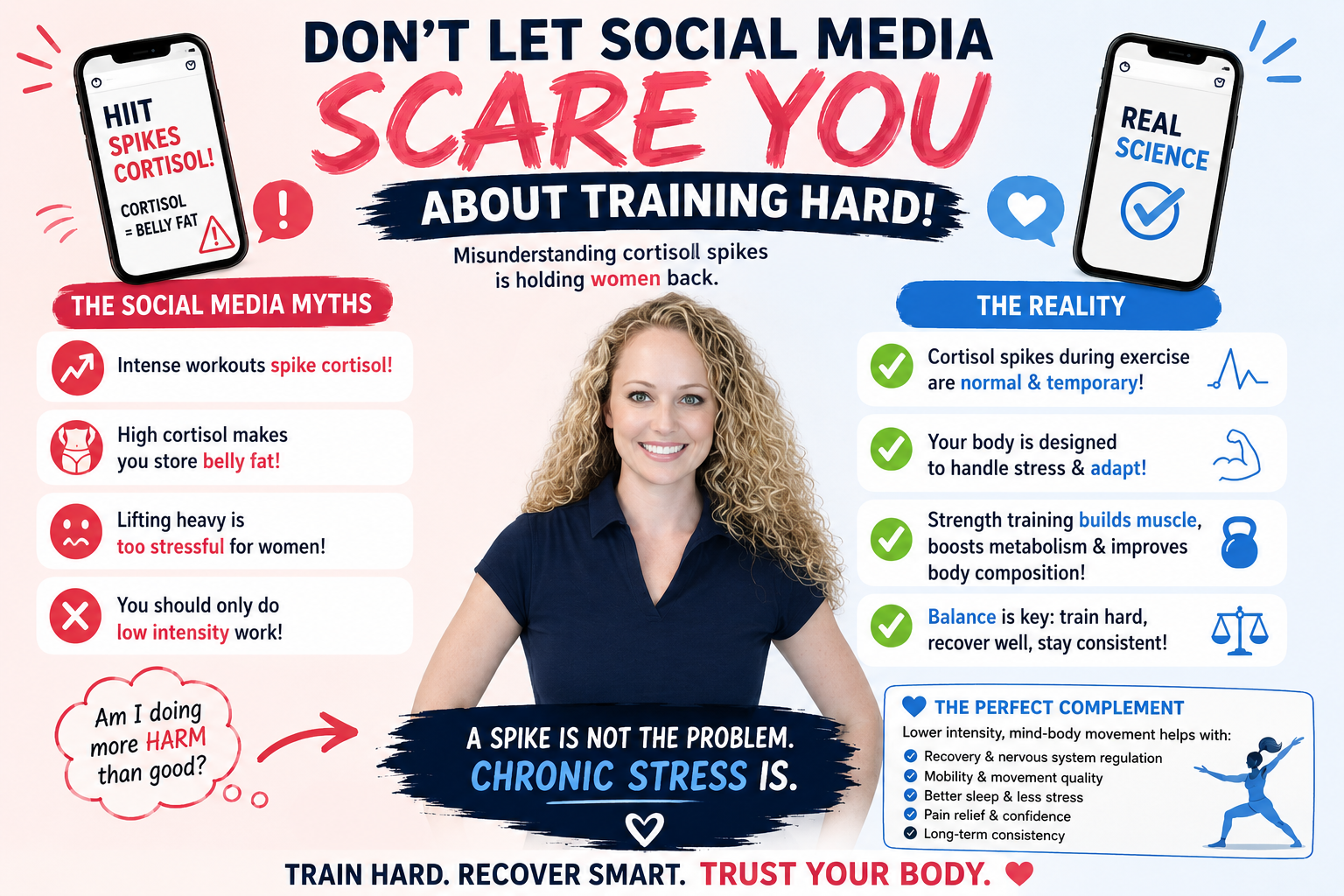
Every day I see social media posts telling women the same thing:
“Stop doing HIIT.”
“Your workouts are spiking cortisol and preventing fat loss.”
As a physical therapist who works with women every day, I understand why these messages have become so popular. Many women are frustrated. They’re exercising consistently, eating well, and still struggling to lose body fat. When someone offers a simple explanation, “it’s your cortisol”, it’s easy to believe.
The problem is that our bodies are much more complex than a 30-second social media video.
While cortisol absolutely plays an important role in our health, the idea that a challenging workout is preventing you from losing body fat simply isn’t what the research tells us.
Cortisol Is Supposed to Increase During Exercise
One of the biggest misconceptions I see is the belief that every rise in cortisol is harmful.
It’s actually the opposite.
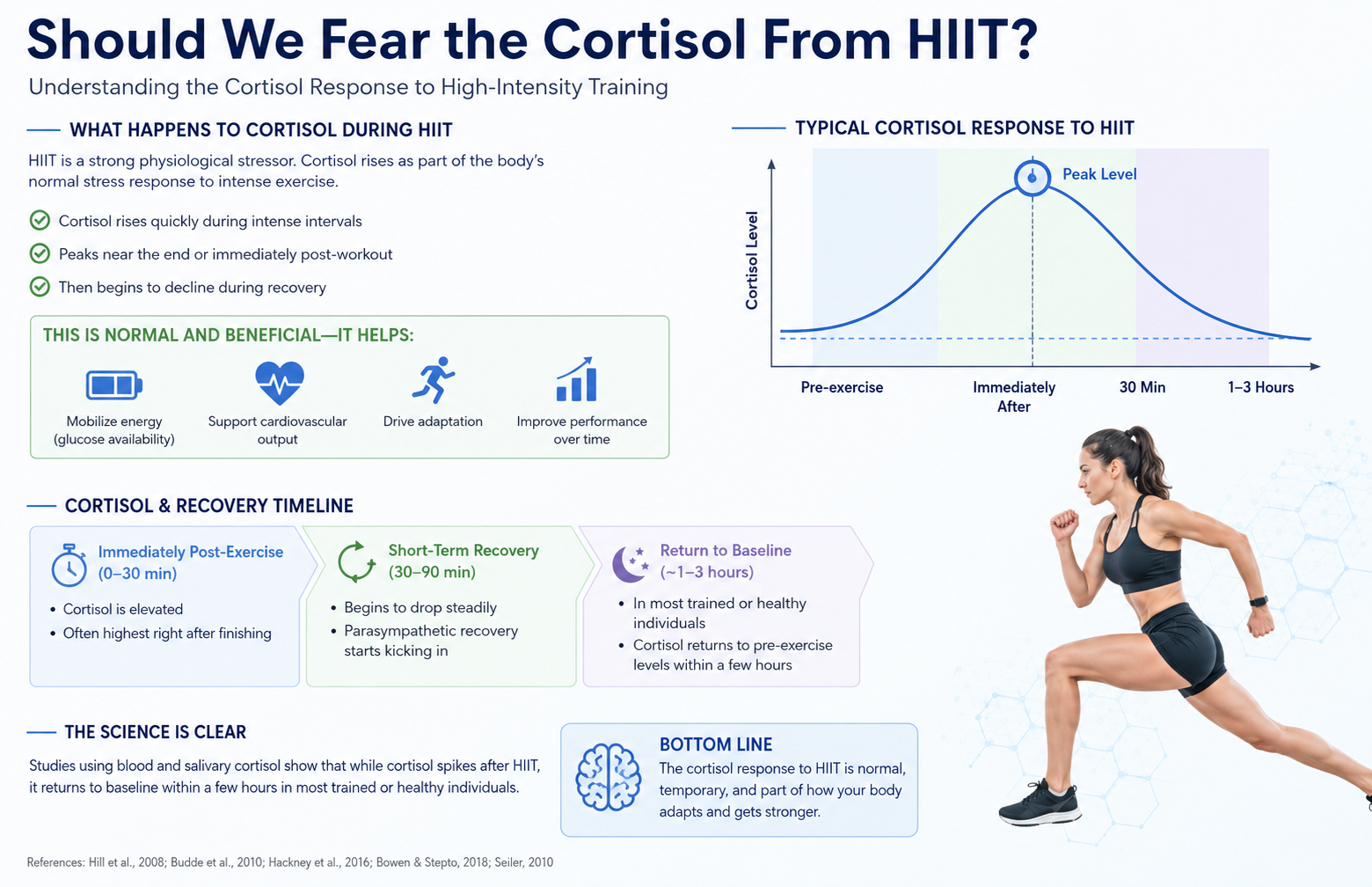
Cortisol is one of your body’s normal performance hormones. During strength training or high-intensity exercise, cortisol helps mobilize stored energy so your muscles have the fuel they need to work hard.
Without that response, you couldn’t perform at a high level.
Just like your heart rate increases during exercise, cortisol rises because your body is adapting to the demands you’re placing on it.
Once your workout is over and recovery begins, cortisol returns toward normal.
That temporary increase isn’t damaging, it’s part of the process that helps you become stronger.
The Real Problem Isn’t a Workout
What deserves more attention is chronic stress, not temporary exercise stress.
Poor sleep.
Constant work pressure.
Chronic pain.
Undereating.
Never allowing yourself to recover.
Those are the factors that can keep your stress response system activated for long periods of time and influence everything from appetite to recovery and energy levels.
Unfortunately, many social media posts lump these very different situations together and make women afraid of exercising hard.
That’s a shame because strength training remains one of the most effective things women can do for their long-term health.
Research consistently shows that resistance training helps improve muscle mass, bone density, insulin sensitivity, metabolic health, and body composition, even though cortisol temporarily increases during the workout.
If those temporary spikes prevented fat loss, decades of exercise research would look very different.
Where I Think Many Women Can Improve
I don’t think the answer is replacing strength training with lower intensity movement.
I think the answer is adding lower intensity movement to support your strength training.
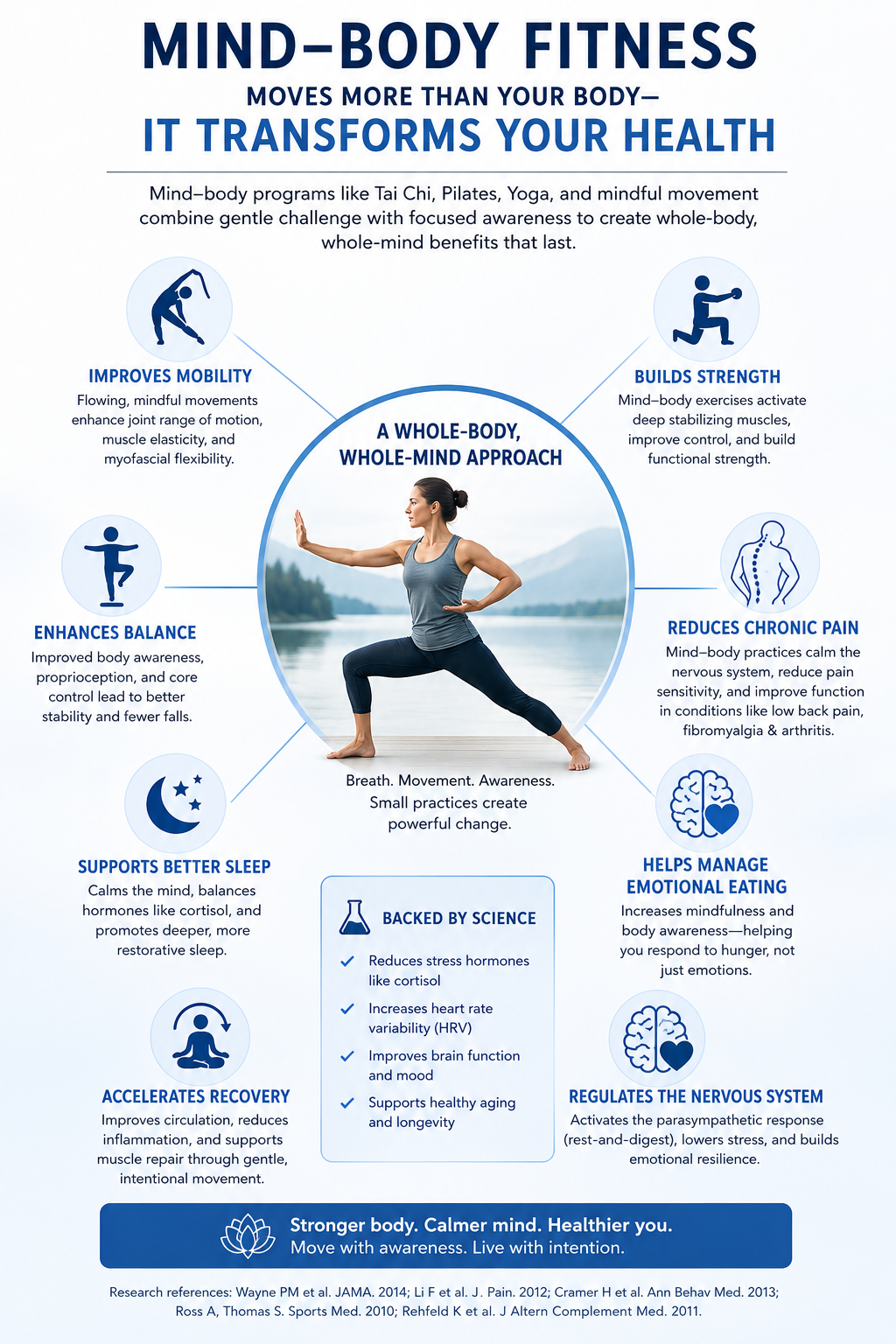
This is where I believe practices like Tai Chi, yoga, Pilates, walking, breathing exercises, and our Myofascial Integrated Movement (MIM) system become incredibly valuable.
Not because they “cancel out cortisol.”
But because they improve the things that allow your body to recover and adapt.
Research has shown these types of movement can improve mobility, balance, body awareness, sleep quality, heart rate variability, pain, anxiety, and overall nervous system regulation.
For many of my patients, they also restore confidence in movement and help them feel better between their harder training sessions.
Think of Training Like a Symphony
One of the biggest mistakes in fitness is believing every workout has to accomplish everything.
Strength training builds strength.
Conditioning improves cardiovascular fitness.
Mind-body movement develops mobility, coordination, breathing, recovery, and movement quality.
They’re different instruments playing in the same orchestra.
When you only focus on one, you’re missing part of the performance.
When you combine them intelligently, they make each other better.
My Advice to Women
Please don’t let social media convince you that lifting weights or challenging yourself is somehow “breaking” your hormones.
Instead, ask a better question.
Are you recovering as well as you’re training?
Are you sleeping enough?
Managing stress?
Eating enough protein?
Moving well?
Making time for mobility and recovery just as intentionally as you make time for strength?
Those habits will influence your long-term results far more than a temporary cortisol increase during a workout.
The goal isn’t to avoid stress.
The goal is to become more resilient to it.
That’s exactly what intelligent strength training combined with thoughtful recovery helps your body do and that’s a message I wish more women were hearing.
Find out MUCH more in our MIM programs that are 35% off THIS week with code “dvrt35” HERE
Featured in





© 2026 Ultimate Sandbag Training. Site by Jennifer Web Design.