
Does Getting Older Mean More Back Pain?
2026-03-5

Throwing statistics at you like “about 45% of people over 40 experience low back pain” (WHO) can feel a bit sterile. The real challenge of living with back pain is far more meaningful than a number on a page.
Stats are useful, but they often make us forget the real people behind them.
Anyone who has experienced low back pain knows how quickly it can affect everyday life. Suddenly, something as simple as walking across the room can feel uncertain. Every step can come with the question:
Is this going to trigger another spasm?
For some people, the fear becomes even bigger than the pain itself. They start worrying about whether they’ll be able to do the things their life requires working, picking up their kids, sitting through dinner, or simply getting through the day.
For others, back pain slowly begins to shrink their world.
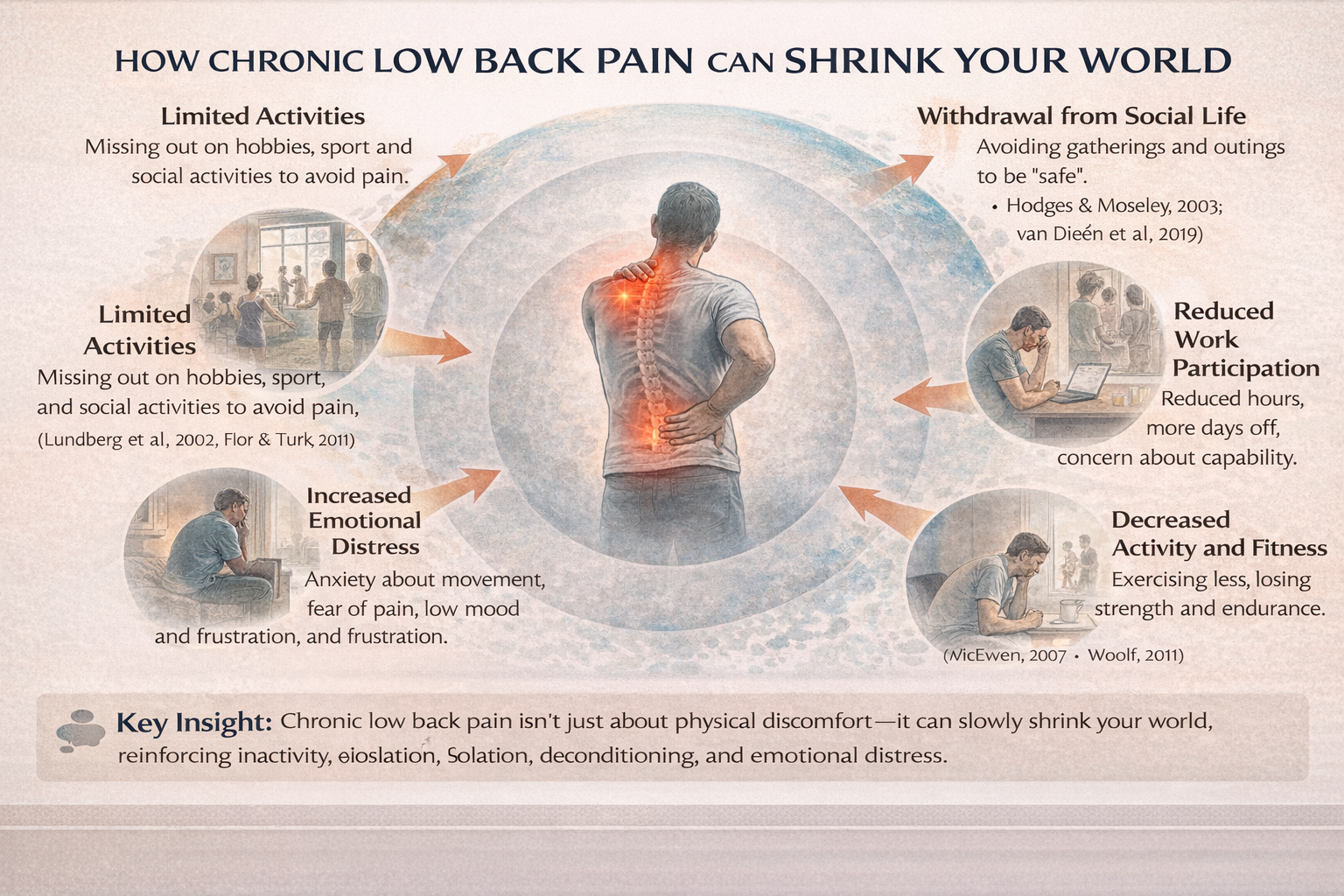
Activities they once loved hiking, traveling, exercising, even socializing start to feel risky. Sitting in a restaurant too long might cause a flare-up. A long car ride might feel impossible.
So people begin avoiding those situations altogether.
The problem is that this avoidance doesn’t just affect us physically. When we stop moving and start isolating ourselves, the mental toll can become significant. In fact, depression rates in people with chronic low back pain can be as high as 60%.
This is why statistics alone don’t capture the full picture.
Pain itself is difficult, but what pain does to our lives can sometimes be even worse.
And there’s actually a name for the process many people fall into:
The Negative Pain Cycle
Pain → Protective Guarding → Reduced Movement → Deconditioning → Increased Sensitivity → More Pain
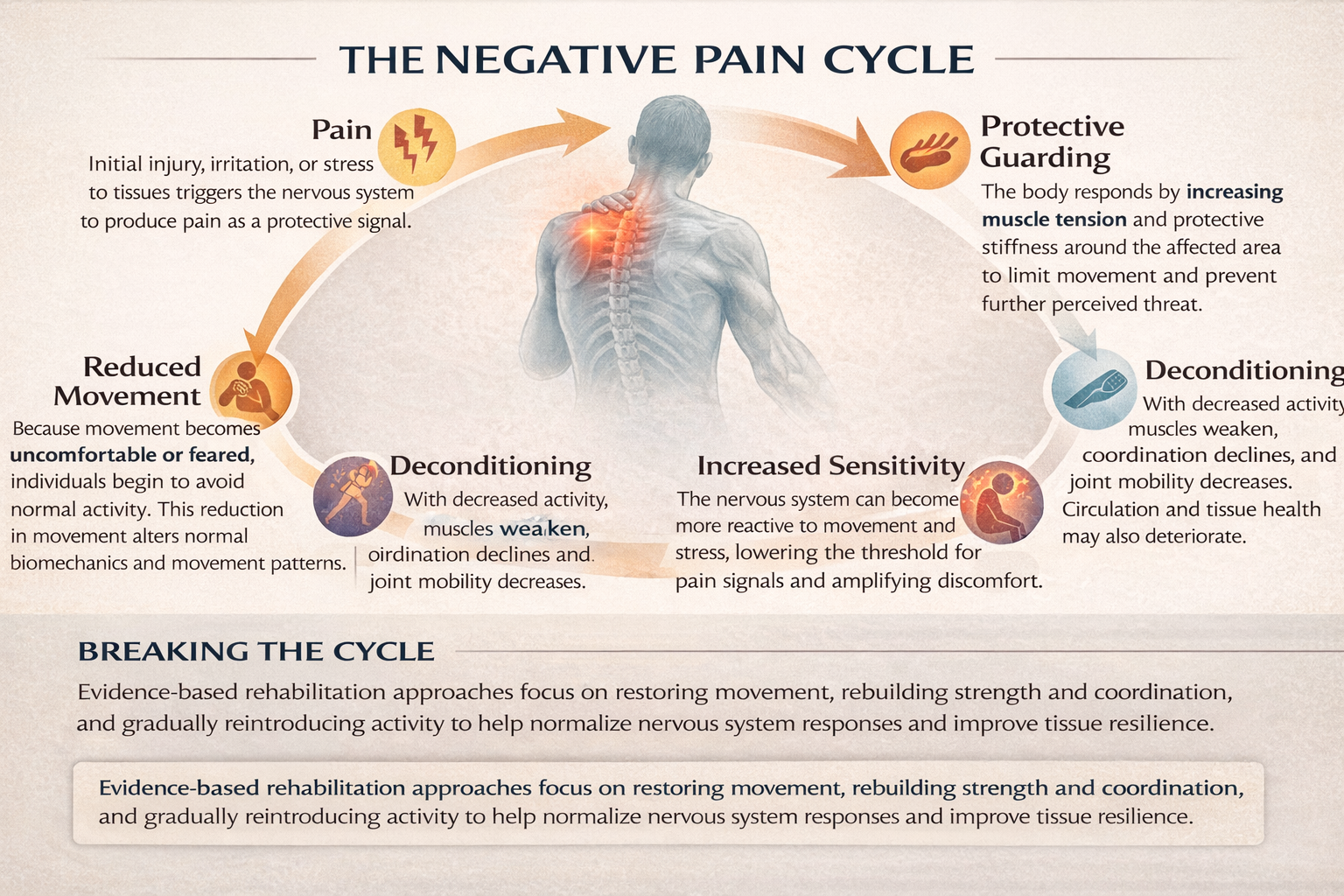
Once this cycle starts, it can feel like there’s no way out.
So the big question becomes:
Is this inevitable as we age?
The answer might surprise you.
While it’s certainly possible to develop structural issues in the spine as we age, research consistently shows that most chronic low back pain is not primarily caused by structural damage.
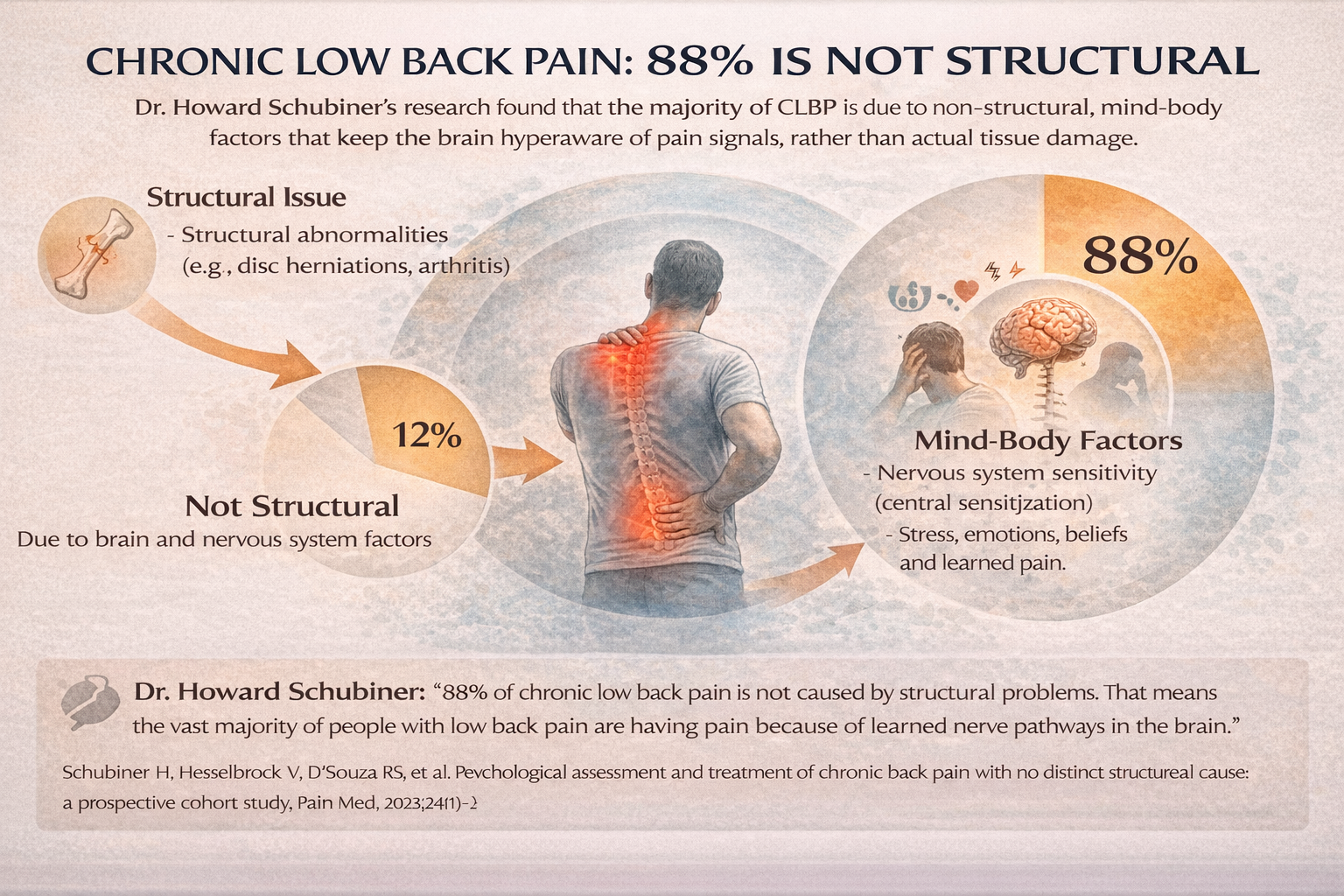
Before diving into that idea, it helps to understand the difference between acute and chronic low back pain.
Acute pain refers to pain lasting less than 3 months, while chronic pain persists longer than 3 months.
The encouraging news is that around 90% of acute low back pain cases resolve within about 6 weeks (PMID: 38550557).
Even more interesting, research also shows that targeting the low back specifically doesn’t produce better outcomes than simply staying generally active.
In other words, when your back gets irritated, you usually don’t need to panic.
If getting a massage, visiting a chiropractor, trying acupuncture, or doing dry needling makes you feel better, that’s completely fine. These approaches may not be “fixing” the underlying issue, but feeling better and feeling safe are incredibly important parts of recovery.
And we shouldn’t underestimate that.
The bigger challenge tends to appear when pain lasts longer than three months.
At that point, several factors beyond age start to play a major role.
We Become Less Active
This probably isn’t shocking.
Our 40s can be some of the busiest years of life. Careers are demanding, family responsibilities are high, and free time becomes limited.
Exercise often becomes one of the first things pushed aside.
But when physical activity drops, several things begin to happen:
• Weight gain can increase back pain risk. Some research suggests roughly a 7% increase in low back pain risk for every 10 pounds gained. Weight gain not only places greater mechanical stress on the spine but can also increase low-grade systemic inflammation, which heightens pain sensitivity.
• Pain tolerance decreases. Exercise stimulates the release of the body’s natural opioids and improves pain regulation. When activity levels fall, this protective mechanism weakens.
• Fascia becomes less healthy. Reduced movement can make fascia thicker, stiffer, and more sensitive to pain. Inactivity allows adhesions to develop, which can lead to stiffness and restricted mobility. Regular movement helps keep fascia supple and resilient.

Stress Is Often Higher
Another major factor during midlife is stress.
Research shows 57% of people aged 35–44 report significant stress, and nearly 50% of those aged 45–54 experience high stress levels.
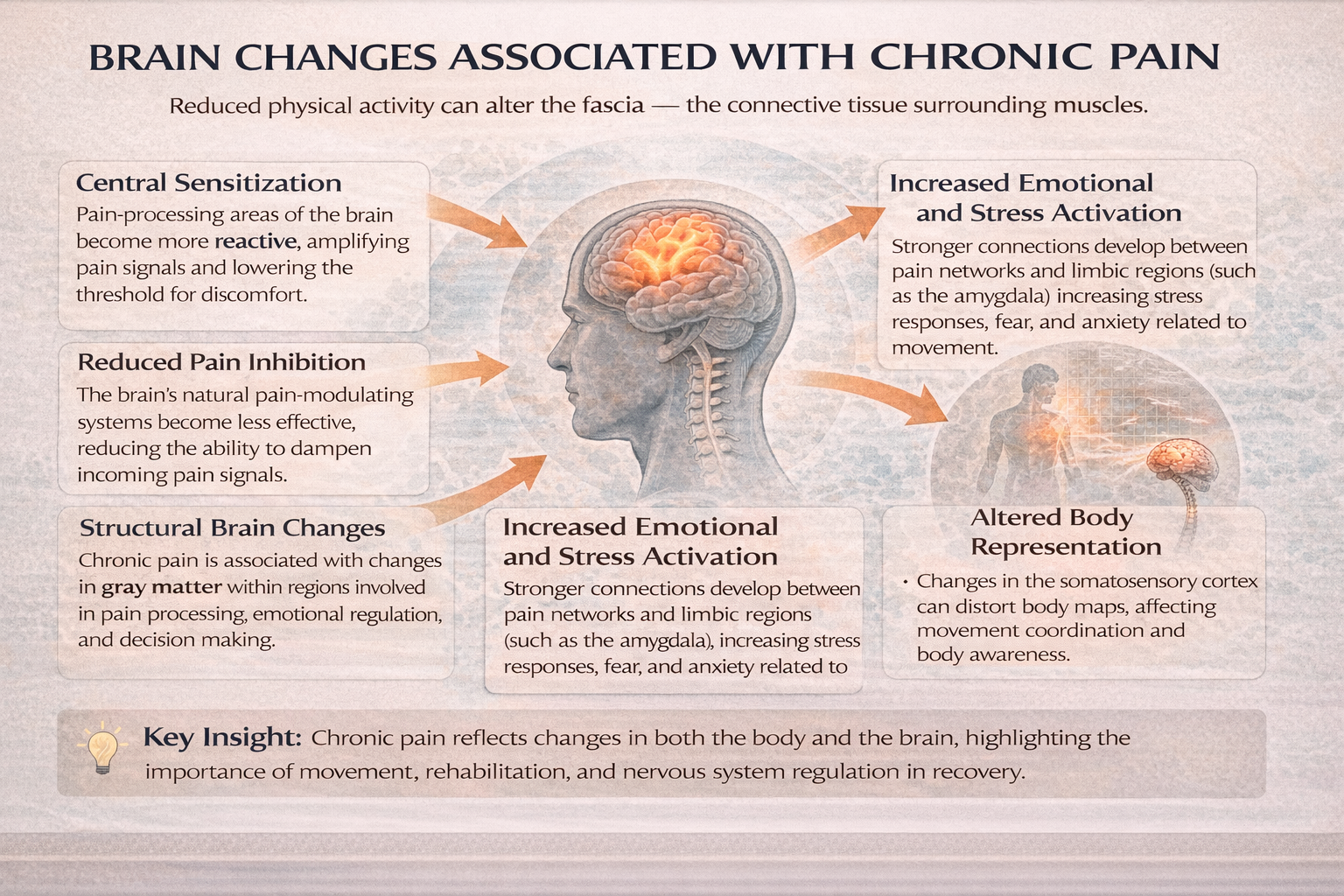
Stress plays a major role in chronic pain through several mechanisms:
• Heightened pain sensitivity
Stress and anxiety make the nervous system more reactive, causing the brain to interpret even small signals as intense pain.
• Increased muscle tension
Stress activates the sympathetic nervous system, which increases tension in the muscles surrounding the spine. Over time, this constant tension can lead to fatigue, poor circulation, and pain.
• Reduced pain regulation
Stress disrupts the brain’s natural ability to dampen pain signals, making discomfort feel stronger and more persistent.
• Altered movement patterns
When people are stressed, their motor control changes. Muscles around the trunk may co-contract excessively, creating stiffness and increasing the load on the spine.
So What Can We Do?
The good news is that this cycle can be interrupted.
The most important step is finding movement that feels safe, enjoyable, and sustainable.
Exercise has been shown to reduce low back pain by around 50% on average.
You might wonder why it isn’t 100%.
The answer is simple: low back pain has many contributing factors. Some people experience complete relief, while others see meaningful improvements but still need to manage lifestyle factors like stress, sleep, and daily activity.
That’s why the most effective strategies address multiple influences on pain, not just the spine itself.
Lifestyle factors, personal beliefs about pain, stress levels, and overall activity patterns all play important roles.
What does this look like?
Lower Stress, Improve Mobility, & Reduce Fear Of Movement
Good Core Training
Contrary to what social media might tell you, A LOT of research shows that core stability can help reduce chronic low back pain (PMID: 25931693, PMID: 23284879). Now, not all core training is equal, that is why we recommend starting with the type of drills that physical therapist, Jessica Bento shows below…
View this post on Instagram
The Key Is Consistency
The goal isn’t to find the perfect exercise.
It’s to find movement that you can perform consistently, that feels safe, and that keeps you engaged.
Starting gradually is often the best approach.
And when resistance or weight is used, it shouldn’t just be about making the exercise harder. Properly applied loading can provide the body with valuable feedback that helps improve coordination and stability.
So rather than just asking how much weight we should use, the better question is:
How can we use load to help people move better?
Because when we focus on movement quality, confidence, and consistency, we start to break the negative pain cycle and that’s where real progress begins.
Learn MUCH more at our Training Over 40 online masterclass staring TUESDAY!!! Only a couple of days left to save 20% HERE with code “masterclass20”
Featured in





© 2026 Ultimate Sandbag Training. Site by Jennifer Web Design.