Does Rounding Your Low Back Cause Back Injury? What Research REALLY Says!
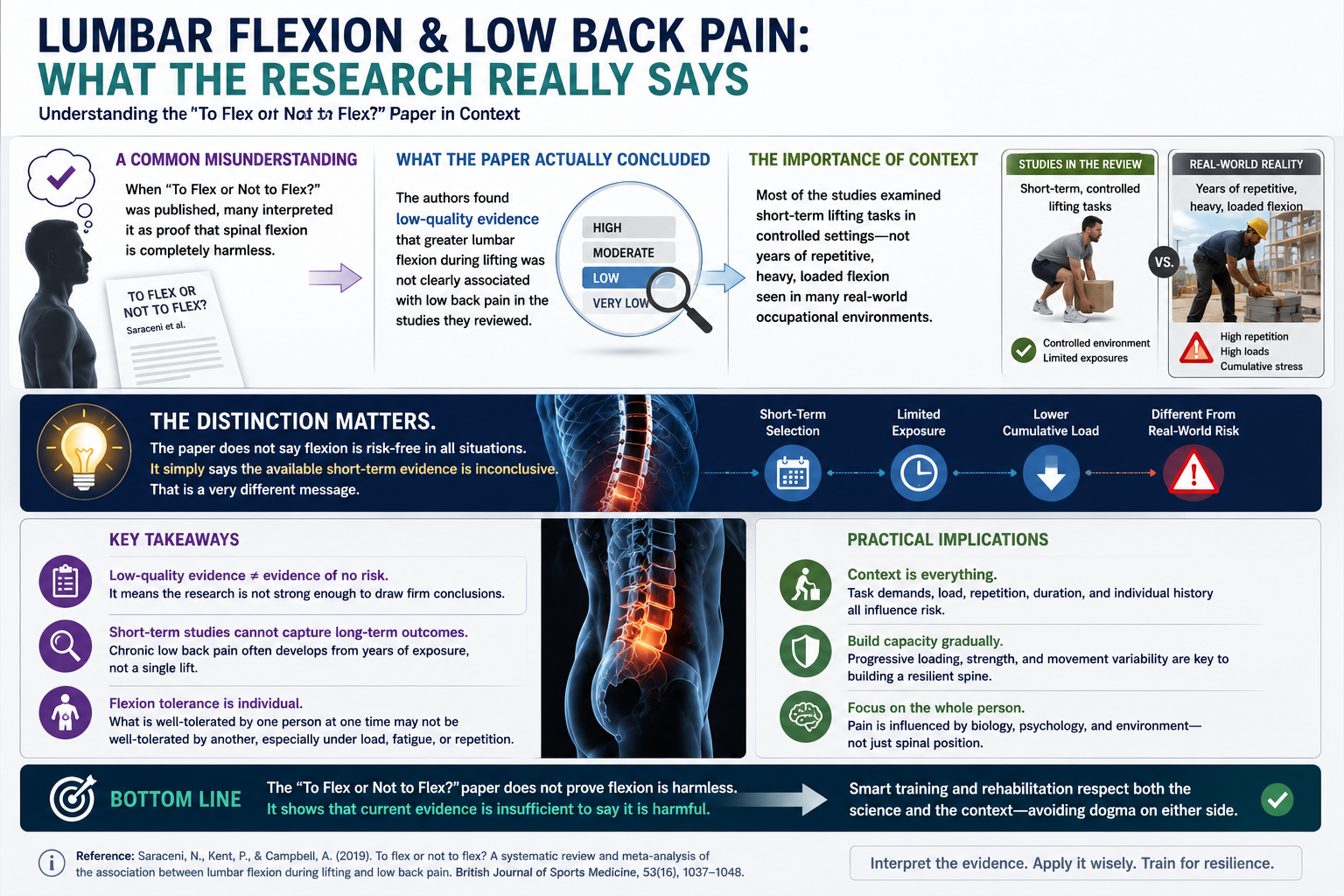
The conversation around lumbar flexion and low back pain has become one of the most misunderstood topics in fitness and rehabilitation. When the paper “To Flex or Not to Flex?” by Saraceni and colleagues was published, many people quickly interpreted the findings as proof that spinal flexion is completely harmless and that concerns about bending the spine were outdated. However, that is not actually what the research said.
The paper’s real conclusion was much narrower. The authors found low-quality evidence that greater lumbar flexion during lifting was not clearly associated with low back pain in the studies they reviewed. Importantly, most of the studies looked at relatively short-term lifting tasks in controlled environments, not years of repetitive heavy loaded flexion seen in many occupational settings.
That distinction matters.
Pain Is More Complex Than Posture
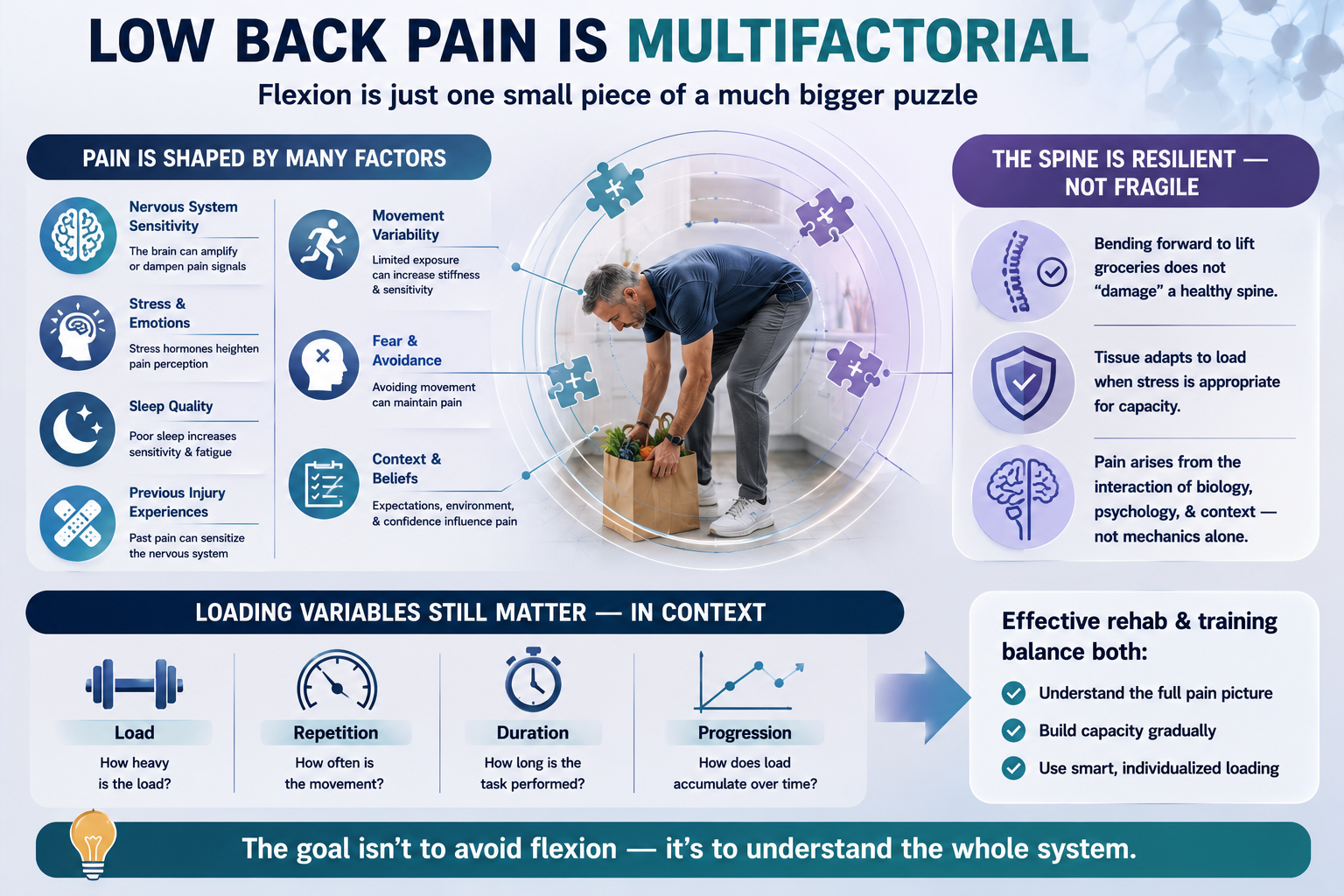
One of the biggest positive contributions of the paper is that it challenges the fear-based messaging surrounding spinal movement. For years, people were taught that bending the spine was inherently dangerous and that lifting with a rounded back would inevitably “blow out” a disc. This mindset often created more fear than resilience.
Research has shown that people with low back pain frequently move with less lumbar flexion, not more. In many cases, this reduced movement appears tied to fear, guarding, or previous beliefs about spinal fragility.
This is a critical point.
Pain is influenced by many factors beyond tissue mechanics alone: stress, sleep, previous injury experiences, fear avoidance, lack of movement variability, and nervous system sensitivity all play roles. The spine is not a fragile structure that suddenly fails because someone bent forward to pick up groceries.
At the same time, acknowledging that pain is multifactorial does not mean loading variables suddenly stop mattering.
What the Conversation Often Leaves Out
The problem is that many social media interpretations jumped from “flexion is not automatically dangerous” to “loaded spinal flexion never matters.” Those are two completely different statements.
The To Flex or Not to Flex? review did not examine the long-term effects of repetitive occupational loading over years or decades. Yet occupational research consistently shows that repetitive heavy lifting, cumulative spinal loading, awkward postures, and repeated flexion under load are associated with higher rates of low back pain.
Studies examining manual labor populations, warehouse workers, and repetitive lifting occupations continue to identify cumulative loading exposure as a meaningful risk factor.
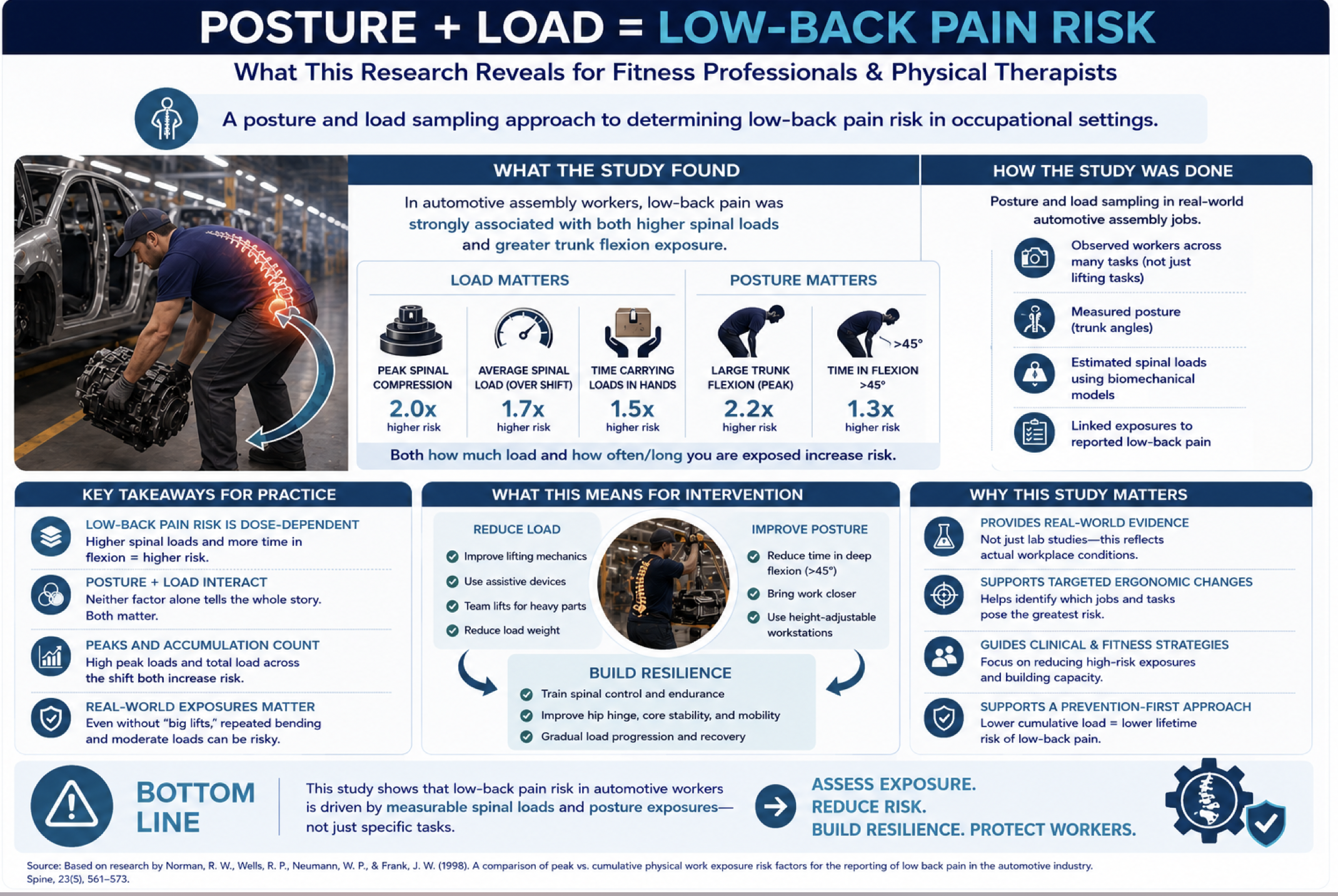
This aligns with basic principles of tissue adaptation. Human tissues adapt remarkably well to stress when exposure is progressive and recoverable. But excessive repetitive loading without adequate recovery can exceed tissue tolerance over time.
That does not mean flexion itself is “bad.” It means dosage matters.
We would never say squatting is dangerous simply because too much poorly managed squatting can irritate knees. Likewise, we should not label spinal flexion as inherently harmful. The issue is capacity versus demand.
The Missing Middle Ground
Too often the discussion becomes polarized:
- One side says spinal flexion is dangerous and should always be avoided.
- The other side says spinal flexion is completely irrelevant.
Reality usually lives somewhere in the middle.
The spine is designed to move. Flexion is a normal human movement. Walking, sitting, tying shoes, rolling in bed, and athletic movement all involve spinal flexion to varying degrees.
But movement quality, load management, recovery, conditioning, and context still matter.
An untrained person repeatedly performing heavy loaded flexion for hours every day may not tolerate the same demands as a well-conditioned athlete progressively exposed to those stresses. Capacity changes everything.
This is where intelligent movement systems become important.
How We Introduce Spinal Flexion Safely
In our Myofascial Integrated Movement (MIM) approach, spinal flexion is not treated as something to fear, nor is it thrown into training recklessly. Instead, we use carefully designed progressions that help people restore movement confidence, improve coordination, and regulate unnecessary tension.
One example is the use of Cat Camel variations.
Cat Camels are often misunderstood as simple mobility drills, but when performed intentionally they can serve several important purposes:
- Teaching segmental spinal awareness
- Reducing excessive muscular guarding
- Improving breathing coordination
- Helping downregulate the nervous system
- Introducing spinal flexion in a controlled, unloaded environment
For individuals dealing with pain, the nervous system is often operating in a protective state. Gentle spinal movement paired with controlled breathing can help decrease threat perception and restore movement variability.
This is an important concept because rigid movement strategies are not always protective long term. Research has suggested that excessive guarding and avoidance behaviors may actually contribute to persistent pain states.
Within MIM drills, we also integrate flexion alongside rotational and lateral stabilization strategies. Rather than isolating movement into robotic patterns, we teach people how to coordinate the trunk with the hips, lats, core, and fascial sling systems.
That integration matters because real life does not happen in perfectly neutral positions.
Building Capacity Instead of Fear
The goal should not be avoiding spinal flexion forever. The goal should be building resilience and capacity.
For some individuals in pain, reducing loading temporarily may absolutely be appropriate. Calm sensitive tissues, improve movement confidence, and gradually reload. But eventually, most people benefit from reintroducing spinal movement rather than permanently avoiding it.
Avoidance strategies often create deconditioning and fear. Exposure strategies, when intelligently progressed, build adaptability.
That is ultimately the biggest lesson missing from many interpretations of the lumbar flexion debate.
The question is not simply “Is flexion bad?”
The better question is:
“How much flexion, under what load, at what frequency, for what person, and with what preparation?”
When we ask better questions, we get better answers.
And when we stop treating the spine as fragile, while still respecting the realities of cumulative loading and recovery, we can help people move with far more confidence, intelligence, and resilience.
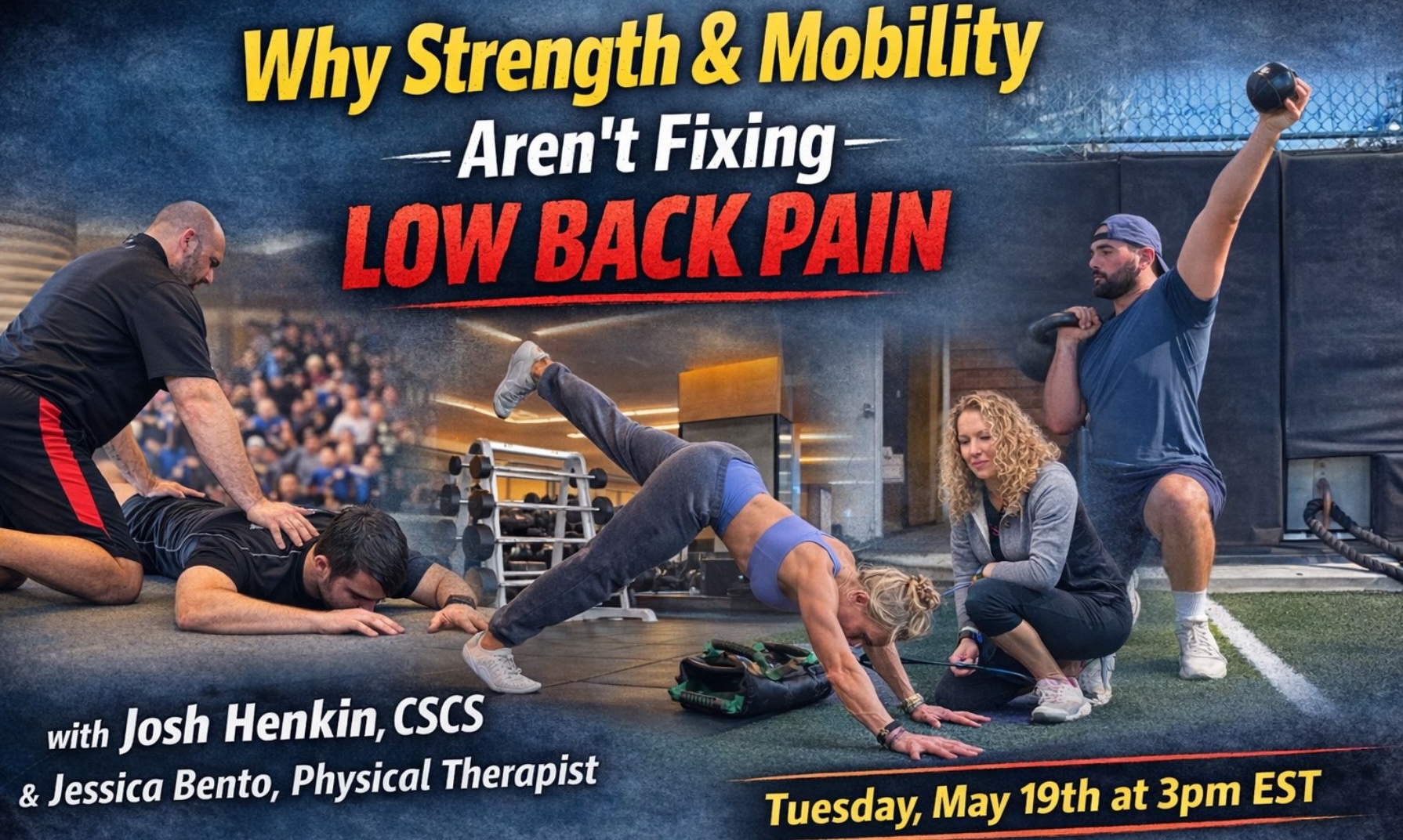
Learn MUCH more at our upcoming FREE webinar May 19th this coming Tuesday at 3pm EST HERE