
Getting BETTER Fitness Results Over 40
2026-02-12

Exercise absolutely helps slow many aspects of the aging process but it doesn’t stop aging. That distinction matters.
We all age. Hormones shift. Recovery changes. Muscle protein synthesis becomes slightly less responsive. Tendons lose some elasticity. Power declines faster than raw strength. Sleep can become more fragile. None of this means we are broken. It means we are adapting to a new biological landscape.
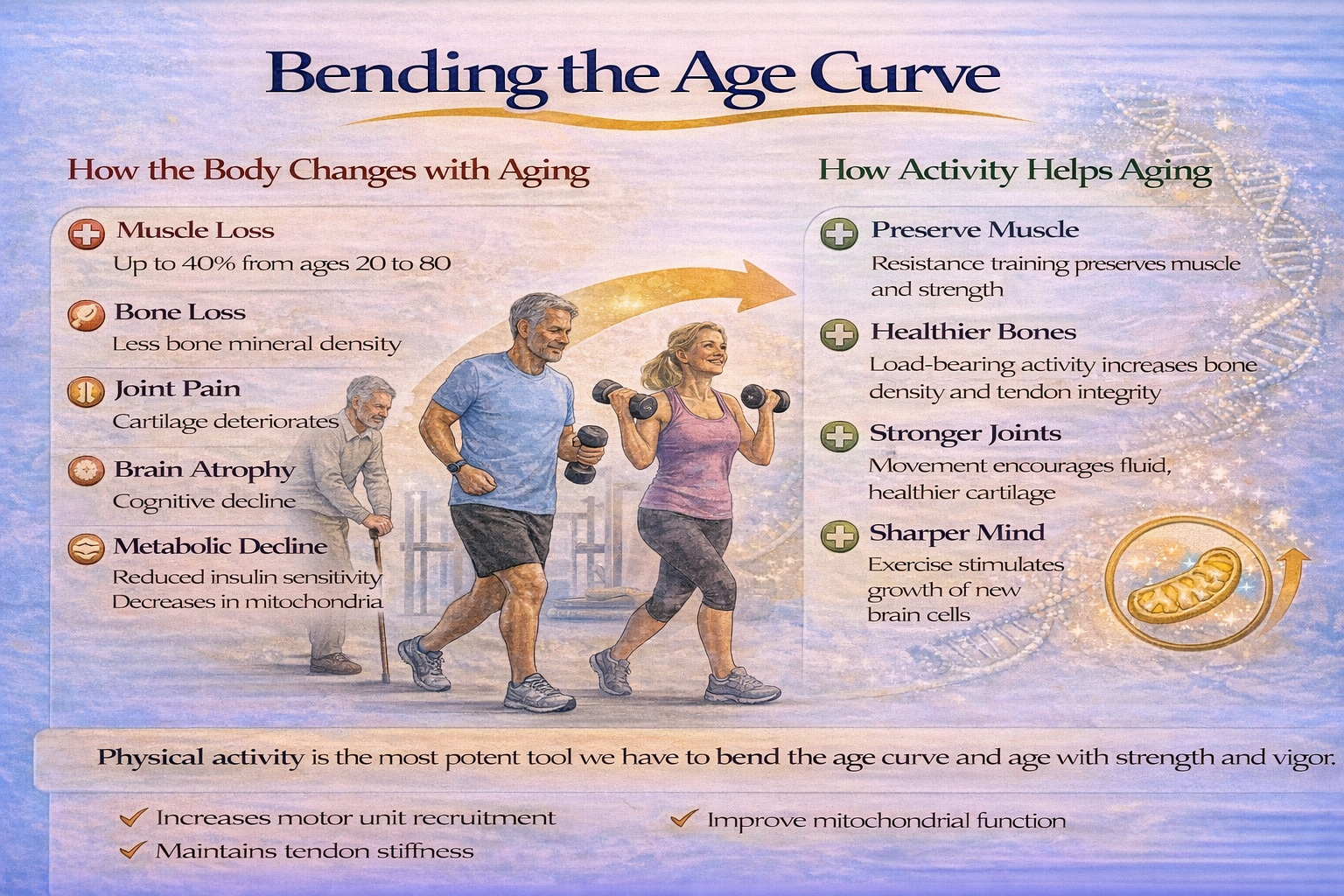
While exercise can help us age better, it does NOT stop us from aging.
The mistake many people make isn’t that they stop training it’s that they try to train like they’re still 20.
In our twenties, we could often get away with chaos. Random workouts. High intensity every session. Minimal warm-ups. Poor sleep. Max effort conditioning layered on top of heavy lifting. The body was forgiving because recovery capacity was high and life stress was often lower, sound familiar?
After 40, the equation changes.
Research shows that resistance training remains one of the most powerful tools we have to preserve muscle mass, bone density, insulin sensitivity, and cognitive function. Strength training increases motor unit recruitment, maintains tendon stiffness, and improves mitochondrial function all of which counter many hallmarks of aging. In fact, adults in their 60s and 70s can still gain significant strength and muscle when training appropriately.
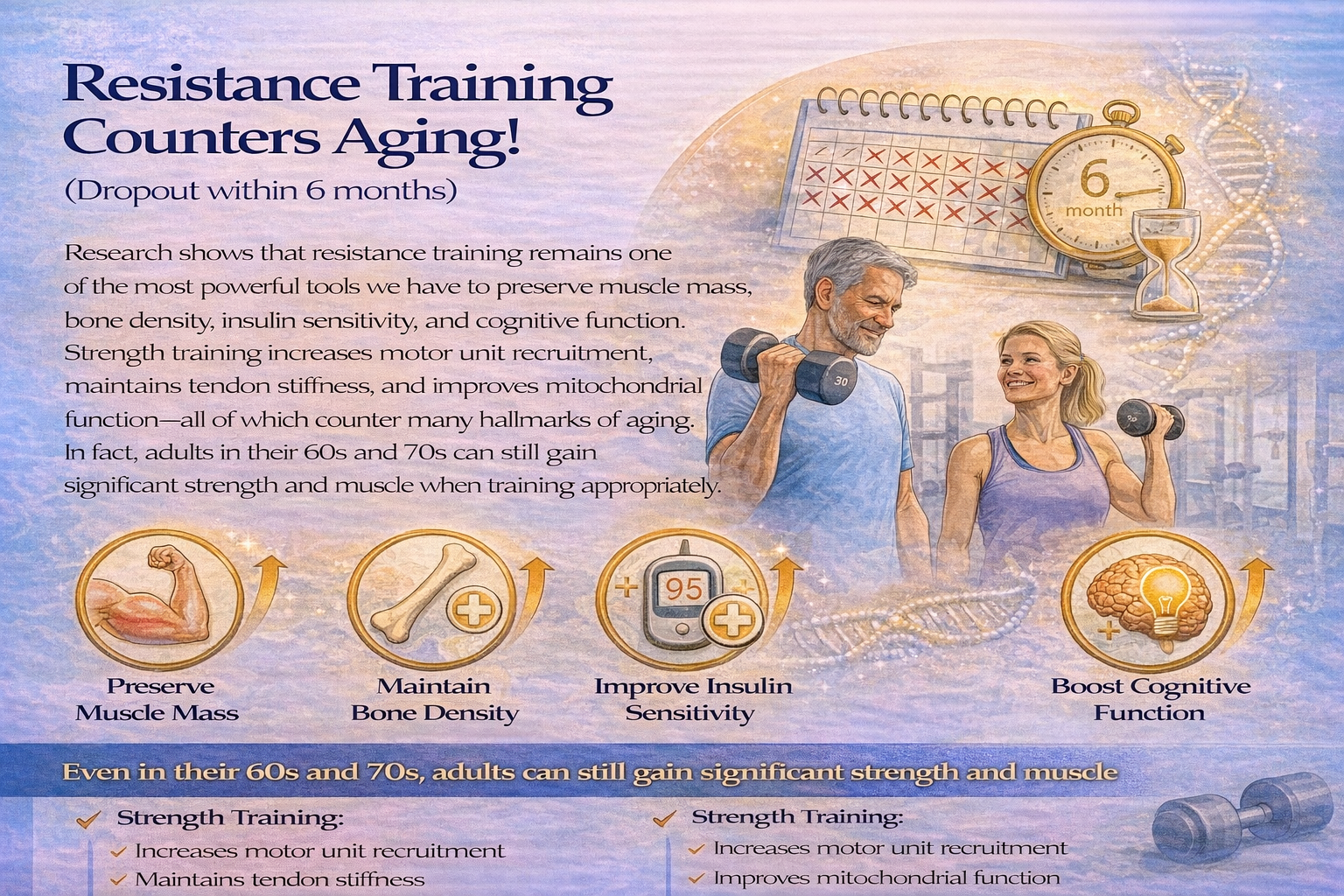
But “appropriately” is the key word.
As we age, what benefits us the MOST also changes. Don’t get me wrong, the concepts I’m about to share are VERY much needed at any age, however, they get even stronger as we get older!
Training smarter means respecting these shifts rather than fighting them.
Single Leg Training Should Be A Priority
As we age, incorporating more single-leg training into our programs isn’t and shouldn’t be a controversial take as it’s supported by research showing meaningful benefits for mobility, stability, and overall function without sacrificing strength or muscle growth.
Unilateral exercises such as split squats, lunges, and single-leg deadlifts require each leg to support the body independently. This pattern more closely mimics everyday movements like walking, climbing stairs, and recovering from slips activities that become increasingly important as balance and neuromuscular control diminish with age. Research indicates that training one limb at a time can improve balance and proprioception because it engages stabilizing muscles that aren’t as challenged during traditional bilateral lifts, helping reduce the risk of falls in older adults.
Step-ups are often an underrated single leg exercise that allows A LOT of progressions with height of step, direction of step, and loading of the body as all options.
Importantly, systematic analyses comparing unilateral and bilateral training methods show that single-leg exercises can stimulate strength and hypertrophy just as effectively as bilateral movements when overall training volume and intensity are matched. In some cases, unilateral training even exposes and corrects strength asymmetries between limbs a common issue that can increase injury risk and compensate with poor movement patterns.
Additionally, because unilateral work often involves loading that doesn’t have to be on the back and increased core and hip engagement, it can reduce undue stress on the low back while building joint stability and functional strength. This makes single-leg training particularly valuable for aging clients who want to maintain strength and muscle size without overloading vulnerable areas.
We should just not be incorporating more single-leg work into our routines, but prioritizing it in our training. This isn’t lesser than training, it is actually increasing our results.
Better Upper Body Training
One of the biggest shifts we can make is integrating more of the body into our upper-body training. Instead of isolating the shoulders, chest, or arms on a bench, we use standing presses, staggered stances, lifts that involve the hips, and movements that require the core to stabilize while the arms produce force.
Research on the kinetic chain shows that force production in the upper body is influenced by what happens at the hips and trunk. When we improve proximal stability the ability of the core and hips to control motion we improve distal function in the shoulders and arms. This often translates to stronger presses and pulls with less irritation.
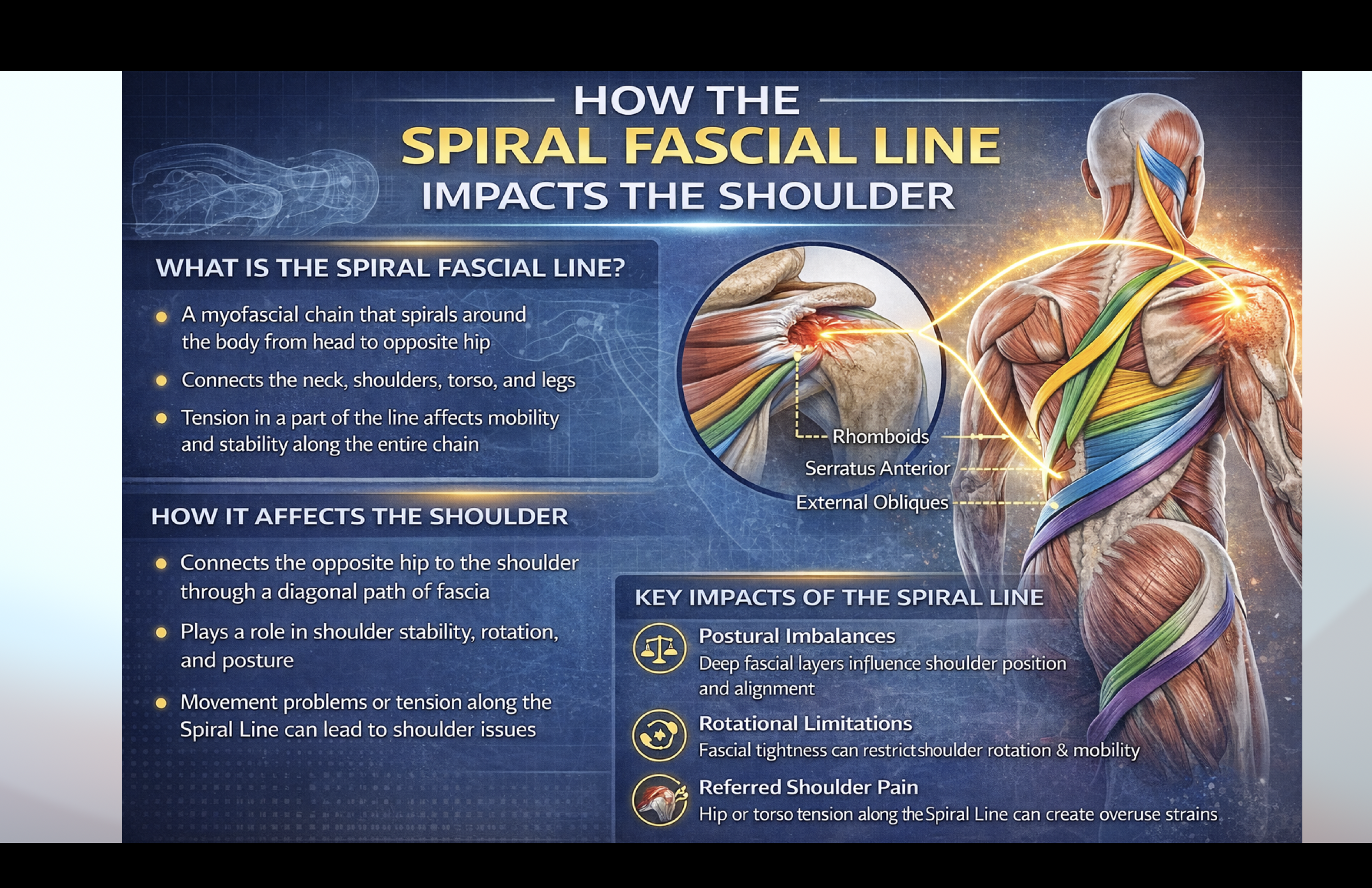
As we age, this integration matters even more. Training the body as a connected system improves joint stability, distributes stress more evenly, reduces unnecessary strain on the shoulders and low back, and enhances mobility through coordinated movement not isolated strengthening.
View this post on Instagram
We can achieve incredible results as we age… strength, muscle, mobility, and resilience are not reserved for the young. But progress after 40 isn’t about grinding harder; it’s about training smarter. It means respecting recovery, prioritizing quality over chaos, integrating the body instead of isolating parts, and progressively building capacity instead of chasing exhaustion. When we align our programming with how the body adapts over time supporting joints, developing stability, maintaining power, and managing total stress, we don’t just slow decline, we continue to improve. Aging is inevitable, but unnecessary breakdown isn’t. With intelligent training, we can build a body that performs well, feels strong, and supports the life we want to live for decades to come.
Find out SO much more at our upcoming “Fitness Over 40” FREE Webinar Tuesday Feb. 24th HERE
Tim Rudd does a great job of showing how to put these ideas into practice while ALSO addressing another obstacle for many people of lack of time in a super efficient workout…
Featured in





© 2026 Ultimate Sandbag Training. Site by Jennifer Web Design.