
Smarter Power Training: Building Speed and Strength Without Beating Up Your Joints
2026-02-28

I have found in my past 30 years of coaching that a good idea can go sideways in fitness pretty fast. One that is really important to discuss is power training, especially as we age.
Why?
I could tell that you that power actually decreases faster than strength when we are over the age of 35, but so what? You are probably not as focused on if you can jump high, throw the furthest, or what we usually associate power with in life.
Power training is very important to us as we get older for A LOT of reasons…
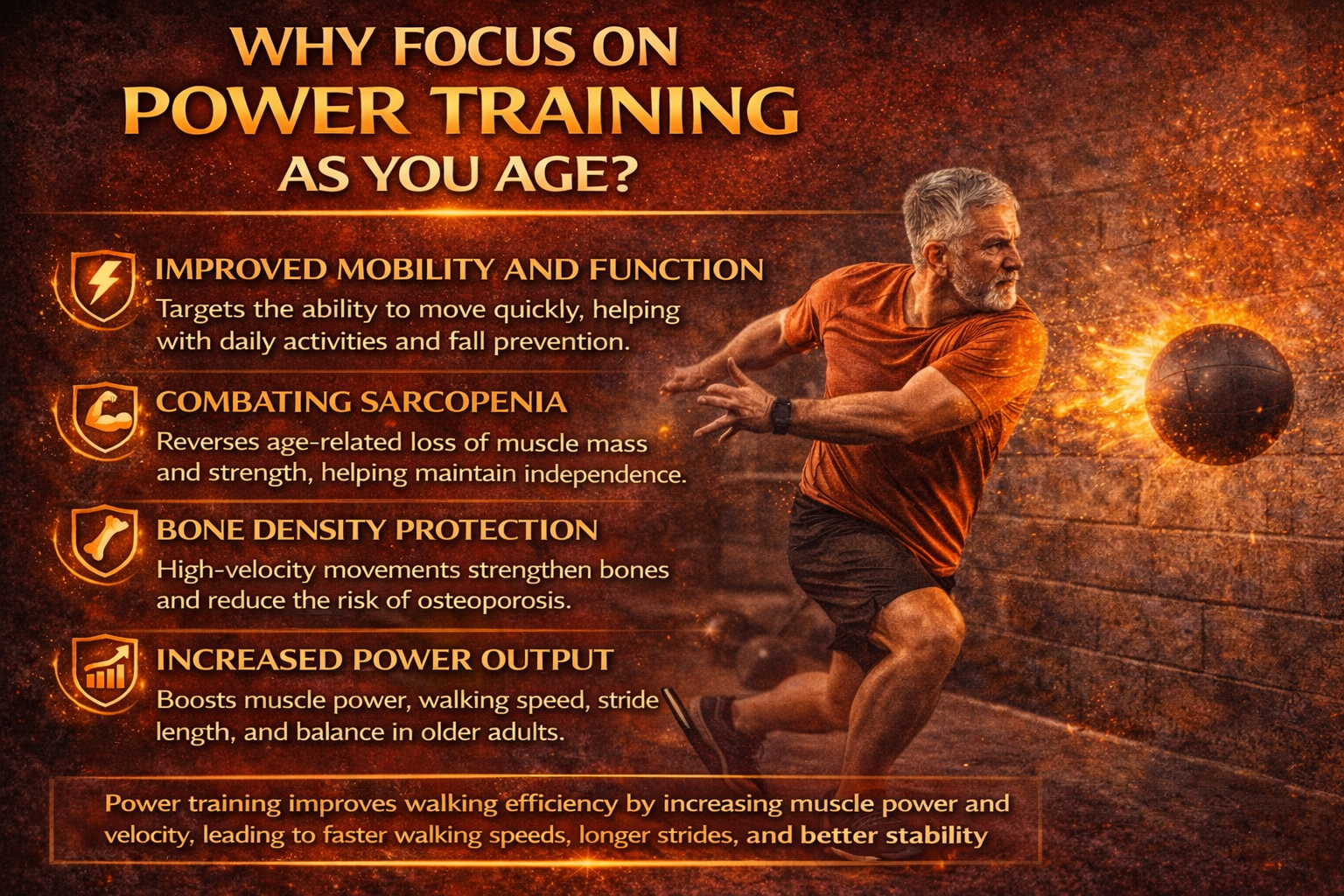
Improved Mobility and Function: Unlike traditional slow strength training, power training specifically targets the ability to move quickly, which is essential for catching oneself to prevent falls and performing daily activities.
Combating Sarcopenia: It helps reverse the natural, age-related loss of muscle mass (sarcopenia) and strength, enabling seniors to maintain independence longer.
Bone Density Protection: The high-velocity movements create increased stress on bones, strengthening them and reducing the risk of osteoporosis.
Increased Power Output: Studies indicate it can lead to significant increases in muscle power and overall physical performance in older adults, boosting quality of life.
Power training improves our ability to walk efficiently by increasing muscle power and velocity, leading to faster walking speeds, longer strides, and better stability in older adults and those with mobility limitations. By enhancing neuromuscular activation and strengthening muscles at high speeds, it directly improves push-off force, ankle/knee kinematics, and balance.
So, no question that power training is important and nowadays pretty acceptable, but what is good and not so good power training for the average person as we age?
Social media is full of ideas, some good, some not so much.
One of the most common concepts that gets promoted is that of jumping, even really high impact jumping. Does such training build power? Yes. Can such training even help build bone density? Yes. Buuuuut…people leave out who is often NOT included in the studies often referenced. So, if you were someone with…
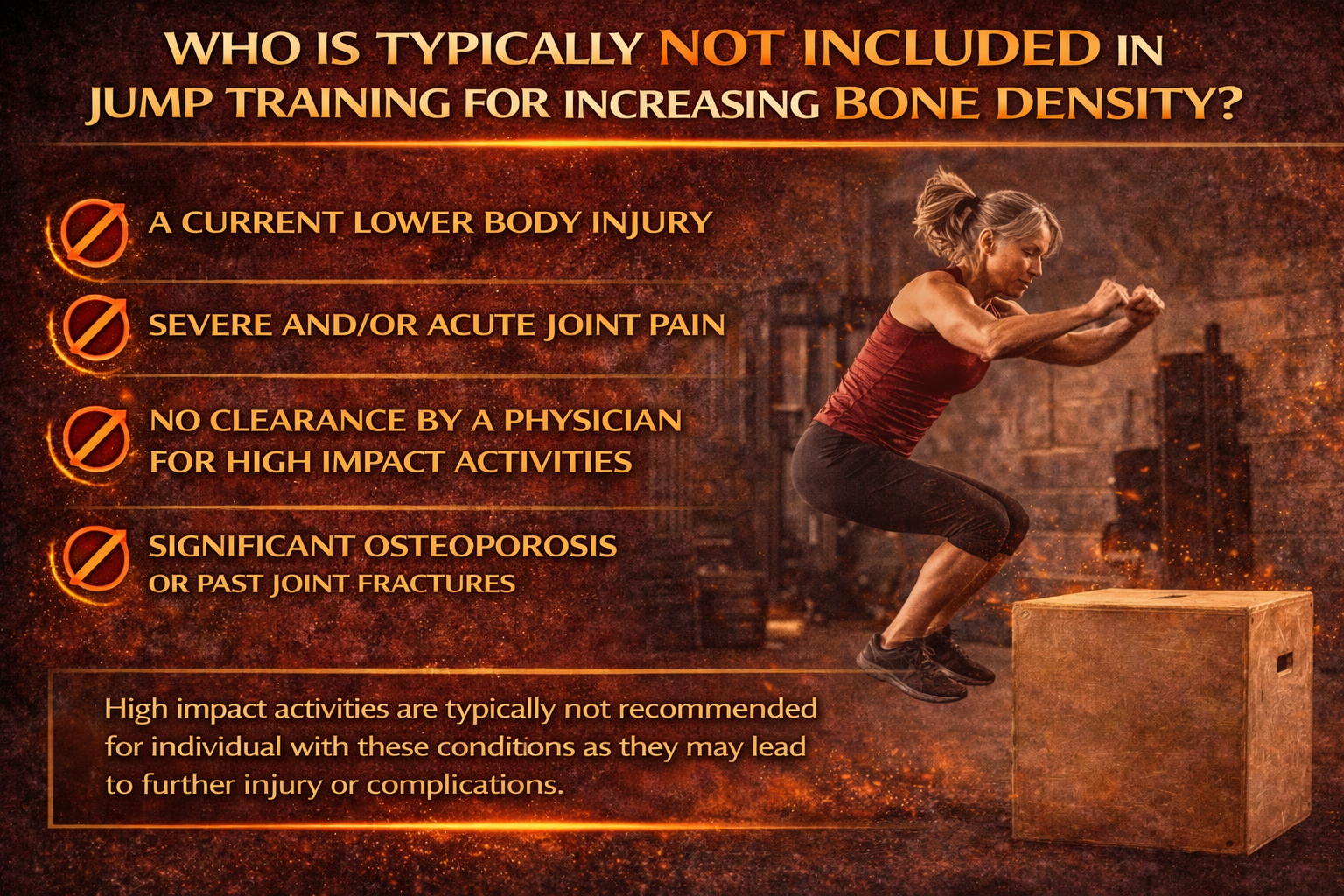
-A current lower body injury
-Severe and/or acute joint pain
-No clearance by a physician for high impact activities
-Significant osteoporosis or past joint fractures
You were left out of these studies, that is an ethical concern. The point being that in very specific circumstances jump training can be beneficial, but in most of my years coaching people weren’t without challenges. In fact, most had a knee, hip, back, even foot “issues” going on that made such training not ideal. Others didn’t have the technical proficiency in movement to do the movements without potential issues and so forth.
All I am saying here is that jumping isn’t bad, it is just for the minority, not typically the average person looking to improve their power. The good news is that jumping isn’t the only form of power training we can use. Often people miss these keys to good power training based on what the research has shown…
-Acceleration (just try to move with some speed): Most people don’t know that simply trying to accelerate the weight you lift a weight (including your body) counts as power training. That can mean trying to come up from a squat fast, drive up from a push-up fast, pull a weight on row with intent to accelerate, trying to up from a deadlift with acceleration all counts as power training.
Many times we can use specific tools to help with such training. Accelerating doesn’t come naturally to many people especially if you haven’t trained it in awhile. That is why tools like bands can be particularly helpful because as you move against bands they increase their tension almost FORCING you to move with greater speed. This is also true of heavier weights.
Most think power always has to BE fast, what we are talking about right now is focusing on just simply the intent of TRYING to move a weight faster yields very positive results. Often using a bit more weight than most people would think (imagine a weight that gives you a pretty good effort) and trying to move fast (even if you aren’t) can be helpful in giving both a good result and teach people how to develop more power.
Probably even more shocking to a lot of people is that research has also shown practices like we demonstrate in our Myofascial Integrated Movement system can also help with power development like you see in examples below.
As a coach I am ALWAYS weighing the risk vs reward of doing something and I am also always looking for the safest way to achieve any goal. Power is no different. Nothing can derail a well-meaning program like an injury and since power can also challenge stability, it makes sense to have a more progressive and wider approach to help people in ways they can develop power and do so by building a healthier body.
This is the LAST week to both register and save 20% on our upcoming Training Over 40 online masterclass & get 3 FREE resources HERE with code “masterclass20”
Featured in





© 2026 Ultimate Sandbag Training. Site by Jennifer Web Design.