
Unlocking Thoracic, Shoulder, and Neck Mobility
2025-12-1

I think mobility for being such a popular term is something that most coaches and fitness enthusiasts really struggle to achieve. Sure, people on social media make large claims and demonstrations that mobility is solved with a few crazy movements, but the reality is most of these people have never really struggled with mobility. Yes, there is a BIG difference between demonstrating one’s mobility and helping those that struggle with it actually improve upon it.
Mobility is more than just stretching or cranking on joints in the body, it’s about restoring functional movement to areas of the body that are often stiff or underused. Among the most common areas where people struggle are the thoracic spine, shoulders, and neck. Poor mobility in these regions can lead to compensation patterns, pain, and even injury.
The thoracic spine (mid-back) is a critical link between the lower back and the shoulders. When it’s stiff, the body compensates by overusing the lumbar spine or shoulder joints, increasing the risk of strain or injury. Similarly, shoulder and neck mobility are essential for everything from lifting overhead, pressing, and pulling, to everyday movements like reaching or carrying. In many cases, poor mobility here isn’t just about tight muscles it’s about underactive stabilizers and inefficient movement patterns.
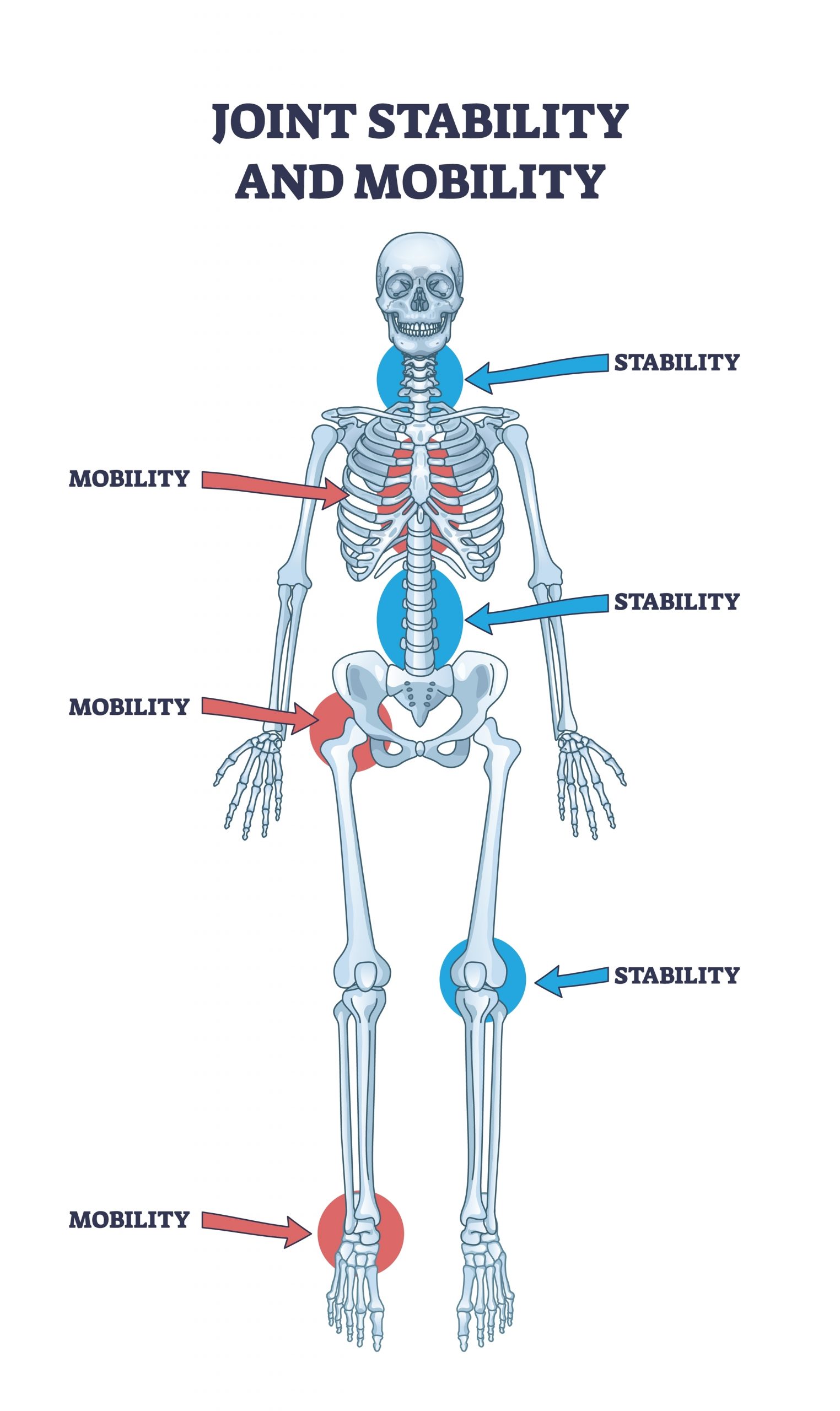
Integrated movements of the lower body and core play a crucial role in improving mobility in the thoracic spine, shoulders, and neck. The human body functions as a connected chain: force generated in the hips, glutes, and legs travels upward through the core to the spine and upper body. When the lower body and core are engaged effectively in movement, they create a stable foundation that allows the thoracic spine to rotate freely, the shoulders to move efficiently, and the neck to maintain proper alignment.
This engagement stabilizes the lumbar spine, unloads the thoracic spine, and allows rotational mobility in the mid-back and shoulders. Without this integration, the upper body often compensates for instability in the lower body, leading to restricted thoracic rotation, limited shoulder range of motion, and tension in the cervical spine
View this post on Instagram
Meditative movement further enhances mobility in these areas by cultivating awareness of how the body moves in space. Unlike conventional stretching, which often focuses on isolated joints or muscles, meditative movement emphasizes slow, deliberate motion through integrated chains of muscles. This type of movement encourages the thoracic spine to extend and rotate gently, improves scapular mechanics, and reduces chronic tension in the neck. By moving mindfully, individuals learn to notice areas of stiffness or tension and can adjust posture and movement patterns in real-time. Over time, this improves proprioception and teaches the nervous system to allow greater range of motion safely, enhancing both thoracic and cervical mobility while protecting the shoulder joints.
View this post on Instagram
Stability is the final piece of the puzzle in improving mobility for the thoracic spine, shoulders, and neck. Mobility without stability can be dangerous, as unrestricted motion without control can lead to injury. When the core and lower body provide a stable anchor, the thoracic spine can rotate with support rather than collapse under load, the scapulae can move with proper orientation, and the cervical spine can maintain alignment without excessive strain. Exercises that build proximal stability train the muscles around the spine and pelvis to resist unwanted motion while allowing controlled movement in the upper body. This combination of stability and mobility promotes efficient, pain-free movement, enhances posture, and improves performance in functional tasks.
View this post on Instagram
Mobility in the thoracic spine, shoulders, and neck is not just about stretching these areas directly it depends heavily on integrated movement of the lower body and core, mindful meditative movement, and proximal stability. Together, these elements create a strong, responsive foundation that allows the upper body to move efficiently, reduces tension, and protects the spine and shoulders from overcompensation or injury. By training mobility in a connected, controlled, and mindful way, the thoracic spine, shoulders, and neck can achieve greater range of motion while maintaining strength, coordination, and long-term health.
This week we have 40% off our online courses, certifications, and masterclasses like those by physical therapist, Jessica Bento by using code “save40” HERE
View this post on Instagram
Featured in





© 2026 Ultimate Sandbag Training. Site by Jennifer Web Design.