
Why Back Pain Often Shows Up After 40 (And Why It’s Not Just “Aging”)
2026-02-23

There are a few positives in having struggled with chronic low back pain for 35 years. It allows me to be a relatable person for clients coming in with their own struggles of low back pain. I always try to make sure people understand any sort of pain is NOT a competition. Everyone’s experience with low back pain is different, but there are some things we can really learn and share that helps the experience.
Back pain over 40 is something really common and it is often extremely frustrating. Back pain isn’t explained well by one single tissue or one single “bad movement” (sorry social media). For many people, it’s the result of changes in connective tissue adaptability, stress physiology, and how the nervous system interprets threat, especially when daily movement drops.
Below I wanted to shared a research-based lens that helps explain why back pain becomes more common in midlife and what actually matters most.
When You Move Less, Your “Connective Tissue Slip” Changes
One underappreciated contributor to persistent low back pain is the thoracolumbar fascia (TLF), a layered connective tissue structure in the low back that normally allows smooth gliding between layers during trunk movement.
A landmark ultrasound study found that people with chronic low back pain had reduced shear strain (less sliding/gliding) between layers of the thoracolumbar fascia compared to pain-free controls. This reduced “fascial glide” was associated with chronic pain presentation and may reflect thickening/adhesion-like behavior that can develop when movement variability decreases.
More recent work continues to explore TLF mobility and shear strain as a meaningful clinical variable in chronic low back pain.
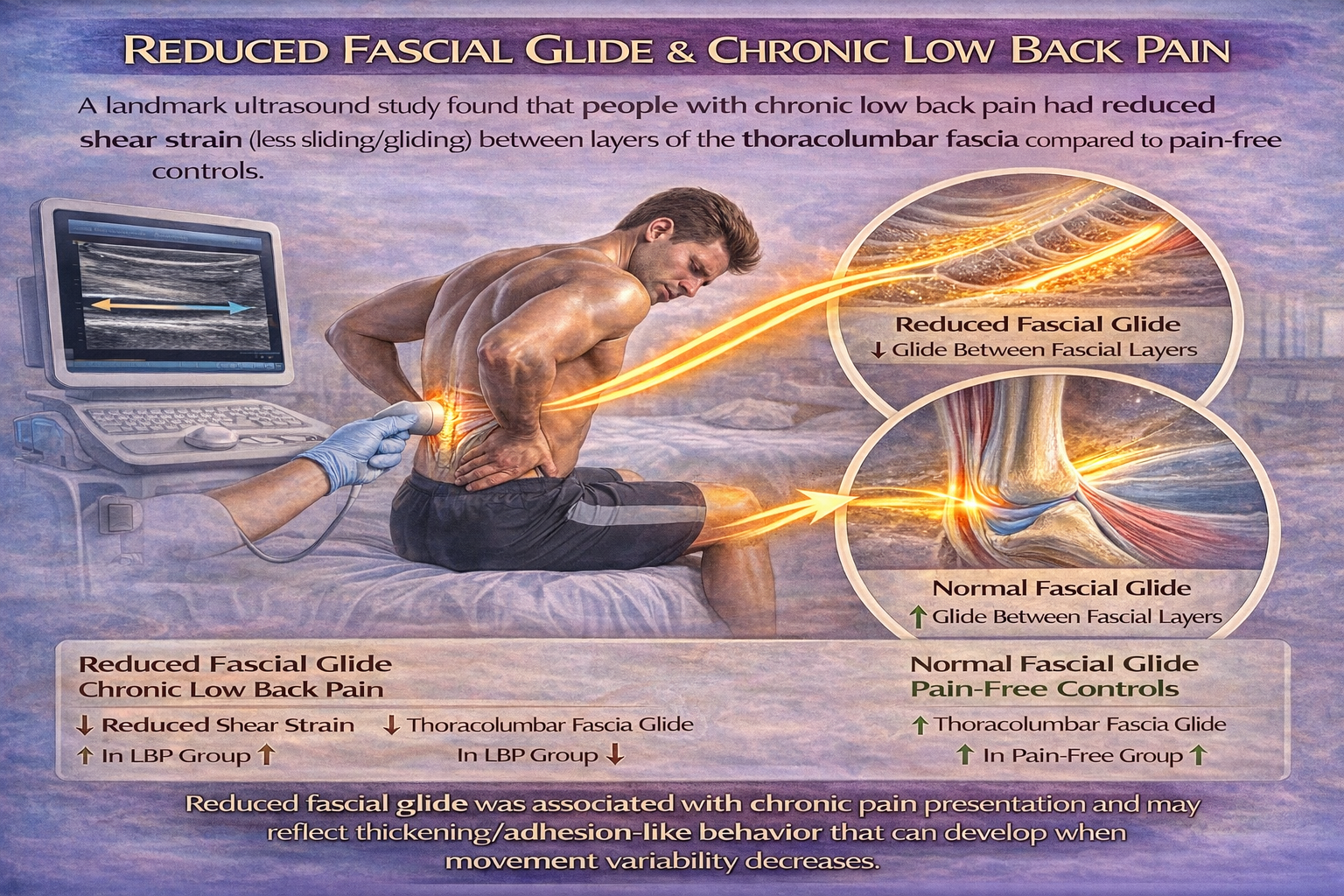
The takeaway for adults over 40 isn’t “fascia is the problem.” It’s that connective tissue needs regular, varied loading and motion to maintain its ability to transfer force and move well. When movement options shrink (sitting more, walking less, training less consistently), the system often becomes more sensitive and less adaptable.
View this post on Instagram
Coach Lauren Penton shows how to use our MIM program to provide that varied movement
Stress and Fatigue Don’t Just “Coincide” With Back Pain They Can Drive It
People over 40 often face more total stress load: career demands, family demands, reduced sleep, and less recovery margin.
Research consistently links psychosocial stressors to chronic low back pain outcomes. A systematic review and meta-analysis found meaningful relationships between psychosocial work factors and chronic low back pain. Another systematic review of prospective studies also identified psychosocial variables as important predictors of poor low back pain outcomes.
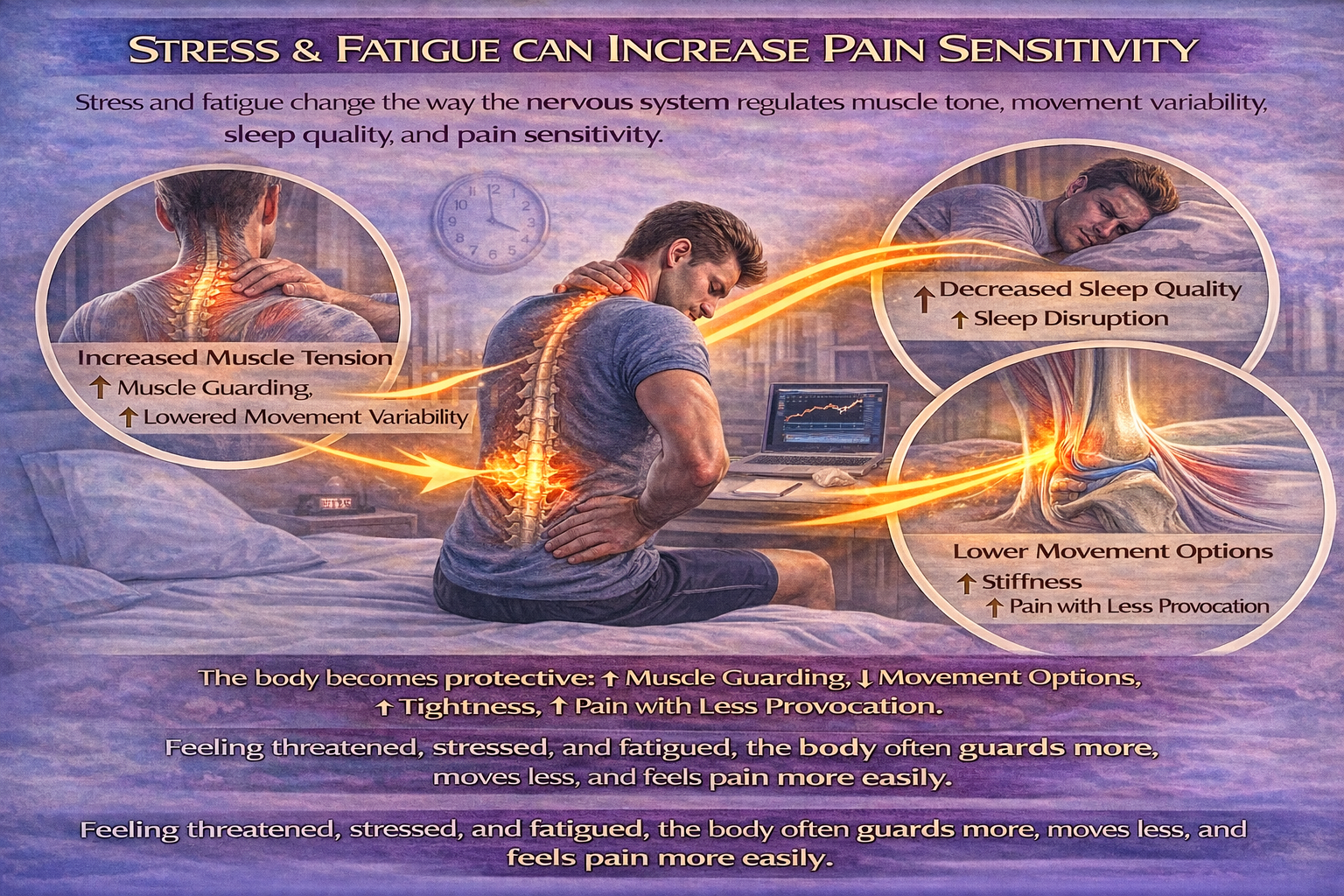
Why does this matter?
Because stress and fatigue change the way the nervous system regulates muscle tone, movement variability, sleep quality, and pain sensitivity. Under high stress, the body often becomes more protective: more guarding, less movement options, more “tightness,” more pain with less provocation.
Many Persistent Back Pain Cases Are “Primary Pain” (Nociplastic/Neuroplastic), Not Structural Damage
A huge shift in modern pain science is recognizing that many people have ongoing pain without a clear tissue injury driving it, especially when imaging findings don’t match symptoms.
A study applying a clinical approach to diagnosing primary pain (also described as nociplastic/neuroplastic) reported that although almost all patients had at least one spinal anomaly on imaging, the majority were classified as having primary back/neck pain, not pain clearly explained by tissue damage.
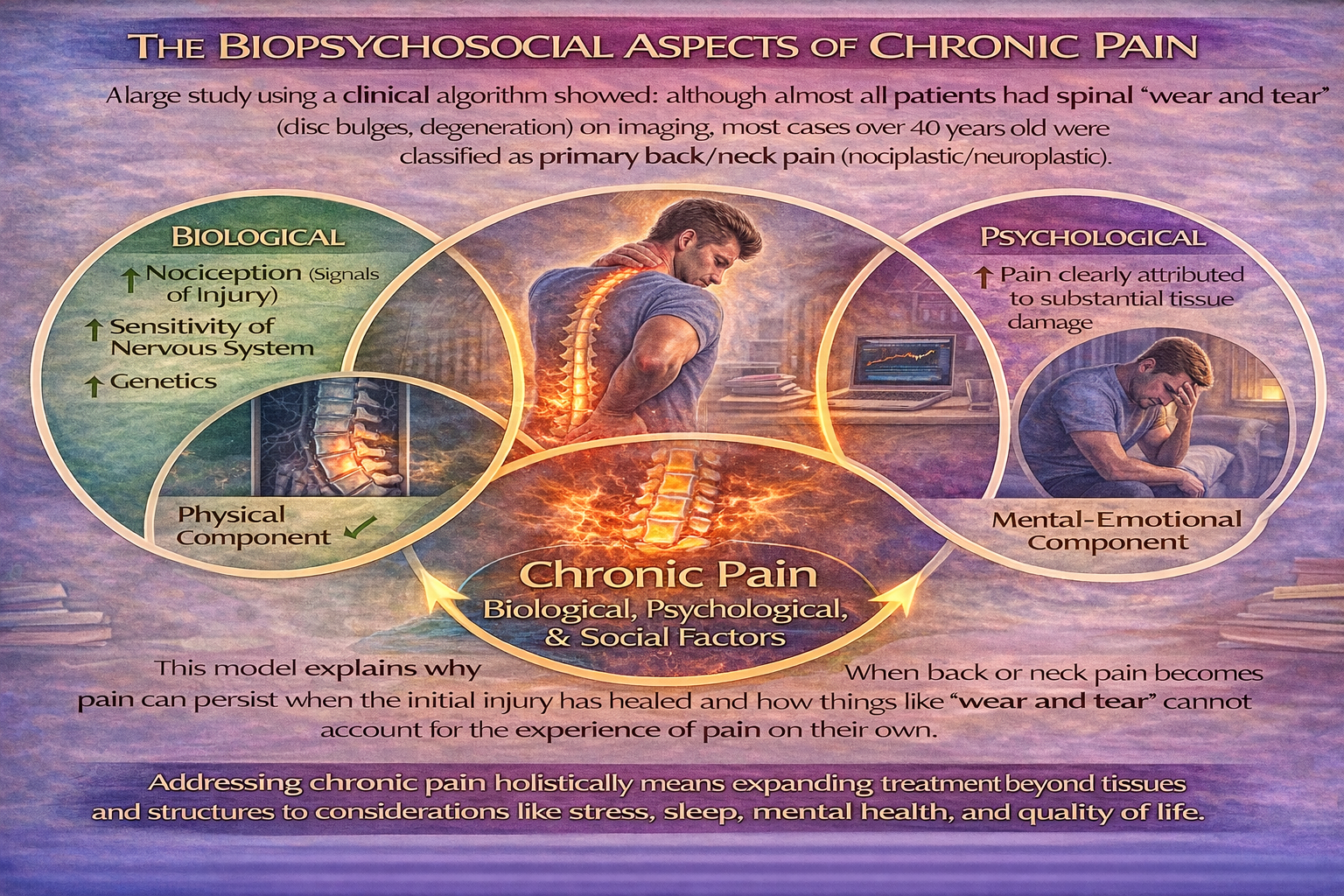
This matters for adults over 40 because imaging often shows “wear and tear” findings (disc bulges, degeneration) that are common with age, but these findings don’t automatically equal pain. When pain becomes persistent, the nervous system can learn pain as a protective output, especially under stress, poor sleep, fear, and deconditioning.
That doesn’t mean symptoms aren’t real.
It means the best solution often isn’t chasing a single “broken” structure. We have to look at the person as a whole, not just the pain in of itself.
“Loaded Spinal Flexion” Isn’t Supported as a Primary Fix (And Evidence Is Limited)
There’s a loud online debate about whether loaded spinal flexion (for example, Jefferson curls) is the answer for back pain.
Here’s the honest evidence-based position: we do not currently have strong clinical trial evidence showing that loaded spinal flexion is a superior intervention for chronic low back pain. There are trials comparing flexion-based vs extension-based lumbar exercise programs, but those are not the same as progressive loaded spinal flexion strength training.
For example, a randomized trial comparing flexion- vs extension-based lumbar exercises for chronic axial low back pain exists, showing both can be used clinically depending on the person. And in a degenerative spondylolisthesis population, flexion exercises were not inferior to stabilization exercises for pain/disability outcomes.
So the point isn’t “flexion is bad.”
It’s that there’s no high-quality evidence that loaded spinal flexion is the answer and for many people with sensitized, persistent pain, pushing end-range strategies too early can increase threat rather than build confidence.
View this post on Instagram
Core Stability and Physical Activity Matter Because They Restore Options
When people become less active, trunk endurance, timing, and coordination often decline. That doesn’t always show up as “weak abs.” It shows up as less control under fatigue, less ability to transfer force, and more protective bracing or avoidance.
Systematic reviews support core stabilization approaches as helpful for non-specific low back pain, improving pain and disability for many individuals. Broader exercise evidence also supports that multiple forms of exercise can improve chronic low back pain, suggesting that the “best” program is often the one the person can adhere to and progress safely.
The best programs for people over 40 usually share common traits:
-
graded exposure back to movement
-
progressive strength (especially hips + trunk)
-
restoration of movement variability (not one “perfect posture”)
-
recovery management (sleep, stress, fatigue)
View this post on Instagram
Back pain after 40 is rarely one simple problem. It’s often the interaction of:
-
connective tissue adaptability (including fascial gliding)
-
stress and fatigue load
-
nervous system sensitivity / neuroplastic pain mechanisms
-
reduced physical activity and trunk coordination
The goal isn’t to find one magic exercise.
The goal is to rebuild a system that feels safe moving again strong, coordinated, and resilient.
Find out much more at our upcoming online “Training Over 40” Masterclass with 3 FREE resources and 25% off for a VERY limited time HERE with code “masterclass25”
Featured in





© 2026 Ultimate Sandbag Training. Site by Jennifer Web Design.