Why Exercise Helps Low Back Pain (And It’s Not for the Reason You Think)
One of the biggest misconceptions I see, both in fitness and rehab, is this idea that exercise helps low back pain because it’s “fixing something” in the spine.
I used to think that too.
Get stronger, stabilize the core, correct the issue…pain goes away.
But when you actually look at the research, and more importantly, when you work with enough people you start to realize something very different is going on.
Exercise absolutely helps low back pain. That part is clear. But the reasons why are often misunderstood, and honestly, these are some of the most overlooked factors that make the biggest difference.
First, exercise helps your body become more tolerant.
That might not sound exciting, but it’s huge.
Most people with low back pain aren’t “broken.” What’s often happening is that their system has become more sensitive to load. Things that used to feel fine, bending, lifting, even just being in certain positions, now trigger pain.
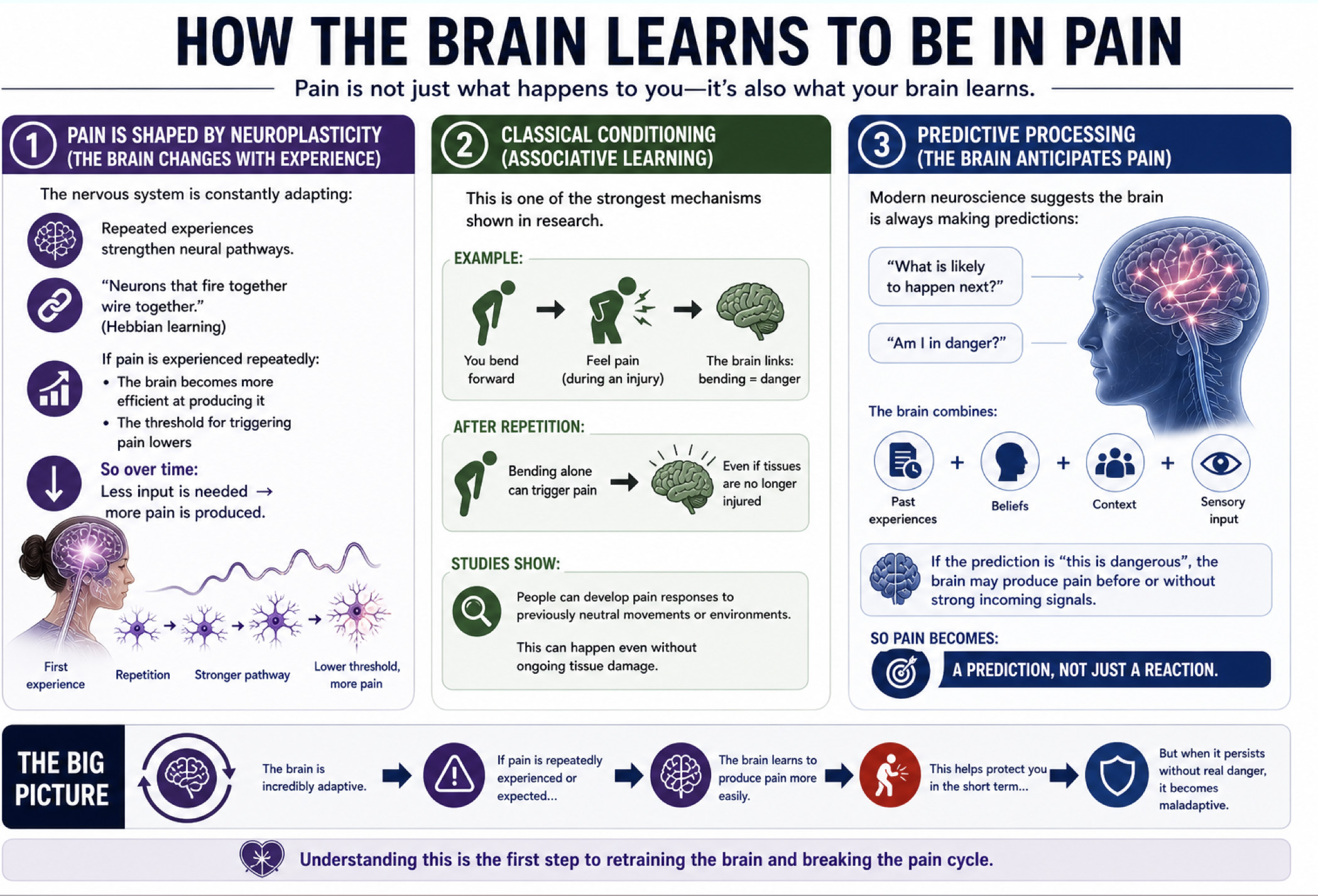
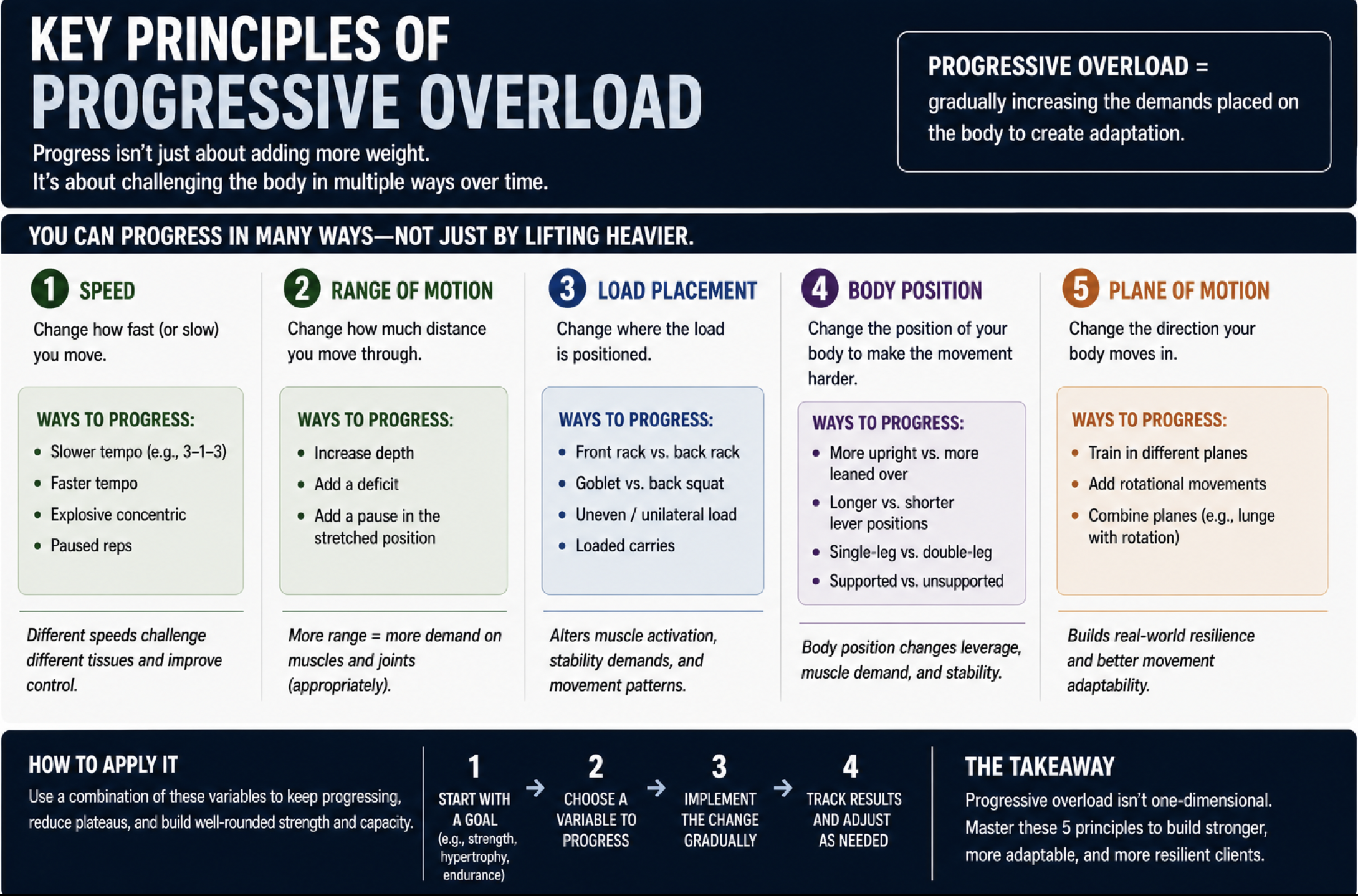
Exercise, when done progressively, changes that. It builds your capacity. Your muscles, your connective tissue, and your nervous system all start to adapt. Over time, your body simply becomes better at handling stress without reacting with pain.
That’s a very different goal than trying to “fix” a structure. It’s about expanding what your body can tolerate.
But that’s just one piece.
Another big one that gets overlooked is how exercise changes your nervous system.
Pain isn’t just about tissues. It’s also about how your brain interprets what’s going on. When pain has been around for a while, the system can get more reactive. It starts turning the volume up on signals that might not actually be dangerous.
Exercise helps turn that volume back down.
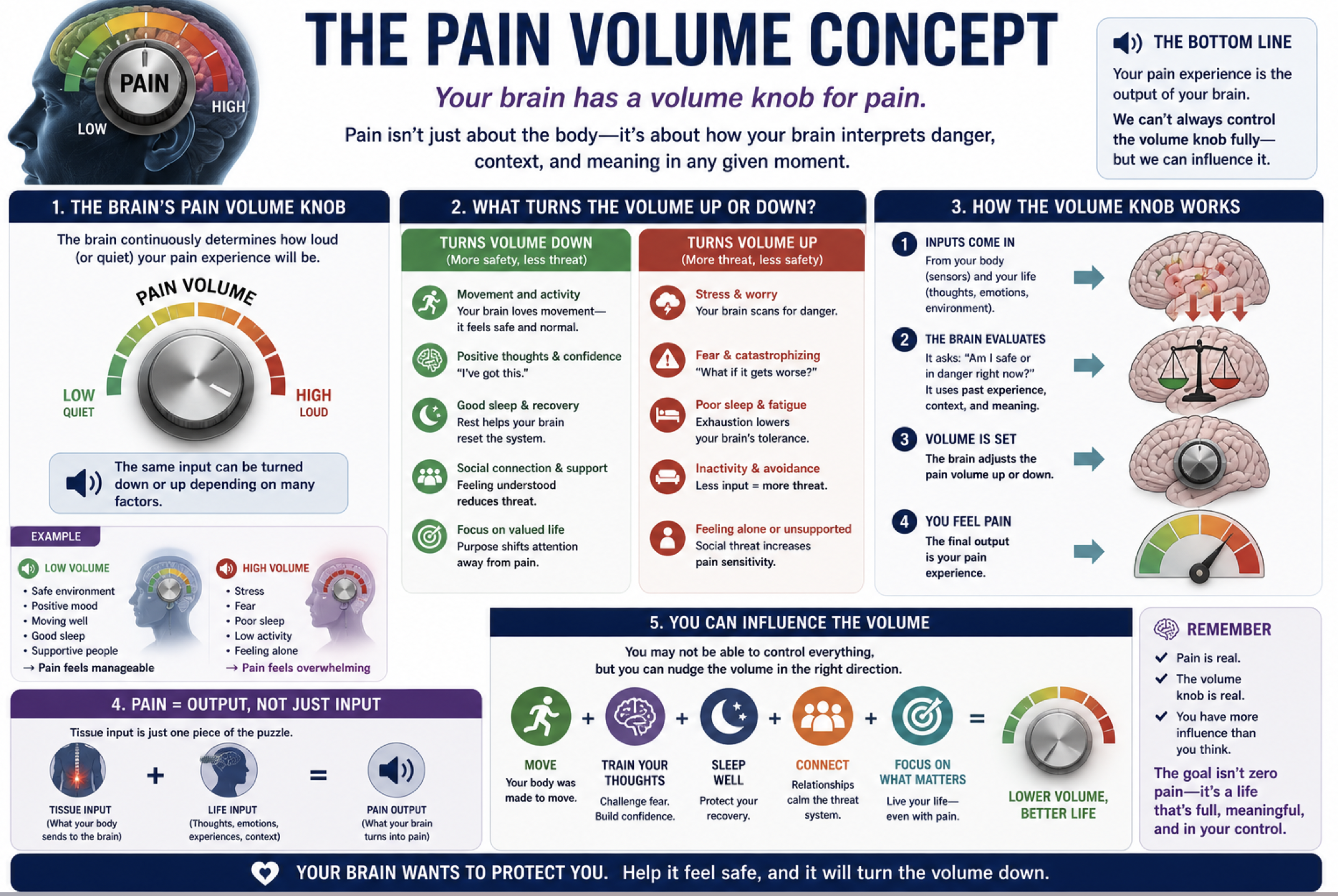
There’s a well-documented effect called exercise-induced hypoalgesia, which is just a fancy way of saying movement can reduce pain sensitivity. Your body releases natural pain-relieving chemicals. Your brain gets new input that movement is safe. Over time, the system calms down.
This is one of the reasons why something like Tai Chi, walking, or even light strength work can be so powerful. It’s not just what’s happening in the muscles, it’s what’s happening in the entire system.
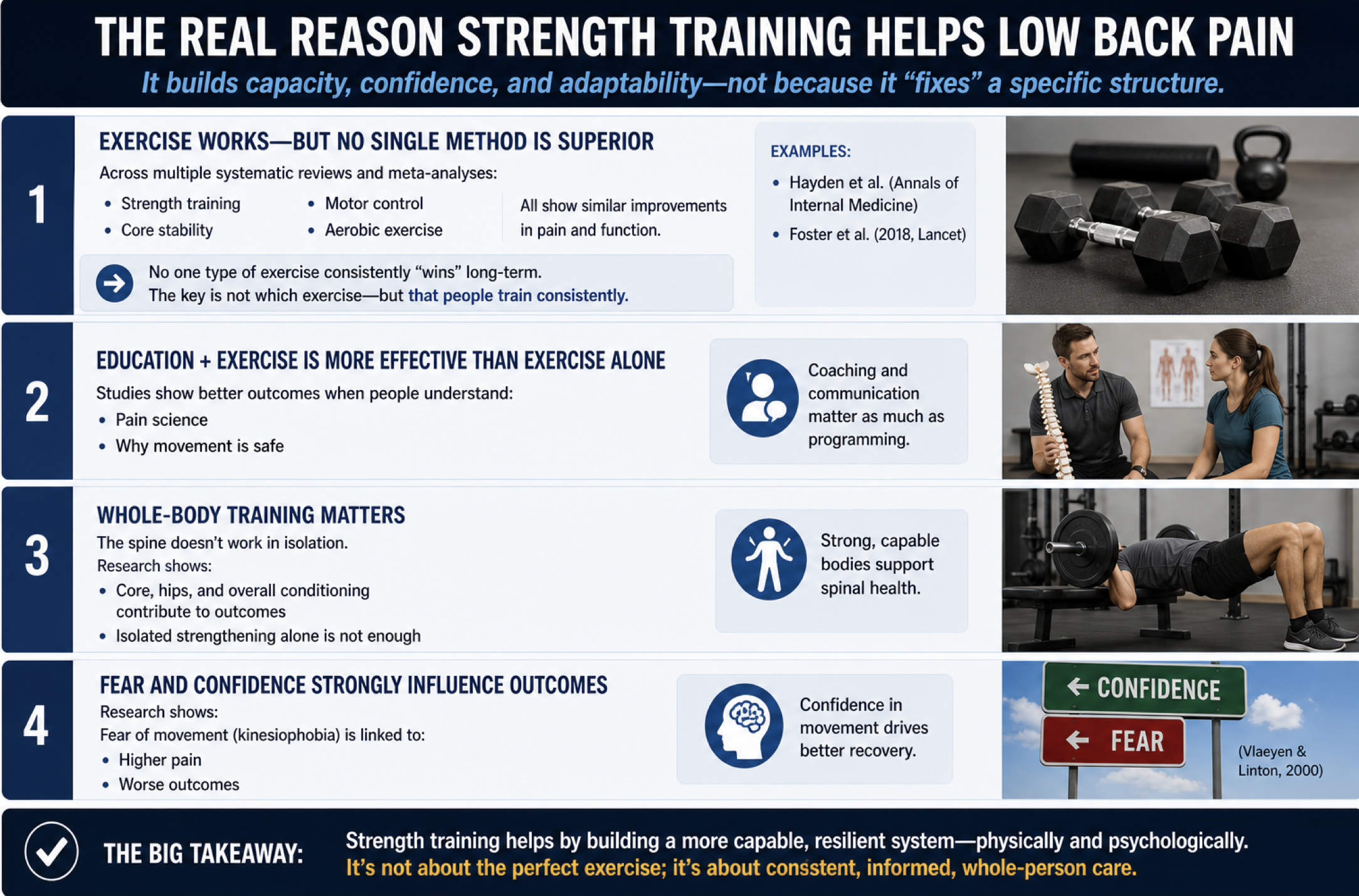
And that ties into another huge factor: confidence.
A lot of people don’t realize how much fear plays into low back pain.
If you’ve been in pain for a while, it’s completely normal to start avoiding movement. You become cautious. You brace. You try not to “do the wrong thing.” But that often leads to more stiffness, more guarding, and ironically, more pain.
Exercise, when it’s introduced in the right way, starts to rebuild trust.
You move a little, and it doesn’t flare things up. You load a little, and you’re okay. That experience matters. It teaches your brain that movement isn’t something to fear. That shift alone can be incredibly powerful.
Another piece that doesn’t get talked about enough is efficiency.
When someone has low back pain, they often don’t have a “weak core” problem. In many cases, they actually have the opposite. Their system is overworking. Muscles are co-contracting. Everything is a bit too tight, too guarded.
Exercise, especially when it focuses on coordination and breathing, helps clean that up.
Instead of just making muscles stronger, you start improving how they work together. Timing gets better. Movement gets smoother. The body doesn’t have to grip so hard to feel stable.
That’s why approaches that include breath work, controlled movement, and integration tend to work so well. You’re not just adding strength, you’re improving how the system organizes itself.
And here’s something else that surprises a lot of people.
It’s not about finding the “perfect” type of exercise.
The research is pretty clear on this. Strength training works. Core training works. Walking works. Pilates works. Even general movement works.
There isn’t one magical method that beats everything else.
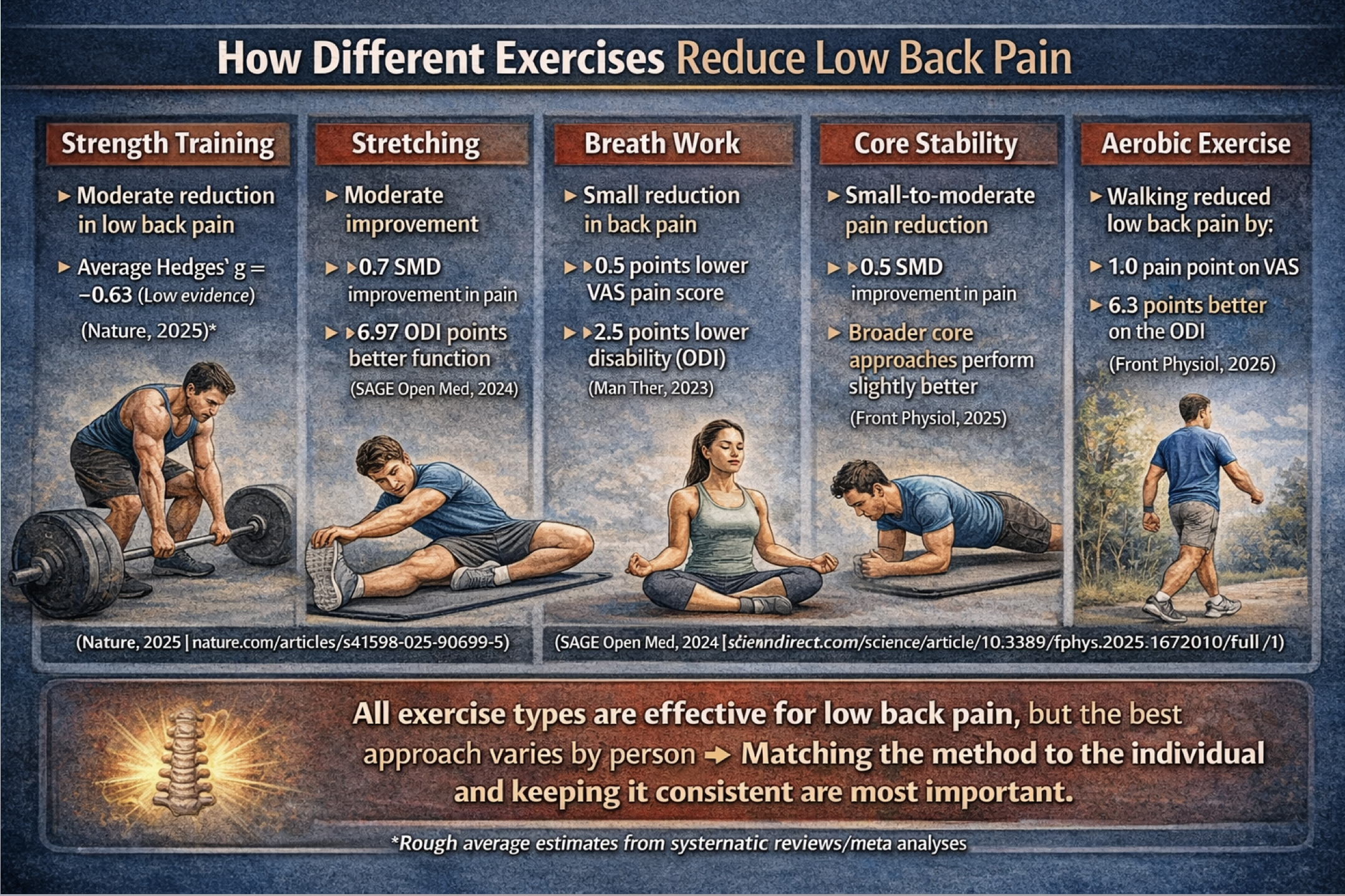
What matters more is that you’re doing something consistently, that it’s progressive, and that it’s appropriate for where you are right now.
That’s actually really freeing when you think about it.
It means you don’t have to chase the perfect program. You need something that you can stick with, that challenges you just enough, and that helps you move better over time.
So how do we take all of this and make it practical?
It starts with changing the goal.
Instead of asking, “What exercise fixes my back?” a better question is, “How do I gradually build my body’s ability to handle more?”
That might look like starting with simple movements that feel safe. It might mean focusing on breathing and reducing unnecessary tension. It might mean integrating more full-body patterns instead of isolating one area.
As things improve, you layer in more load, more complexity, and more variability. You expose the body to different positions, different demands, and different challenges.
That’s how resilience is built.
Not by protecting the back forever, and not by forcing it into one “correct” way of moving, but by gradually expanding what it can do.
When you look at exercise through this lens, it changes everything.
It’s not just about muscles. It’s not just about structure.
It’s about capacity, confidence, coordination, and how your body and brain work together.
And when you train those things consistently, that’s when you start to see real, lasting change.
Learn SO much more at our upcoming Low Back Pain webinar May 19th FREE HERE