
Why Misunderstanding Functional Training Causes Worse Results
2026-02-8

Back in 1996 I got introduced to the idea of functional training. I’ll admit, I probably didn’t have the best understanding at the time of what it REALLY meant, but it did make a whole of sense. Even the most common definitions of “functional” get the term wrong like, “train like you do in real life.” That isn’t what functional actually means.
Before I jump into the meat of what functional training is, the major reason I want to write such content 30 years later is because I know people’s results suffer by NOT understanding what functional means.
Don’t get me wrong, I am not suggesting functional training is “magical”. Rather, we know the greatest limitations that people have in their training is TIME! I don’t like to focus on those that live at the gym (although functional training would help them as well), but the average person who is trying to make fitness a part of their life. Functional training by FAR is the most efficient and effective way to improve one’s fitness that matters the most.
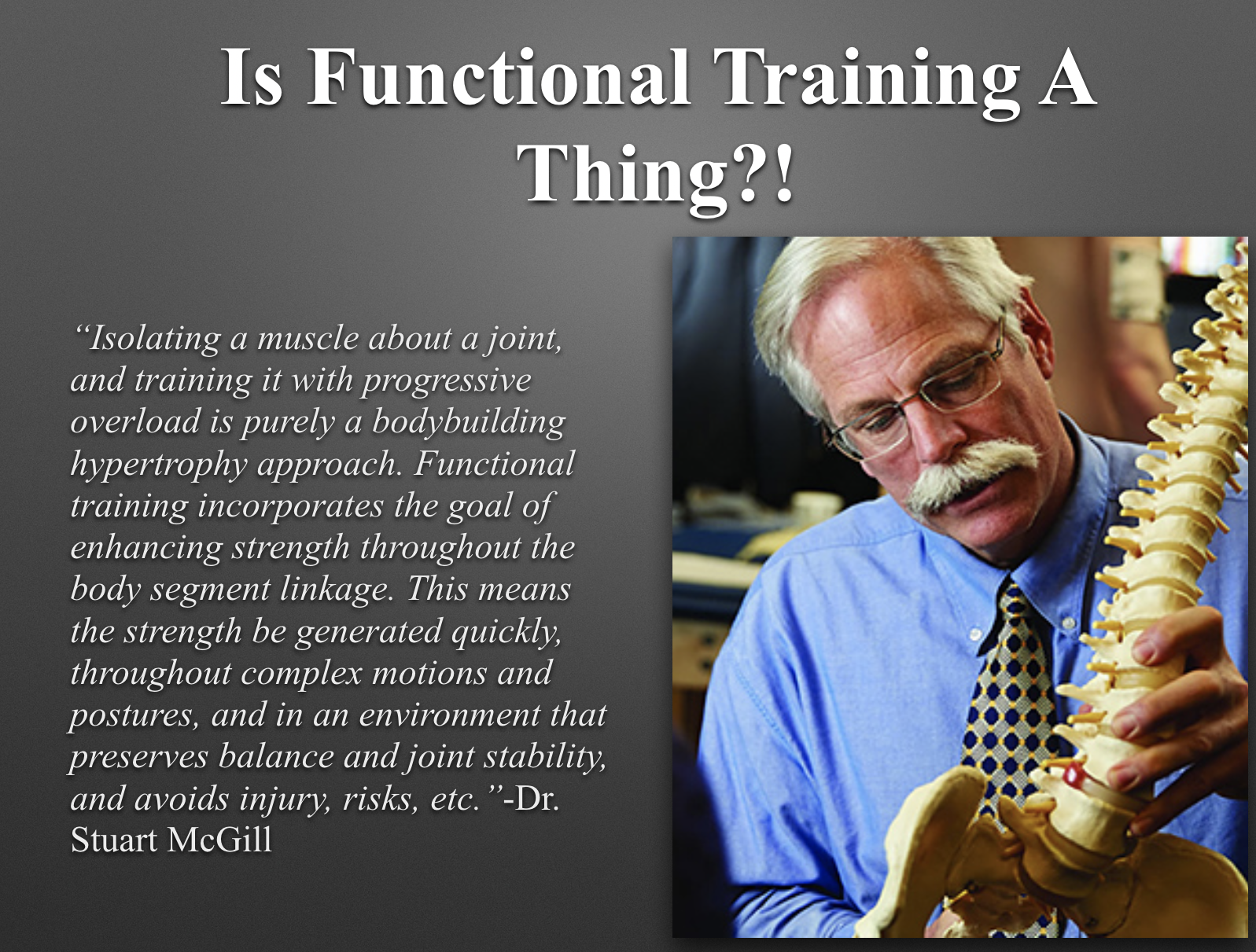
What Does “Functional” Really Mean?
Dr. Stuart McGill, one of the world’s leading spine biomechanics researchers, offers a clear definition of functional training: training that enhances the ability to perform tasks by improving coordinated movement, force transfer, and spinal stability under real-world demands. (McGill, 2007; McGill, 2010).
This definition immediately exposes the limitations of most programs that typically:
-
Lock the body into fixed paths
-
Remove the need for balance and coordination
-
Minimize the role of the core as a force transmitter
-
Isolate muscles rather than training integrated systems
While isolation can be useful in specific contexts, it does not reflect how the body functions during daily activities, sport, or work tasks. Real movement is three-dimensional, variable, and coordinated, not linear and constrained.

View this post on Instagram
What the Research Says About Integrated Training
Research consistently shows that free-weight and ground-based exercises produce greater neuromuscular activation, improved motor control, and better transfer to functional tasks compared to machine-based training or more isolated approaches.
For example:
-
Studies comparing free-weight squats to machine leg presses show greater activation of stabilizing musculature and trunk muscles in free-weight movements (Escamilla et al., 2001).
-
Core stability research demonstrates that functional strength depends on the integration of the trunk with the limbs, not isolated abdominal activation (Kibler et al., 2006).
-
Motor learning literature emphasizes that variability and task relevance improve long-term skill retention and transfer (Schmidt & Lee, 2011).
View this post on Instagram
Why DVRT Is Not “Just the Basics”
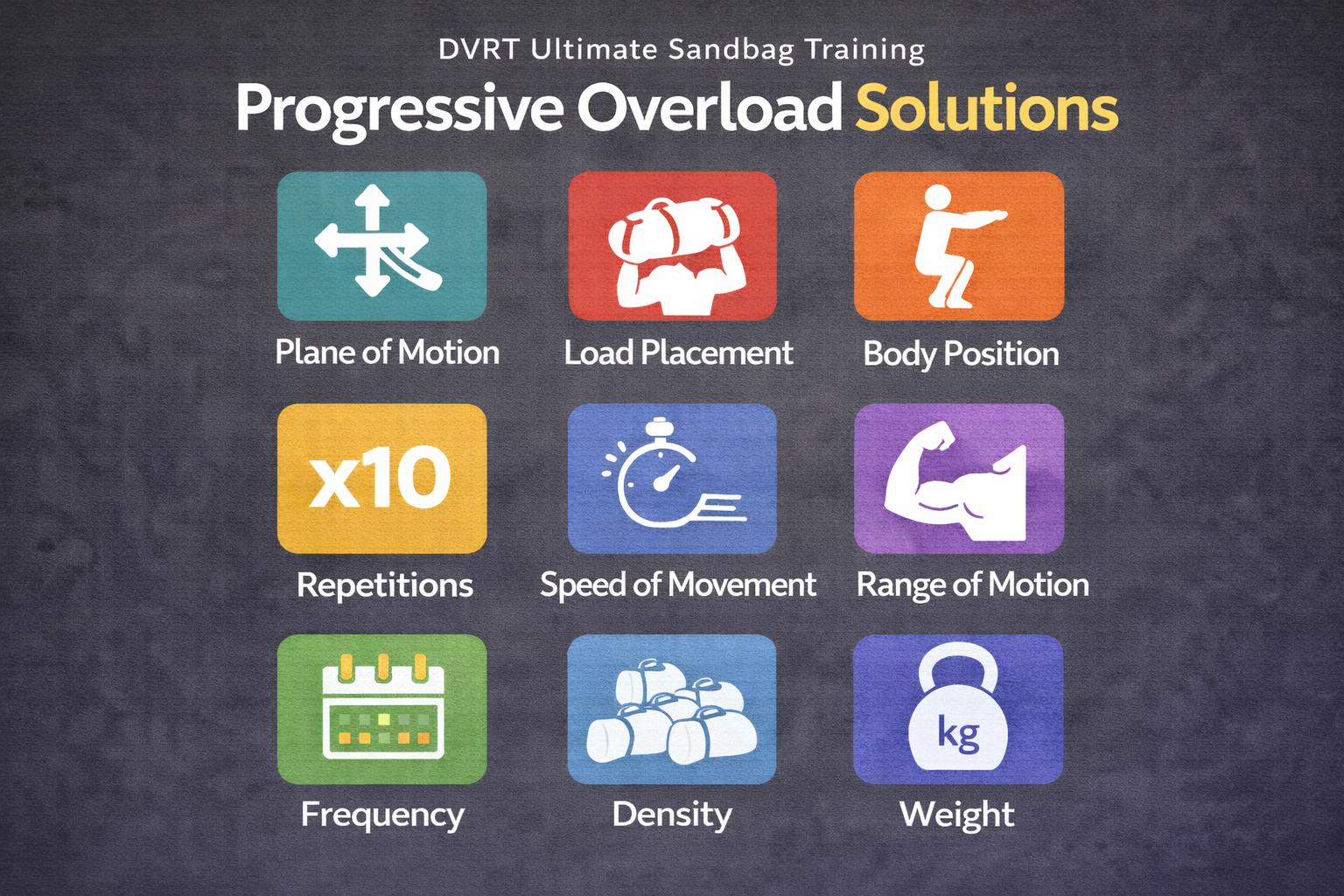
One common misunderstanding is that functional training must stay simple forever. While DVRT values fundamental movement patterns—hinges, squats, lunges, pushes, pulls—it does not stop there. Instead, DVRT uses systematic progressions to increase complexity without sacrificing purpose.
Progressions may involve:
-
Changes in load position (front-loaded, suitcase, shoulder, overhead)
-
Asymmetrical loading to challenge anti-rotation and lateral stability
-
Tempo changes to increase time under tension and control
-
Movement plane shifts to reflect real-world demands
View this post on Instagram
DVRT allows coaches to progress training by changing how load is applied, not just how much load is lifted.
Why Functional Training Is Also Not “Circus Training”
At the opposite end of the spectrum, some functional training devolves into novelty; unstable surfaces, excessive randomness, and movements that prioritize entertainment over adaptation. Research on instability training shows that excessive instability can reduce force output and limit strength development, making it counterproductive for most training goals (Behm & Anderson, 2006).
DVRT avoids this trap by respecting a simple principle: instability must be purposeful and scalable. The Ultimate Sandbag provides a unique advantage because its shifting load creates reactive stability demands without removing the athlete’s connection to the ground. This allows the nervous system to learn how to manage variability while still producing meaningful force.
The result is training that is challenging, but not chaotic, complex, but not careless.
View this post on Instagram
Force Transfer: The Other Forms Of Training Don’t Provide
One of the most overlooked aspects of functional training is force transfer. The body does not operate as a collection of independent muscles. Force generated at the hips must travel through a stable trunk to reach the arms, whether lifting, throwing, carrying, or pushing.
What we teach in DVRT accomplishes…
-
Link the feet to the core
-
Connect the hips to the shoulders
-
Maintain spinal stability under changing loads
This is functional strength in its truest sense, not because it looks different, but because it behaves differently.
Functional training is not about abandoning strength, nor is it about chasing novelty. Yes, we can build muscle and even strength a host of different ways. However, when we look at the type of strength and muscle that we build that allows us to move, feel, and perform better WHILE achieving the aesthetics we want, THAT is why functional training should be at the root of what you do!
Want to learn more?! We hope you will join us Tuesday, February 24th for a FREE webinar on “The Biggest Mistakes In Training Over 40” HERE
View this post on Instagram
Featured in





© 2026 Ultimate Sandbag Training. Site by Jennifer Web Design.