
What Really Builds Knee Health? A Science-Based Look Beyond the Knee
2026-03-23

When people experience knee pain, the instinct is simple: focus on the knee.
Strengthen it. Stretch it. Protect it. I get it, that is why people sell those who struggle with knee pain on just focusing on the knee. It is how we have been taught to think, but it isn’t what the science shows us.
Research and clinical experience continue to point in a different direction. The knee is not an isolated joint. It is deeply influenced by what happens above and below it, as well as how the brain and body coordinate movement.
If you want resilient, pain-free knees, you have to think bigger.
Let’s break down four of the most important and research-supported drivers of knee health.
It Starts at the Ground: Foot Stability and “Rooting”
While research often focuses on measurable joints like the ankle and hip, biomechanics consistently show that how we interact with the ground shapes everything upstream.
When you create a stable foot, what many coaches describe as “rooting”, you provide a solid base for force transfer. Without that stability, the body compensates up the chain, often increasing stress at the knee.
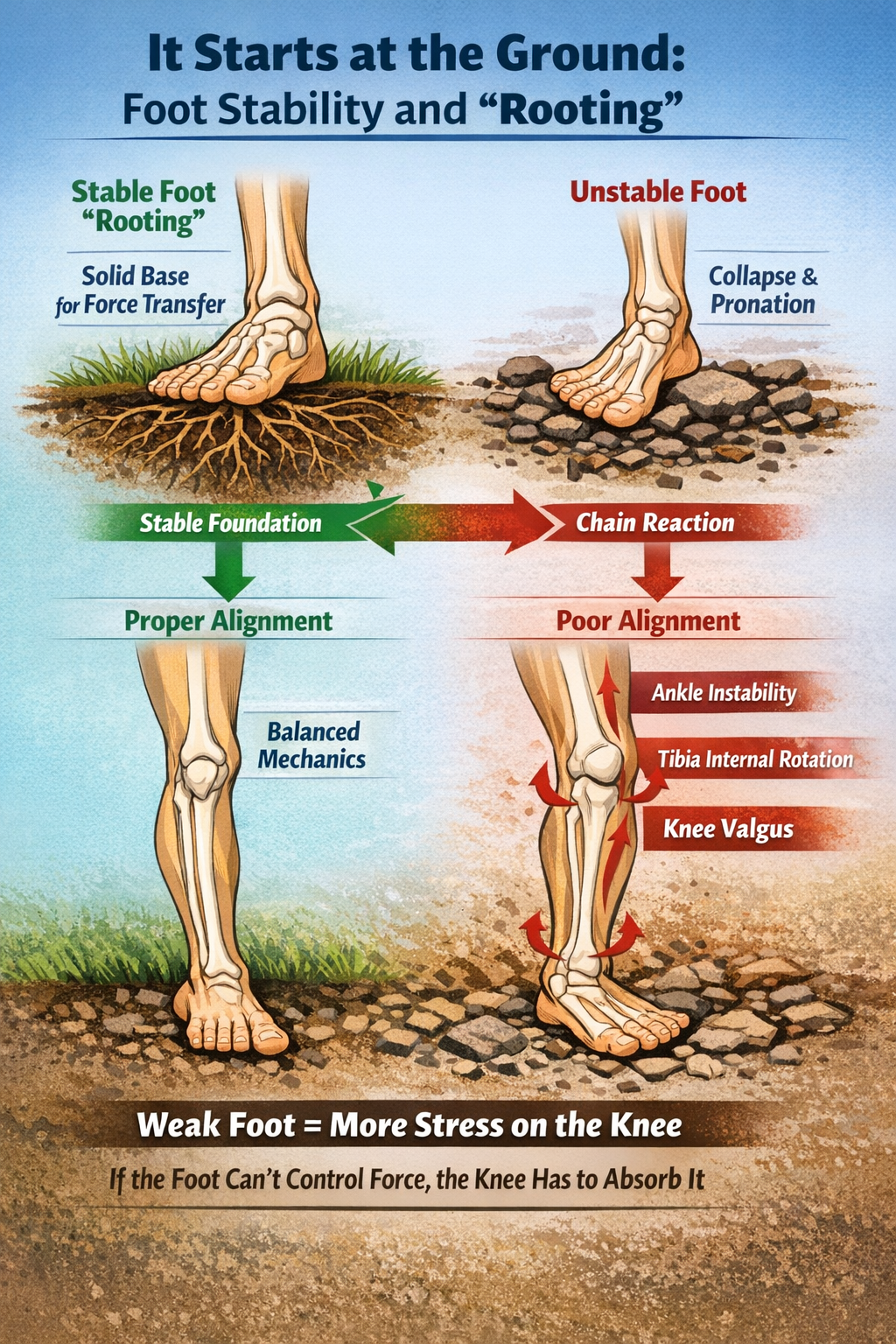
This idea aligns with kinetic chain principles: instability at the foot leads to altered mechanics at the ankle, tibia, and ultimately the knee. Poor foot control can contribute to excessive pronation and internal rotation, which then feeds into knee valgus (the inward collapse associated with many knee issues).
In simple terms: If the foot can’t control force, the knee has to absorb it
View this post on Instagram
Ankle Mobility: The Hidden Driver of Knee Mechanics
One of the strongest areas of research supporting knee health comes from studies on ankle dorsiflexion (the ability to bring your shin forward over your foot).
Multiple studies show that limited ankle mobility significantly alters knee mechanics.
- Restricted ankle dorsiflexion is associated with increased knee valgus and internal rotation, both linked to injury risk
- Limited ankle motion forces compensations during squatting, landing, and walking, shifting stress to the knee joint
- It can even contribute to faulty landing mechanics and knee pain patterns
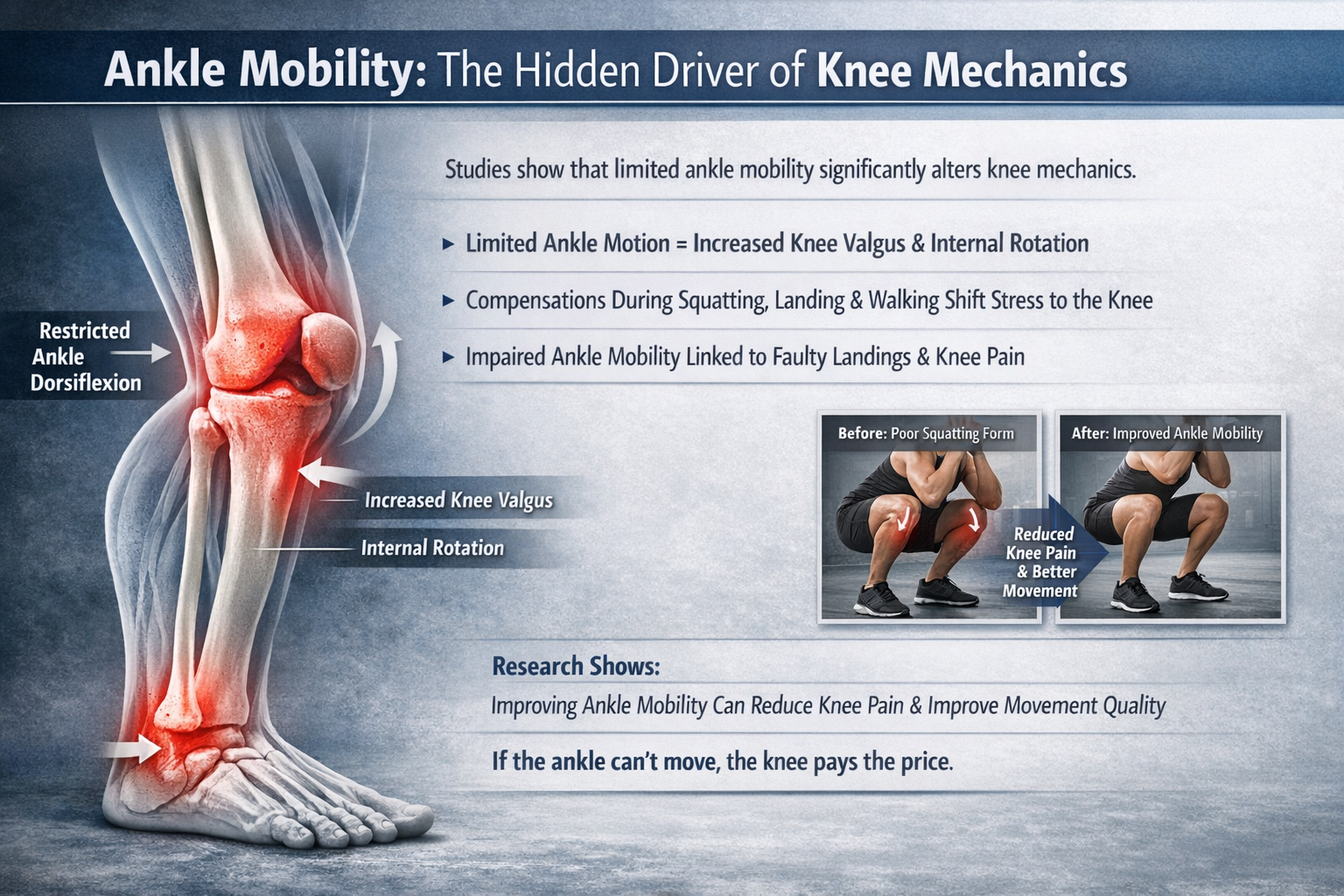
There’s also evidence that improving ankle mobility can directly improve knee symptoms. For example, ankle mobilization interventions have been shown to reduce knee pain and improve movement quality in individuals with patellofemoral pain .
The takeaway is clear: If the ankle can’t move, the knee pays the price.
Core Stability and Glute Function: Controlling the Knee from Above
While the ankle influences the knee from below, the core and hips control it from above.
Research consistently shows that core stability and hip strength are essential for knee health:
- Core stability is directly connected to the function of the hip, knee, and ankle, reflecting the integrated nature of movement
- Strong core musculature improves posture, movement efficiency, and reduces pain in knee osteoarthritis populations
- Core strengthening programs have been shown to improve pain, function, and quality of life in individuals with knee osteoarthritis
From a biomechanical standpoint, the core controls trunk position and pelvic alignment. If that control is lacking, the femur (thigh bone) often collapses inward, increasing stress at the knee.
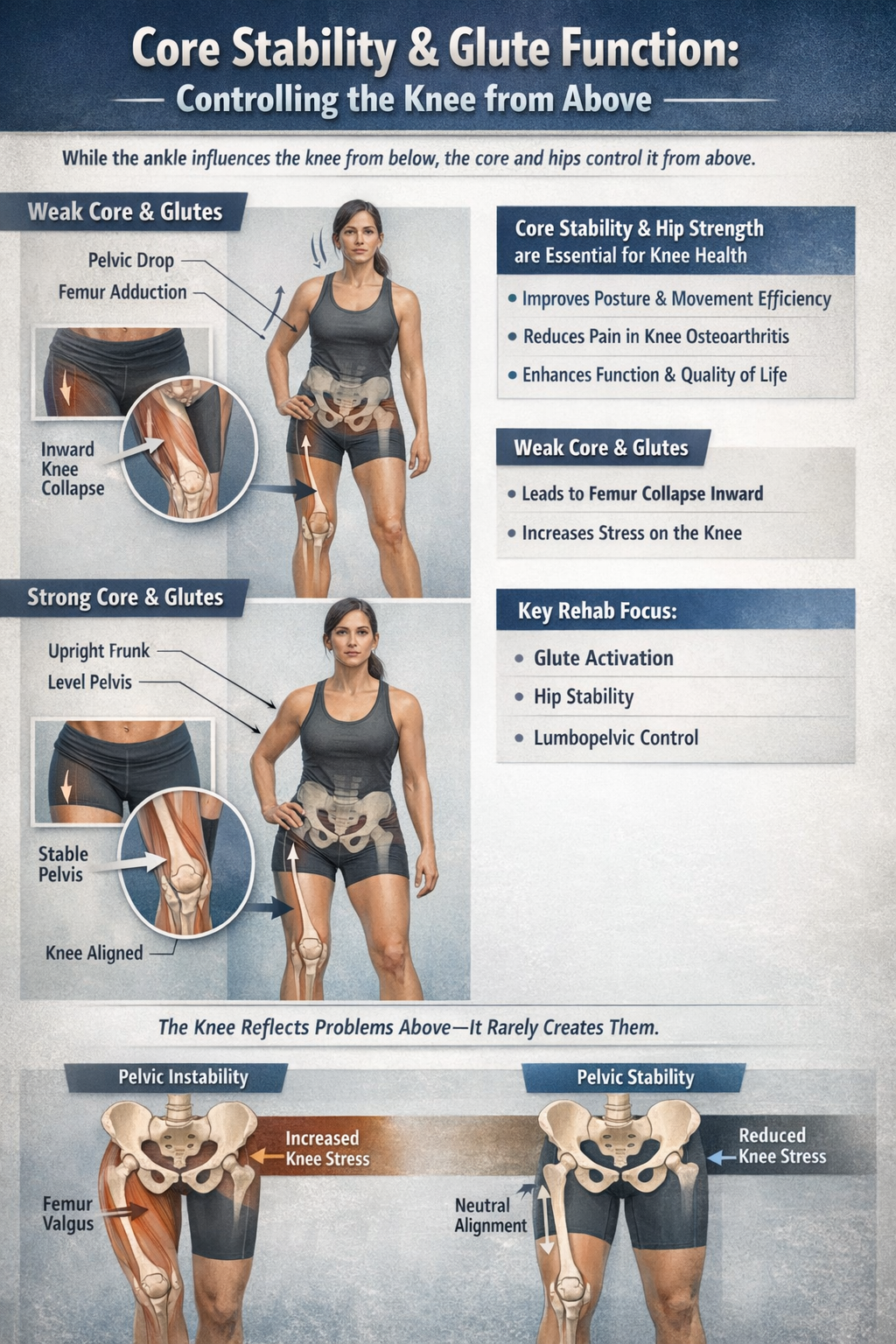
Similarly, weak or poorly coordinated glutes fail to stabilize the hip, leading to the same inward knee collapse associated with many injuries and chronic pain conditions.
This is why so many knee rehab programs now emphasize:
- Glute activation
- Hip stability
- Lumbopelvic control
Because the knee often reflects problems, it rarely creates them on its own.
View this post on Instagram
The Mind-Body Connection: A Missing Piece in Knee Pain
Perhaps the most overlooked component of knee health is the role of the nervous system.
Modern research increasingly supports the use of mind-body exercise approaches for managing knee osteoarthritis and chronic knee pain.
A large systematic review and meta-analysis found that:
- Mind-body exercise significantly improves pain and physical function
- Tai Chi and Pilates were especially effective interventions
- These approaches also improve quality of life in individuals with knee osteoarthritis
These benefits go beyond just movement.
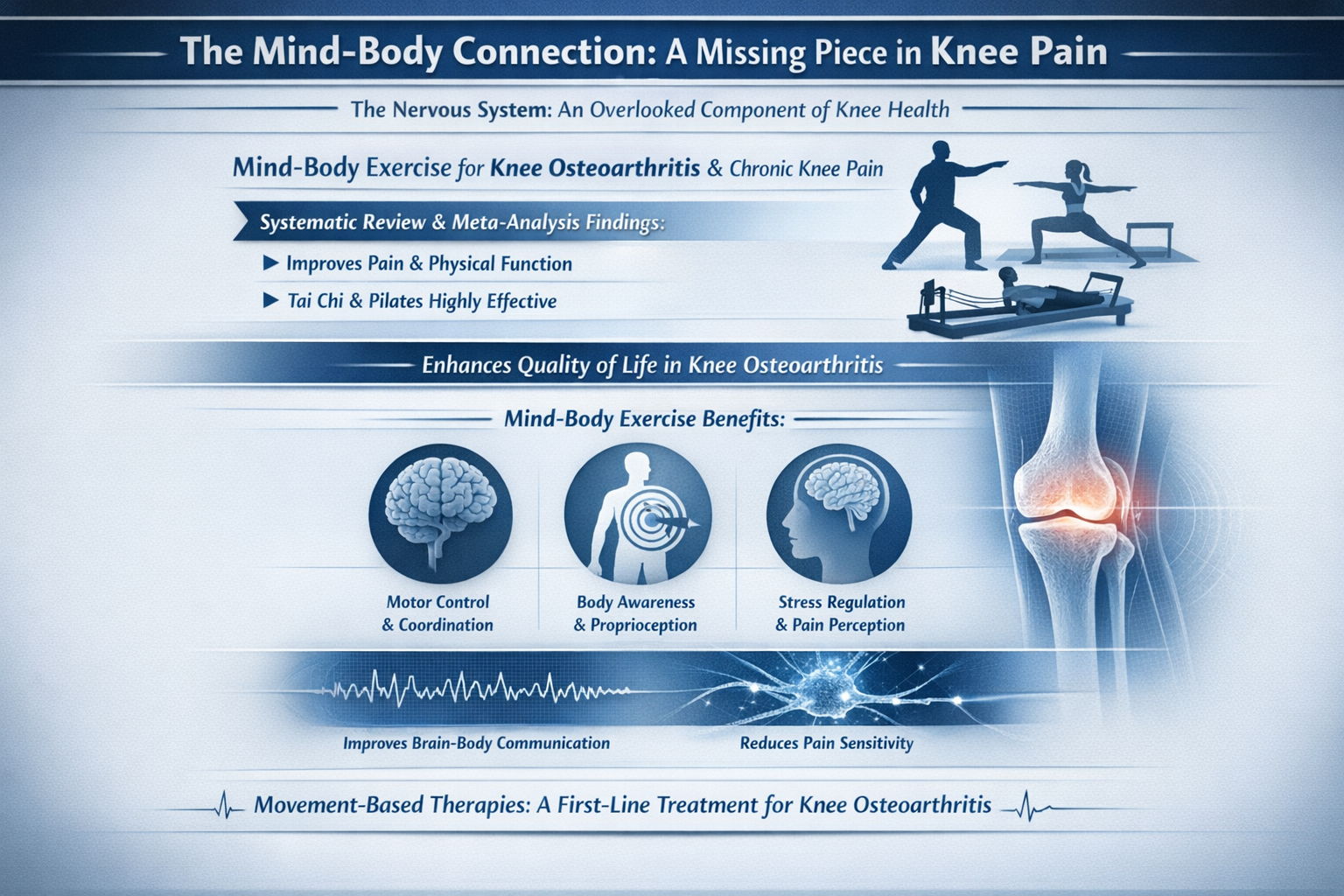
Mind-body training improves:
- Motor control and coordination
- Body awareness (proprioception)
- Stress regulation and pain perception
In other words, it helps the brain better organize movement and reduces the sensitivity of the pain system.
This aligns with broader guidelines that recommend exercise, specially movement-based therapies, as a first-line treatment for knee osteoarthritis. The good news is you don’t have to become a Tai Chi master or Pilates expert to provide these benefits as we show in our Myofascial Integrated Movement system.
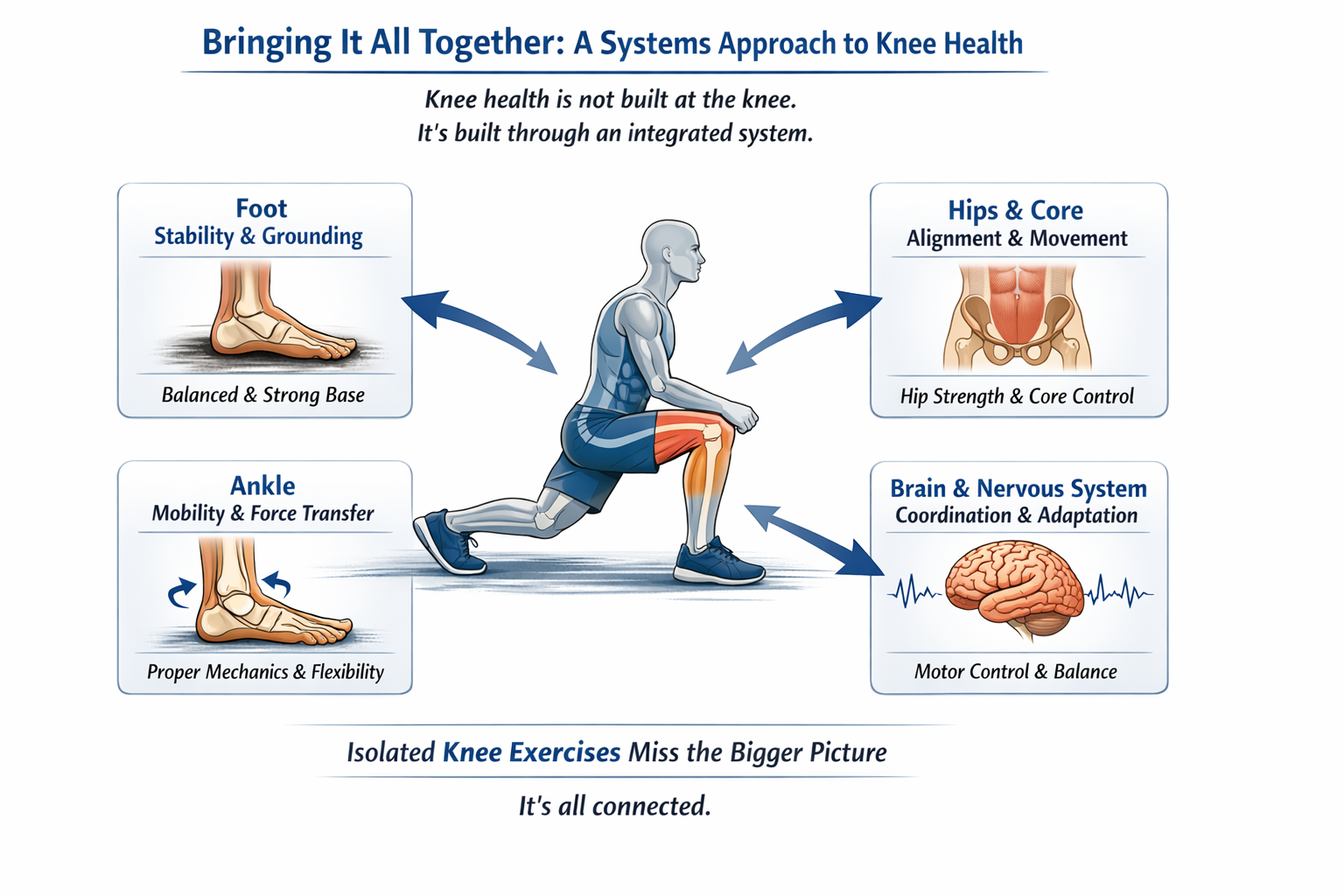
Bringing It All Together: A Systems Approach to Knee Health
If you step back and look at the research collectively, a clear pattern emerges:
Knee health is not built at the knee.
It’s built through an integrated system that includes:
- The foot: creating stability and grounding
- The ankle: providing mobility and proper force transfer
- The hips and core: controlling alignment and movement
- The brain and nervous system: coordinating and adapting movement
This is why isolated knee exercises often fall short.
They miss the bigger picture.
Learn MUCH more in physical therapist, Jessica Bento’s knee programs HERE or our DVRT Rx Knee Health Masterclass HERE ALL 30% off with code “virtual” HERE
Featured in





© 2026 Ultimate Sandbag Training. Site by Jennifer Web Design.