
Why the Side Plank Might Be the Most Underrated Core Exercise
2026-04-3
When people think about core training, they often default to crunches, sit-ups, or even traditional planks. But one of the most powerful and often overlooked exercises for building real-world strength and resilience is the side plank.
Simple in appearance but incredibly sophisticated in its benefits, the side plank has been widely supported in both clinical and performance settings for its role in improving core stability, reducing pain, and helping prevent injuries. Let’s break down what the research and applied science actually tell us.
The Side Plank Builds “Real” Core Strength
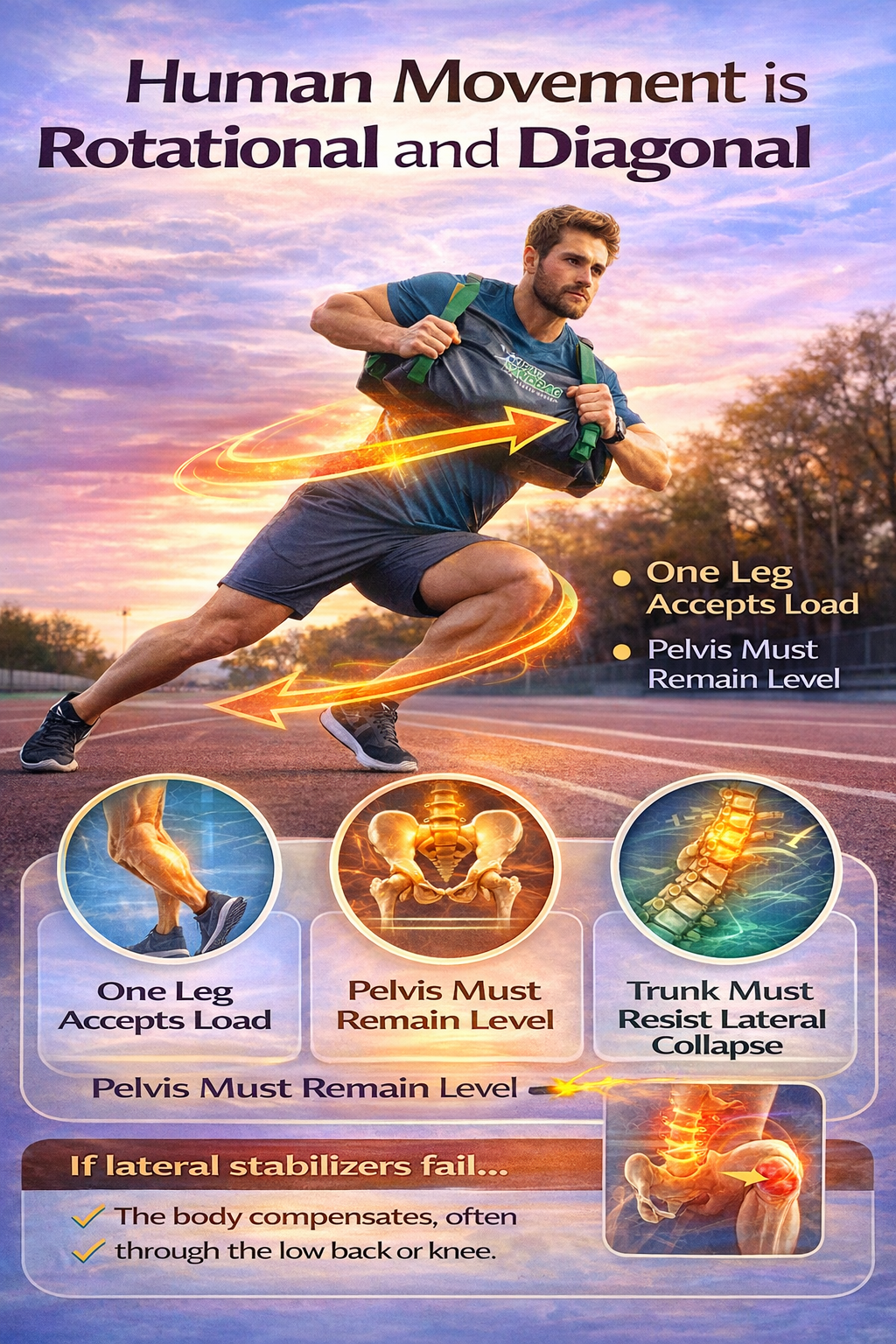
Unlike crunches, which primarily train the front of the abs, the side plank emphasizes the lateral core, especially the obliques, quadratus lumborum, and deep stabilizers of the spine.
This matters because the core’s primary role isn’t to create movement, it’s to resist unwanted movement.
The side plank is an anti-lateral flexion exercise, meaning it trains your body to resist side bending. This is critical for nearly every real-life and athletic task, from carrying groceries to sprinting and changing direction.
Research shows that side planks create high activation of the obliques and deep core muscles while maintaining spinal alignment and stability.
Additionally, the exercise recruits the glute medius and hip stabilizers, linking the core to the lower body, a key component of functional strength. The side plank doesn’t just make your core stronger, it makes it more useful.
A Key Tool for Injury Resilience
One of the biggest predictors of injury, especially in the lower back, is poor core endurance and stability.
A study published in the International Journal of Sports Physical Therapy found that low core endurance is associated with increased injury risk, reinforcing the importance of exercises like planks and side planks.
The reason is simple: your spine relies on surrounding muscles for support. When those muscles fatigue or fail, stress shifts to passive structures like ligaments and discs.
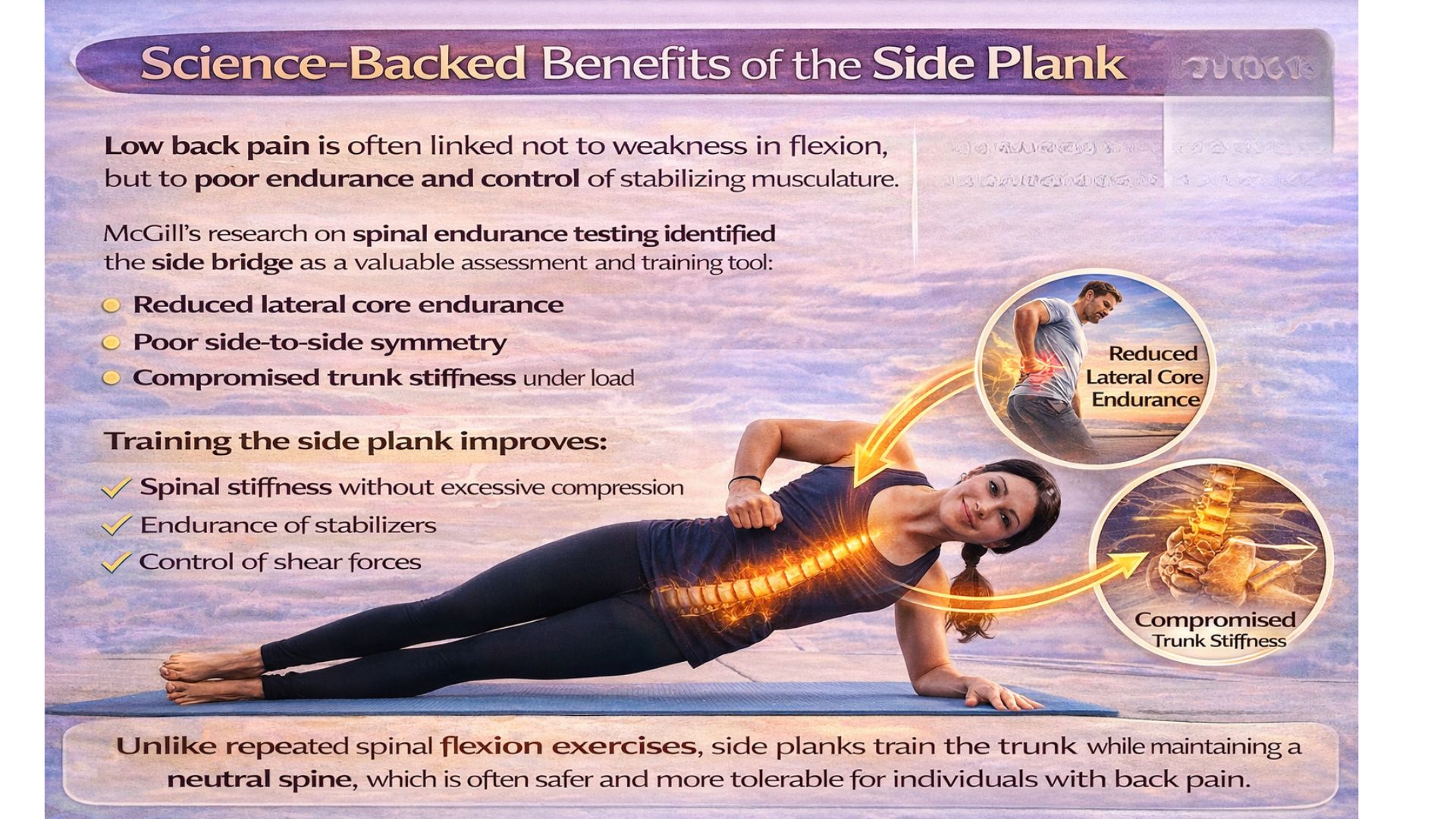
The side plank directly addresses this by strengthening the muscles that stabilize the spine and pelvis. Stronger lateral stabilizers help control forces during movement, reducing strain during bending, twisting, and load transfer.
Even beyond the spine, improved core stability influences how forces are distributed throughout the body. Research shows that trunk and pelvic control play a major role in joint loading, including at the knee during dynamic movements.
This means a stronger, more stable core can indirectly protect joints throughout the body—not just the back.
View this post on Instagram
Improving Movement Efficiency and Performance
Beyond injury prevention and pain relief, the side plank has a direct carryover to performance.
The exercise improves balance, coordination, and proprioception (your awareness of body position), all of which are essential for athletic movement.
More importantly, it enhances your ability to transfer force between the upper and lower bodya key factor in activities like running, throwing, and lifting.
When your core is stable, your limbs can produce and transfer force more efficiently. When it’s not, energy “leaks” occur, reducing performance and increasing injury risk.
By strengthening lateral stability, the side plank helps your body handle forces in the frontal plane, something many traditional exercises fail to address.
This is especially important for single-leg activities like walking, running, and cutting, where pelvic control is critical.
Why It Stands Out From Other Core Exercises
Not all core exercises are created equal.
Traditional movements like sit-ups emphasize spinal flexion, which can increase stress on the discs and may not translate well to real-world movement.
In contrast, the side plank:
- Builds strength without spinal compression
- Targets often-neglected lateral stabilizers
- Improves endurance rather than just peak strength
- Integrates the core with the hips and shoulders
This aligns with modern research, which emphasizes core endurance and stability over repetitive bending movements for long-term spine health.
Find out MUCH more not only about side planks, but progressions and coaching for the most impactful core exercises in our NEW Core Blueprint Program 30% off with code “stronger” HERE. Pick up this great new program and 2 of other Squat Blueprint and Stronger Without Pain Arthritis Program 30% off HERE.
Featured in





© 2026 Ultimate Sandbag Training. Site by Jennifer Web Design.