
Why Your Mobility Work Isn’t Working (And How to Fix It)
2026-04-30

Mobility is often treated as a local issue, tight shoulders need stretching, stiff hips need opening, but research and clinical practice increasingly point to a different conclusion: mobility is a whole-system quality, not just a joint-specific one. When we look at how the body actually produces and controls movement, four key factors consistently emerge as critical for improving both shoulder and hip mobility: proximal (core) stability, bottom-up nervous system regulation, integrated kinetic chains (especially diagonal patterns), and foot stability.
Understanding how these pieces work together changes not just what exercises we choose, but how we apply them.
At the center of this discussion is proximal stability, often referred to as core stability. Research has long demonstrated that the trunk plays a foundational role in extremity function. Kibler et al. (2006) described this concept clearly, showing that efficient movement of the limbs depends on a stable base that allows for force transfer and coordination. When the trunk cannot effectively stabilize, the shoulder and hip are forced to compensate, often resulting in restricted motion or poor movement quality.
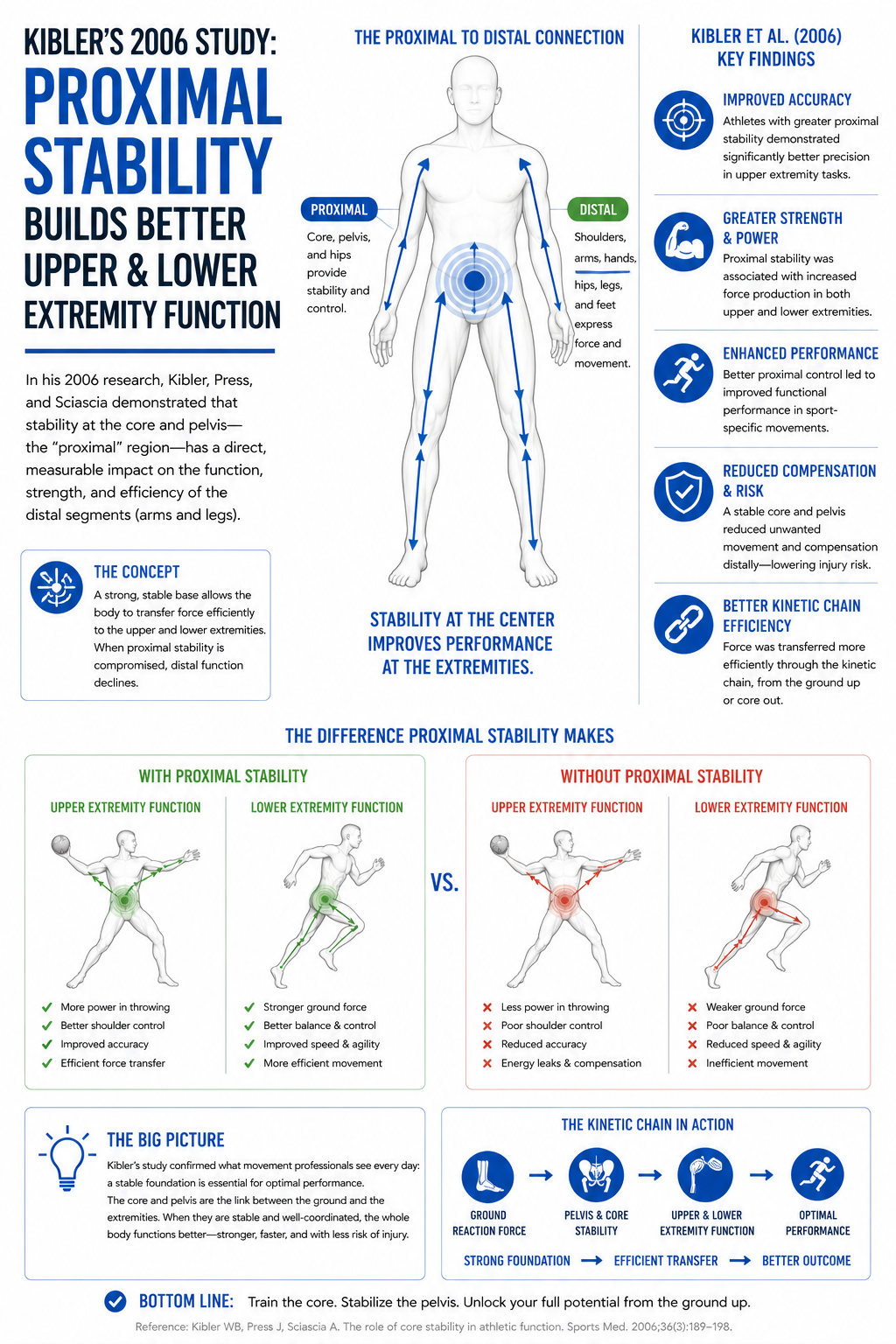
This is why simply stretching the shoulder or hip frequently produces only temporary results. Without adequate proximal control, the body lacks the ability to use newly acquired range of motion. Core stability is not just about resisting movement, but about creating the right level of stiffness at the right time to allow distal segments, the shoulders and hips, to move freely and efficiently. Hodges and Richardson further demonstrated that deep trunk musculature activates in anticipation of limb movement, reinforcing that stability is a prerequisite for mobility.
However, stability is not purely a muscular phenomenon it is also deeply influenced by the nervous system. This brings us to the concept of bottom-up regulation. The nervous system continuously integrates sensory input from the body, especially from the feet, joints, and connective tissues, to determine how much movement is “safe.” When the system perceives instability or threat, it often restricts motion as a protective strategy.
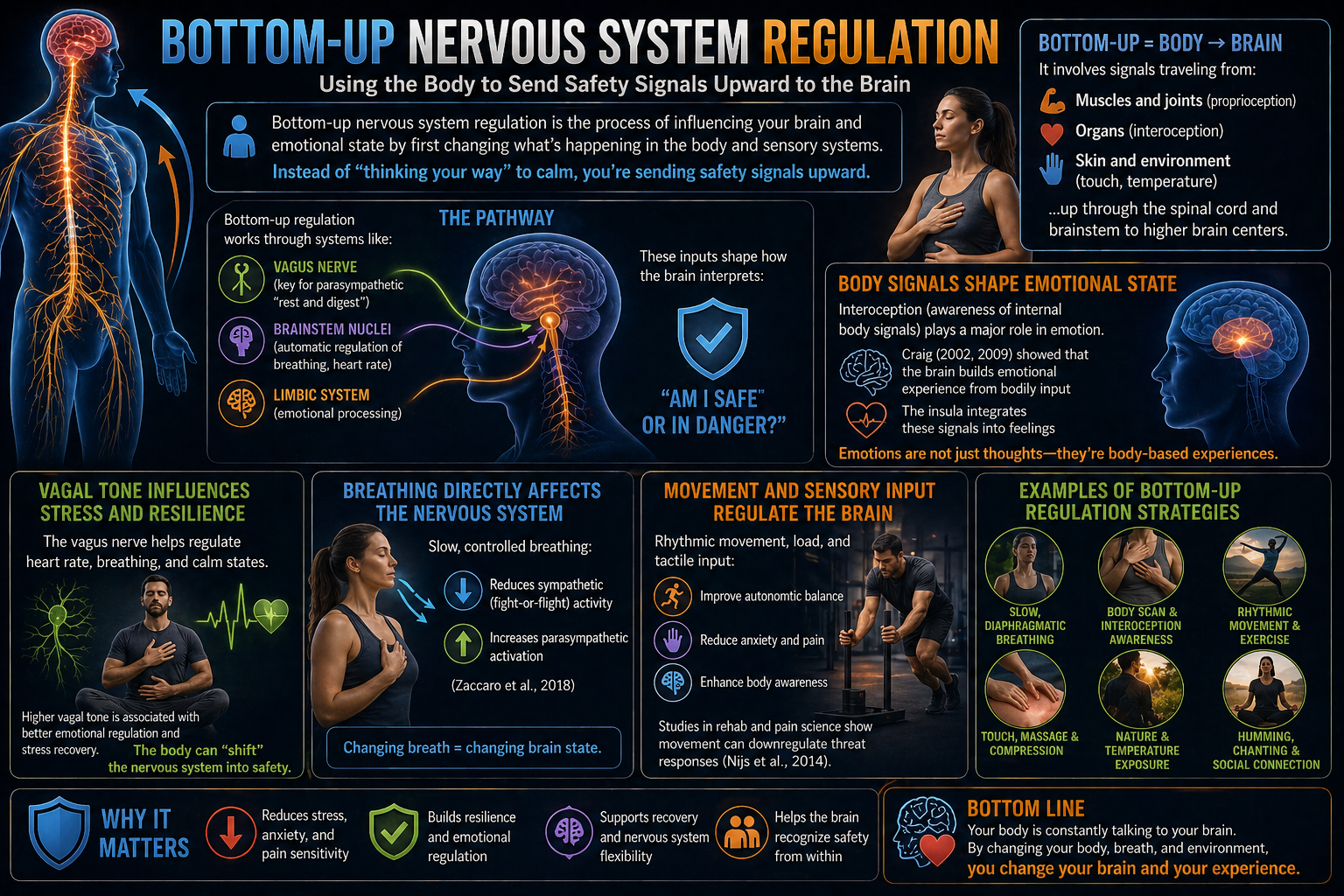
Bottom-up approaches emphasize improving the quality of this sensory input. By enhancing proprioception and creating controlled, intentional movement experiences, we can influence how the brain interprets and allows motion. This aligns closely with principles seen in myofascial and integrated movement systems, where movement is slow, deliberate, and often paired with breath. Breathing itself plays a key role in nervous system regulation, affecting muscle tone, rib cage mechanics, and overall movement efficiency. Research has shown that breathing patterns can influence trunk stability and motor control, further linking respiration to both mobility and stability outcomes.
When proximal stability and nervous system regulation are addressed, the next layer involves how the body coordinates movement across segments this is where kinetic chains and myofascial connections come into play. The body is not a collection of isolated joints, but a network of interconnected tissues that transmit force and coordinate action. Myers’ concept of myofascial meridians, along with research on sling systems, highlights how structures like the posterior oblique sling connect the gluteus maximus on one side with the latissimus dorsi on the opposite side.
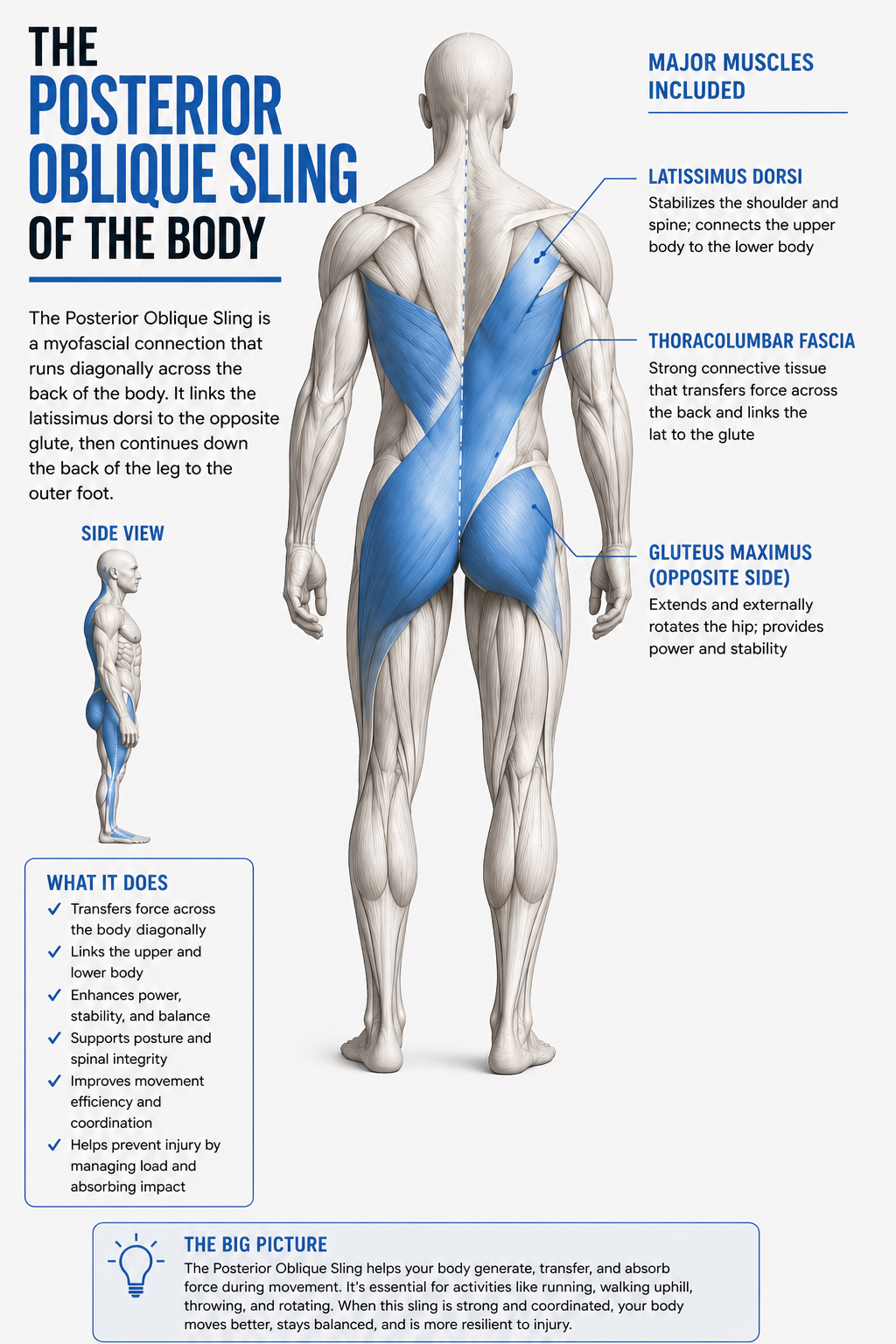
These connections are especially relevant for shoulder and hip mobility because they emphasize diagonal, cross-body movement patterns, which more closely reflect how we move in real life. Walking, running, throwing, and lifting all involve rotational and diagonal forces. Training in these patterns reinforces coordination across the system, improving not just range of motion, but the ability to access and control that range.
Studies on functional movement and athletic performance consistently show that rotational and multi-planar training improves both mobility and stability more effectively than isolated approaches. By engaging multiple segments simultaneously, diagonal patterns help “unlock” motion through improved sequencing and timing rather than forcing range at a single joint.
Finally, none of this works effectively without a stable and responsive base, the foot. The foot serves as the primary interface between the body and the ground, providing both mechanical support and rich sensory input. Research has shown that deficits in foot stability and proprioception can alter movement patterns up the kinetic chain, contributing to issues at the knee, hip, and even shoulder.
For example, limited foot stability can reduce the body’s ability to create ground reaction forces efficiently, which in turn affects how force is transferred through the hips and trunk to the upper body. This can manifest as restricted hip mobility or compensatory shoulder movement. Conversely, improving foot stability, through better arch control, balance, and ground interaction, can enhance proprioceptive feedback and create a more stable platform for movement.
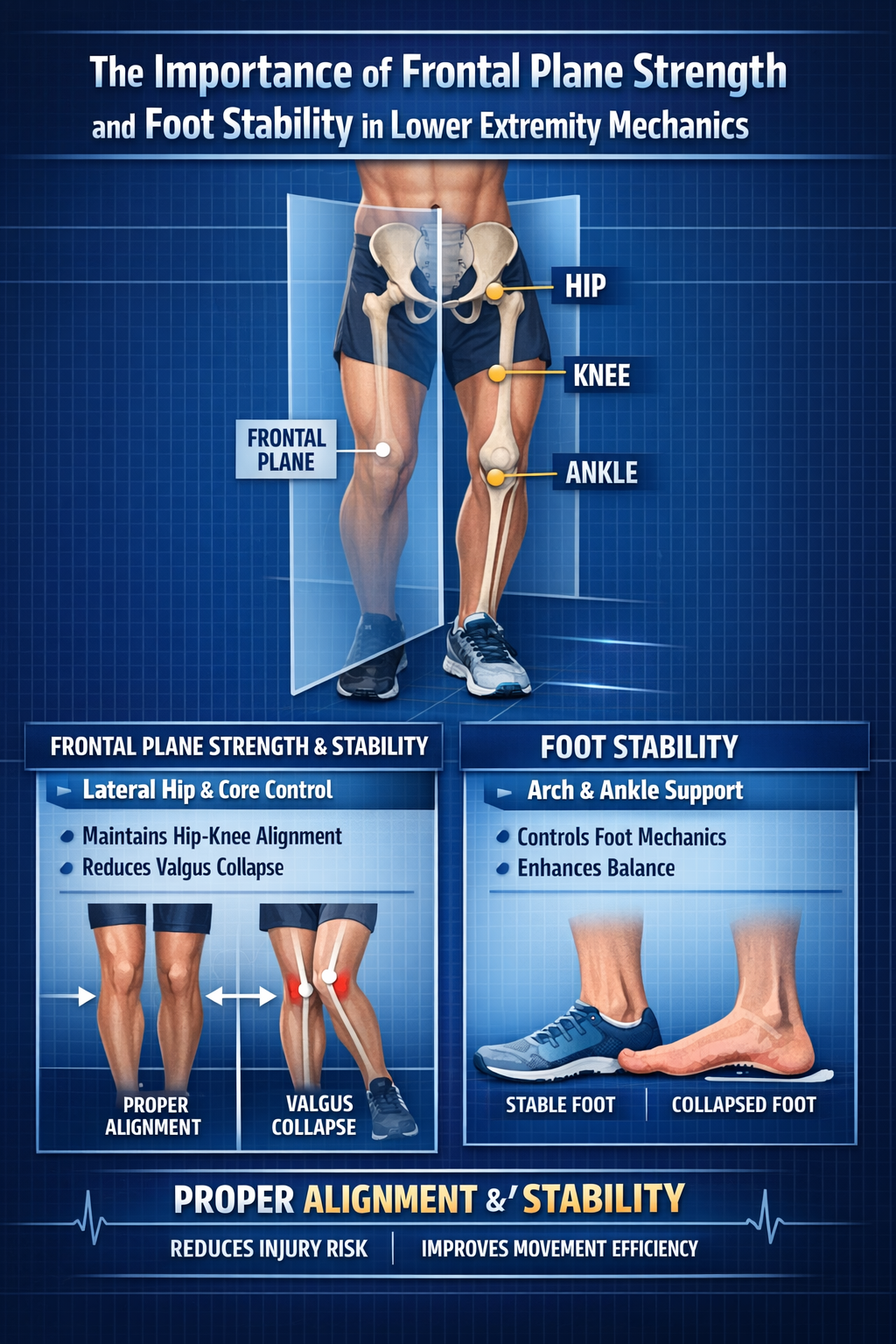
This “ground-up” effect reinforces the idea that mobility is not just about flexibility, but about how well the entire system communicates and coordinates. When the feet are stable, the nervous system receives clearer input. When the core is stable, the limbs have a reliable base. When the body moves through integrated, diagonal patterns, it reinforces the connections that make movement efficient.
Taken together, these elements suggest a shift in how we approach mobility training. Instead of isolating joints and forcing range of motion, a more effective strategy is to:
- Build proximal stability to support distal movement
- Use bottom-up strategies to improve nervous system regulation
- Train movement through integrated, diagonal kinetic chains
- Develop foot stability to enhance both mechanics and sensory input
The result is not just increased range of motion, but usable mobility, movement that is stable, coordinated, and adaptable.
Ultimately, the goal is not simply to move more, but to move better. By respecting the interconnected nature of the body, we can create mobility interventions that are not only more effective, but also more durable and transferable to real-world performance. Coach Martin Adame shows some great examples of how we bring these ideas to life.
Learn more in our Corrective Exercise Programs HERE and our Myofascial Integrated Movement HERE all 20% off this week with code “save20”
Featured in





© 2026 Ultimate Sandbag Training. Site by Jennifer Web Design.