
The “Just Push the Plate Away” Myth And Why It Fails Almost Everyone
2026-08-20

If you’ve spent any time in fitness spaces, you’ve heard some version of it: weight loss really just comes down to willpower. Eat less. Push the plate away. Want it badly enough, and the rest takes care of itself.
It’s simple, it’s tidy, and it’s almost entirely wrong, NOT because people don’t need self-control at all, but because this advice fundamentally misunderstands how eating behavior actually forms, and it rests on a scientific concept that has been seriously undermined by the last decade of research.
Eating Behavior Is a Learned Habit Loop, Not a Willpower Test
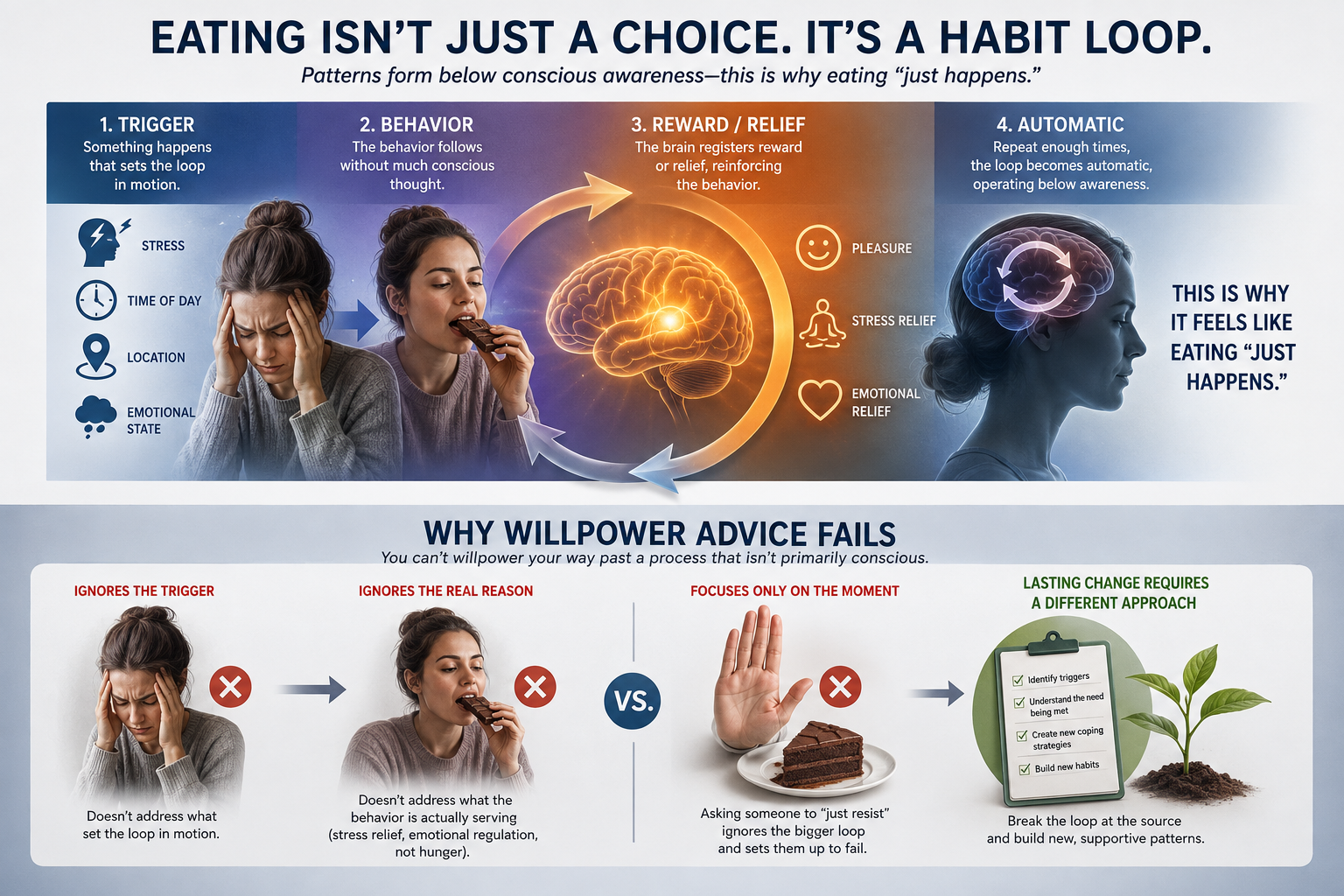
“Push the plate away” treats every instance of eating as an isolated moment of choice. Habit research tells a very different story. Eating patterns form through a well-documented loop: a trigger occurs (stress, a certain time of day, a specific location, an emotional state), a behavior follows (eating), and the brain registers some form of reward or relief. Repeated enough times, this loop becomes automatic, operating below conscious awareness, which is exactly why it can feel like eating “just happens” despite someone’s genuine intention to eat differently.
This matters enormously for why willpower-based advice fails so often. You cannot willpower your way past a process that isn’t primarily conscious in the first place. Asking someone to simply resist in the moment ignores the trigger that got them there and the reward the behavior is actually serving, often stress relief or emotional regulation, not hunger at all.
The Environment Does Most of the Work, Not the Willpower
Research on food environments and cue-reactivity adds another layer this advice ignores entirely. Modern food environments are deliberately engineered through availability, marketing, and constant visual and olfactory cues to trigger cravings and consumption regardless of actual hunger. Asking an individual to overcome, through sheer willpower, an environment specifically engineered to undermine that willpower is an enormously unfair fight, and it locates the entire problem inside the person rather than acknowledging the conditions surrounding them.
Shame Makes It Worse, Not Better
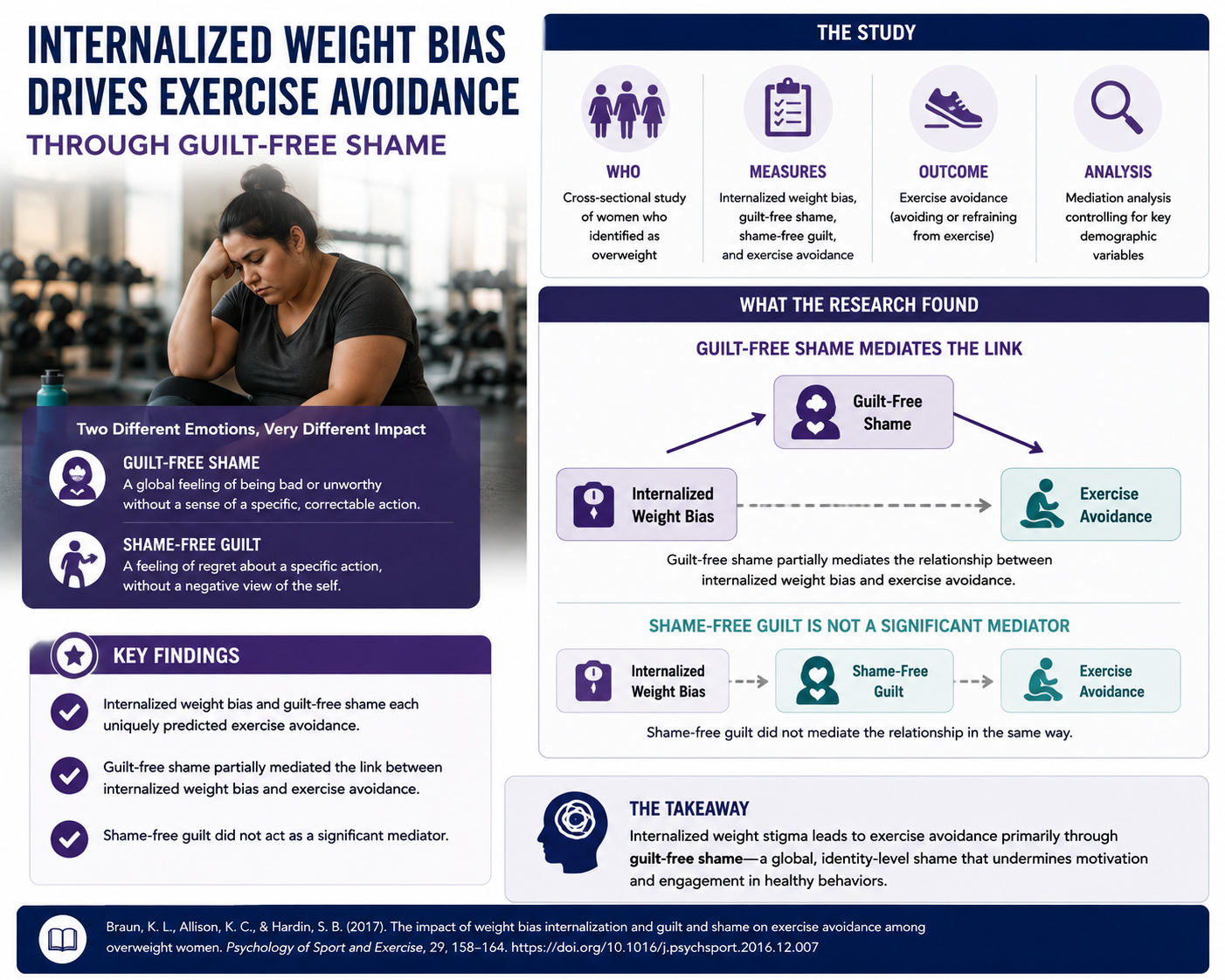
Perhaps the most damaging part of “push the plate away” thinking is what happens when it fails, and given everything above, it frequently does. Research on shame and eating behavior shows a clear, troubling pattern: after a binge or a perceived lapse, shame reliably increases, and that shame is associated with continued or worsening disordered eating, not correction. A framework that reduces eating entirely to willpower leaves no room for anything except blame when a person doesn’t succeed, precisely the shame-driven cycle the research shows keeps people stuck.
What This Actually Means for Real Change
None of this means self-regulation is irrelevant. It means the “just push the plate away” model radically oversimplifies a genuinely complex behavior shaped by learned habit loops, environmental engineering, emotional regulation, and even a person’s beliefs about their own willpower. Real, lasting change tends to come from identifying and adjusting triggers, building environments that don’t require constant resistance, addressing the emotional function eating is serving, and replacing shame with self-compassion when setbacks happen, because they will.
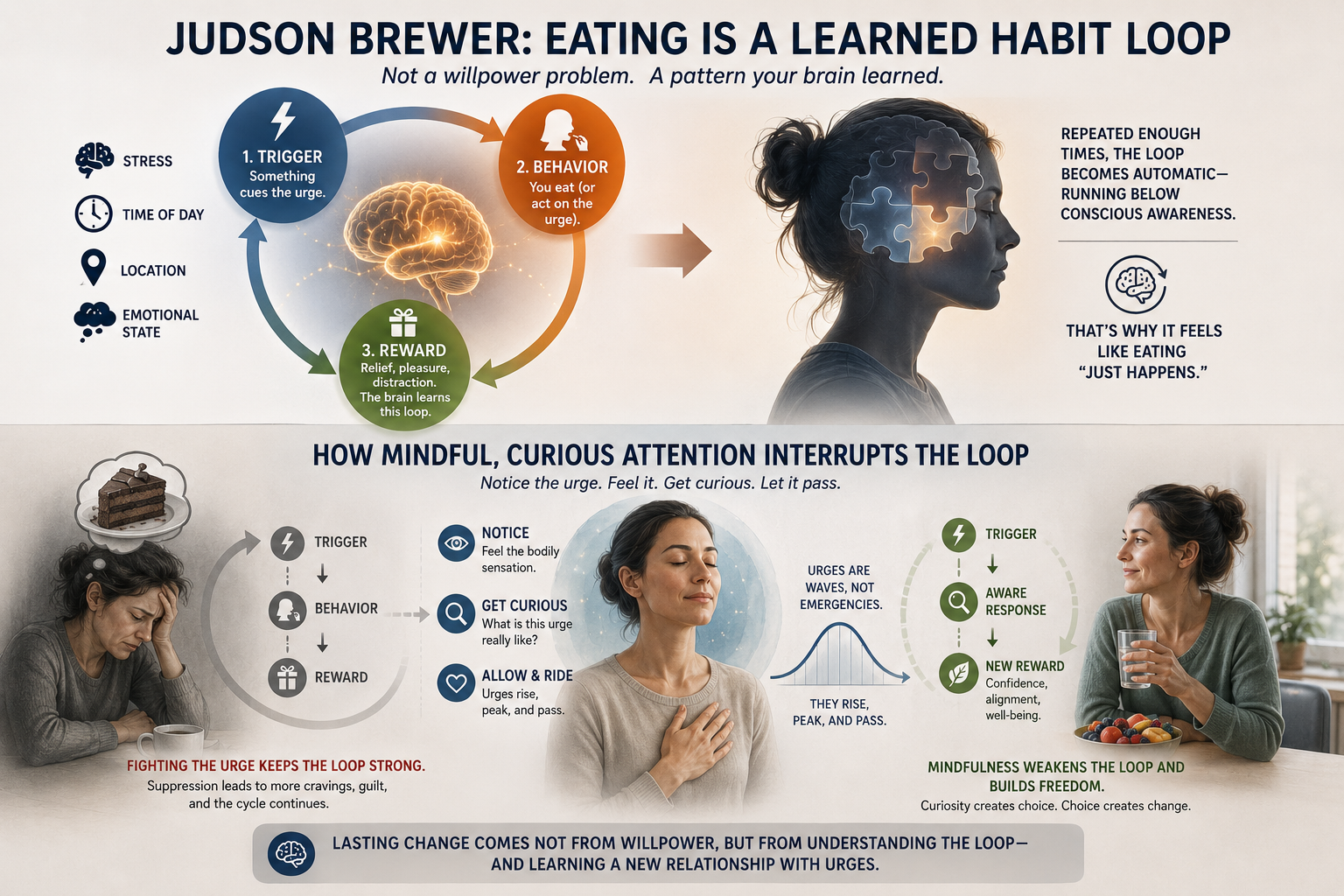
Research from three leading behavioral scientists points toward what actually replaces the “just push the plate away” model. Judson Brewer’s work reframes eating not as a willpower contest but as a learned habit loop; trigger, behavior, reward, and shows that mindful, curious attention to the urge itself, rather than white-knuckled resistance, is what interrupts the loop. In his research and clinical work, teaching people to simply notice the physical sensation of a craving with curiosity, rather than fighting it, produces more durable change than suppression ever does.
Katy Milkman’s research adds a structural piece: rather than relying on willpower to override temptation in the moment, she’s shown that redesigning the conditions around a behavior works better. Her studies on temptation bundling, pairing a behavior you’re avoiding with something enjoyable and on the “fresh start effect,” where people are measurably more likely to pursue change at natural temporal landmarks (a Monday, a new month, a birthday), both point to the same conclusion: successful behavior change comes from working with predictable psychological patterns, not fighting them through sheer force of will.
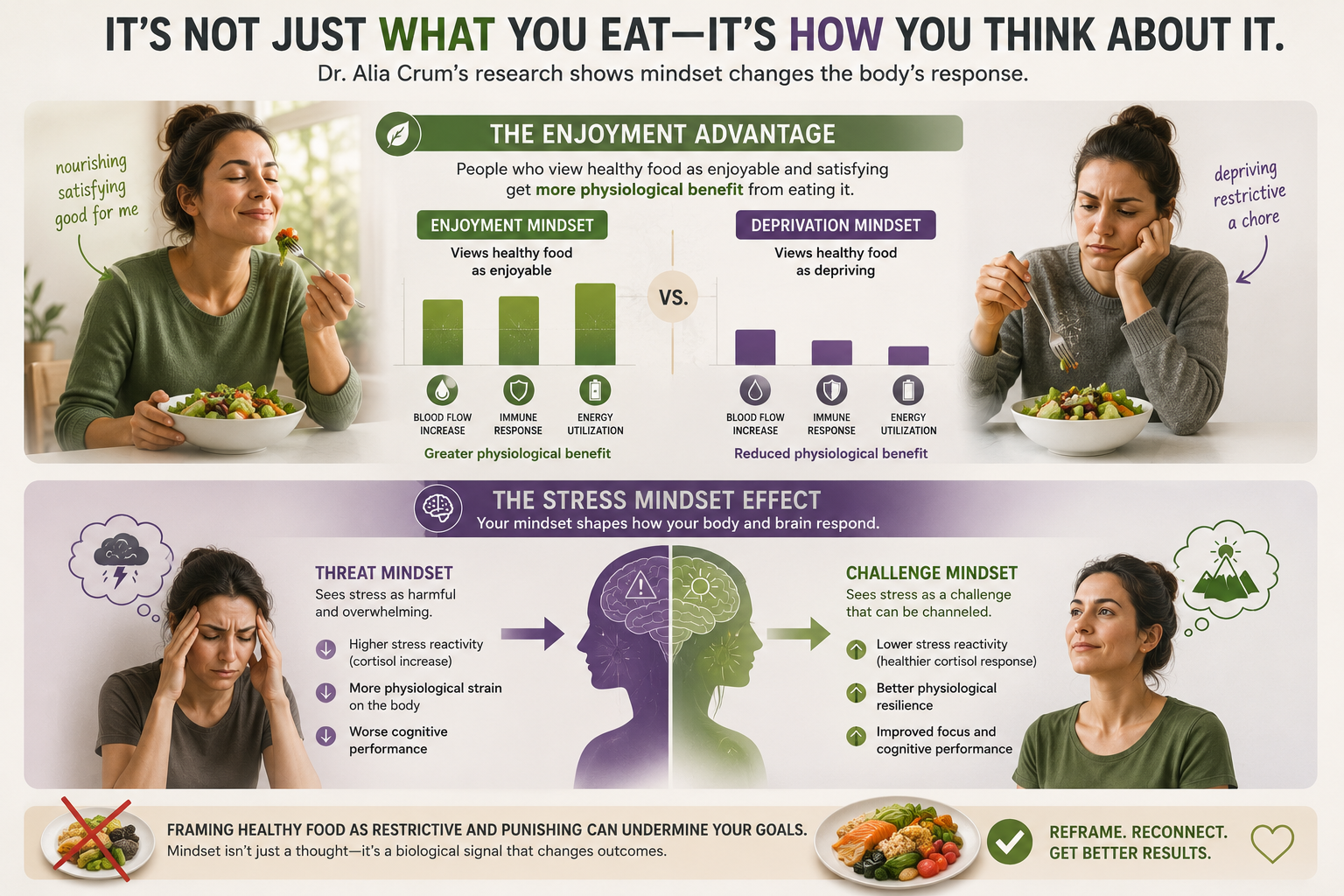
Alia Crum’s research contributes perhaps the most counterintuitive finding: mindset itself changes physiology, not just behavior. In one striking study, participants’ ghrelin (a hunger-regulating hormone) dropped nearly three times faster when they believed they were drinking an indulgent, high-calorie milkshake , even though the shake was identical both times. In another line of research, she found that people who view healthy food as depriving and unsatisfying get measurably less physiological benefit from eating it than people who view healthy food as genuinely enjoyable. Her stress-mindset research shows a similar pattern: viewing stress as something that can be channeled productively rather than something purely harmful, improves physiological and cognitive stress responses. Applied to eating, this suggests that framing healthy food as restrictive and punishing (the exact framing “push the plate away” reinforces) may be working against the very outcome it’s trying to produce.
Put together, this research points to a genuinely different model than willpower: notice cravings with curiosity instead of resisting them, redesign your environment and timing instead of relying on in-the-moment resolve, and consciously shift how you frame food and health itself, because your beliefs about the behavior turn out to shape your body’s actual response to it.
Learn MUCH more in our DVRT Online Masterclasses like “Why Fitness Is Failing Fat Loss” and other programs 25% off with code “dvrt25” HERE along with all DVRT programs and tools.
Featured in





© 2026 Ultimate Sandbag Training. Site by Jennifer Web Design.