
Have Back Pain? Do Nothing?! Crazy But Right!
2026-08-27

In one of our recent online Masterclasses, a student asked a question that comes in many forms: “Some days I wake up with a tight back. What should I do?”
I told them: nothing. Not right away, at least.
I could see the shock on their face. It’s a strange answer to hear, especially in a fitness world that treats every uncomfortable sensation as a problem demanding an immediate solution a stretch, a foam roller, a “fix.” But “do nothing, at first” isn’t laziness or denial. It’s actually exactly in line with what current pain science tells us.
Why “Doing Something” Can Make It Worse
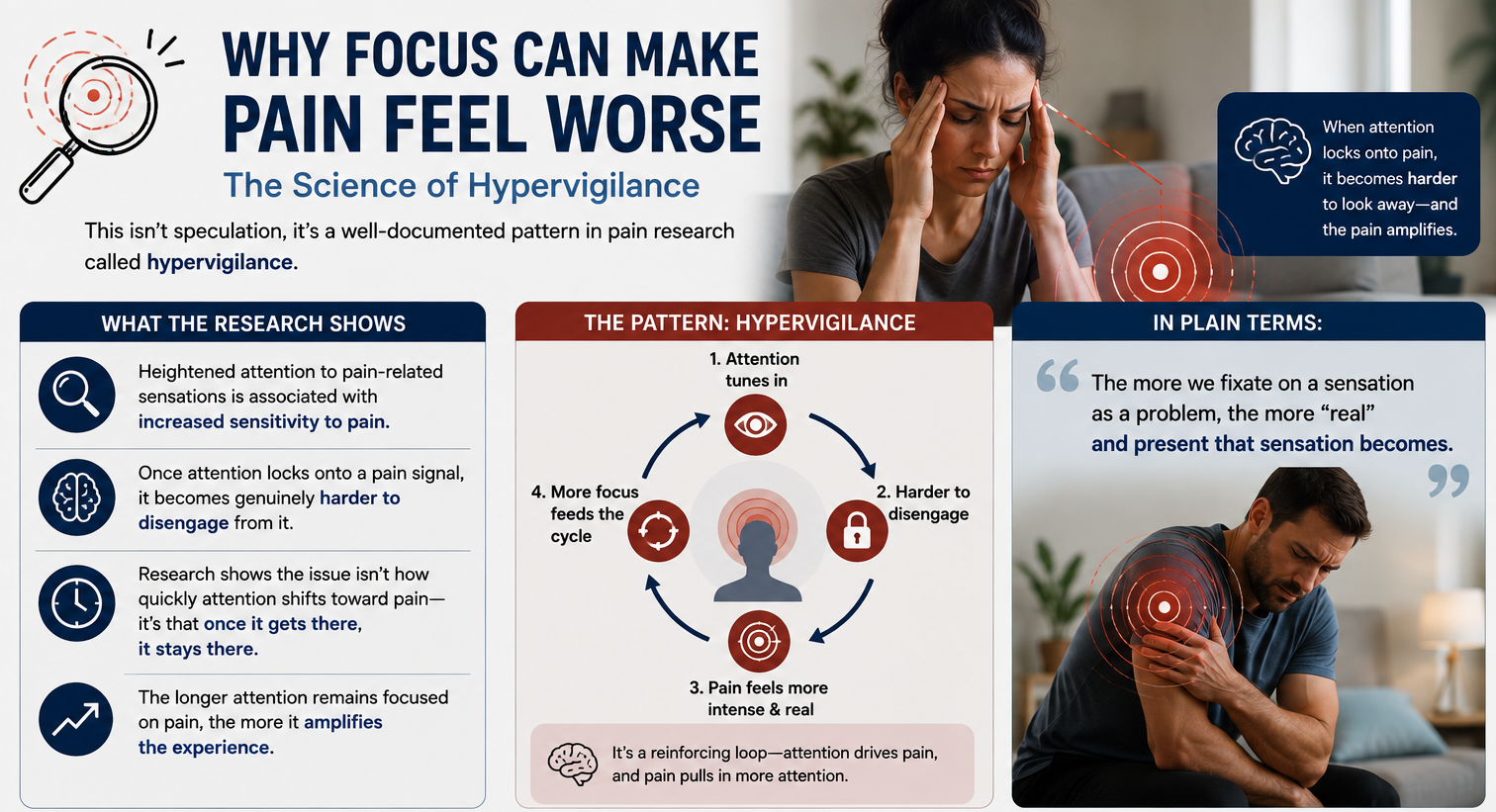
Here’s what happens the moment we label a sensation as “bad”: our nervous system starts interpreting it as a threat. And once something is flagged as dangerous, the body shifts. We become more sensitive to the sensation, we pay more attention to it, and we drift toward a more activated, protective, fight-or-flight state.
This isn’t speculation, it’s a well-documented pattern in pain research called hypervigilance. Studies on chronic pain populations have found that heightened attention to pain-related sensations is associated with increased sensitivity to pain itself, and that once attention locks onto a pain signal, it becomes genuinely harder to disengage from it. Some of this research has found that the issue isn’t how quickly attention shifts toward pain it’s that once it gets there, it stays there, amplifying the experience the longer it’s focused. In plain terms: the more we fixate on a sensation as a problem, the more “real” and present that sensation becomes.
I’m not suggesting you should just ignore every uncomfortable sensation. But the belief that we must do something every single time we feel discomfort, sadness, or a bit of anxiety often traps people in exactly the cycle described above, one that keeps those feelings and sensations more persistent, not less.
Step One: Just Accept It’s There
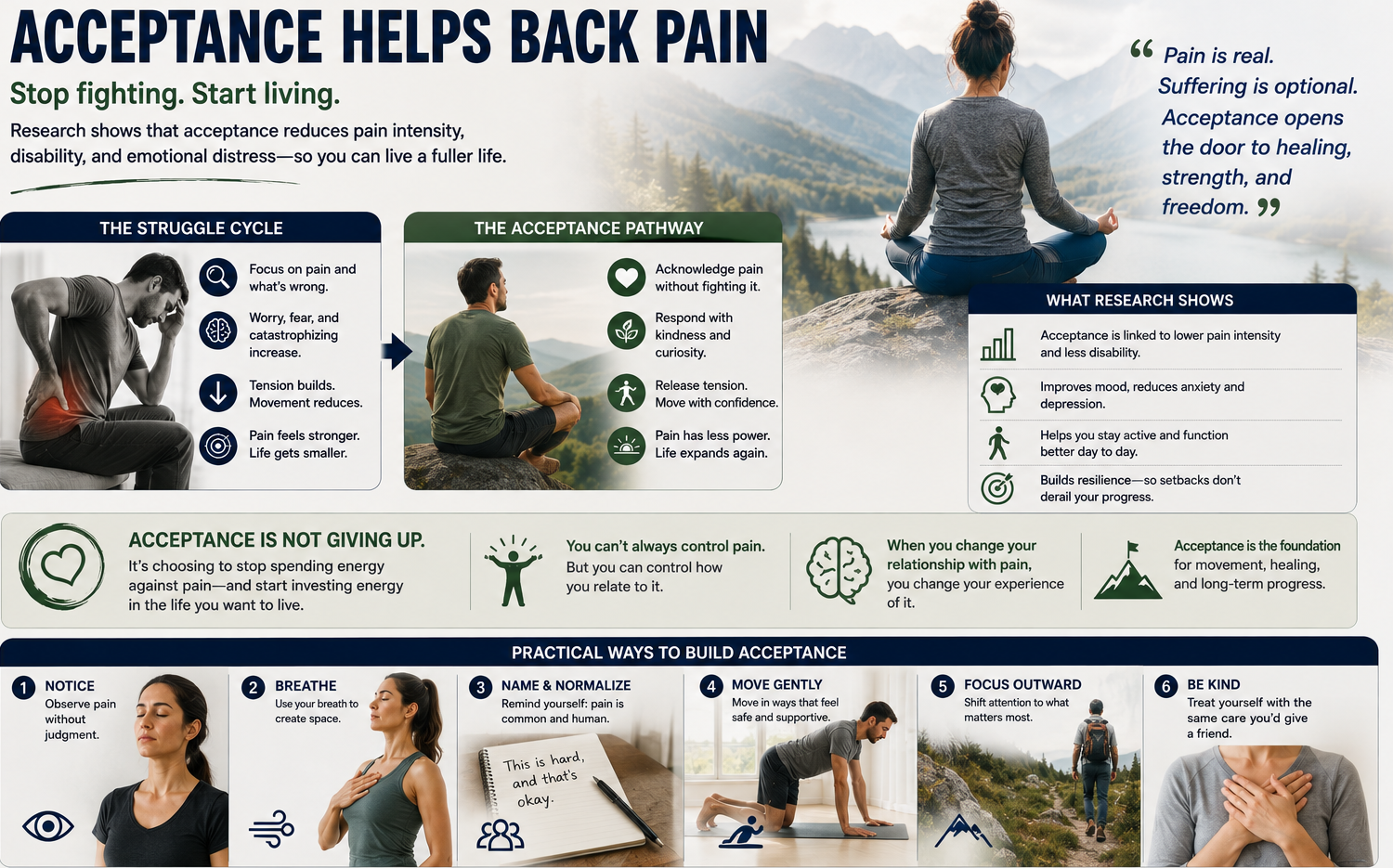
The first move isn’t fixing anything. It’s simply accepting that the sensation exists. Not liking it. Not deciding it’s fine. Just acknowledging: right now, this is a sensation, nothing more.
I understand this one personally. After multiple significant back surgeries, I wake up most mornings with some kind of sensation in my back. Some days it’s VERY noticeable. Some days there’s nothing at all. What I’ve learned is that reacting to every variation with alarm doesn’t protect my back, it just adds a layer of fear on top of whatever sensation was already there.
I get it, when you are uncomfortable you want to do SOMETHING about it. Funny enough, one of the most effective strategies I have found is that just start doing something in my usual routine. If it is starting to make breakfast, say hello to my dogs, unload the dishwasher, and as I do it I just try to focus on the task. Sure, I notice the sensations and I even notice the stories that I start creating around what the sensations means. Maybe its…
-Oh no, I won’t be able to get my workout in today!
-Ugh, how am I suppose to get me work done when I’m this uncomfortable?!
-This is so frustrating, I hate having to deal with this!!!
It’s normal to feel these things, but the first step is to notice that you are creating these stories around a sensation you aren’t really sure is that problematic. That is where the old saying, “pain is inevitable, suffering is optional” is really referring to in our lives.
When you notice the story telling and remind yourself it IS just a story (even if there is some truth to it) and we don’t have to buy in these idea fully it can start to lower the intensity of whatever discomfort we are experiencing.
Instead, we COULD say….
-Okay, let me start warming up today and see how I feel
-Well, I can always modify my workout to meet how I am feeling
-Maybe I can’t get EVERYTHING done today I wanted, but let me prioritize and rest a bit
-It is frustrating to be uncomfortable, but discomfort is not unusual, I know I can tolerate it, and I have evidence it doesn’t last forever.
Step Two: Look for Boring Explanations
Once you can simply accept the sensation without panicking about it, you can start looking for context and this step matters more than people realize.
Did you try a new exercise yesterday and your body is still adapting to the stimulus? Were you up half the night with sick kids, or in my case, dogs demanding a 3 a.m. parade to the backyard? Is there a stressful, overloaded day ahead that’s got your nervous system on edge before you’ve even gotten out of bed?
Finding a plausible, non-injury explanation matters because of what it communicates to your brain. Pain research consistently shows that perceived safety directly shapes the pain experience when the nervous system has reason to believe a sensation isn’t a sign of danger, it doesn’t need to keep amplifying it as a protective measure. Reminding yourself of a boring, ordinary reason for the tightness is a genuine way of telling your nervous system: you’re safe, this isn’t an emergency.
Step Three: Shift Attention Toward What Feels Fine
From there, try shifting some attention toward sensations that don’t feel uncomfortable. A full breath where you consciously let go of tension. The smell of coffee. Your family’s sleepy morning smiles. The wiggling, overly excited butts of your dogs greeting the day. This isn’t about distraction for its own sake it’s about giving your nervous system evidence, moment to moment, that not everything about right now is a threat. The less fear we build around a sensation, the less power it tends to hold.
Step Four: Modify, Don’t Cancel
If the sensation is still there and you’re planning to train, the answer usually isn’t skipping the workout entirely it’s modifying it. Reduce range of motion. Do fewer reps of certain movements. Go lighter. Or pick a different activity entirely, one that doesn’t send your nervous system further into protective mode.
When a sensation feels strong, your nervous system often needs more reassurance of safety, not less activity altogether. Treating every uncomfortable sensation as something urgently in need of fixing frequently makes the problem worse, locking people into the exact fear-pain loop this whole approach is designed to avoid.
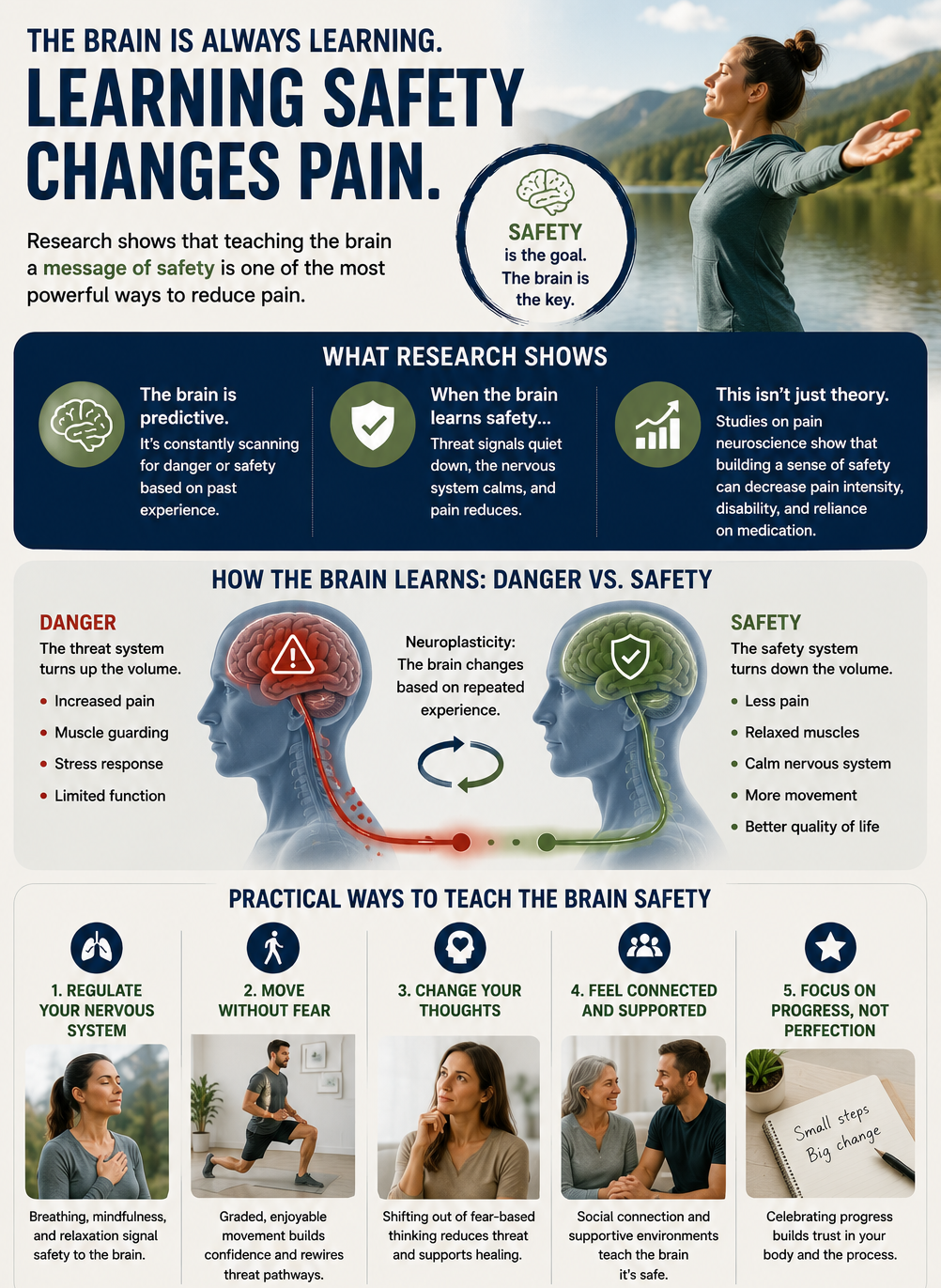
Sometimes the most effective response to a tight back really is: accept it, get curious about it, redirect your attention, and modify rather than cancel. Not because the sensation doesn’t matter, but because how we respond to it often determines whether it fades or takes hold.
Find out A LOT more of the science of pain in our Masterclasses that are ALL 25% off including our workout programs and Ultimate Sandbags HERE with code “dvrt25”
Featured in





© 2026 Ultimate Sandbag Training. Site by Jennifer Web Design.