Ancient Method Behind Modern Strength and Power

Long before “kinetic chain” and “fascial lines” became buzzwords in strength and mobility circles, martial artists were training a concept that captured all of it in a single movement principle: silk reeling.
Rooted in Chen-style Tai Chi, silk reeling (chán sī jìn) describes the sensation of continuously unwinding silk from a cocoon smooth, spiraling, unbroken tension that never snaps and never goes slack. It sounds poetic, almost abstract. But strip away the metaphor and you’re left with one of the most complete models of human movement mechanics available, and it applies just as much to an athlete chasing more power as it does to someone simply trying to move well for life.
Spiraling Is How the Body Actually Moves
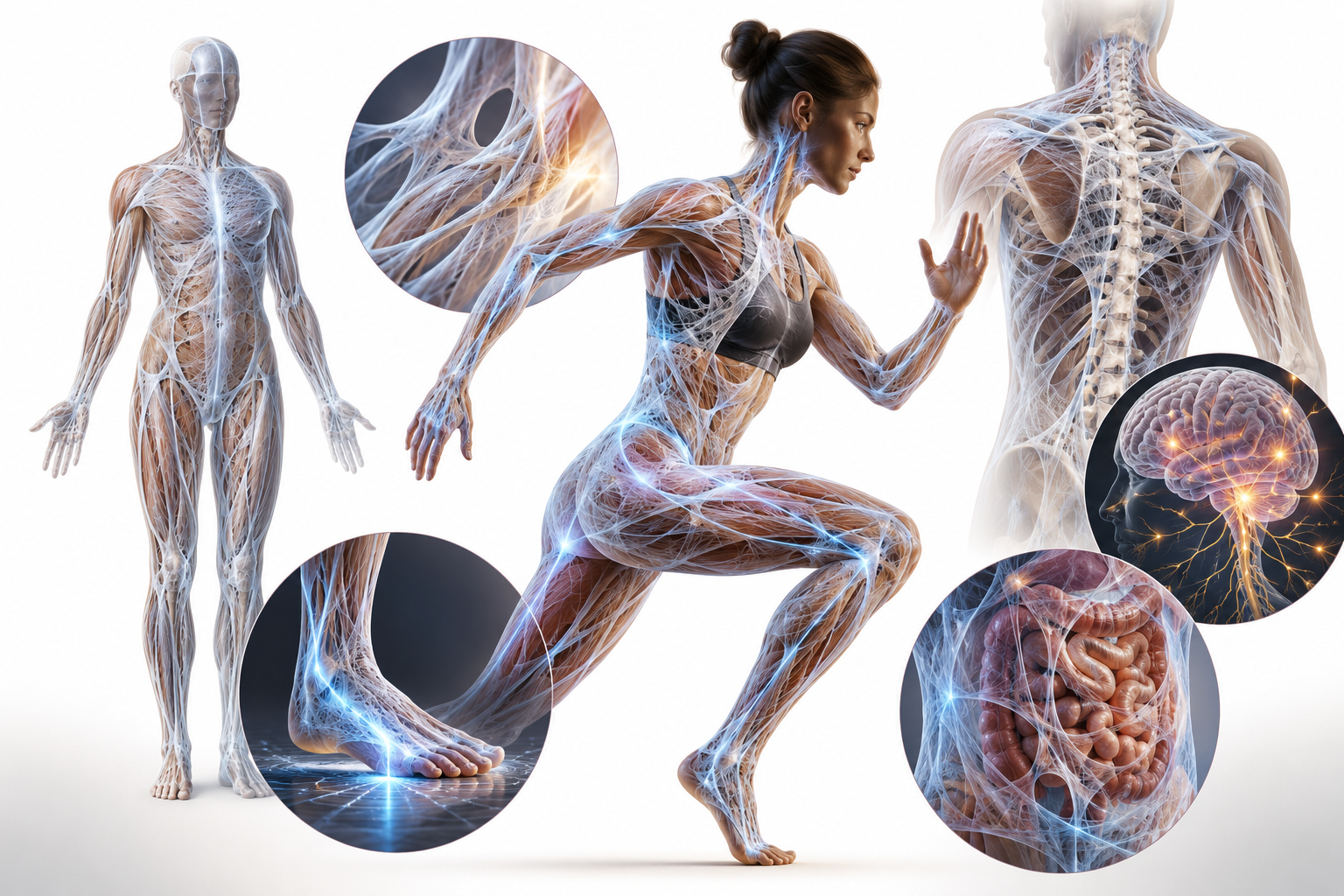
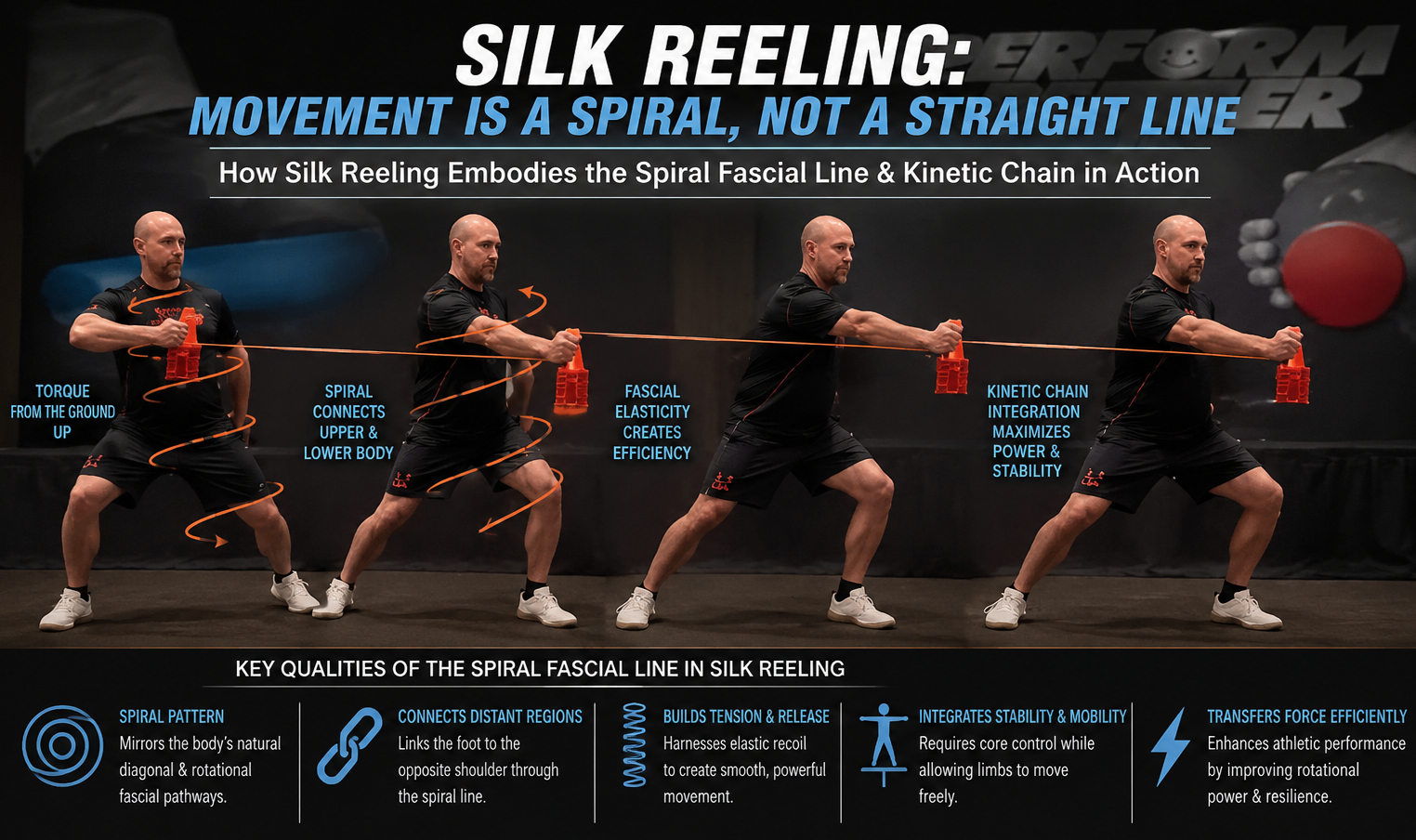
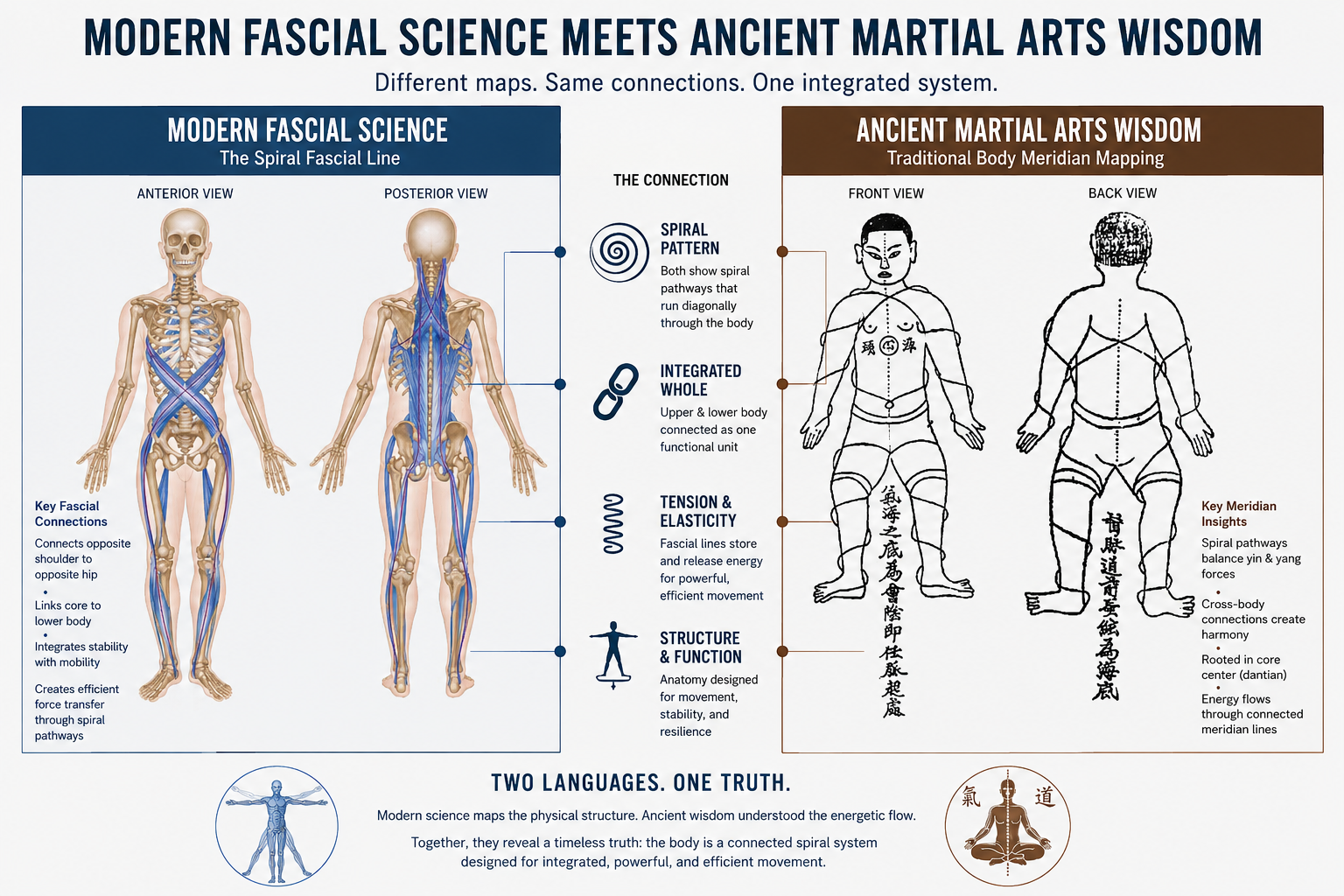
Modern fascial research has caught up to what silk reeling practitioners understood generations ago: your body doesn’t generate force in straight lines. It spirals. Fascial line models, like the spiral line described in fascial anatomy research , trace connective tissue that wraps diagonally around the body, from foot to opposite shoulder, linking rotation in the hips to rotation in the ribcage and shoulders.
Silk reeling trains exactly this pathway. Every movement in the practice involves simultaneous, coordinated spiraling the foot creates force into the ground, the shin and thigh rotate, the pelvis follows, and that rotation continues up through the torso and out through the arm. Nothing moves in isolation. This is the spiral line in motion, and it’s precisely why silk reeling feels different from conventional strength training that isolates muscles or moves joints in single planes.
The Lower Body as the Engine
One of the most valuable lessons silk reeling offers is something elite strength coaches spend years trying to teach: power doesn’t start in the arms or shoulders. It starts in the ground.
In silk reeling practice, force is initiated through rotation at the foot and ankle, transmitted up through the knee and hip, and delivered into the torso before it ever reaches the hands. This mirrors exactly how the kinetic chain functions in athletic movement a golf swing, a punch, a throw, a sprint. The lower body generates and organizes force; the upper body simply expresses it. When that sequence breaks down when the arms try to generate power independently of the legs and core you get exactly what silk reeling is designed to prevent: disconnected, inefficient, vulnerable movement.
Train silk reeling consistently, and you’re training your nervous system to default to this efficient sequencing, even outside of formal practice. That transfer is enormous for anyone lifting weights, playing sports, or just trying to move powerfully without injury.
Reflexive Core Stability, Not Braced Core Stability
Most core training asks you to brace tighten deliberately, hold a position, resist movement. Silk reeling asks something more sophisticated: let the core respond reflexively to rotational force moving through the body.
Because silk reeling involves continuous spiraling through the trunk, the deep stabilizing muscles of the core the ones that wrap around the spine and pelvis are constantly required to respond to changing rotational demands in real time. This is reflexive stability: the kind your nervous system builds automatically, without conscious bracing, because it’s had to respond to varied rotational load over and over again.
This matters because real-world strength and athletic performance rarely happen in braced, static positions. They happen while you’re moving, rotating, and reacting. Reflexive core stability, built through practices like silk reeling, transfers to those conditions far more directly than a plank ever will.
Full-Body Strength, Not Segmented Strength
Perhaps the most valuable outcome of silk reeling is the hardest one to isolate in a gym setting: full-body integration. Because every silk reeling movement links the feet, legs, hips, spine, and arms into one continuous spiral, the body is trained as a single unit rather than a collection of separate muscle groups working independently.
This is fundamentally different from segmented training, where you build strength in the legs on one day, the core on another, and the upper body on a third, hoping it all somehow connects under real demand. Silk reeling doesn’t hope for integration it trains it directly, every single repetition.
The result is strength that doesn’t leak. Power that transmits efficiently from the ground up. Mobility that comes from controlled, spiraling rotation rather than forced stretching. And a nervous system that’s rehearsed, thousands of times over, exactly how to organize the whole body around a single, connected line of force.
Why This Matters for Everyone, Not Just Martial Artists
You don’t need to study Tai Chi to benefit from these principles. Whether you’re an athlete chasing more explosive power, a lifter looking to move more efficiently under load, or simply someone who wants to move well and stay resilient as you age, the underlying mechanics silk reeling trains spiraling force transmission, ground-up power, reflexive stability, and full-body integration are the same mechanics your body relies on for virtually everything you do.
Ancient practice, modern relevance. Sometimes the oldest methods turn out to be the ones science is still catching up to explain.
Discover more and join us for our live 4-week Myofascial Integrated Movement classes (yes, recordings will be available) and we have 25% off with code “mim25” HERE