Does Glute Training REALLY Help Low Back Pain

For years, one of the most common messages in fitness and rehabilitation has been:
“Your glutes are weak, and that’s why your back hurts.”
As a result, countless people with low back pain have been prescribed:
- clamshells
- glute bridges
- monster walks
- hip thrusts
- mini-band exercises
The idea seems logical:
if the glutes help stabilize and move the pelvis and hips, then stronger glutes should reduce stress on the low back.
But does research actually support the idea that “weak glutes” are a primary cause of low back pain?
The answer is more nuanced than many people think.
What The Research Actually Shows
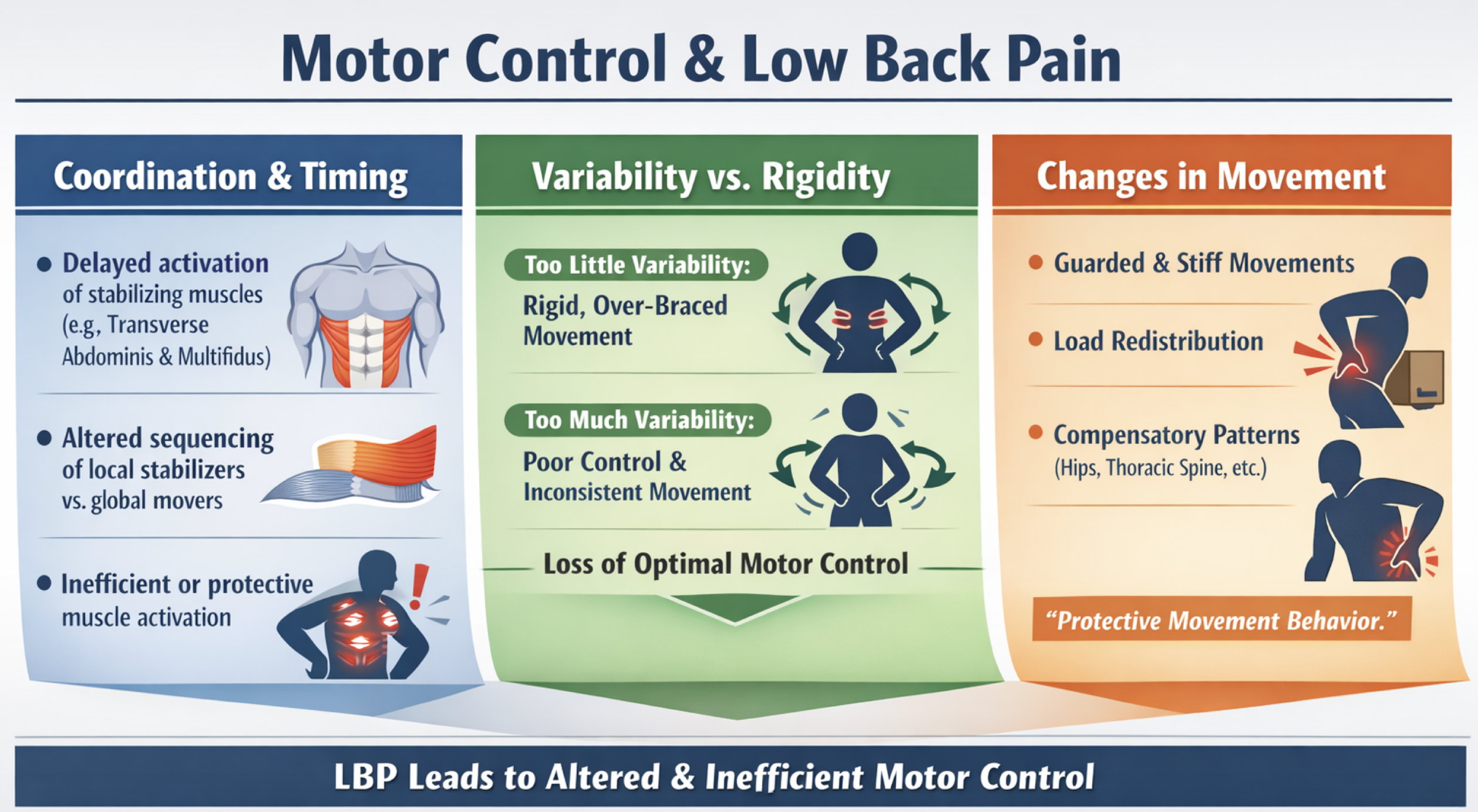
Research does suggest people with chronic low back pain often demonstrate:
- altered glute activation
- reduced hip strength
- different movement strategies
- reduced load tolerance
- changes in motor control
However:
that does NOT automatically mean weak glutes caused the pain.
This is a really important distinction.
Many studies are cross-sectional, meaning they compare people who already have pain to people who do not. Those studies cannot determine whether glute weakness caused the pain, or whether pain changed how people move and use their muscles.
In fact, pain itself often changes:
- muscle activation
- coordination
- movement variability
- force production
- confidence with movement
So reduced glute activity may sometimes be: a response to pain rather than the root cause of pain.
Do Glute Exercises Help?
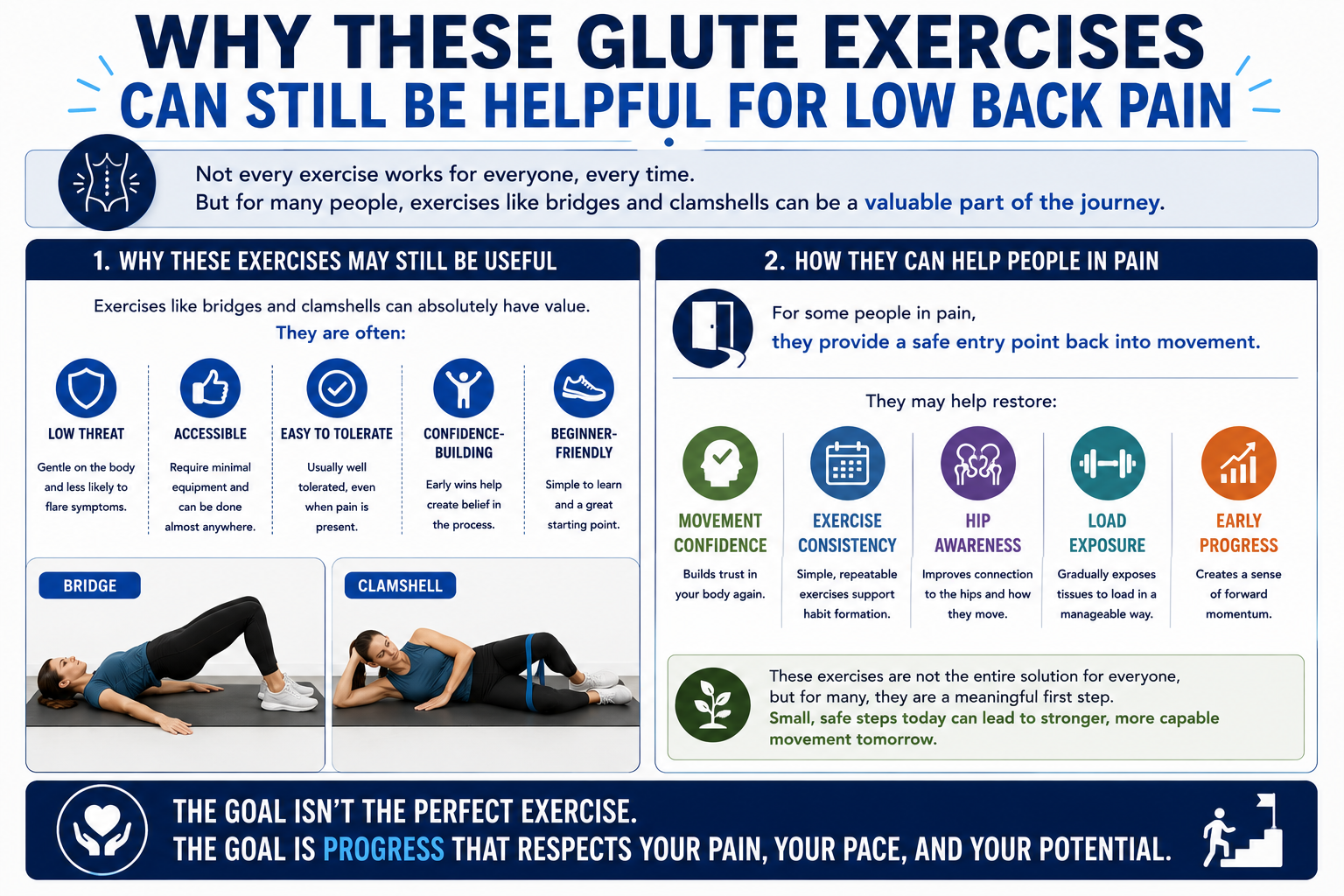
Interestingly, glute-focused exercise programs can absolutely help some people with low back pain.
But here’s the key: research generally shows that many different forms of exercise help low back pain, not just glute training specifically.
Studies consistently show benefits from:
- walking
- resistance training
- aerobic exercise
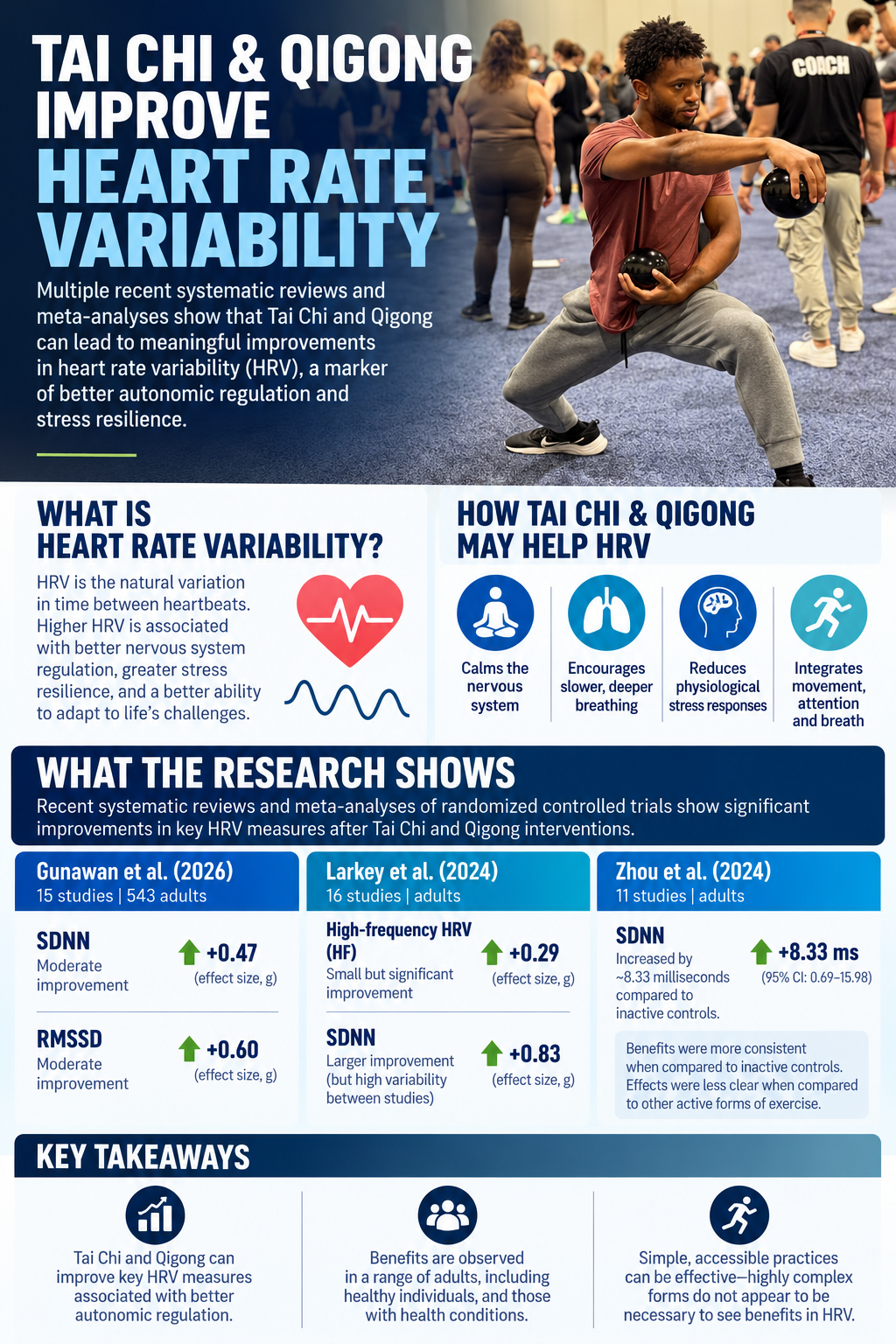
- Tai Chi
- Pilates
- yoga
- general strengthening
- graded exposure exercise
- motor control exercise
In many cases: no single exercise style clearly outperforms all others long term.
That suggests something important:
exercise may work less because of one “magic muscle” and more because it improves:
- confidence
- movement tolerance
- circulation
- physical capacity
- nervous system regulation
- load tolerance
- fear reduction
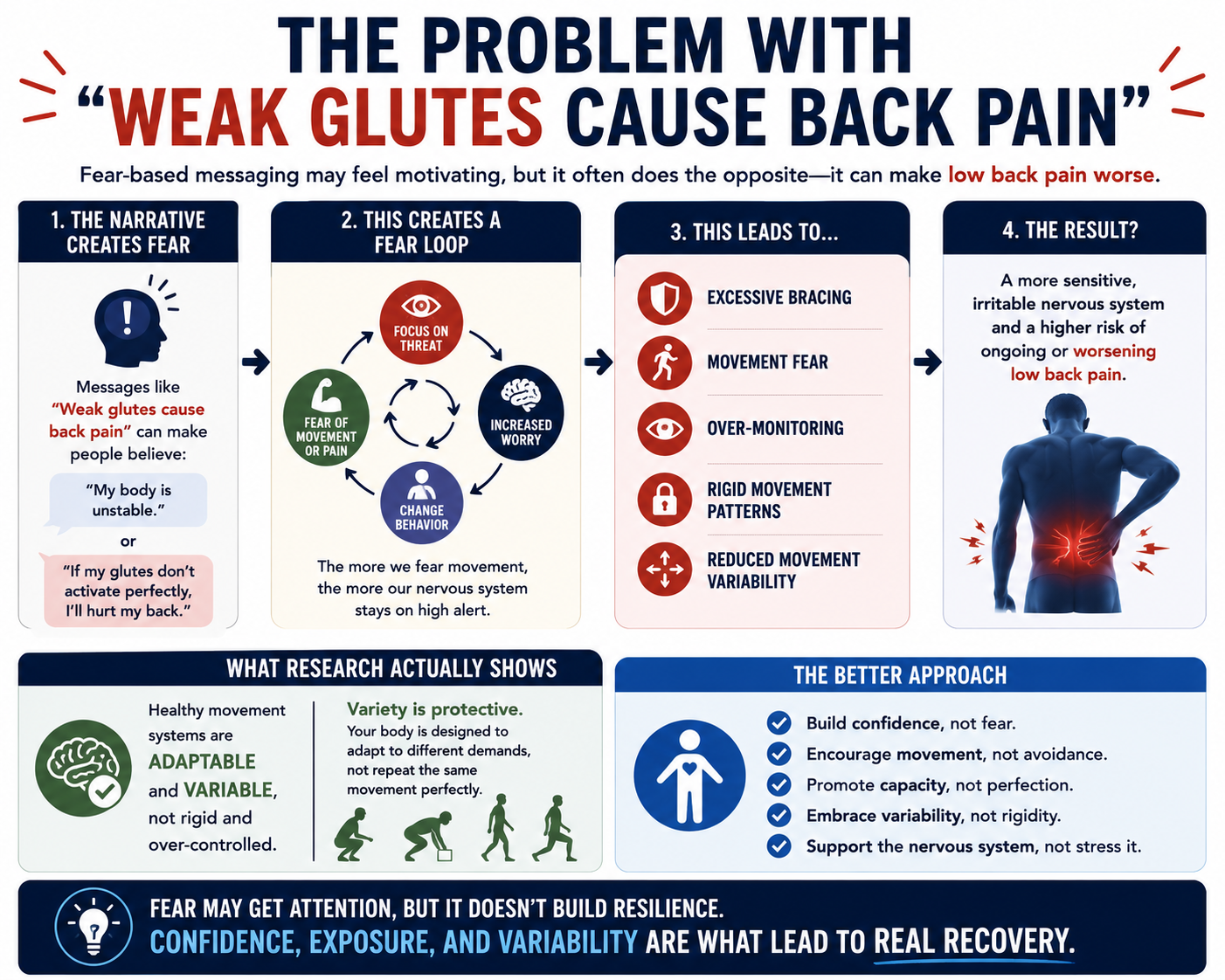
The Problem With “Weak Glutes Cause Back Pain”
One issue with the “weak glutes” narrative is that it can unintentionally increase fear and hypervigilance.
People may begin believing:
“My body is unstable.”
or:
“If my glutes don’t activate perfectly, I’ll hurt my back.”
This can create:
- excessive bracing
- movement fear
- over-monitoring
- rigid movement patterns
- reduced movement variability
Ironically: research increasingly suggests healthy movement systems are adaptable and variable, not rigid and over-controlled.
What The Glutes Actually Do
This does not mean the glutes are unimportant.
The glutes are incredibly important for:
- hip extension
- pelvic control
- force transfer
- gait
- running
- lifting
- rotational control
- load sharing throughout the body
The glute max especially contributes to:
powerful hip extension
resisting forward collapse
transferring force through the thoracolumbar fascia
coordinating with the trunk and hamstrings
The glute medius helps:
frontal plane control
single-leg stability
pelvic positioning during gait
So improving glute strength and coordination can absolutely improve movement efficiency and capacity.
But that is very different from claiming:
“Weak glutes are the main cause of low back pain.”
What Modern Research Suggests
Modern pain science and rehabilitation research increasingly support a broader perspective.
Low back pain is influenced by many interacting factors:
- stress
- sleep
- fear
- physical inactivity
- previous injury
- nervous system sensitization
- deconditioning
- emotional distress
- workload
- recovery capacity
- movement confidence
This means strengthening the glutes may help because it:
- improves overall physical capacity
- increases confidence
- improves load tolerance
- restores movement options
- reduces fear of movement
- improves exercise adherence
not necessarily because it “fixes” a dysfunctional muscle.
View this post on Instagram
The Bigger Lesson
The biggest lesson may be this:
The goal is probably not: “perfect glute activation.”
The goal is helping people become:
- stronger
- more resilient
- more adaptable
- more confident
- less fearful of movement
Good training programs likely work because they improve the whole system.
That includes:
- movement variability
- progressive loading
- confidence-building
- conditioning
- recovery
- sleep
- stress management
- meaningful movement experiences
So Should We Train The Glutes?
Absolutely.
But probably not from a fear-based perspective.
Instead of:
“Your glutes aren’t working.”
A more evidence-informed message might be:
“Improving hip strength and overall movement capacity may help your back tolerate life and movement better.”
That is a much healthier and more empowering framework.
Glute strengthening can absolutely be useful for people with low back pain.
But the research does not strongly support the simplistic idea that:
“weak glutes are the main cause of back pain.”
Low back pain is complex and influenced by many biological, psychological, and lifestyle factors.
The most effective programs are probably not the ones obsessing over isolated muscle activation , but the ones helping people:
move confidently
build strength
improve fitness
reduce fear
increase load tolerance
and reconnect with meaningful movement again.
Find out MUCH during our BRAND NEW Low Back Pain Masterclass starting June 12th. For a VERY limited time you can save 20% AND get our Core Blueprint program for FREE with code “back20” HERE