
Fitness Success When You Hurt
2026-04-14
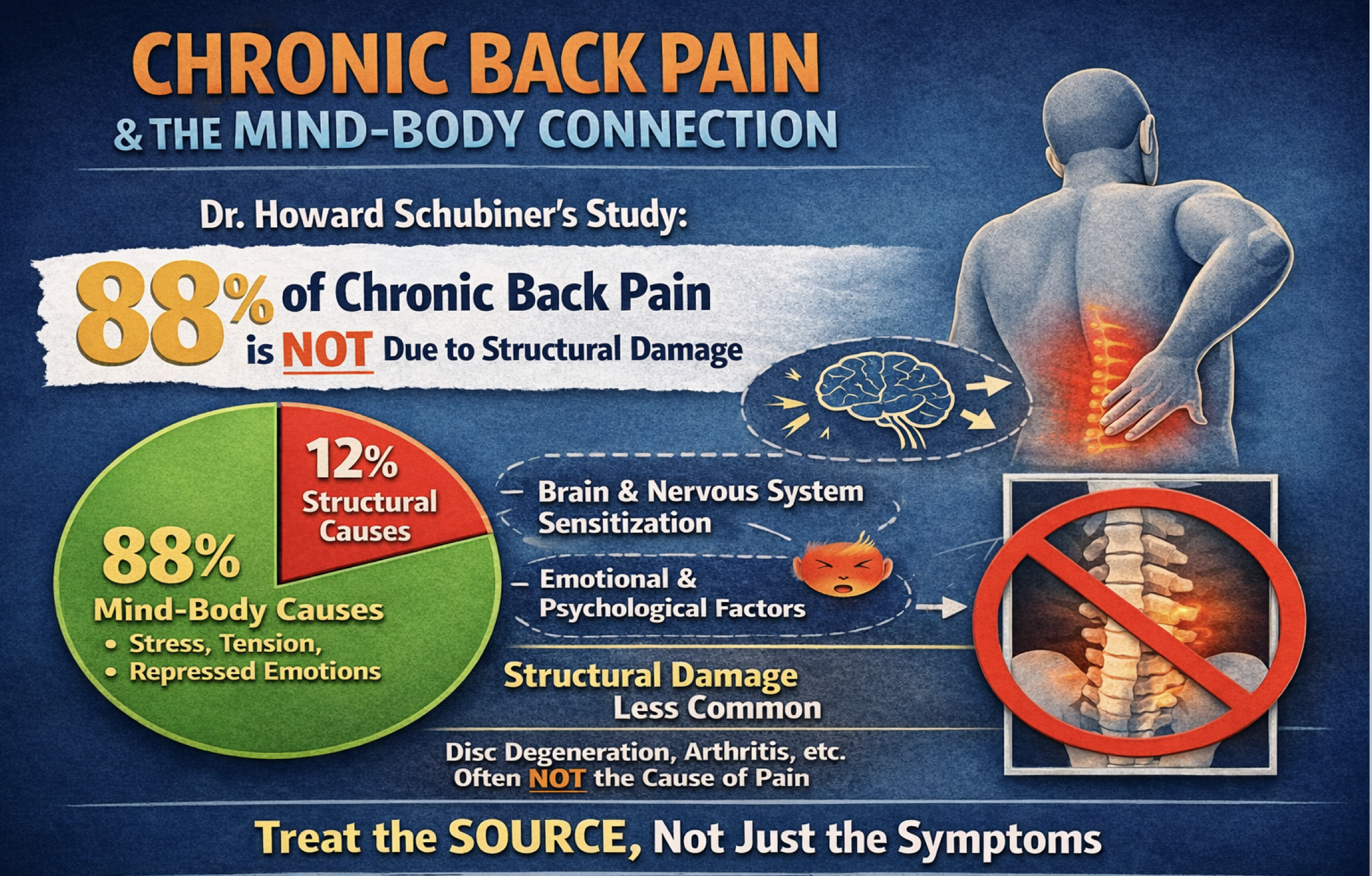
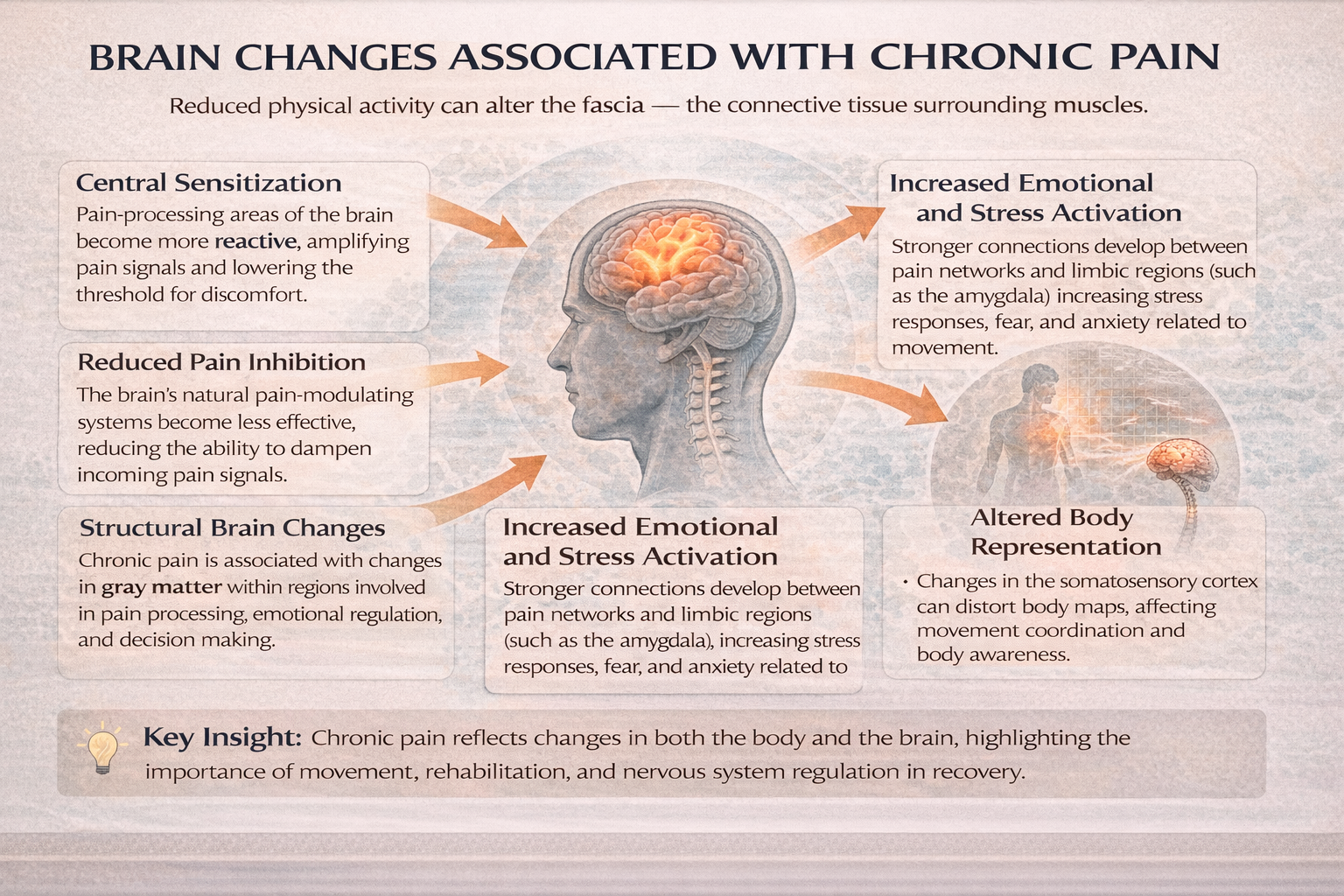
Modern pain science shows that chronic pain is influenced by more than tissue damage. Factors like stress, fear of movement, poor sleep, and nervous system sensitivity all play a role.
Research consistently demonstrates:
- Pain does not strongly correlate with structural damage
- The nervous system and brain heavily influence pain perception
- Movement, when done appropriately, can actually reduce pain sensitivity over time
This means effective training must address both:
- The body (strength, mobility, coordination)
- The mind (perception, control, confidence, stress response)
What is Mind-Body Fitness?
Mind-body fitness focuses on the connection between mental processes and physical movement. Practices like controlled breathing, intentional movement, and awareness-based training help regulate the nervous system.
Research in this area (including studies on Tai Chi, yoga, and mindful movement) shows:
- Reduced pain intensity
- Improved physical function
- Better emotional well-being
Why does this work?
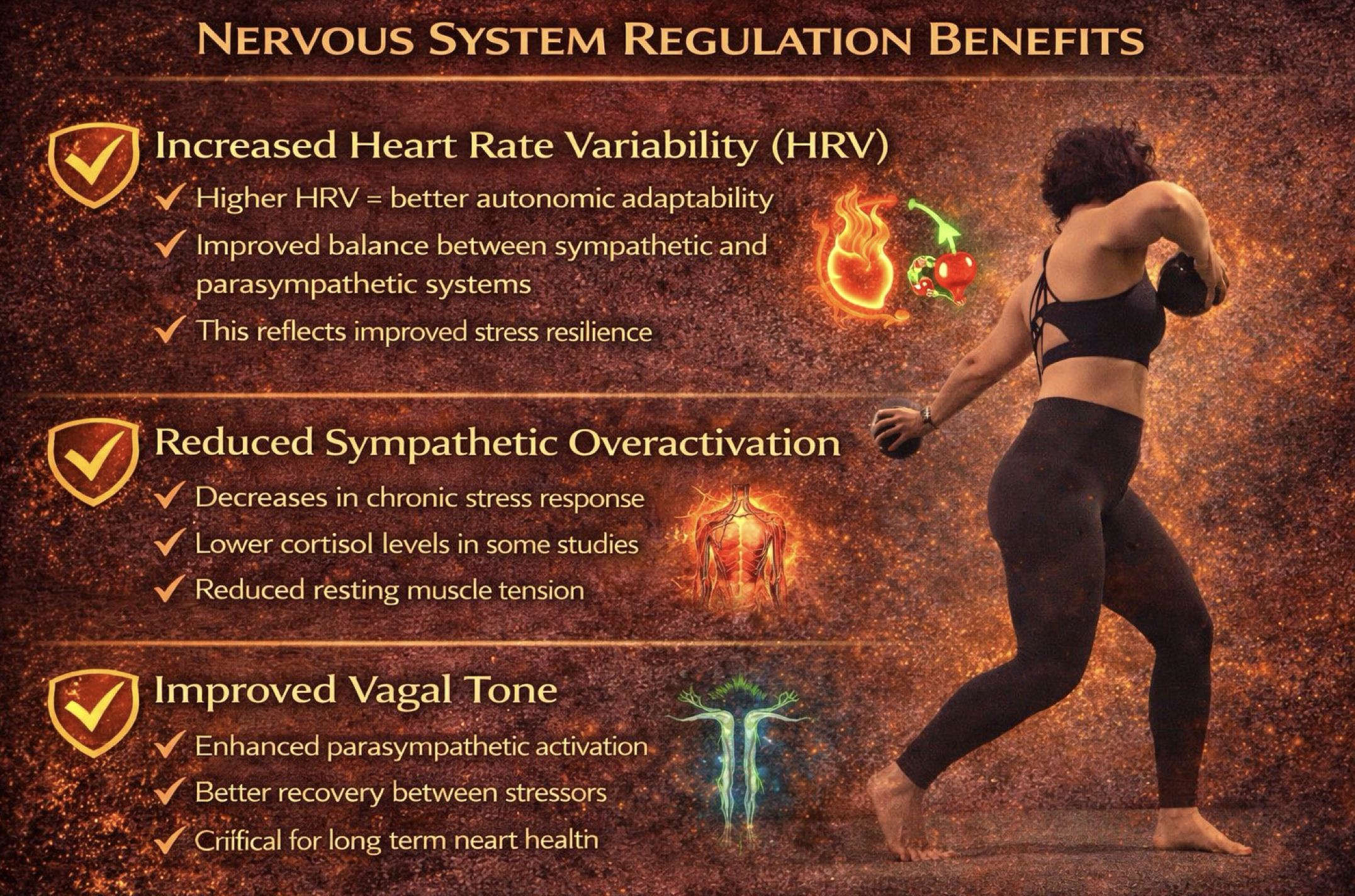
Because chronic pain often involves a sensitized nervous system. Mind-body strategies help:
- Downregulate stress responses
- Improve body awareness (proprioception)
- Reduce fear and guarding
In simple terms: they help the body feel safe to move again. Of course, people have a difficult time making such practices an important aspect of their tiring because they are too worried about calorie burning. This is missing the bigger picture because if we can lower pain intensity not only can we end up training hard, but we can lower issues like chronic cortisol please as well.
The Role of Total Body Functional Training
While mind-body approaches calm the system, functional training rebuilds it.
Total body functional training emphasizes:
- Integrated, multi-joint movement patterns
- Stability and mobility working together
- Real-world strength (not isolated muscles)
Instead of training muscles in isolation, it trains how the body actually moves, walking, lifting, rotating, and stabilizing.
Research supports this approach for chronic pain because it:
- Improves movement efficiency
- Reduces unnecessary joint stress
- Enhances coordination and control
For example, studies on chronic low back pain show that motor control and movement quality are often more important than raw strength alone.
View this post on Instagram
Why Combining Both is So Powerful
Individually, both approaches are helpful. Together, they are far more effective.
Here’s why:
They Address Both Sides of Pain
Mind-body training:
- Calms the nervous system
- Reduces pain sensitivity
Functional training:
- Builds strength and resilience
- Improves physical capacity
One reduces the “alarm system,” the other improves the “hardware.”
View this post on Instagram
They Restore Confidence in Movement
One of the biggest drivers of chronic pain is fear of movement (kinesiophobia).
When people are afraid to move:
- They move less
- They become weaker
- Pain often worsens
Mind-body strategies help individuals feel more in control, while functional training provides safe, progressive exposure to movement.
This combination rebuilds trust in the body.
They Improve Movement Quality, Not Just Quantity
Doing more exercise isn’t always the answer, doing better movement is.
Functional training teaches:
- Proper load distribution
- Core stability in context
- Coordinated movement patterns
Mind-body awareness ensures:
- Movements are controlled, not reactive
- Compensation patterns are reduced
This leads to more efficient movement and less strain on sensitive areas.
They Influence Pain Through Multiple Pathways
Research shows exercise reduces pain through several mechanisms:
- Release of endorphins (natural painkillers)
- Improved circulation and tissue health
- Reduced inflammation
- Changes in brain processing of pain
Mind-body training adds:
- Reduced stress hormones
- Improved autonomic nervous system balance
- Better emotional regulation
Together, they create a multi-layered effect on pain reduction.
A combined approach doesn’t mean doing random exercises or just “relaxing more.” It’s about intentional integration.
Examples include:
- Using breathing techniques during strength exercises
- Incorporating slow, controlled movement patterns
- Training stability before adding load or speed
- Progressing movement complexity gradually
For instance:
- A squat isn’t just a strength exercise, it’s an opportunity to train breathing, control, and alignment
- A rotation exercise can improve both mobility and coordination while reinforcing body awareness
The Bigger Picture: Improving Quality of Life
As highlighted in research on osteoarthritis and other chronic conditions, pain is the biggest driver of reduced quality of life.
By reducing pain and improving function, this combined approach helps people:
- Move more freely
- Perform daily tasks with less difficulty
- Feel more confident in their bodies
- Stay active long-term
And perhaps most importantly, it shifts the focus from “what’s wrong with me” to “what can I do.”
Chronic pain is complex, but the solution doesn’t have to be.
The evidence is increasingly clear:
- Mind-body fitness helps calm the system
- Functional training helps rebuild the system
- Together, they create a powerful, sustainable path to less pain and better performance
Save 30% on our online programs and courses that bring together mind-body and functional training fitness with code “stronger” HERE
Featured in





© 2026 Ultimate Sandbag Training. Site by Jennifer Web Design.