
When Life Gets Hard, How to Help the Mind & Body
2026-07-15

I want to be honest about something I don’t usually put into words publicly.
Over the past while, I’ve been navigating some real interpersonal challenges, the kind that don’t stay contained to one part of life. They’ve bled into my body. My pain has climbed higher than it’s been in a long time. My fatigue has been heavier. Workouts that used to feel manageable have started to feel like climbing a mountain some days.
If you’ve ever been through something similar where stress in your relationships or your life shows up as pain, exhaustion, or a body that just won’t cooperate the way it used to, I want you to know that’s not weakness, and it’s not just “in your head.” Your nervous system and your body are deeply connected, and when one is under strain, the other feels it.
I’m not writing this for sympathy. I’m writing it because in the middle of this, I’ve leaned on a few specific strategies that have genuinely helped me stay on track not perfectly, but enough to keep moving forward. I wanted to share them, in case they help you too.
1. Accepting What’s Happening — Not Liking It, Just Acknowledging It
The first thing that’s helped me most is acceptance. And I want to be really clear about what I mean by that, because it gets misunderstood often.
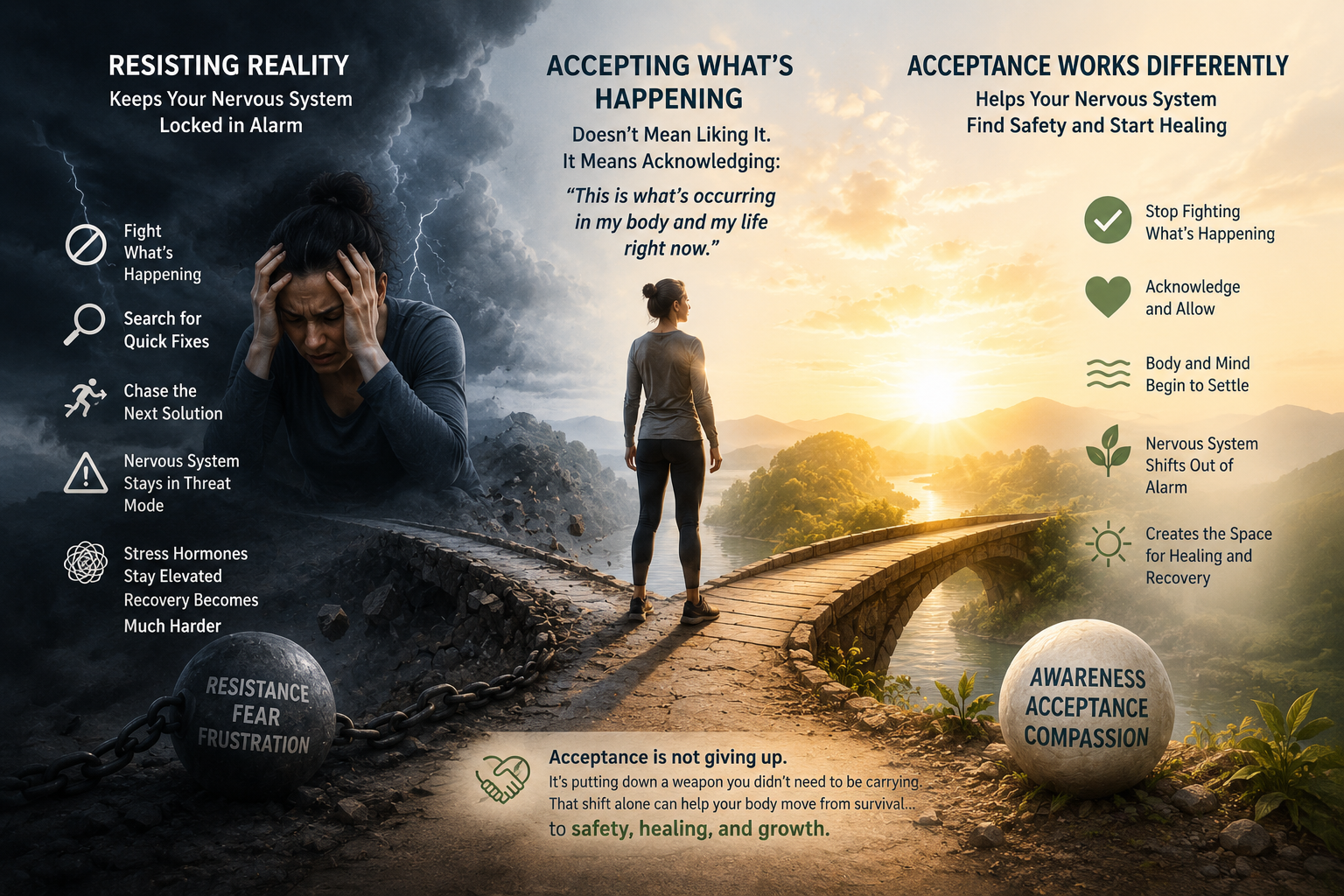
Accepting what’s happening doesn’t mean liking it. It doesn’t mean being okay with elevated pain, or fatigue, or the stress causing it. It simply means acknowledging: this is what’s occurring in my body and my life right now.
That distinction matters more than it might seem. When we resist reality, when we fight against what’s happening, deny it, or frantically search for the one bio-hack, supplement, or protocol that will make it disappear immediately we keep our nervous system locked in a state of alarm. The body reads that resistance as an ongoing threat, which keeps stress hormones elevated and makes it even harder to recover.
Acceptance works differently. When I stop fighting what’s happening and just acknowledge it, something in my body actually settles. It’s not resignation I’m not giving up on getting better. It’s more like putting down a weapon I didn’t need to be carrying. That shift alone has helped calm my nervous system down enough to actually start healing, instead of staying in a constant state of emergency response.
2. Focusing on What I Can Do, Not What I Can’t
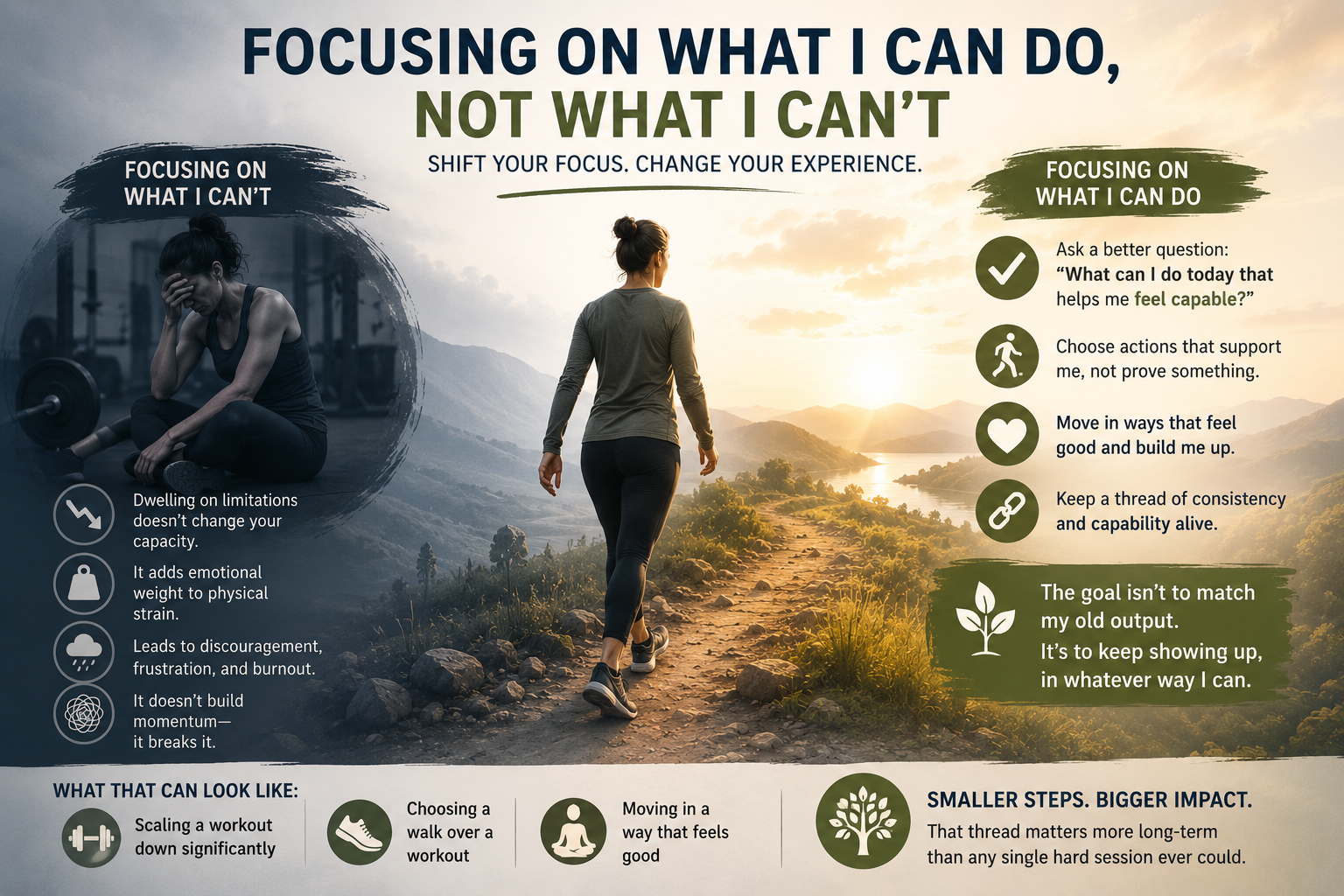
The second thing has been a shift in focus away from everything I currently can’t do, and toward what I still can.
This has been harder than it sounds. It’s easy to get discouraged staring at a workout you used to crush, now feeling out of reach. But dwelling there doesn’t change your capacity it just adds emotional weight on top of physical strain.
So instead, I’ve been asking a different question: what can I do today that helps me feel capable? Sometimes that means scaling a workout down significantly. Sometimes it means choosing a walk over a workout entirely. Sometimes it’s simply moving in a way that feels good rather than a way that proves something. The goal isn’t to match my old output it’s to keep a thread of consistency and capability alive, even in a smaller form. That thread matters more long-term than any single hard session ever could.
3. Being Compassionate With Myself
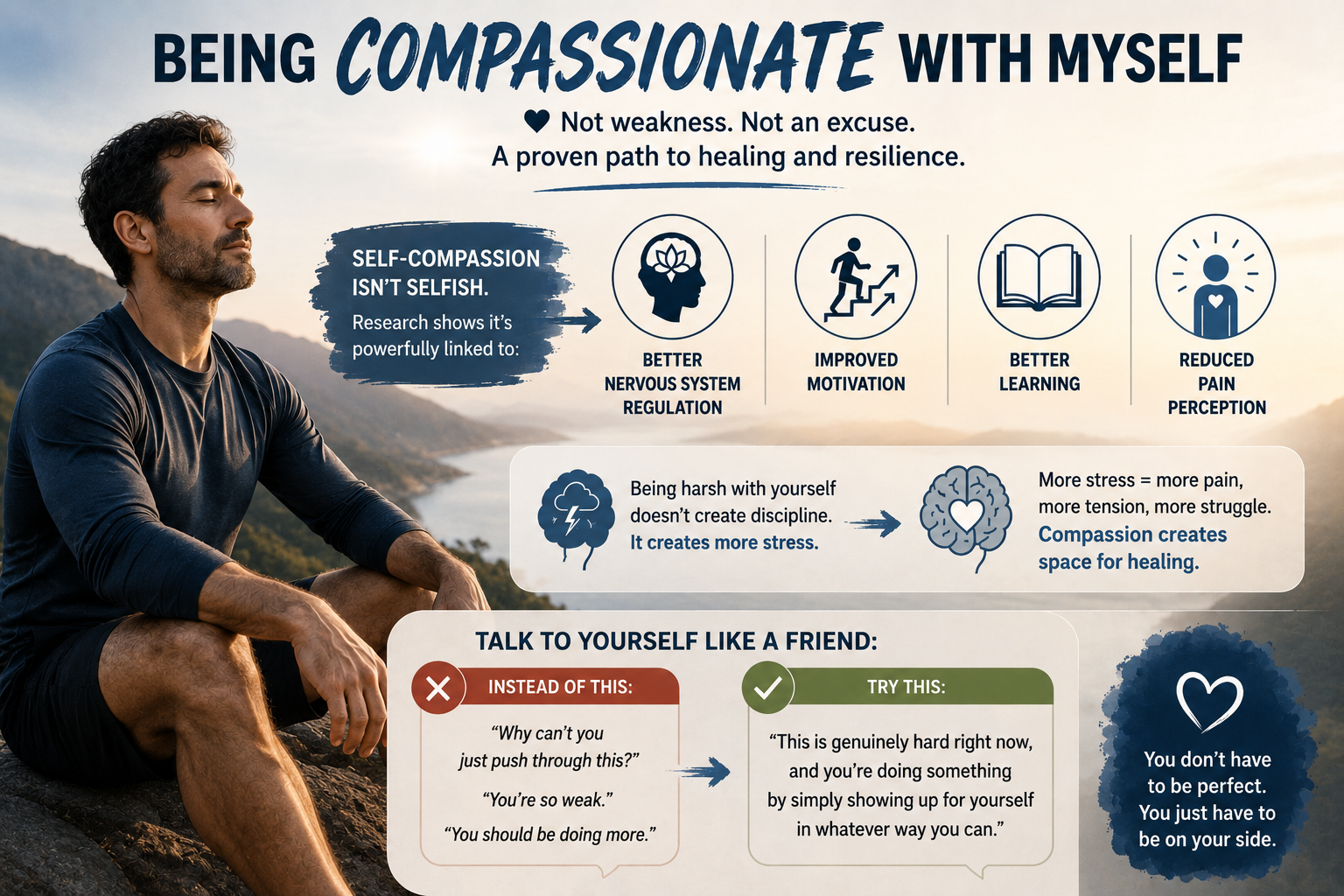
The third piece is one that, oddly, makes a lot of people uncomfortable: self-compassion.
I understand why. It can feel indulgent, or like an excuse, or like you’re letting yourself off the hook. But that’s not what the research shows. Self-compassion has been linked to better nervous system regulation, improved motivation, better learning, and notably, reduced pain perception. Being harsh with yourself doesn’t create discipline. It creates more stress, which is precisely the thing making everything harder in the first place.
For me, this has looked like talking to myself the way I’d talk to a friend going through the same thing. Not “why can’t you just push through this,” but “this is genuinely hard right now, and you’re doing something by simply showing up for yourself in whatever way you can.”
Leaning on Mind-Body Movement
One of my personal go-tos through all of this has been leaning into mind-body workouts, specifically our MIM (Myofascial Integrated Movement) sessions. There’s something different about this kind of training when things feel heavy. It gives me a place to move through physical and mental frustration rather than just carrying it around all day. Because MIM works with the nervous system from the bottom up through the fascia, the breath, and functional movement patterns it doesn’t ask me to force my way through anything.
Diaphragmatic breathing is a core part of every session, and that alone has been huge for me. Slowing my breath down while I move helps shift my body out of that stress-driven, guarded state and into something calmer and more regulated. It’s not about pushing hard. It’s about giving my body and nervous system a way to process what they’re holding, one session at a time.
Where This Leaves Me
I don’t have this fully figured out. Some days these strategies work better than others, and some days I still catch myself resisting, comparing, or being harder on myself than I’d ever be on someone else.
But accepting what’s happening, focusing on what’s possible instead of what’s lost, and treating myself with some basic compassion these have been the difference between spiraling and staying on track. If you’re in a hard season yourself, physically or otherwise, I hope one of these helps you find a little more steadiness too.
If you’re ready to experience this for yourself, our 4-week online MIM coaching program is open now save 25% (use code “mim25” HERE) and start building real strength, mobility, balance, and a calmer, more regulated nervous system, all from the comfort of home.
Featured in





© 2026 Ultimate Sandbag Training. Site by Jennifer Web Design.