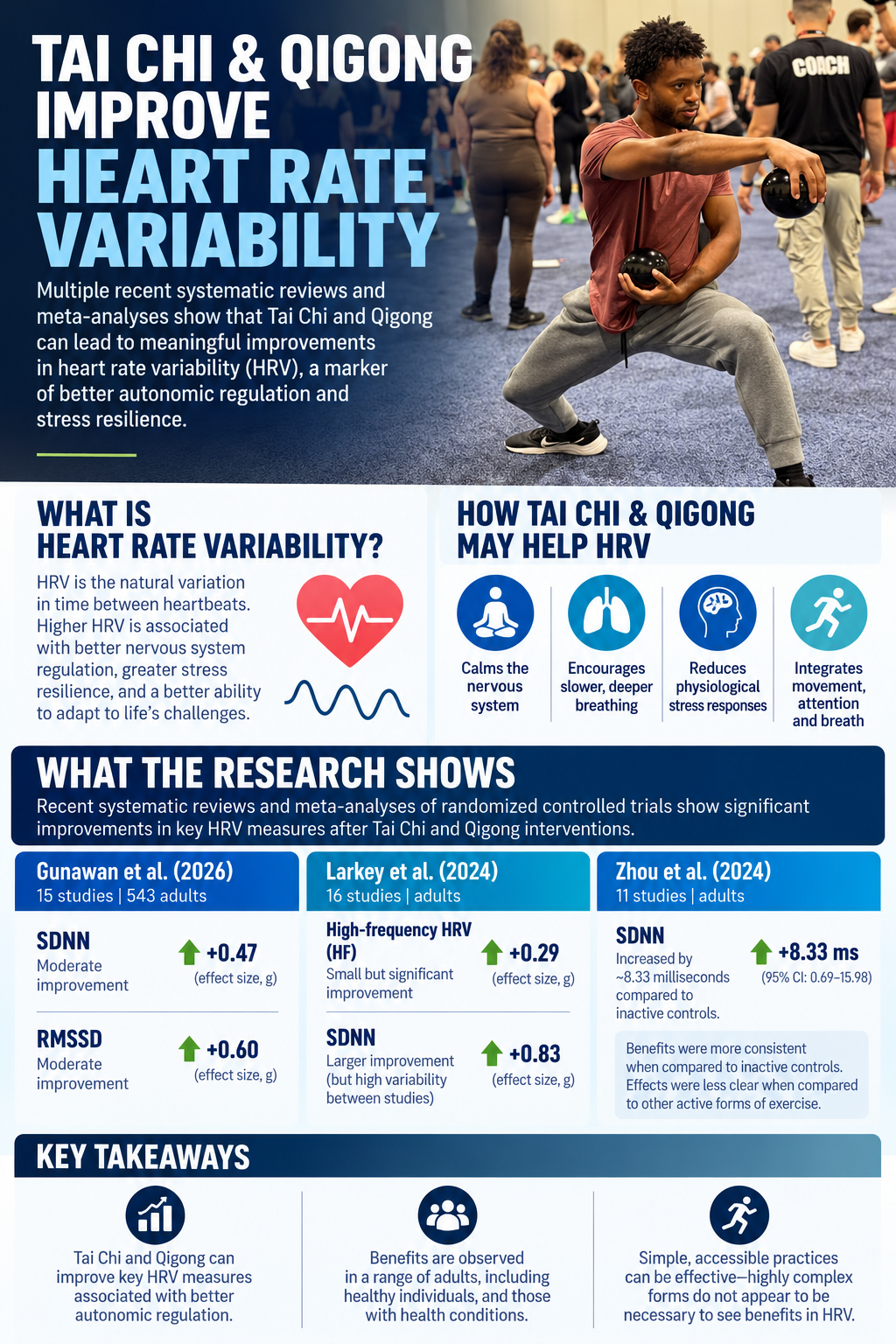
You’re Training Hard. You’re Not Training Smart

Most fitness programs are built around one question: how hard can you push? Heavier weights, faster reps, higher heart rates. It’s a model that works until it doesn’t. You hit a wall. Progress stalls. Old injuries flare up. And no amount of extra effort seems to fix it.
That’s usually the moment people discover mind-body fitness and realize they’ve been missing half the equation.
What Mind-Body Fitness Actually Means
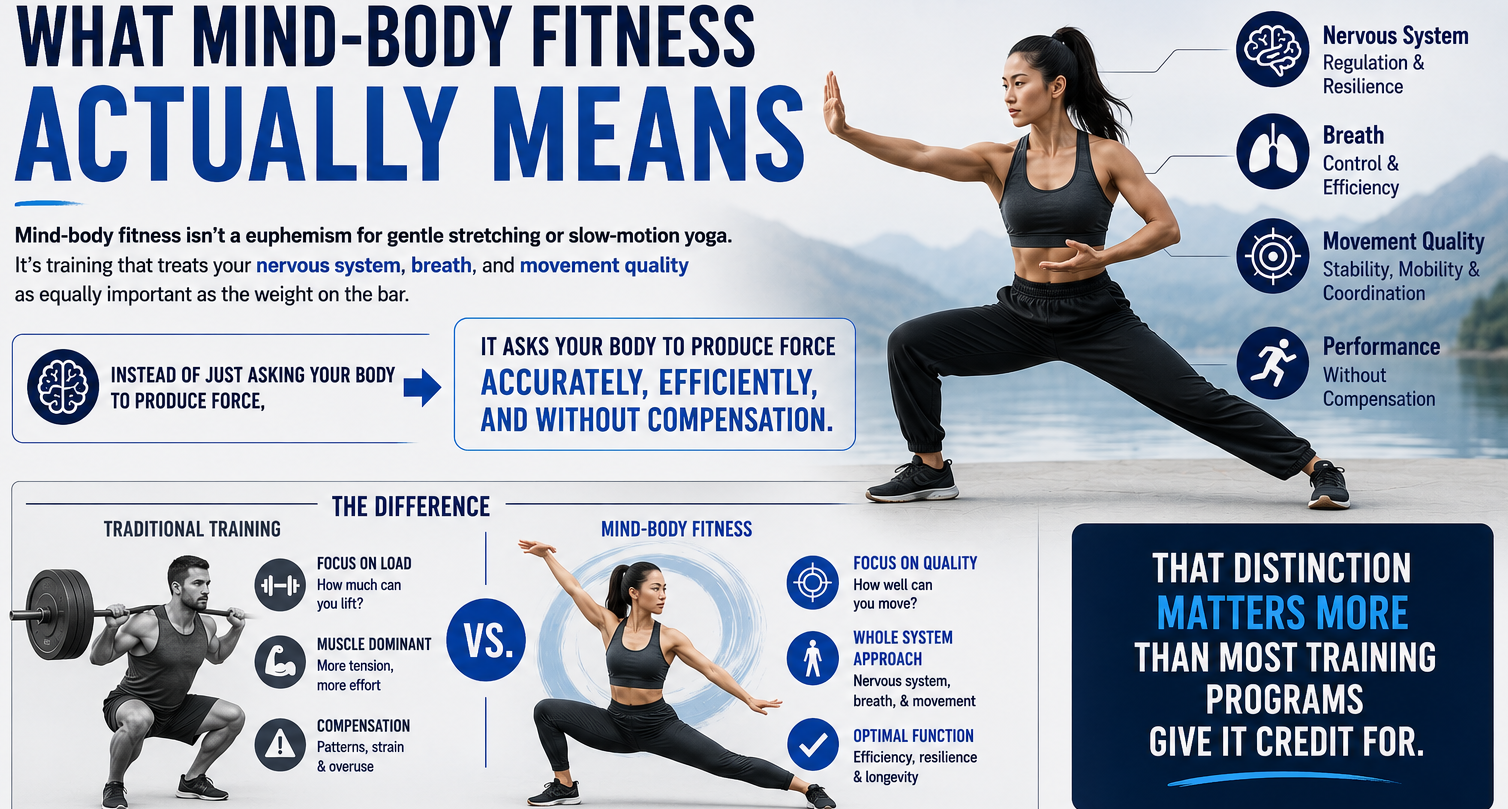
Mind-body fitness isn’t a euphemism for gentle stretching or slow-motion yoga. It’s training that treats your nervous system, breath, and movement quality as equally important as the weight on the bar. Instead of just asking your body to produce force, it asks your body to produce force accurately, efficiently, and without compensation.
That distinction matters more than most training programs give it credit for.
The Fat Loss Connection
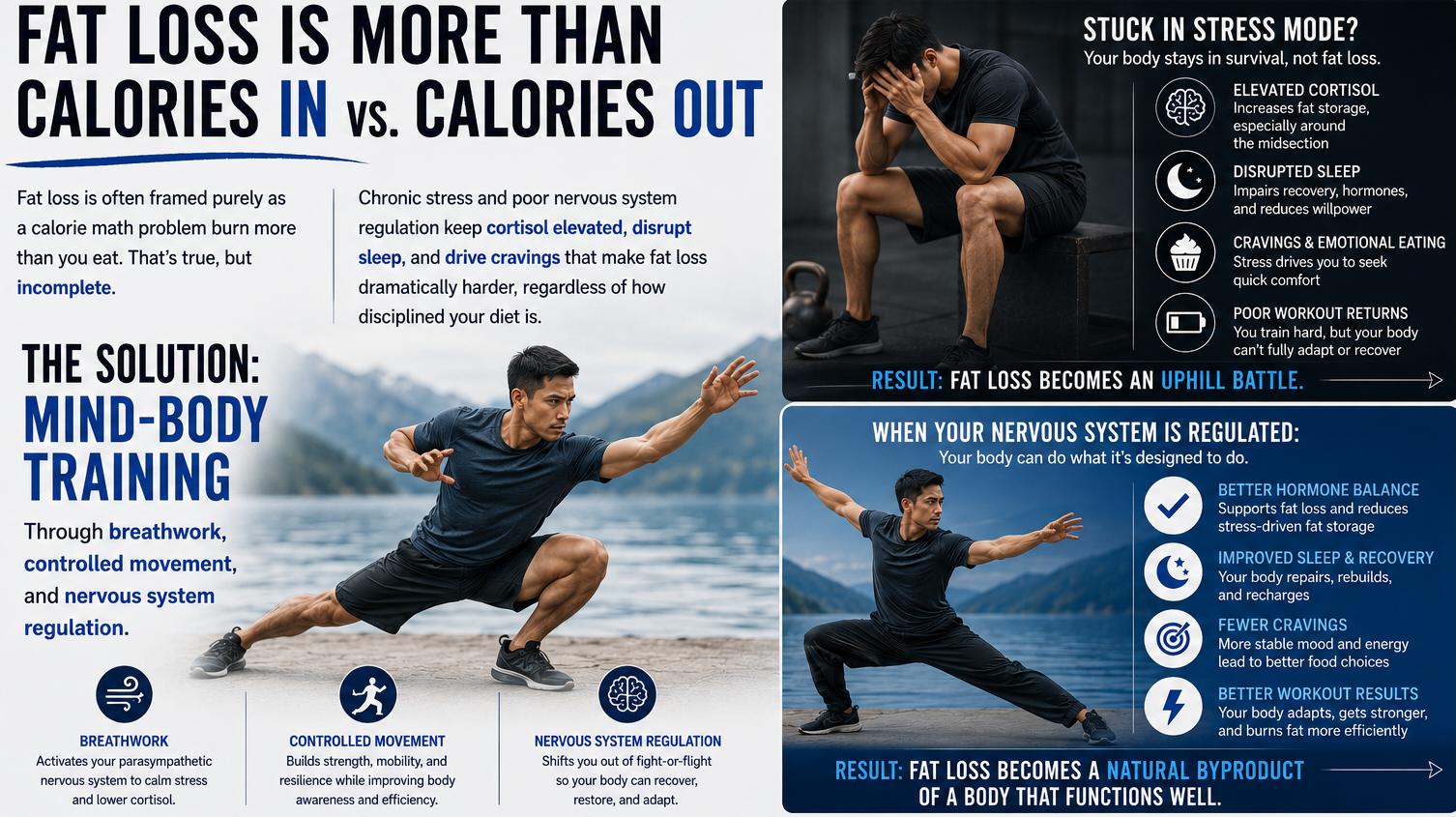
Fat loss is often framed purely as a calorie math problem burn more than you eat. That’s true, but incomplete. Chronic stress and poor nervous system regulation keep cortisol elevated, disrupt sleep, and drive cravings that make fat loss dramatically harder, regardless of how disciplined your diet is.
Mind-body training through breathwork, controlled movement, and nervous system regulation helps shift your body out of a constant low-grade stress response. When your nervous system isn’t stuck in fight-or-flight, your body becomes more capable of recovering, regulating hormones, and actually using the workouts you’re doing. Fat loss becomes a byproduct of a body that’s functioning well, not just a body that’s exhausted.
Building Real Strength and Stability
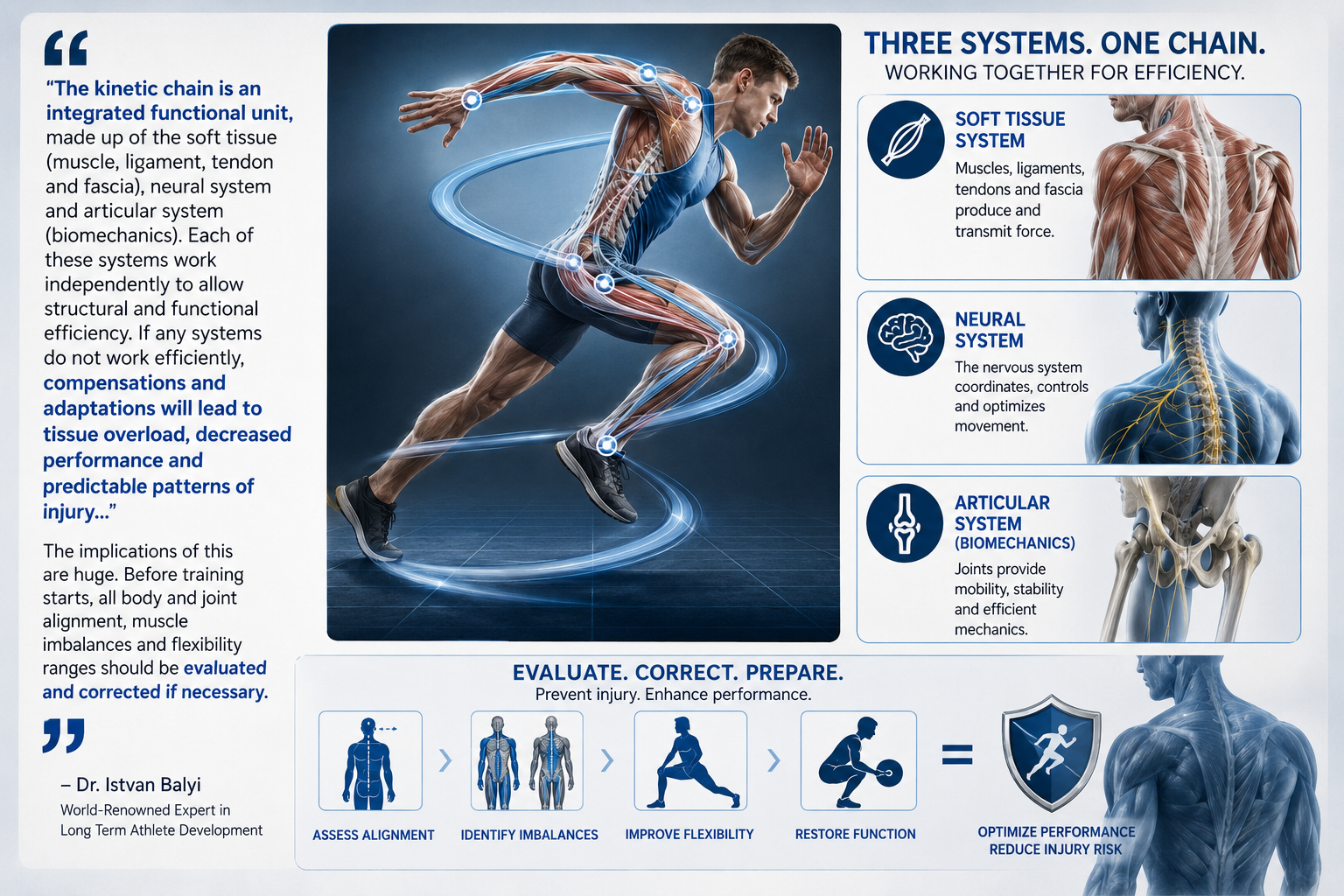
Strength isn’t only about how much weight you can move it’s about how efficiently your body organizes itself to move that weight. A body with poor core control, weak stabilizers, or disconnected movement patterns leaks force. You end up strong on paper but inefficient in practice, prone to compensation and injury.
Mind-body training builds the foundation strength is supposed to sit on top of. It teaches your core, hips, and stabilizing muscles to do their job before you load a heavy lift, so that strength you build is strength you can actually use and keep.
Balance Is a Skill, Not a Given
Balance isn’t just about not falling over. It’s your nervous system’s ability to constantly sense, adjust, and correct in real time. That skill degrades when we exclusively train in predictable, fixed patterns same machine, same path, same range of motion, every time.
Mind-body practices intentionally challenge this system: unstable surfaces, single-limb work, controlled tempo changes, and breath-driven movement all force your nervous system to stay engaged and responsive. That responsiveness carries over into everything athletic performance, daily movement, and injury prevention as you age.
Regulating the Nervous System
Here’s the piece most people skip entirely: your nervous system determines how much strength, mobility, and power you’re actually able to access. A nervous system stuck in a defensive, guarded state will limit your range of motion and hold back your output regardless of how strong your muscles are. It’s a protective mechanism, not a weakness.
Breathwork, deliberate tension, and mindful movement give your nervous system the information it needs to feel safe enough to let go of unnecessary guarding. That’s not a soft, secondary benefit. It’s often the actual bottleneck standing between you and your next level of performance.
Slow Doesn’t Mean Weak — It Means Precise
This is where a common misconception needs correcting: mind-body fitness isn’t inherently slow, and slow isn’t the opposite of powerful.
Slowness is a tool. When you slow a movement down, you remove the ability to cheat through momentum, compensation, or sloppy mechanics. You’re forced to feel exactly where tension should be, where stability needs to come from, and how force should travel through your body. That’s movement accuracy and it’s the prerequisite for real power, not a substitute for it.
Once your body learns a movement pattern with precision at a slow tempo, that same pattern becomes far more powerful at speed. You’re no longer generating force through compensation; you’re generating it through efficient, well-organized mechanics. That’s why so many high-level athletes and strength coaches build slow, controlled work into their programming — not to make things easier, but to build a foundation capable of producing significantly more power when it counts.
Mind-body fitness isn’t a departure from serious training it’s what makes serious training sustainable. It’s the difference between a body that grinds out short-term results and one that builds fat loss, strength, stability, and balance on a foundation that actually holds up over time. Slow down where it matters, and you’ll find there’s more power waiting on the other side than you expected.
Learn MUCH more at our upcoming online MIM live classes (recordings will be given to each participant) to practice and learn from us directly. Save 25% this week with code “mim25” HERE and learn how to develop better movement and well-being.