
The Healthy Aging Mistake Almost Everyone Makes
2026-07-26

As an 18 year old trainer (yea, when I really began) training the “healthy aging” population sounded like training “old people.” To be honest, I was a bit blind to how amazing and powerful training the healthy aging population can be for everyone. Now that 50 is only a few months away for me, I AM the healthy aging population. That has raised far more awareness for me where so many well intended people like myself end up going wrong.
There are two mistakes people tend to make when it comes to aging and fitness, and they sit at opposite ends of the same problem.
The first mistake is treating aging as fragility. Slowing down unnecessarily. Avoiding real strength training out of fear. Assuming that getting older means gently coasting rather than genuinely training. This mistake robs people of capability they could have kept, simply because they were told, or told themselves, that they should expect less.
The second mistake is the opposite: refusing to acknowledge that anything has changed at all. Training exactly the way you did at 25, ignoring old injuries, new health conditions, or the simple accumulated demands of life, and pushing forward as if none of it matters. This mistake often ends in frustration, setback, or injury, not because the goals were wrong, but because the approach ignored the body’s actual, present reality.
The truth sits between these two extremes, and it’s the foundation of how we coach both MIM and DVRT.
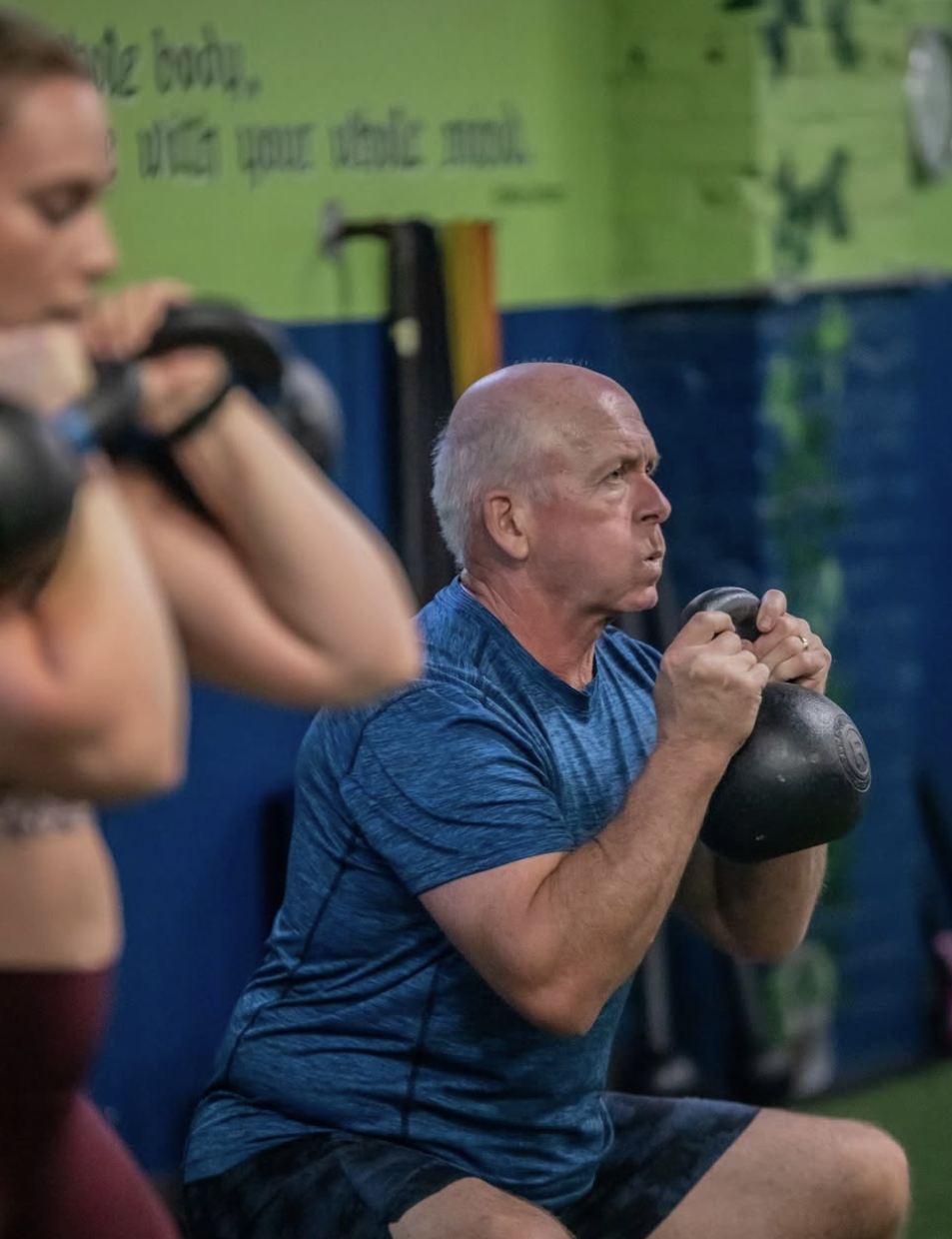
The crew from Fitness Lying Down is a great example of smart healthy aging training.
Aging Doesn’t Mean Fragile
Let’s be direct about this: getting older does not automatically mean weak, fragile, or incapable. Plenty of the assumptions built into “healthy aging” programming lighter weights across the board, avoiding challenging positions, treating every older client identically regardless of their actual capability do a disservice to people who are fully capable of real strength training, real power development, and genuinely ambitious goals.
We’ve worked with clients well into their 60s, 70s, and beyond who are stronger, more mobile, and more capable than people half their age, precisely because they never accepted the fragility narrative and trained with real intent. Age alone is not a reason to lower the bar.
My Tai Chi teacher is a 71 year old who can out perform many half her age!
But Aging Does Change Things And Pretending Otherwise Is Its Own Mistake
At the same time, honesty matters here too. Aging does change the body, and ignoring that reality isn’t toughness, it’s a setup for setback.
Past injuries accumulate. A shoulder that was scoped in your 30s, a knee that’s never quite felt the same since an old sports injury, a back that flares up under certain positions these aren’t excuses, but they are real considerations that deserve to be trained around intelligently, not ignored out of stubbornness.
New health conditions enter the picture for many people as well blood pressure concerns, joint changes, metabolic shifts and these deserve real respect in how a program is built, not dismissal in the name of “pushing through.”
Life demands shift too. Recovery capacity changes. Sleep patterns change. The number of physical and mental demands stacked on a person’s day-to-day life often changes significantly compared to years prior. Training that ignores this and simply demands more, more often, without adjustment, isn’t brave it’s just poor programming.
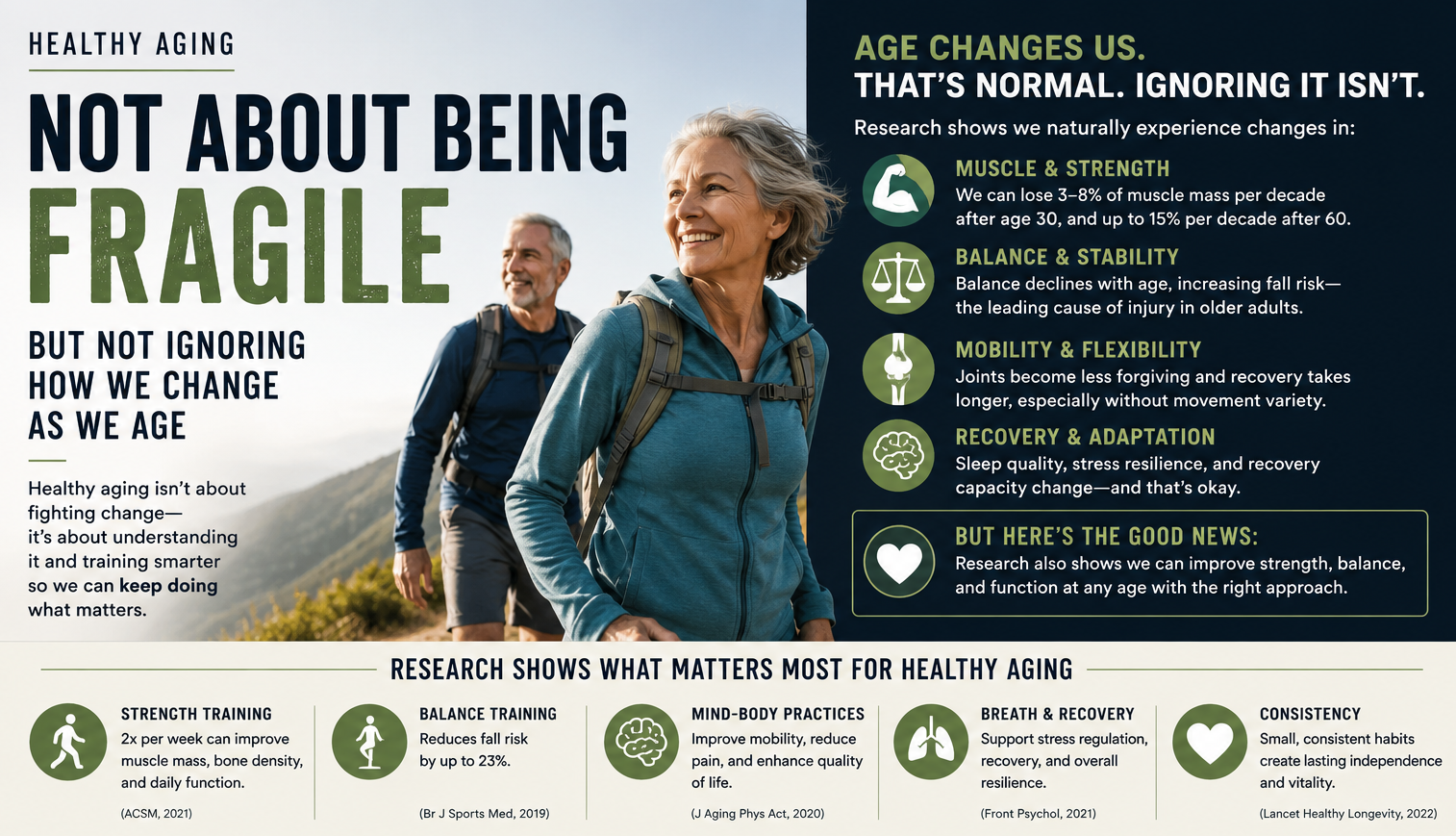
And then there’s simply the natural process of getting older itself connective tissue changes, some degree of natural strength and mobility shifts over time none of which means someone can’t achieve lofty, ambitious goals, but which absolutely means the path there may look different than it did decades earlier.
Training Hard and Smart Are Not Opposites
This is exactly where MIM and DVRT are built to meet people. Both systems reject the idea that “smart” training means “watered-down” training, and both reject the idea that “hard” training means ignoring what your body is actually telling you.
DVRT’s use of leverage, asymmetrical loading, and multi-planar movement allows serious strength and power development to be trained in ways that respect joints and old injuries, rather than forcing a person into rigid, one-size-fits-all barbell patterns that may not serve their specific history or goals. The tools and progressions scale intelligently, so a genuinely hard training session can still be built around what a person’s body needs on that given day.
View this post on Instagram
MIM’s integration of breathwork, fascial chain training, and nervous system regulation gives us a way to build real strength, mobility, and stability while directly addressing guarding, compensation, and fear that often develop around old injuries or new limitations. Instead of avoiding a compromised area entirely, or ignoring it recklessly, MIM allows us to train around it thoughtfully, rebuilding capability and confidence at the same time.
View this post on Instagram
Together, these systems let us pursue ambitious goals without pretending nothing has changed, and without accepting unnecessary limitation as the price of getting older.
Healthy aging was never about choosing between fragility and recklessness. It’s about training with enough humility to respect what your body genuinely needs, and enough ambition to keep chasing real strength, capability, and goals worth pursuing.
That balance to hard and smart, ambitious and honest is exactly what MIM and DVRT were built to deliver.
Find out more as we begin our 4-week MIM online classes TOMORROW! You can still sign-up HERE
View this post on Instagram
Featured in





© 2026 Ultimate Sandbag Training. Site by Jennifer Web Design.