
Why Stretching Your Hamstrings and Hip Flexors Can Help Chronic Low Back Pain, But Usually Isn’t Enough
2026-06-1

I remember both when I FIRST hurt my low back when I was 14 and when I aggravated it again in college during basketball practice, I received the same advice. You have to stretch more your hamstrings and hip flexors. While that advice isn’t necessarily wrong, many have an improper impression on what works, how much it works, and other things that influence the effectiveness of stretching. This often leaves people frustrated when their back pain doesn’t improve as much as they hoped.
The reality is that research does support the use of stretching for chronic low back pain. Studies have consistently found that improving flexibility, particularly in the hamstrings and hip flexors, can reduce pain and improve function. However, the same research also shows that stretching alone is rarely enough to create lasting changes. The most successful outcomes occur when stretching is combined with other factors such as regular physical activity, improved movement confidence, better sleep, stress management, and exercises that enhance trunk stability.
In other words, stretching can be part of the solution, but it is rarely the entire solution.
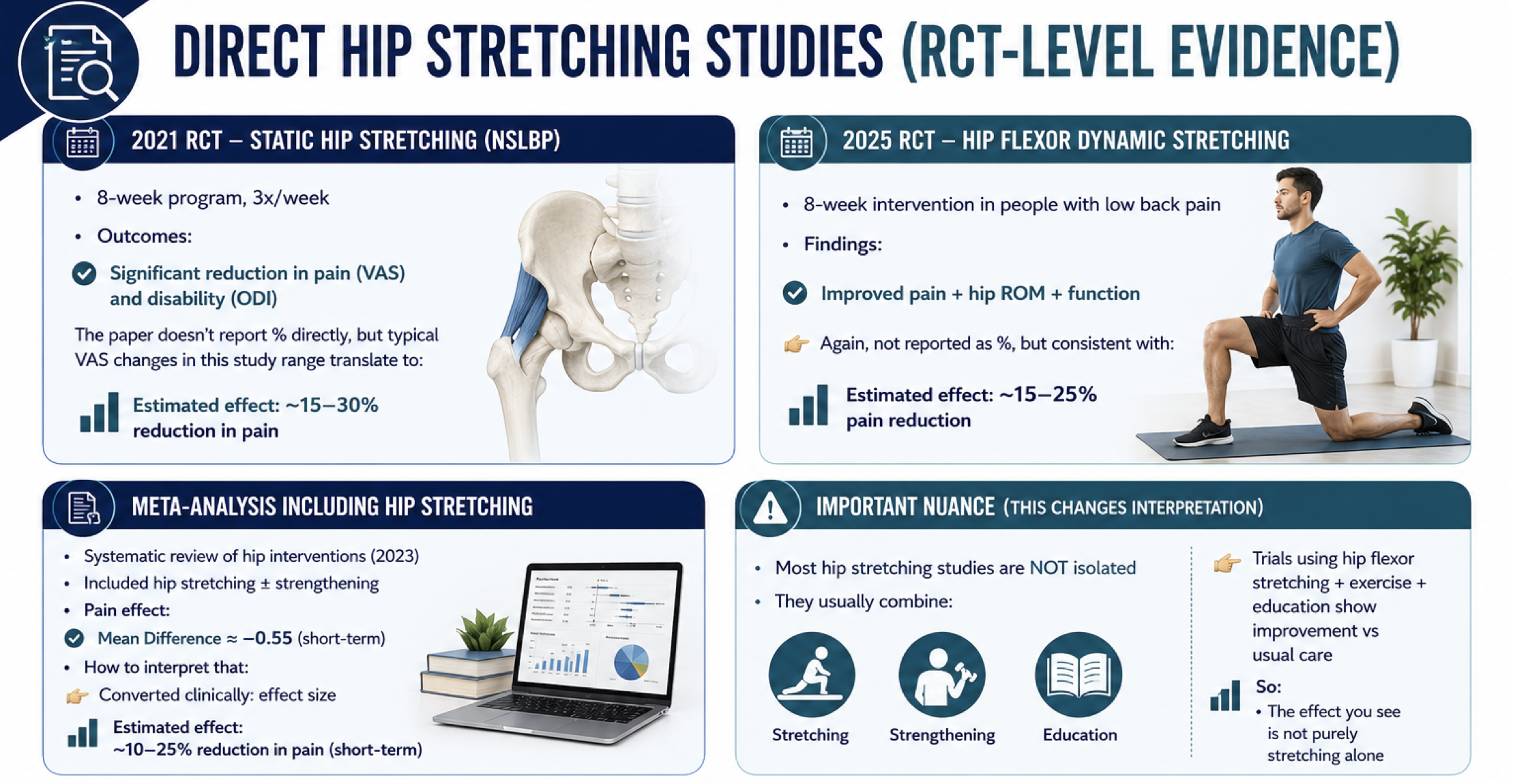
What the Research Says About Stretching and Low Back Pain
A growing body of research suggests that targeted stretching programs can improve pain and disability in people with chronic low back pain.
A 2024 systematic review and meta-analysis, “The effects of hamstring stretching exercises on pain intensity and function in low back pain patients: A systematic review with meta-analysis of randomized controlled trials< found that stretching interventions produced significant improvements in pain intensity, disability, range of motion, and function in individuals with chronic low back pain. Researchers concluded that stretching should be considered a valuable component of treatment programs for chronic low back pain.
Hamstring flexibility has received particular attention because limited hamstring mobility is associated with altered pelvic mechanics and increased stress on the lumbar spine during movement. Several studies have demonstrated that improving hamstring flexibility can reduce pain and improve functional movement patterns in people with chronic low back pain.
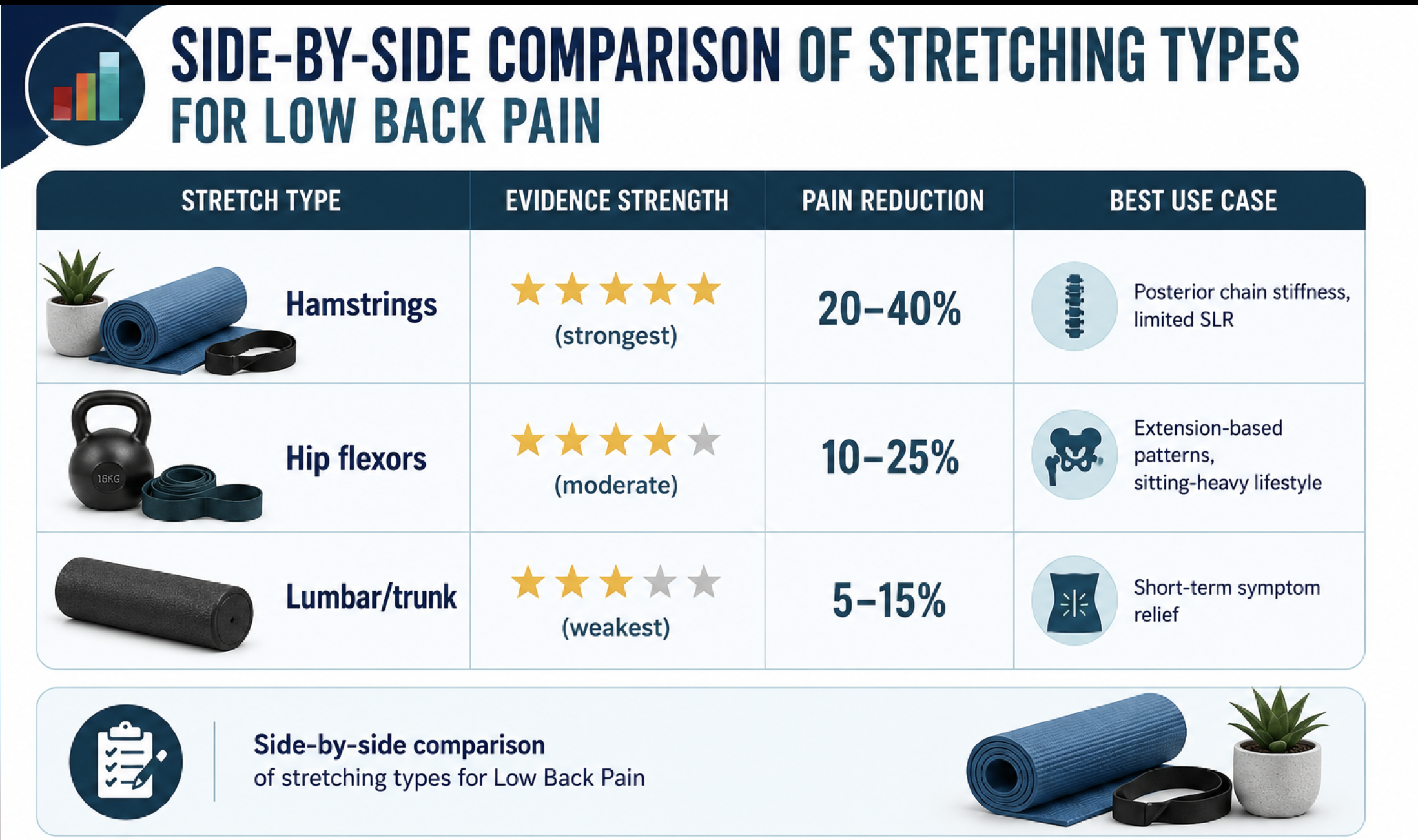
Hip flexor mobility is also important. Tight hip flexors may contribute to excessive lumbar extension and increased stress on spinal structures during standing, walking, and exercise. Research suggests that improving hip mobility can reduce compensatory movement patterns and improve overall function.
These findings help explain why stretching often feels beneficial. However, they also reveal an important limitation: flexibility improvements do not automatically eliminate back pain.
Why Most People Don’t See the Results They Want
One of the biggest reasons stretching fails is surprisingly simple: people are not consistent enough.
Most flexibility adaptations require repeated exposure over weeks and months. Research consistently shows that long-term improvements in range of motion occur through regular practice rather than occasional stretching sessions.
Many people stretch intensely for a few days, skip a week, then wonder why nothing changed.
The nervous system adapts through repetition. Just as strength requires consistent training, mobility requires consistent exposure to movement. Stretching once or twice per week is often insufficient to create meaningful changes in tissue tolerance, movement confidence, or motor control.
The goal isn’t heroic stretching sessions, the goal is consistent practice.
More Stretching Isn’t Always Better
Another common mistake is stretching too aggressively.
Many people believe that if a little stretch is good, a lot must be better. They push until they feel intense discomfort, shaking, or burning sensations.
Ironically, this approach can cause the opposite effect.
Modern pain science suggests that flexibility is influenced not only by tissue properties but also by the nervous system’s perception of safety. When the body perceives excessive threat, protective muscle activity can increase. This protective response may create more tension and guarding rather than less.
Research on stretching tolerance suggests that many gains in flexibility occur because the nervous system becomes more comfortable allowing movement into greater ranges rather than because tissues are dramatically changing length.
This is why stretching should generally create only mild discomfort rather than intense pain. Think of it as having a conversation with the nervous system rather than trying to force tissues to change.
The body tends to open up when it feels safe, not when it feels threatened.
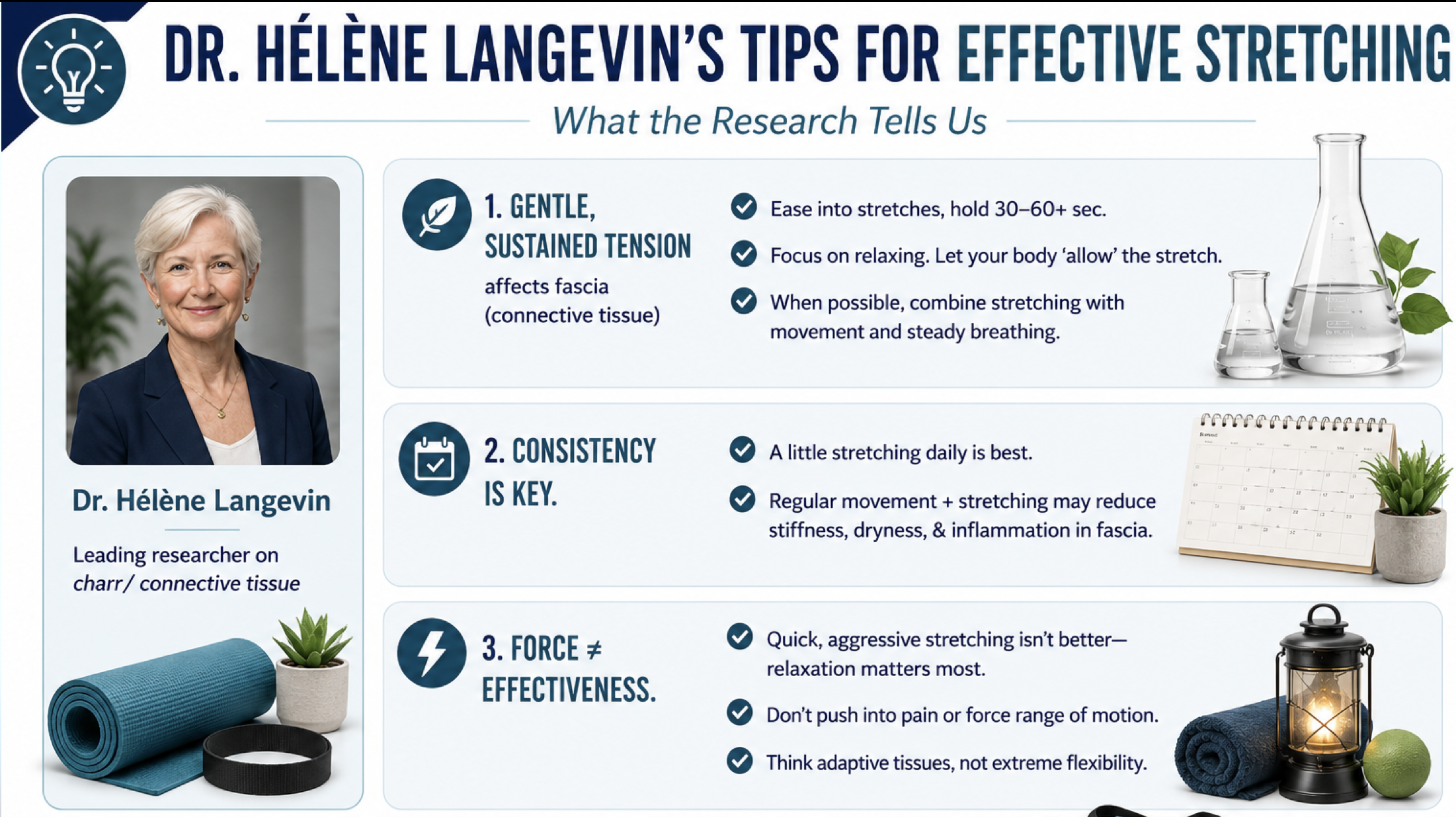
Connective tissue researcher and expert, Dr. Helene Langevin gives some essential keys of stretching.
Why Stretching Alone Cannot Solve Chronic Low Back Pain
One of the most important findings in modern low back pain research is that pain is influenced by far more than muscles and joints.
Studies consistently show that factors such as:
- Fear of movement
- Reduced physical activity
- Poor sleep quality
- Chronic stress
- Anxiety
- Deconditioning
can significantly influence pain levels and disability.
For example, individuals who avoid movement because they fear pain often experience worse long-term outcomes than those who gradually return to activity. Poor sleep has also been linked to increased pain sensitivity and slower recovery.
This does not mean the pain is “all in your head.” It means that pain is influenced by multiple systems throughout the body.
If someone stretches every day but remains sedentary, sleeps poorly, and avoids movement because of fear, stretching alone is unlikely to produce meaningful long-term improvements.
The Missing Piece: Stability and Breathing
Research increasingly supports combining mobility work with exercises that improve trunk stability and motor control.
The spine relies on a coordinated system involving the diaphragm, abdominal muscles, pelvic floor, and deep spinal stabilizers. When these systems work together effectively, movement often feels safer and more efficient.
Studies examining stabilization exercise programs have consistently shown improvements in pain and function for individuals with chronic low back pain.
Breathing may play an important role as well.
The diaphragm contributes to both respiration and spinal stability. Controlled breathing can influence abdominal pressure, reduce excessive muscle tension, and help regulate the nervous system’s perception of threat.
This is why many effective rehabilitation programs combine:
- Gentle mobility exercises
- Breathing strategies
- Core stabilization work
- Gradual exposure to movement
Rather than viewing stretching as a separate activity, it becomes part of a larger strategy designed to improve both mobility and confidence.
View this post on Instagram
A Better Approach to Stretching
Instead of asking, “How hard should I stretch?”, or “Should I even stretch?” a better question may be, “How can I help my body feel safe moving into this position?”
The research suggests a more effective strategy:
- Stretch consistently rather than aggressively.
- Work only into mild discomfort.
- Use controlled breathing throughout the stretch.
- Follow mobility work with stability exercises.
- Stay physically active.
- Address sleep, stress, and recovery habits.
- Gradually build confidence in movement.
Stretching your hamstrings and hip flexors can absolutely help chronic low back pain. The evidence supports that. But stretching is rarely a magic solution.
The greatest benefits occur when stretching becomes part of a comprehensive approach that improves mobility, stability, movement confidence, and overall health. When we combine these elements, we’re not just making muscles more flexible, we’re teaching the nervous system that movement is safe again.
Learn MANY more strategies and practical solutions for low back pain in our upcoming Revolution Low Back Pain Masterclass. We start June 12th and this is the LAST week to save 20% with code “back20” HERE
View this post on Instagram
Key references you may want to cite or link in the published version:
- Thomas et al. (2024). Effects of Stretching on Pain Intensity and Disability in Chronic Low Back Pain: A Systematic Review and Meta-Analysis. Healthcare.
- Hayden et al. (2021). Exercise therapy for chronic low back pain (Cochrane Review).
- Delitto et al. (JOSPT Clinical Practice Guidelines for Low Back Pain).
- O’Sullivan, P. (multiple papers on behavioral and movement-based approaches to chronic low back pain).
- Hodges & Richardson’s work on trunk stability, motor control, and low back pain.
- Smith et al. systematic reviews on hamstring flexibility and low back pain relationships.
Featured in





© 2026 Ultimate Sandbag Training. Site by Jennifer Web Design.